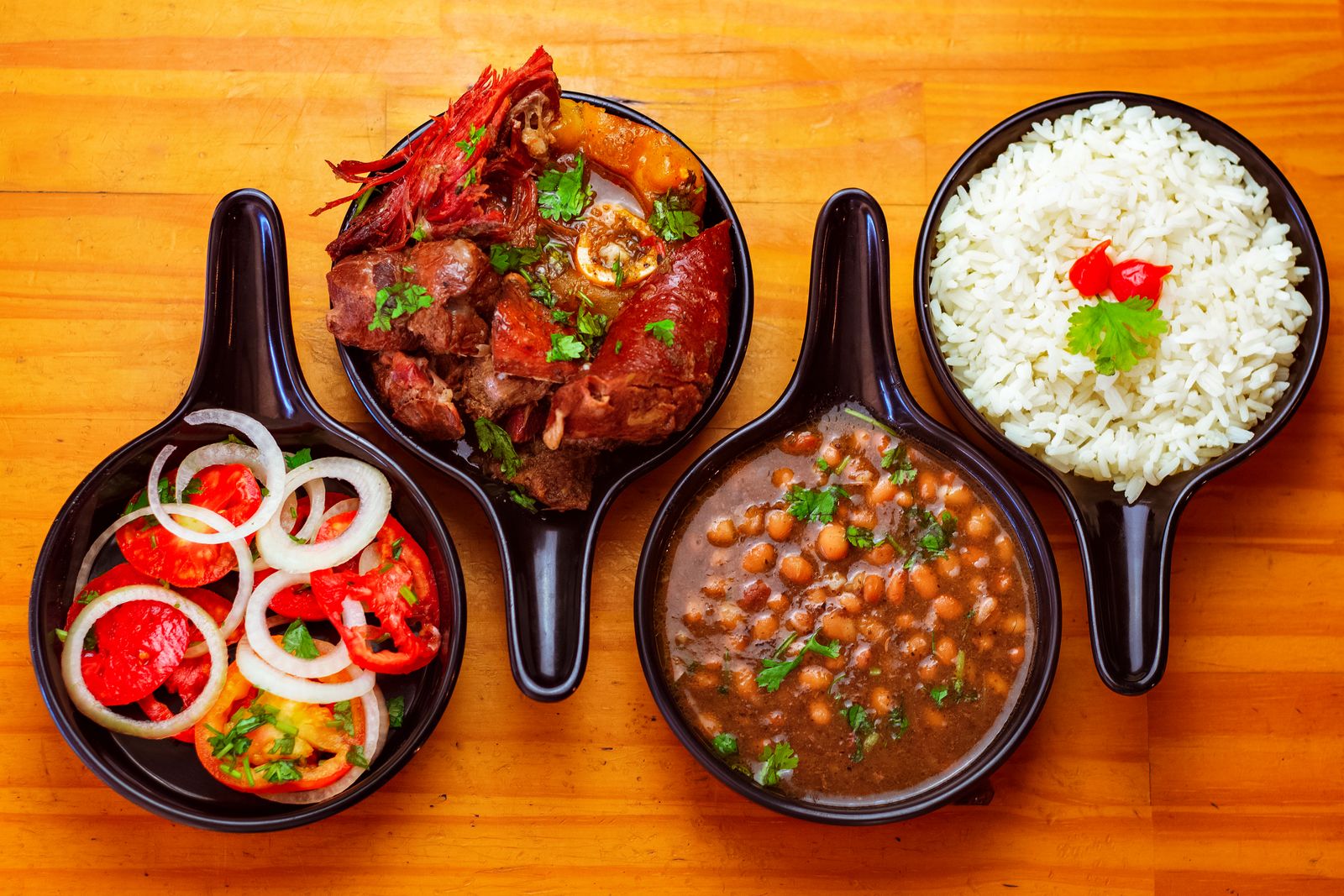
Rio's food reputation is unfair in both directions. It is not a fine-dining capital, whatever the guides say, and it doesn't want to be. What it has instead is one of the great everyday eating cultures on earth: cold beer poured in small glasses so it never goes warm, fried things that arrive on a paper-lined plate for the table, a bean stew that takes a Saturday to eat, and lunch sold by the weight of what you put on the plate. Eat like that all week and the one expensive dinner becomes optional. Here's the map.
The boteco is the whole point
Small glasses, shared plates, and a bill that doesn't hurt.

A boteco is a corner bar that serves food, and it's where the city eats and argues and watches the game. The grammar is simple. You order chopp — draught beer, poured into a small glass with a two-finger head, drunk fast because that's the point — and you order petiscos for the table, not mains for yourselves. Nobody has their own dish. Four people can eat properly for R$50–70 each, and the room will be better than any restaurant you booked.
The ones we'd walk to: Adega Pérola in Copacabana, opened in 1957 by Madeirans and still built around a glass counter of conserved things — octopus, sardines, peppers, a hundred small plates you point at. Pavão Azul, two streets away, for pataniscas de bacalhau, the salt-cod fritters people cross the city for; there's a smarter sibling now if the original is full, and the original is usually full. Bracarense in Leblon for the classic Rio afternoon, standing up, with the best bolinho in the neighbourhood. Jobi, also Leblon, open since 1956 and still going long past midnight. And Cervantes in Copacabana, which serves a roast beef and pineapple sandwich until 4am and has done for sixty years — it changed hands recently and the sandwich survived, which is all anyone was worried about.
Bar Urca, and the seawall that is the actual restaurant
At Bar Urca you queue at a counter downstairs for fried sardines, bolinho de bacalhau and cold beer, then carry it across the road and sit on the seawall with your feet over Guanabara Bay, with Sugarloaf on one side and the whole city lighting up on the other. There are tables upstairs and a proper restaurant, and you should ignore both. It costs about R$40–60 a head, it is the best sunset in Rio that comes with dinner, and for a group of eight it solves the problem of nobody agreeing on anything — everyone orders their own thing at the counter and you all end up on the same wall. Go at 5pm, before the wall fills up.
Feijoada, and when to eat it
Saturday, lunchtime, and one portion between two of you.
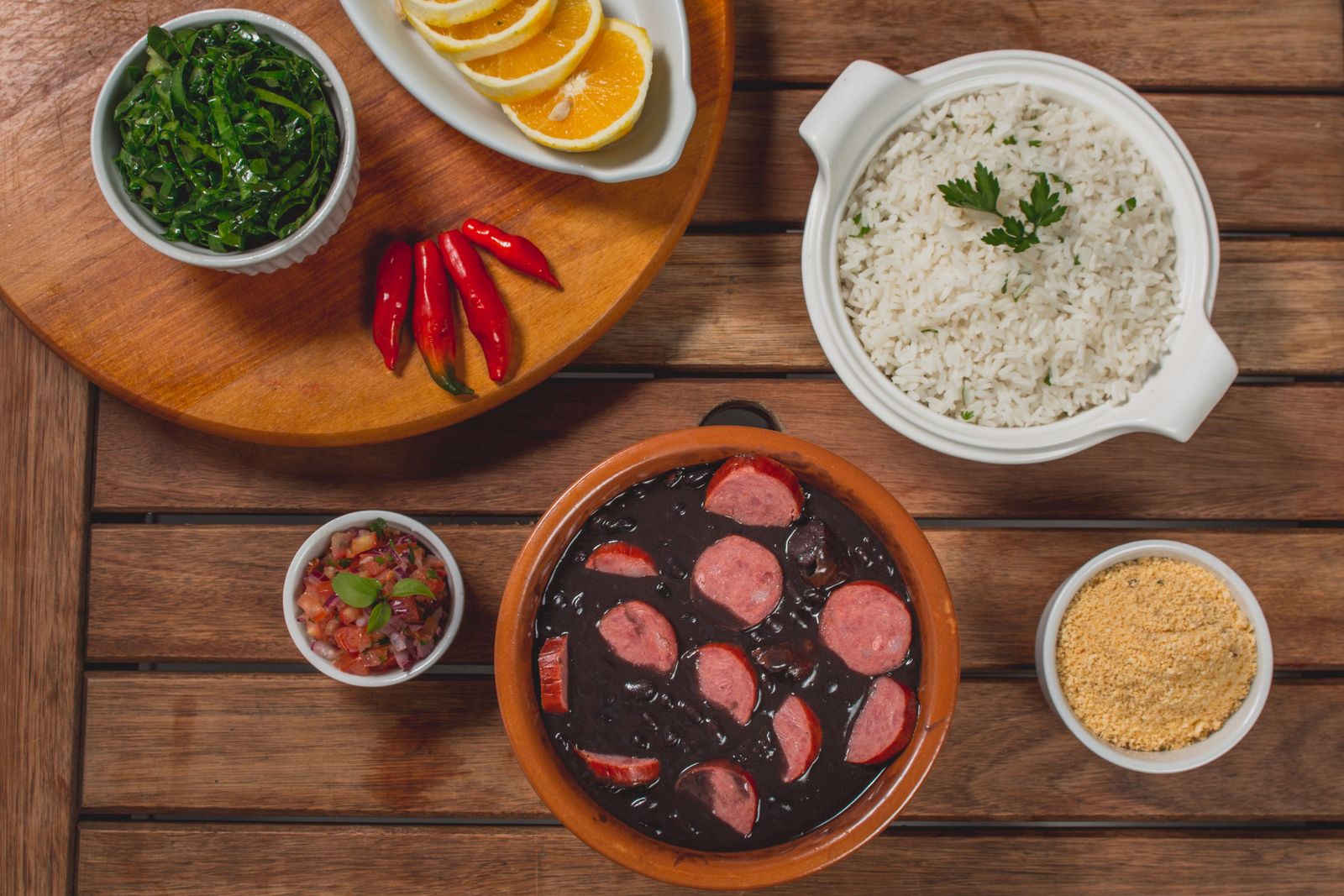
Feijoada is black beans slow-cooked with most of a pig, served with rice, collard greens, orange slices, farofa and a caipirinha you will regret. It's a Saturday-lunch institution — the afternoon disappears afterwards and it's meant to, so don't schedule anything but a beach nap. Two rules: a portion is for two people at almost every place that serves it, so order accordingly and ask if you're unsure, and eat it at midday rather than at night.
Bar do Mineiro in Santa Teresa is the famous one, tiled walls and black-and-white photographs, and it serves feijoada every day of the week, which purists call heresy and groups call convenient. Casa da Feijoada in Ipanema does the full formal version with all the cuts explained and every side on the table — more expensive, more of a production, better if it's someone's first time. And Aconchego Carioca in Praça da Bandeira is where to go if you'd rather have the idea than the whole pot: their bolinho de feijoada, a crisp ball of the stew with collard greens inside, is the single best invention in modern Rio bar food and costs a few reais.
Lunch, weighed
Per-kilo restaurants are the best-value meal in Brazil, and nobody tells you.
The por quilo or self-service place is the thing to understand if you want to eat well for a week without thinking about it. You take a plate, you serve yourself from a long buffet of hot food, salad, grilled meat and beans, and they weigh it at the end: typically R$70–100 a kilo, and a big plate is around 400–500g, so lunch lands at R$35–50 a head and there's always something for whoever in the group doesn't eat meat. Every neighbourhood has three. The one nearest your apartment will be fine — look for the one full of office workers at 12:30 and copy them.
The other daytime move is a juice bar. Rio's are extraordinary and completely ordinary at the same time: forty fruits on a board, a blender, and R$12–18 for something the size of your forearm. Bibi Sucos and Polis Sucos are the chains everyone actually uses. Order an açaí na tigela — the frozen purple bowl with banana and granola, which is a Rio invention and bears no resemblance to the sad version sold abroad — and understand that the R$25 you just spent is lunch.
The beach menu
Everything arrives at your chair, and none of it costs anything.
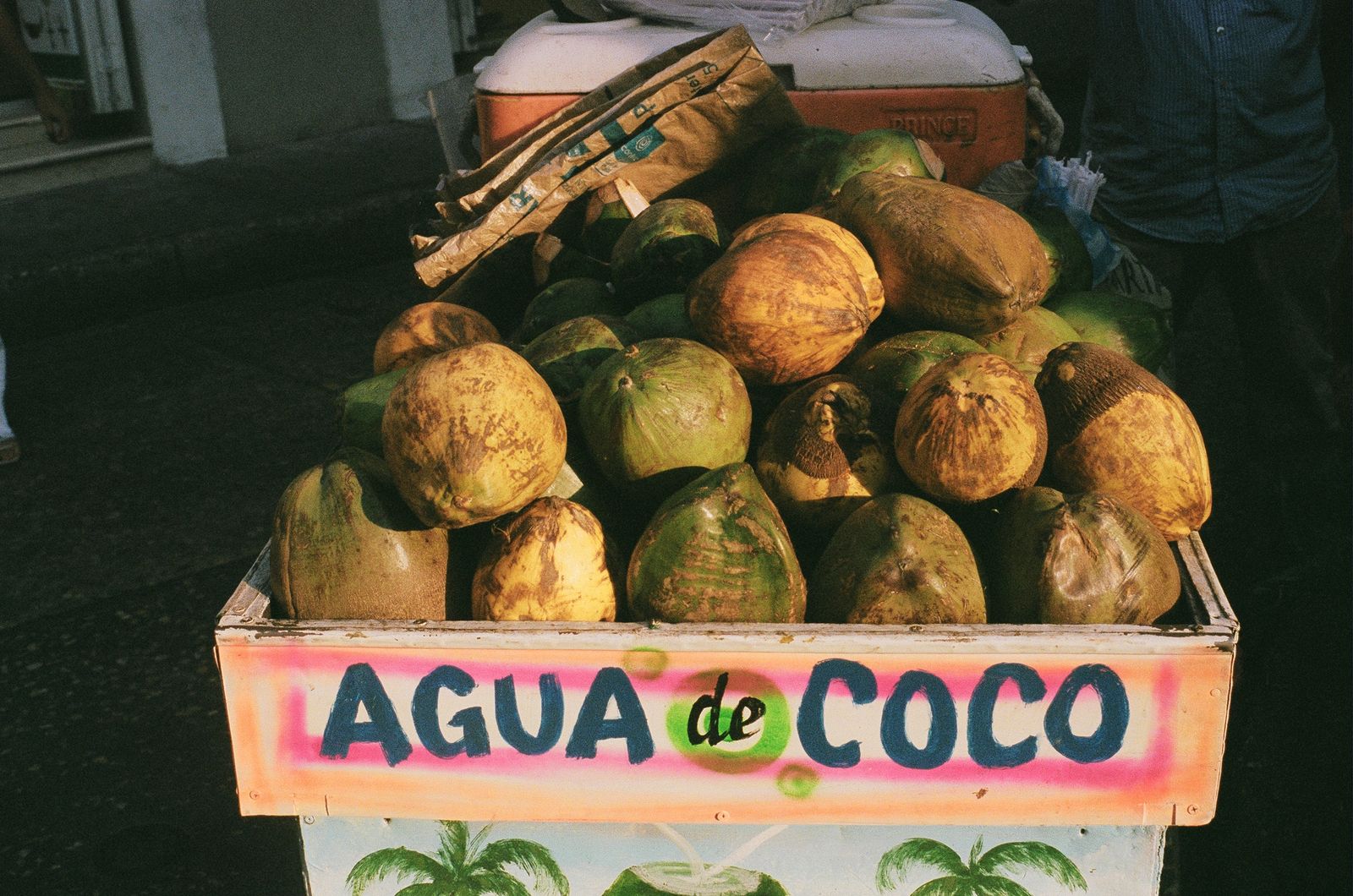
You do not need to leave the sand to eat, and half the fun of a Rio beach day is the parade of things that come to you. Mate — iced, sweet, sold from a metal tank on a strap — and biscoito Globo, the pale styrofoam-textured cassava rings sold in a plastic bag, are a pairing that makes no sense until you're two hours into the heat and then makes total sense; they're a couple of reais each and they're the taste people miss when they leave. Queijo coalho is squeaky cheese grilled on a stick over a little charcoal box, with oregano if you nod. Água de coco comes out of an actual coconut for around R$8–10. Globo, mate, a coconut and a beer will run the four of you about R$60 across an afternoon, which is the cheapest good day out in any big city we know.
The one dinner worth the splurge — and what it actually costs
Rio has nine Michelin stars. Here are the numbers, honestly.
If the trip has room for exactly one big dinner, the 2026 Michelin list gives you real options and real prices, so let's put them on the table rather than gesture at them. Oro in Leblon holds two stars and serves tasting menus at R$980 and R$1,100, with pairings at R$470 and R$650 on top. Lasai in Botafogo also holds two, seats ten people a night, and runs to R$1,380 plus R$638 for the wine. Oteque, a street away, is one star and eight seafood-led courses for R$1,100. Cipriani at the Copacabana Palace and the newly starred Madame Olympe round out the list.
Those are real numbers for six people. R$1,100 a head is a month of someone's rent, and if that's the trip you've decided on, do it on the last night and let the rest of the week be the R$40 counter. Our honest position: Rio is the wrong city to spend a thousand reais proving you can. The best meal we've had here cost R$55 and involved a plastic chair. Put the money into the boat day instead — it's the thing you'll be describing in five years.
Where we would book
Almost nothing here needs booking, which is the point. The botecos don't take reservations and wouldn't know what to do with one — turn up early or wait with a beer, that's the system. Bar Urca needs no booking if you're eating on the wall. Casa da Feijoada and Aconchego Carioca take Saturday bookings and you should use them, because Saturday feijoada fills. The starred restaurants book out weeks ahead on their own sites — go direct, since the concierge markup is real and the tables are the same. For the per-kilo places and the juice bars there is nothing to book, nothing to research and nobody worth paying to find them for you: walk out of the apartment and turn left. And if a tout on the beach offers you a "typical Brazilian dinner show", that's a bus to a buffet — the roda de samba at Pedra do Sal on Monday is free and real.
Related guides
- Your Rio de Janeiro Travel Guide — where to stay, what transit costs, and when to go.
- Things to Do in Rio de Janeiro — beaches, peaks, boats, and the Maracanã.
- Rio de Janeiro Culture Guide — samba's birthplace, Lapa, and Carnival all year.
- Rio de Janeiro Group Trip Guide — the same tables, booked for eight or ten.
- Lisbon Food Guide — the other Portuguese-speaking city built on salt cod and cold beer.