
You can do Rio as a beach city and have a great week. You can also do the other thing — the one where you find out that the music the whole country is built on was invented in a specific eight square blocks by specific people whose names are still on the doors, and that Carnival is not a festival but a year-round institution with rehearsals you can walk into on a Wednesday. This is the guide for the second version. Most of it is free and most of it happens after 9pm.
Samba has an address, and it's a rock in the old port
Monday night at Pedra do Sal, where the music actually started.
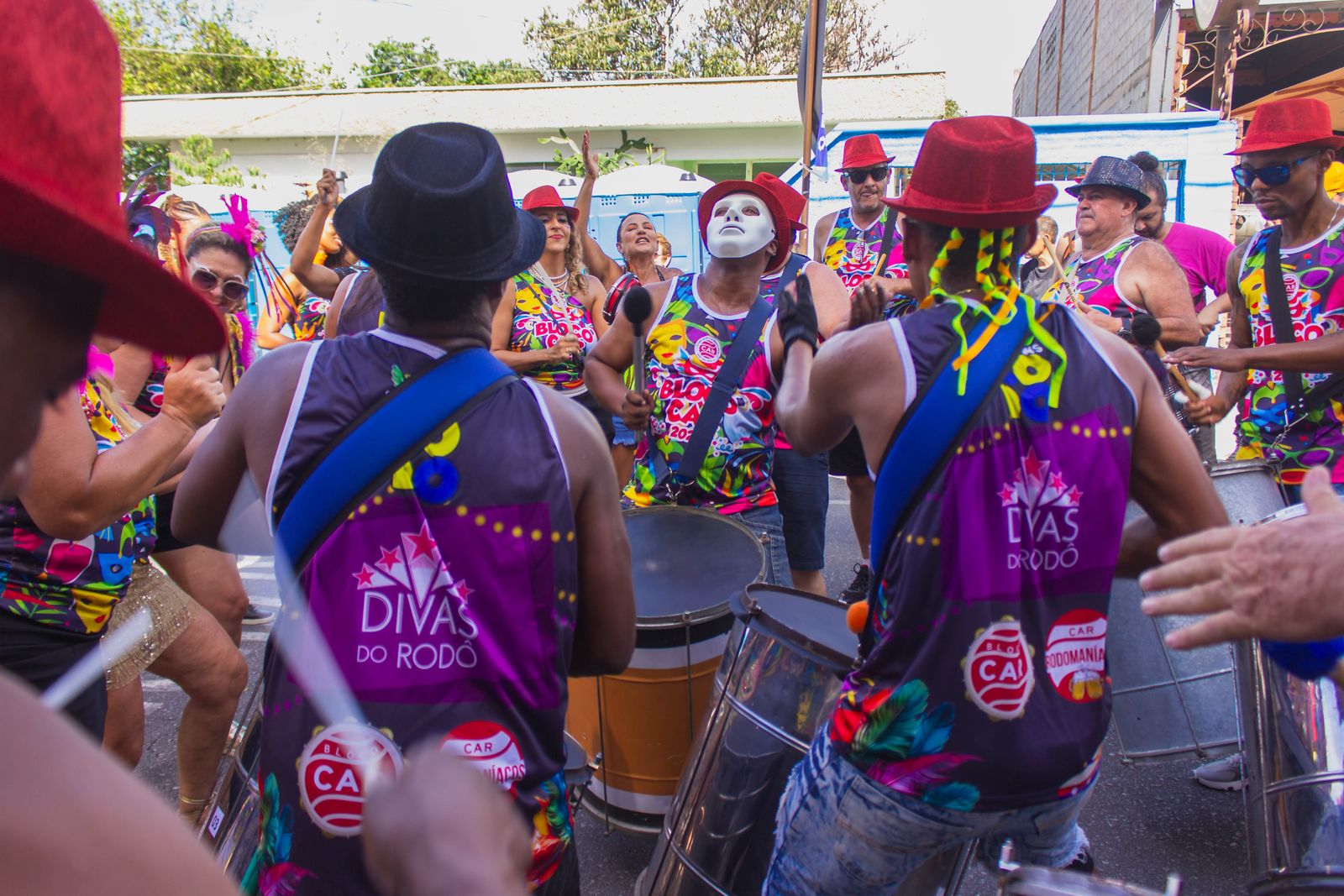
In the docks district north of the centre is a stone outcrop called Pedra do Sal — salt rock, named for the ships it was unloaded from. This is the heart of what Rio calls Pequena África, Little Africa: the quarter where Bahian families settled after abolition, where Tia Ciata held the house parties in which samba was assembled out of everything that met there, and where the first recorded samba was written down in 1916. On Monday from 7pm and Friday from 6pm there's a roda de samba on the steps: musicians in a circle at street level, a few hundred people standing with plastic cups, no stage, no ticket and no bouncer. It's free, it's cash-only for the beer, and it's the best night out in the city.
Two streets away is the Cais do Valongo, the stone wharf where somewhere around 900,000 enslaved Africans were landed — the largest single point of arrival in the history of the Atlantic trade, buried under the city for a century and excavated in 2011. It's a UNESCO World Heritage site now and it's a quiet, unadorned square you can stand in for ten minutes. Go there in daylight before you come back for the music at night; the two are the same story and the order matters.
Samba wasn't discovered by Rio. It was made by people the city was actively trying not to hear.— On Pequena África
Lapa, and how the couvert works
Three good rooms, one arch, and the charge nobody warns you about.
Lapa is the nightlife district under the white aqueduct arches, and on a Friday it's ten thousand people in the street with caipirinha carts between them. It's brilliant and it's a lot; go in a group, keep the phone away, and take a car both directions. Inside, three rooms are worth your night. Rio Scenarium on Rua do Lavradio is three floors of antiques with a different band on each, open Wednesday to Saturday, and it's touristy in the way that a genuinely great place becomes touristy. Carioca da Gema is smaller, hotter and better for the music — doors at 6pm, band on around 8:30 or 9. Trapiche Gamboa, back over towards the port, is where you go when you want the room to be mostly cariocas.
The thing to know before the bill: almost every samba house charges a couvert artístico, roughly R$15–30 a head, which pays the band and is added whether or not anyone mentioned it at the door. It is not a scam and arguing about it marks you instantly. Budget R$40–60 a head for a night in Lapa including the couvert and two drinks, and note that many places run a comanda card system — you're handed a card, everything goes on it, you pay on the way out, and losing it is expensive. One person holds the group's cards.
Carnival is a year-round institution
The parade is four nights. The rehearsals are every week of the year.
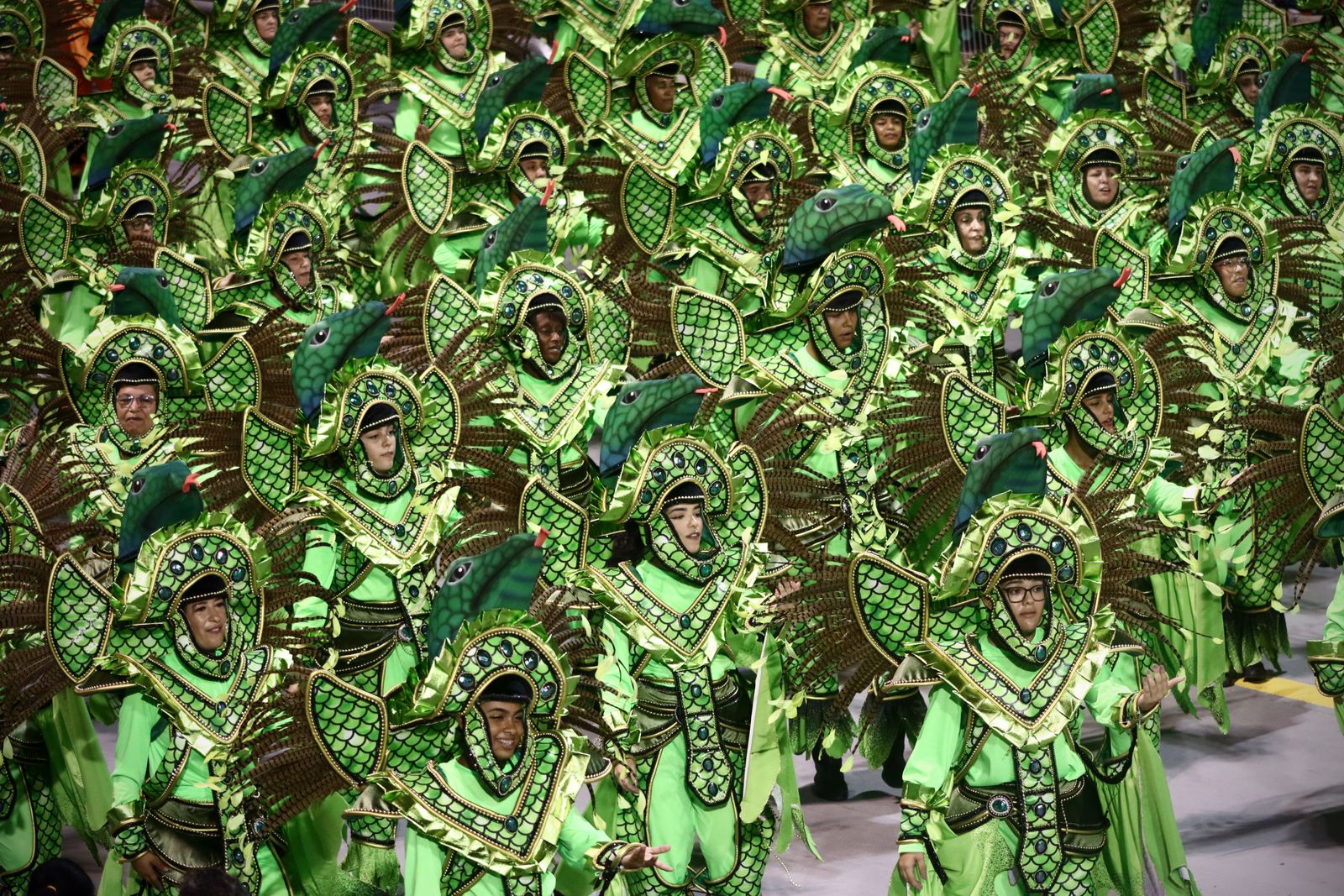
A samba school is a neighbourhood organisation with a building, a president, a workshop and thousands of members, and its quadra — the hall — runs open rehearsals most of the year. Mangueira, in green and pink, is the most famous and the most welcoming; Salgueiro and Portela are the other two to look at. Tickets to an ensaio run about R$40–60, the band is a hundred people deep, and nobody there is performing for tourists. If you're in Rio outside Carnival and you do one cultural thing, do this.
For Carnival 2027 itself: the Série Ouro schools parade at the Sambadrome on 5 and 6 February, the Grupo Especial — the big twelve — on the 7th, 8th and 9th, and the champions return on the 13th. Street blocos start the weekend of 30–31 January and run for a fortnight, and they're the free half of Carnival: Cordão da Bola Preta in the centre draws several hundred thousand, Monobloco takes Copacabana, and Banda de Ipanema and Simpatia é Quase Amor are the South Zone ones you can walk to. Sambadrome tickets go on sale in March through Ticketmaster Brasil and the sector matters enormously — the cheap grandstand sectors at the far end are the ones with the atmosphere, and Sector 9 is the one locals pick. Beds for that week get booked in September.
The museums worth your afternoon
Two on the waterfront, one in a bank, and a garden that is better than all of them.
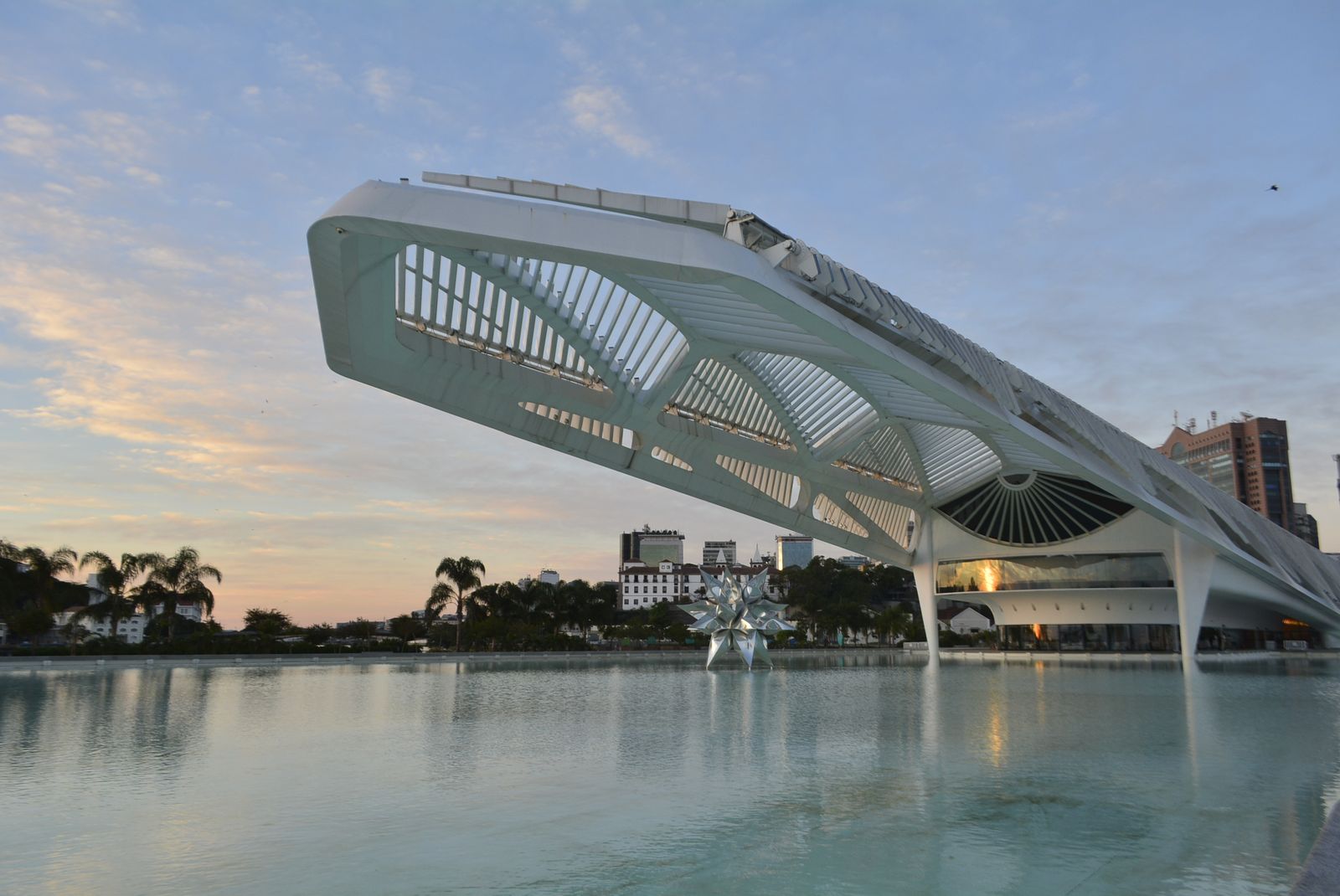
Rio's museums are not the reason you came and two of them are still excellent. The Museu do Amanhã — Calatrava's white spine on the water at Praça Mauá — is a science museum about climate and the future that a group will argue about afterwards, which is the point. Next door, the Museu de Arte do Rio (MAR) is the better one: two buildings joined by a wave-shaped roof, and it tells the city's own story, including the half that Rio spent a century not telling. The Instituto Moreira Salles in Gávea is a modernist house with Burle Marx gardens and the best photography collection in Brazil, and it's free.
Two more, quickly. The Real Gabinete Português de Leitura downtown is a neo-Manueline reading room that looks like a cathedral built out of books; it takes fifteen minutes and it's free. And the Sítio Roberto Burle Marx, out west, is the home and garden of the landscape architect who designed the Copacabana pavement you've been walking on all week — a UNESCO site, visits by appointment, and the most beautiful thing in this guide.
Where we would book
Pedra do Sal needs nothing — turn up, bring cash for the bar, stand where the crowd is. Lapa's rooms take walk-ins and only Rio Scenarium is worth pre-booking on a Saturday, direct through its own site. For the samba school ensaios, buy on the school's own page or at the door; the tour operators reselling them at four times the price add a van and nothing else. Sambadrome tickets for 2027 come from Ticketmaster Brasil when they go on sale in March — pick your sector before you're in the queue, because the good cheap ones go first. Sítio Burle Marx requires an appointment through its own site. And the museums are cheap or free and never sell out, so leave them for the afternoon it rains — which, between December and March, is most afternoons at five.
Related guides
- Your Rio de Janeiro Travel Guide — where to stay, what transit costs, and when to go.
- Rio de Janeiro Food Guide — botecos, feijoada, and lunch by the kilo.
- Things to Do in Rio de Janeiro — beaches, peaks, boats, and the Maracanã.
- Rio de Janeiro Group Trip Guide — Lapa, the ensaio, and the beach tab, for ten.
- Lisbon Culture Guide — the other Portuguese city with a national music of longing.