
Rio is not a city you conquer in four days, and the people who try come home with a phone full of the same three photographs and no idea what the place is actually like. The move is to pick one neighbourhood in the South Zone, get a rhythm, and let the beach set the pace of everything else. Five days is a real trip. Seven and you get a boat day and an island. Here's what it costs, what needs booking, and what to leave loose.
Getting in, and getting around
Two airports, one Metro line that matters, and buses that stopped taking cash.

Rio has two airports and they are not interchangeable. Galeão (GIG) is the international one, about 40 minutes north of the beaches; Santos Dumont (SDU) is the domestic one, sitting downtown on the bay, and landing there is one of the great approaches in aviation. From either, the honest answer for a group with bags is a car: Uber and 99 both work everywhere here, and a ride from Galeão to Ipanema runs roughly R$110–150 depending on traffic. Split across four of you that's about R$30 each, which is less than one person's airport-express ticket in most European capitals.
In town, the Metro is the good surprise — clean, air-conditioned, and running the length of the South Zone from Ipanema through Copacabana and Botafogo into the centre. A single is R$7.90, and you can tap a contactless card straight on the turnstile, so there's nothing to buy. The buses are the trap: since 30 May they no longer take cash at all, and you need either a Jaé card or the QR code in the Jaé app. If someone in the group sets that up, the integrated fare across bus, VLT tram and BRT is R$4.70, which is the cheapest way to move in the city. If nobody does, the bus simply isn't available to you — plan on the Metro and cars instead, and don't find this out at a bus door in the rain.
The one piece of transit that's worth riding for its own sake is the bonde, the yellow Santa Teresa tram, which climbs from the centre over the old aqueduct arches into the hill neighbourhood. It's R$20, it runs roughly 8am to 6:30pm on weekdays and 9am to 5pm at weekends, and it's a genuinely useful way into Santa Teresa as well as the prettiest ten minutes in the city.
Two honest notes on how to ride. On the Metro, keep the phone in a front pocket and the bag in front of you, travel off-peak where you can, and use the women-and-children carriage if it suits you — it's marked in pink and it's real. And after about 10pm, when the trains thin out and the beachfront empties, take a car: four of you from Lapa back to Ipanema is around R$45, or roughly R$11 each. Nobody's being paranoid; that's just what locals do.
Everything in Rio is close, and nothing in Rio is quick. Plan around the second part and the first one is a gift.— On Rio traffic
Where to base yourselves
Ipanema to walk everywhere, Botafogo to eat, Santa Teresa if the group wants a house.
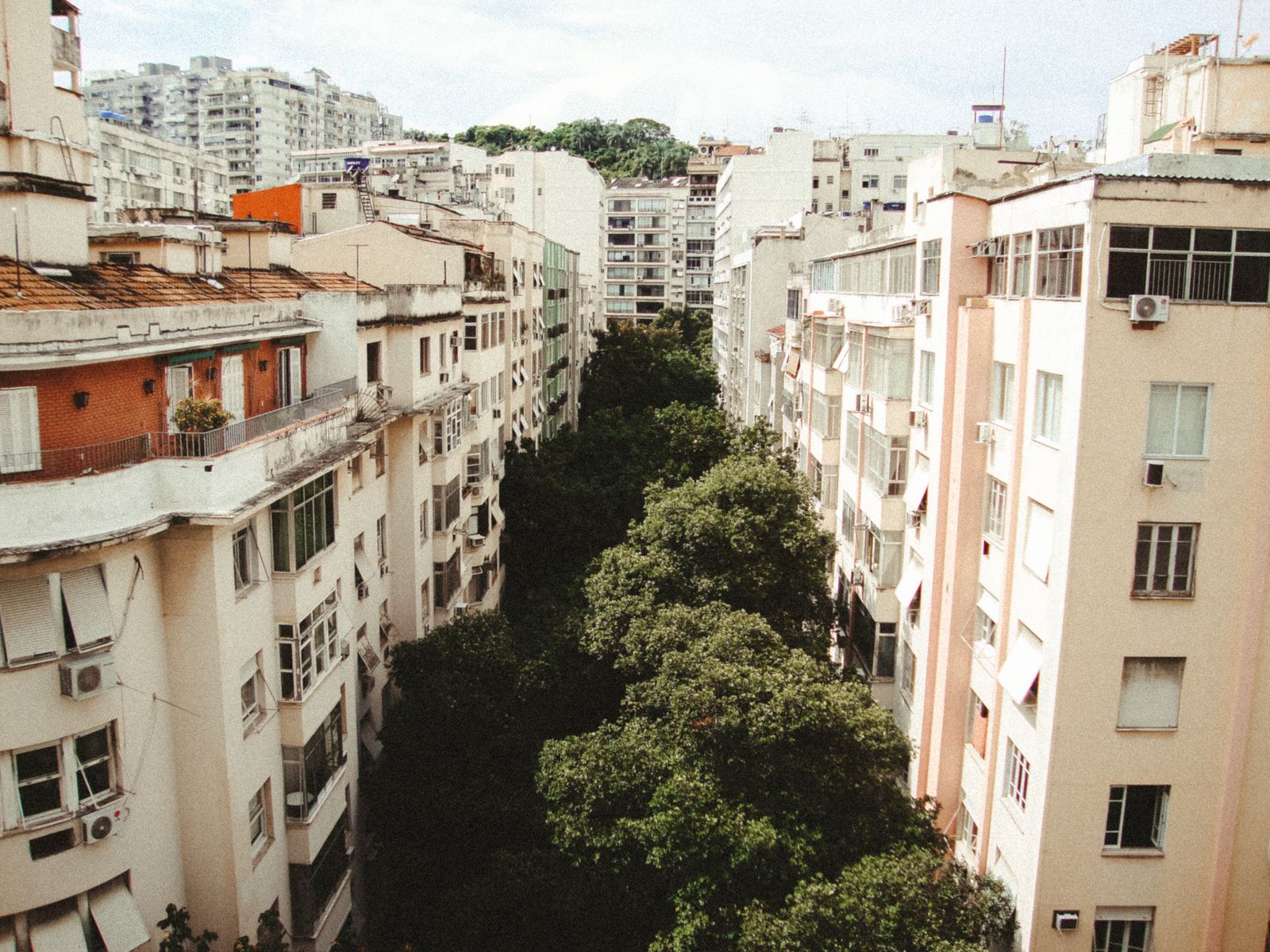
Ipanema is the safe centre of the board: flat, walkable, on the Metro, twenty minutes from most things and thirty seconds from the water. Leblon next door is quieter and slightly more expensive for the same beach. Copacabana gets sniffed at and shouldn't be — it's the cheapest place to sleep near the sand by a wide margin, the Metro runs under it, and the stretch between Posto 4 and Posto 6 is lovely. Botafogo is where the city's own twenty-somethings actually go out, with the best restaurant density in Rio and Sugarloaf at the end of the street; it's a short Metro hop from the beach rather than on it, and that trade is usually worth it. Santa Teresa, up the hill, is the one to pick if you want a house with a view and a pool rather than rooms — it's beautiful, it's steep, and you'll take a car every time you leave.
One apartment, eight people, and the number that decides it
Rio is an apartment city and the maths is friendly the moment you divide. A three-bedroom in Ipanema a block off the sand runs roughly R$1,200–1,500 a night in shoulder season; eight of you across four nights is about R$5,400, which is R$675 each for the week's beds — under R$170 a night per person, in Ipanema. Four hotel rooms will not come close. Do the two-tab trick: find the flat on Airbnb or Booking, then search the building name — many are managed by local agencies with their own sites and the same weeks 10–15% cheaper once the platform fee drops out. Check the photos against the street view, because "Ipanema" on a listing sometimes means the far side of the tunnel, and confirm whether the building has a porteiro (a doorman, 24 hours) — for a group coming home late, that's the amenity that matters, not the rooftop.
The beach is the living room, and it has rules
Postos are addresses, the chair is a rental, and the phone stays at home.
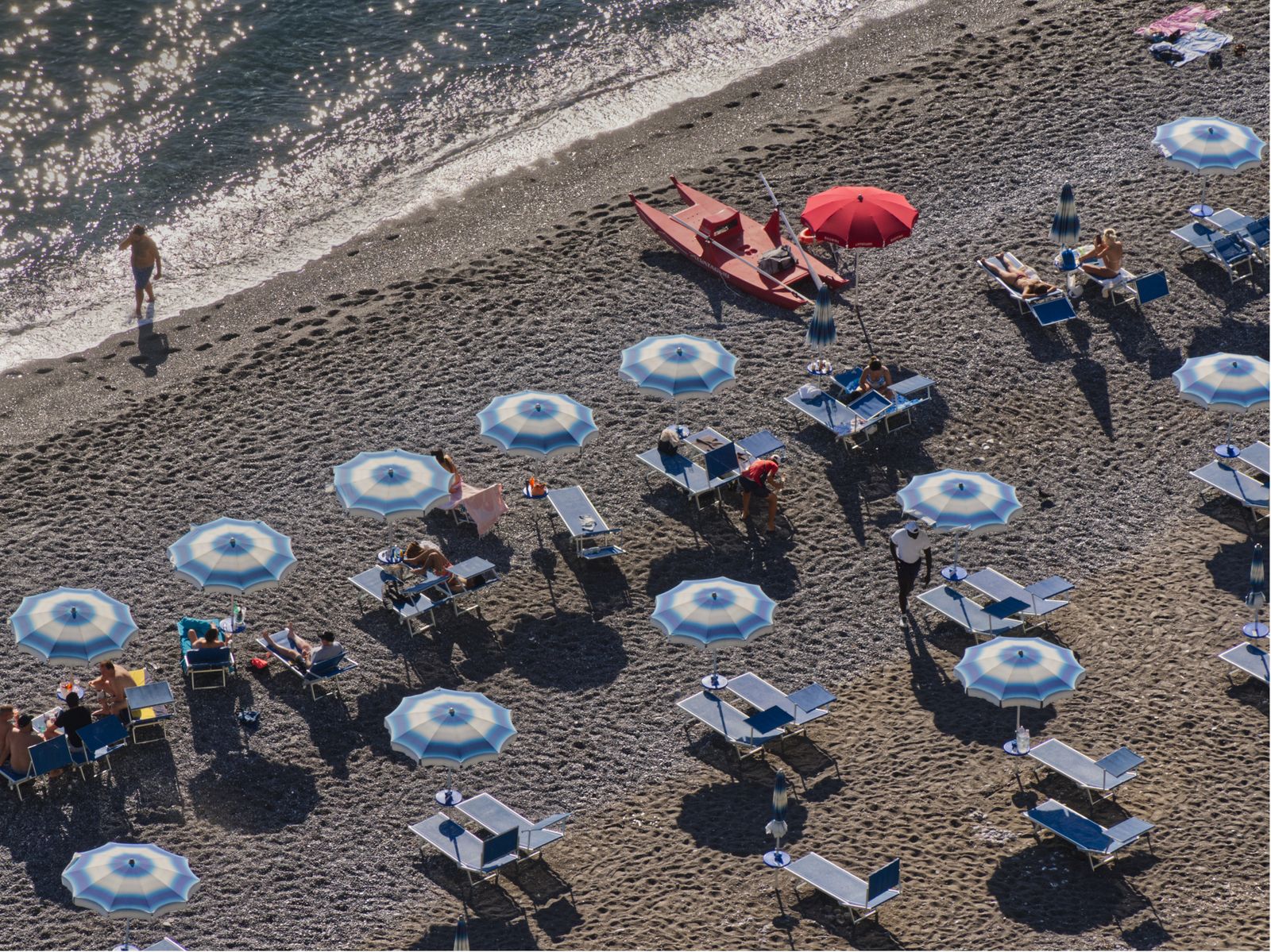
The beach here is not a day trip, it's the public square, and it comes with a grammar worth learning in the first hour. The sand is divided by numbered lifeguard postos, and cariocas use them as addresses — "Posto 9" is a place in the way a bar is a place, and it's where Ipanema's twenty- and thirty-somethings pile up. Posto 8 skews surf, Posto 10 and 11 in Leblon skew families, and Copacabana's Posto 6 is the calm end. You don't bring a towel and a cooler; you rent a chair and an umbrella from the barraca that owns that patch, and they'll bring you cold beer, água de coco, and grilled cheese on a stick all afternoon and total it up at the end.
Two practical things. Agree the price before you sit down. In high season a chair runs R$15–25 and an umbrella R$25–40, but there were umbrellas going for R$80 around Posto 2 in Copacabana last summer, and the difference between the honest price and the tourist price is a ten-second question. And take almost nothing with you. The classic Rio beach kit is a note folded into a flip-flop, sunscreen, and a canga to lie on. Bags get lifted while everyone's in the water — this is the single most common thing that happens to visitors here — so leave the phone in the apartment, or take turns sitting with the pile. You'll enjoy the afternoon more anyway.
The two big views, booked properly
R$134 for the train, R$205 for the cable car, and the free version of the same view.

Christ the Redeemer sits at the top of Corcovado inside a national park, and the way up is either the cog railway or an official van. The Corcovado train costs R$134 for anyone 12 or over, whatever your passport, and you buy it at tremdocorcovado.rio — you pick a departure and a return slot two hours later. Morning and late-afternoon departures sell out days ahead, so this is the one thing to book before you fly. The official Paineiras vans are about R$120 return and are the fallback when the train is gone. Go early: the statue is often in cloud by noon, and the cloud is not a rumour.
Sugarloaf — the bondinho — is R$205 for a general adult ticket as of July, R$160 if you were born and live in Brazil, R$102 half-price for 6-to-21s and over-60s, and R$85 on the Bilhete Carioca if you live in Rio State. Buy at bondinho.com.br. It's two cables in sequence, and if the budget only stretches to one of the two mountains, take this one at sunset — the view is of Rio itself rather than of the statue, and the light does the work.
And if R$339 a head for both is more than the trip has room for, say so out loud and go free instead: the Mirante Dona Marta gives you the classic postcard of the whole bay from a road you can take a car to, the Vista Chinesa in the Tijuca forest gives you the Lagoa and the beaches framed by trees, and the rock at Arpoador gives you the best sunset in the city for nothing at all. Nobody who has done all three will tell you they missed out.
Getting out of town
An island, a mountain town, and the wild beaches an hour west.

Three escapes, in ascending order of effort. The easy one is west along the coast: Prainha and Grumari are protected beaches an hour from Ipanema with forest coming down to the sand and no buildings at all, and a car split four ways makes it a cheap day. Petrópolis, 90 minutes up into the mountains, is where the Brazilian emperor summered — cool air, a palace you walk through in felt slippers, and buses that leave from the Novo Rio terminal all morning. And Ilha Grande is the two-day one worth building the week around: bus or transfer to Conceição de Jacareí, then a boat, and you arrive somewhere with no cars, no ATMs worth trusting, and beaches that take an hour of walking to reach. Búzios is the fourth option everyone mentions; it's genuinely pretty and it's two and a half hours each way, so treat it as an overnight or skip it.
How long, and a shape for the days
Five days is a trip. Seven and you get the island.
A shape that works: Day 1, land, drop bags, walk to the beach for whatever's left of the light and eat at a boteco within stumbling distance. Day 2, Corcovado on the early train you booked weeks ago, then Santa Teresa and the bonde down, then Lapa at night. Day 3, the beach properly — full day, Posto 9, nothing planned, sunset at Arpoador. Day 4, Botafogo and Urca: the Bar Urca seawall at lunch, Sugarloaf at sunset. Day 5, the water — schooner, surf lesson, or the pedal boats on the Lagoa — and a long dinner. Day 6 and 7, Ilha Grande, or the wild beaches west and one more day of doing nothing. Leave one evening entirely unplanned. In Rio that's the one that turns into a roda de samba nobody organised and everybody remembers.
When to go
April to June and August to October. February if you want the other Rio.
April–June and August–October are the sweet spots: warm, dry, sea still swimmable, and prices that bear no relation to high summer. December to March is the postcard and the punishment — 40°C afternoons, thunderstorms at five, and accommodation that doubles. Carnival 2027 falls early: the Série Ouro schools parade on 5 and 6 February, the Grupo Especial on the 7th, 8th and 9th, and the champions come back on the 13th, with street blocos starting the weekend of 30–31 January. If that's the trip, book beds in September, not December — prices go vertical and stay there. New Year's Eve on Copacabana is the other mass event: two million people in white on the sand, fireworks off barges, and no chance of a taxi for hours afterwards, so stay within walking distance of wherever you're sleeping.
Where we would book
Book the apartment direct where you can, with the two-tab trick above and the doorman question asked. Corcovado tickets come from tremdocorcovado.rio and Sugarloaf from bondinho.com.br — both official, both cheaper than any reseller, and both the only places where the timed slots are real. Don't buy a "skip the line" Christ package from a street desk in Copacabana; it's the same ticket with a markup and a van you'll wait in. For Ilha Grande, book the boat crossing the day before rather than as part of a package, and stay somewhere in Abraão on its own site. The Maracanã sells match tickets on its own channels and through the clubs; the tout outside the stadium is selling you a problem. And the best of Rio — the sand, the sunset at Arpoador, the Monday roda at Pedra do Sal, the walk around the Lagoa at dusk — costs nothing, which is exactly why we'd point you at it first.
Related guides
- Rio de Janeiro Food Guide — botecos, Saturday feijoada, and lunch sold by the kilo.
- Things to Do in Rio de Janeiro — the beach, the peaks, the boat, and the Maracanã.
- Rio de Janeiro Culture Guide — where samba was born, Lapa, and Carnival all year.
- Rio de Janeiro Group Trip Guide — the same city, planned for six or ten of you.
- Your Lisbon Travel Guide — the other Atlantic city that speaks Portuguese and eats late.