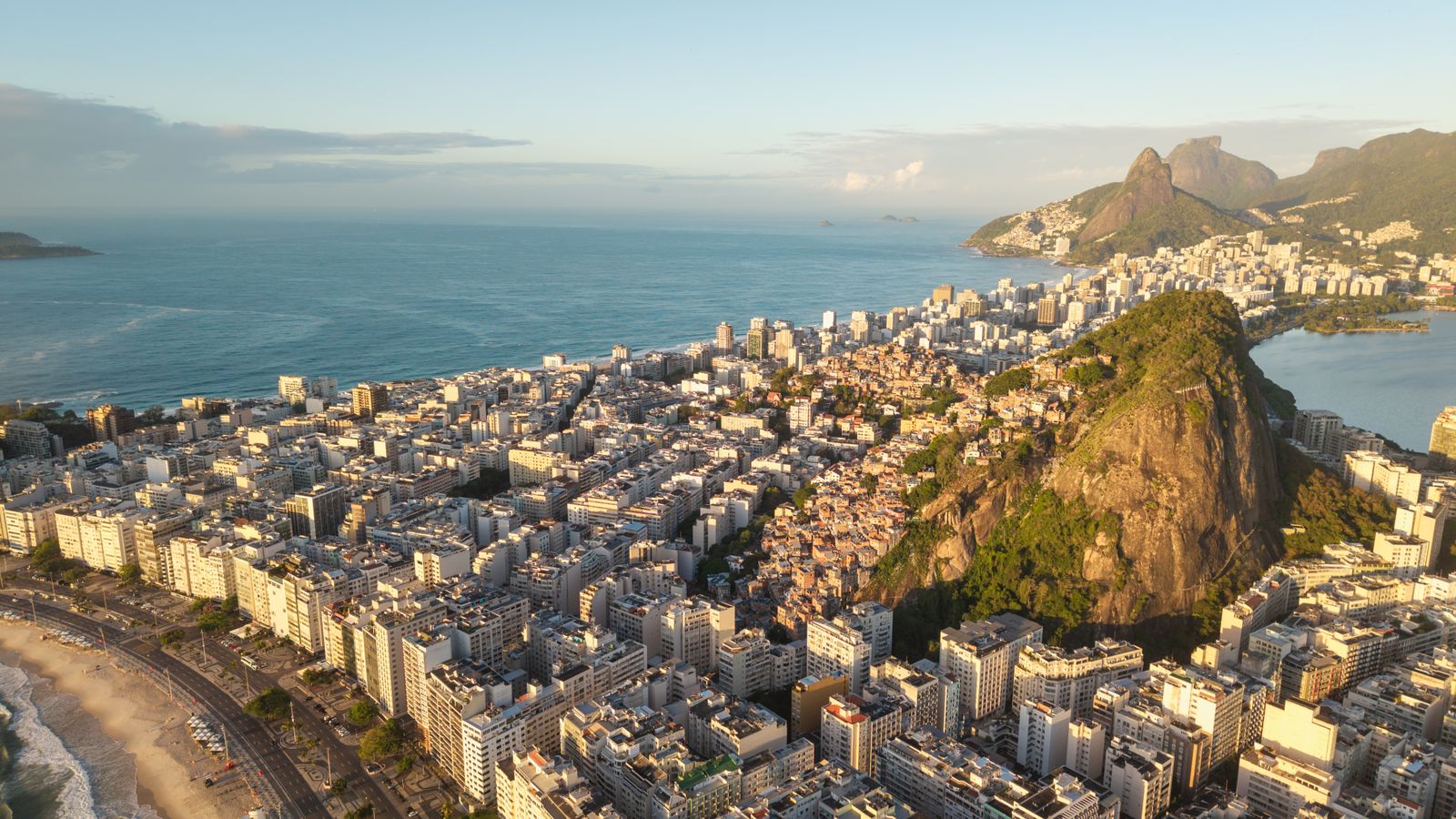

Rio is one of the few great cities that gets cheaper per person the more of you there are. The boat is priced per boat. The house is priced per house. The car from Lapa at 2am is priced per car. Almost nothing here charges you for being a group, and several things quietly reward it. This is the version of Rio planned for six or ten of you — where to sleep, how to eat, what to book, and the one money problem nobody warns you about.
Why Rio works for a group
Shared by default: the sand, the table, the boat, the bill.

The whole social architecture of this city assumes you arrived with people. Nobody eats a main course alone at a boteco — the food comes as plates for the table. Nobody rents one beach chair; the barraca sets up a row and runs one tab. The beach itself is free and enormous, which solves the eternal group problem of finding something everyone will actually agree to do. And the two things that would strain a group budget elsewhere — getting around at night and getting on the water — are both priced per vehicle here, so they get cheaper every time someone else says yes.
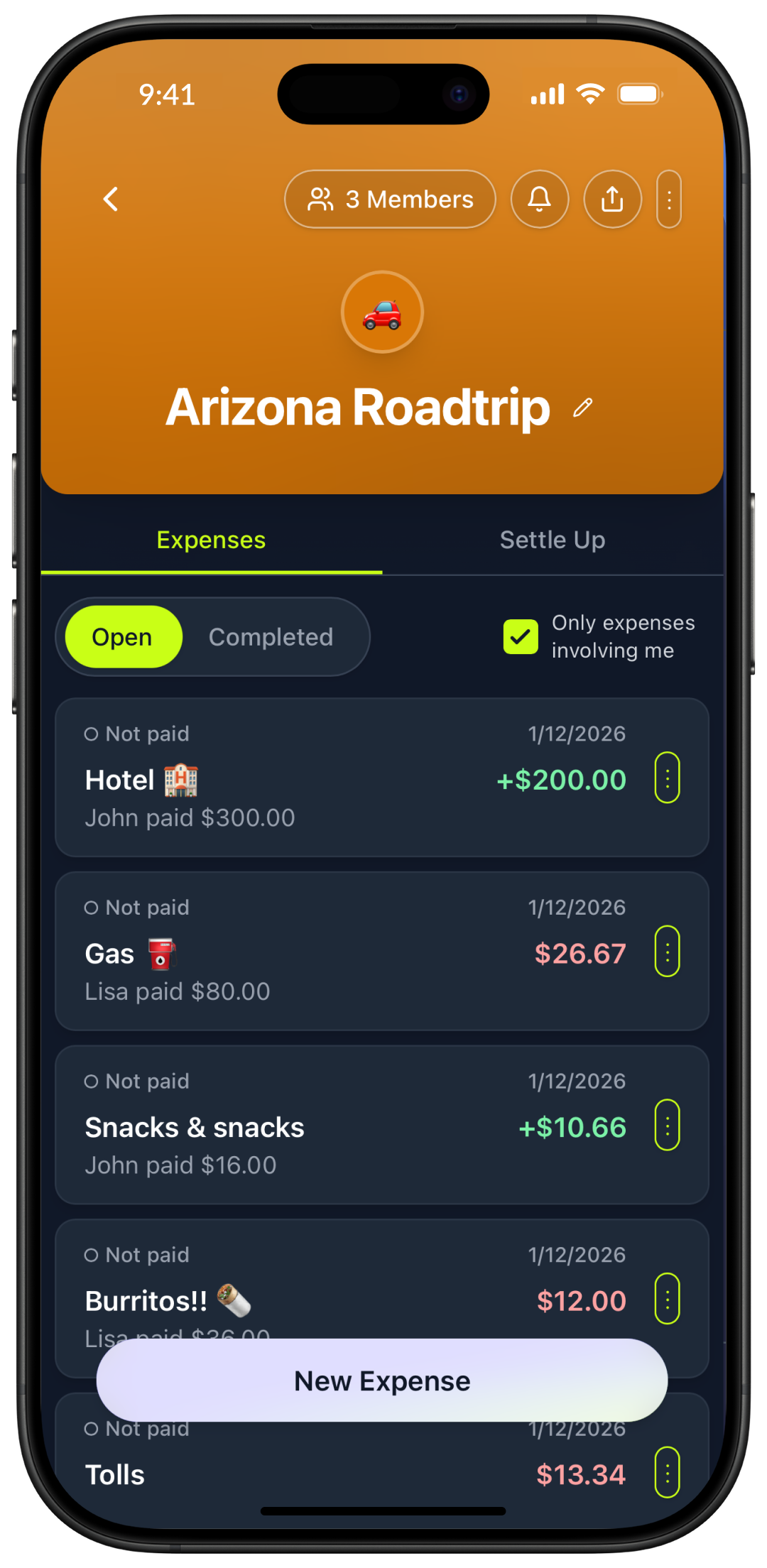
The one genuine friction is money, and it's worth knowing before you land. Brazil runs on Pix, an instant bank transfer that everyone uses for everything, including splitting a table between six people in about four seconds. You almost certainly can't use it: a Pix key is tied to a CPF, the Brazilian tax number, and visitors don't have one. So the local solution to your exact problem is unavailable to you, and what happens instead is that one person's card carries the group all week. Plan for that rather than discovering it.
Where a group sleeps
One apartment beats four rooms, and the doorman matters more than the view.
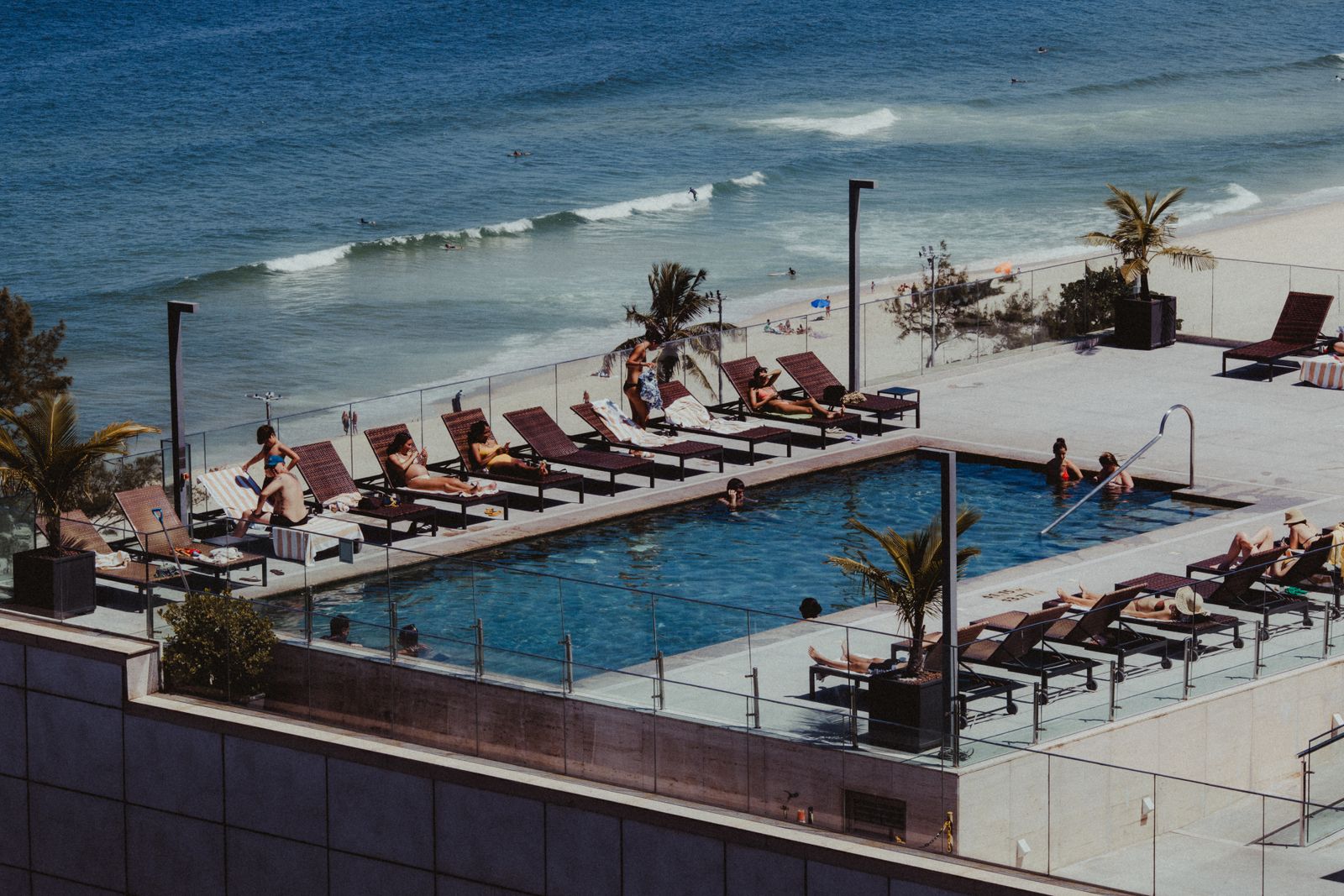
At four to six: a three-bedroom apartment in Ipanema or Copacabana, a block or two off the sand, runs roughly R$1,200–1,500 a night in shoulder season. Four nights split six ways is about R$900 each for the whole stay — and you get a kitchen, which is where half of a good trip happens anyway. Copacabana is meaningfully cheaper than Ipanema for the same distance to the water; take the saving.
At eight or more: stop looking at flats and look at Santa Teresa houses. The hill above the centre is full of old places with pools, terraces and six or seven bedrooms, and a house at R$2,500–3,500 a night split ten ways lands near R$300 a head a night with a pool in it. The trade is real: you're 20 minutes and a car ride from the beach, and the streets are steep. For a group whose trip is about being together rather than about being on the sand by 9am, it's the better week — and the bonde, the yellow tram, is R$20 and runs from downtown up the arches.
Whatever you book, ask two questions: is there a porteiro (a 24-hour doorman — for ten people coming home at 3am, this is the amenity that counts), and is the listing's neighbourhood the actual neighbourhood. Do the two-tab trick as well: find it on the platform, then search the building name for the managing agency's own site, which is usually 10–15% cheaper.
Eating as a group
Three tiers, and only one of them needs a reservation.

Tier one, no booking, any size: the botecos. Adega Pérola in Copacabana, Pavão Azul around the corner, Bracarense in Leblon — you turn up, you push tables together or you stand, and plates arrive for everyone. R$50–70 a head with beer. Ten of you will not be turned away; you'll just wait with a drink.
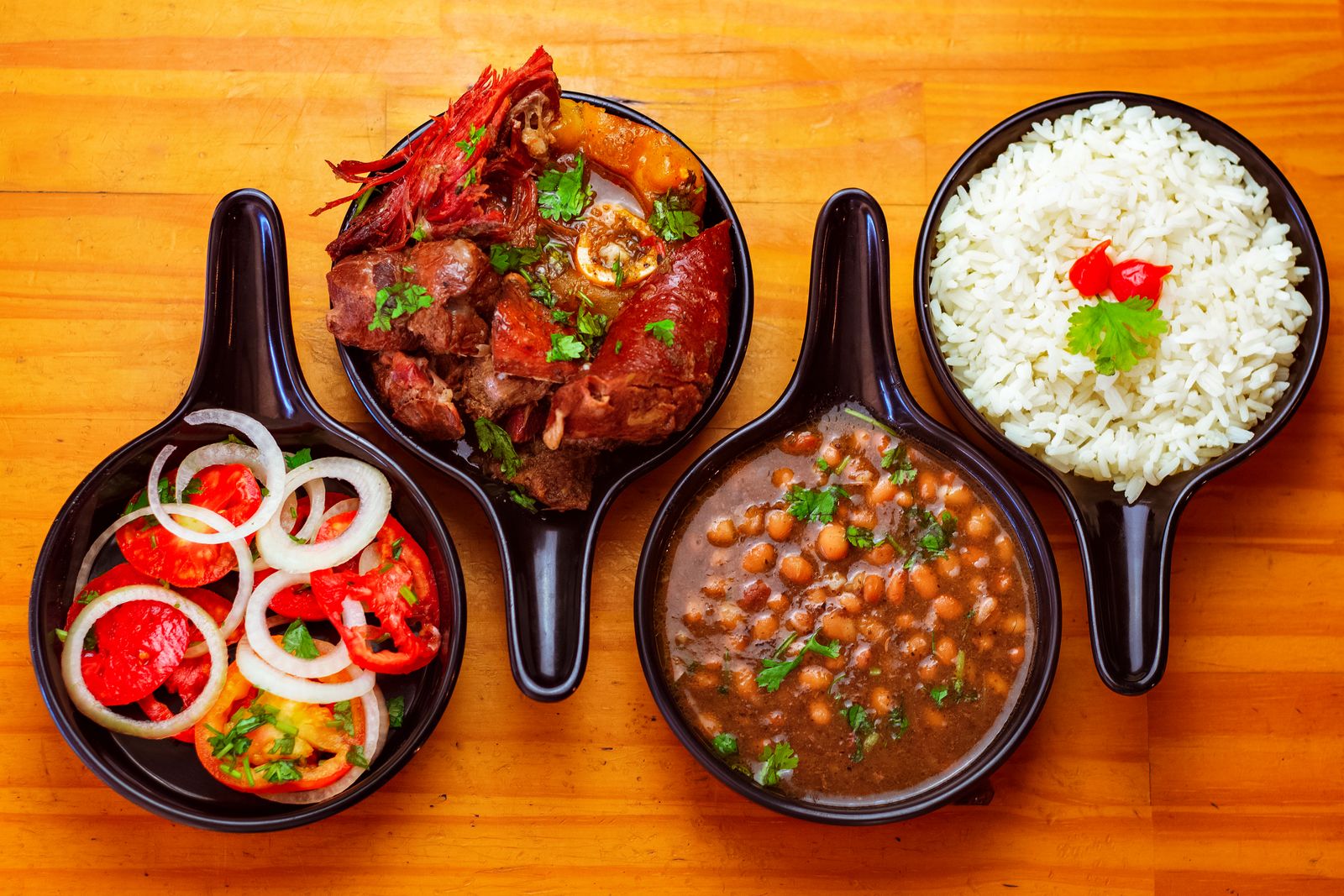
Tier two, book on Saturday: feijoada. Bar do Mineiro in Santa Teresa serves it every day and is the group favourite; Casa da Feijoada in Ipanema does the full explained version. Remember one portion feeds two, so ten people order five and add sides — getting this wrong is the classic and expensive mistake.
Tier three, the churrasco: a rodízio is a fixed price per person, usually R$130–200, and waiters keep bringing skewers until you turn the card to red. It's the one meal where a big group is the intended audience and where the bill divides itself, because everyone paid the same number by definition. Do it once, mid-trip, and book it — the good ones fill on Friday and Saturday.
Bar Urca solves the night nobody can agree on
Eight people, eight opinions, and it's 6pm. Go to Bar Urca: everyone queues at the counter for whatever they want — fried sardines, salt cod balls, cold beer — and then you all sit on the seawall across the road with your feet over Guanabara Bay while Sugarloaf goes gold behind you. About R$40–60 a head, no reservation, no table big enough to argue about, and it works whether there are four of you or twelve. Get there before the wall fills.
The things that get better with more people
Per boat, per van, per car. Learn to spot the pricing.

The boat day is the headline. A schooner or private launch out to the Cagarras islands is quoted for the boat: roughly R$1,500–2,200 for the day with a skipper. Ten of you at R$1,800 is R$180 each. Four of you is R$450 each. It is the single clearest example of why you brought everyone, and it's the day people will still be describing years later.
The same logic runs through the week. A car west to Prainha and Grumari with the driver waiting is R$350–450 for the day — R$70–90 each across five, versus a bus route that doesn't really exist. A guide for the Dois Irmãos hike quotes per group at the top end and per head at the bottom, so ask which. Even Uber becomes trivial: Ipanema to Lapa is around R$45, which is R$11 each across four and the reason you should never walk home along the beach at night.
Three of you pay R$600 each for that boat. Ten of you pay R$180. Nothing about the boat changes.— On why you invite everyone
Moving ten people
Two cars beat one bus, and the Metro is fine until it isn't.
The Metro is clean, cheap at R$7.90, air-conditioned and runs the spine of the South Zone — for daytime moves between Ipanema, Copacabana, Botafogo and the centre it's the obvious answer, and you tap a contactless card straight through. Ride it the way cariocas do: off-peak where you can, phones in front pockets and not in your hand, bags in front of you, nothing in a back pocket. There's a women-and-children carriage marked in pink if anyone in the group wants it. Municipal buses stopped taking cash on 30 May — you need a Jaé card or the app's QR code, so unless one of you sets that up, treat buses as unavailable.
At four to six: one car covers you, and Uber and 99 are everywhere. At eight or more: order two cars at the same time and agree a meeting point at the other end, because splitting a group of ten across four rides that arrive over fifteen minutes is how you lose an evening. After about 10pm — coming out of Lapa, leaving the Maracanã, walking back from dinner in Botafogo — take the car, every time. Split four ways it's a few reais each, and the beachfront after dark is the one place where the city's petty crime actually finds visitors.
Three group days, honestly paced
One beach day, one city day, one on the water. Don't stack them.
Day one — the sand, and nothing else. Get to Posto 9 by 11, agree the barraca price before anyone sits, and let it run. One person holds the tab. Lunch is whatever walks past. Sunset at Arpoador at about 5:30 in winter, and then a boteco within walking distance of the apartment — nobody wants a car after eight hours of sun. Cost, honestly: chairs, umbrellas, drinks and food across ten people lands near R$800, which is R$80 each for the entire day.
Day two — up, then down. The early Corcovado train you booked weeks ago (R$134 a head, and the only thing that truly needs booking), then a car to Santa Teresa for lunch at Bar do Mineiro, then the bonde down and an hour walking Lapa in daylight before it fills. Back to the flat, shower, and out again for the samba — Monday means Pedra do Sal and costs nothing; any other night means Lapa and about R$40–60 a head with the couvert.
Day three — the water. The boat, from about 10am, with a cooler you filled at the supermarket rather than at the marina. Back by five, sunburnt and quiet. Then the churrasco, booked, because after a day on a boat nobody has the energy to negotiate about dinner. If the group has a fourth day, make it the wild beaches west or Ilha Grande, and make it the last one — Rio is very hard to leave from a boat.
Where we would book
The apartment or the Santa Teresa house direct, with the doorman question asked and the two-tab check done. Corcovado at tremdocorcovado.rio and Sugarloaf at bondinho.com.br, both official, both weeks ahead. The boat through your host rather than the marina desk — get the price for the boat in writing, with fuel and skipper confirmed, and ask what happens if the weather turns. The churrasco and the Saturday feijoada by phone or Instagram DM, which is how Rio actually books. Everything else — the botecos, the sand, Arpoador, Pedra do Sal on a Monday — takes no booking and no deposit, and that's most of the week. And if anyone offers your group a packaged "favela tour" in a jeep, skip it; a community-run samba night with someone who lives there is the honest version of that curiosity.
Related guides
- Your Rio de Janeiro Travel Guide — where to stay, what transit costs, and when to go.
- Rio de Janeiro Food Guide — botecos, feijoada, and lunch by the kilo.
- Things to Do in Rio de Janeiro — beaches, peaks, boats, and the Maracanã.
- Rio de Janeiro Culture Guide — samba's birthplace, Lapa, and Carnival all year.
- Mexico City Group Trip Guide — the other Latin American city where the boat, the table and the bill are all shared.