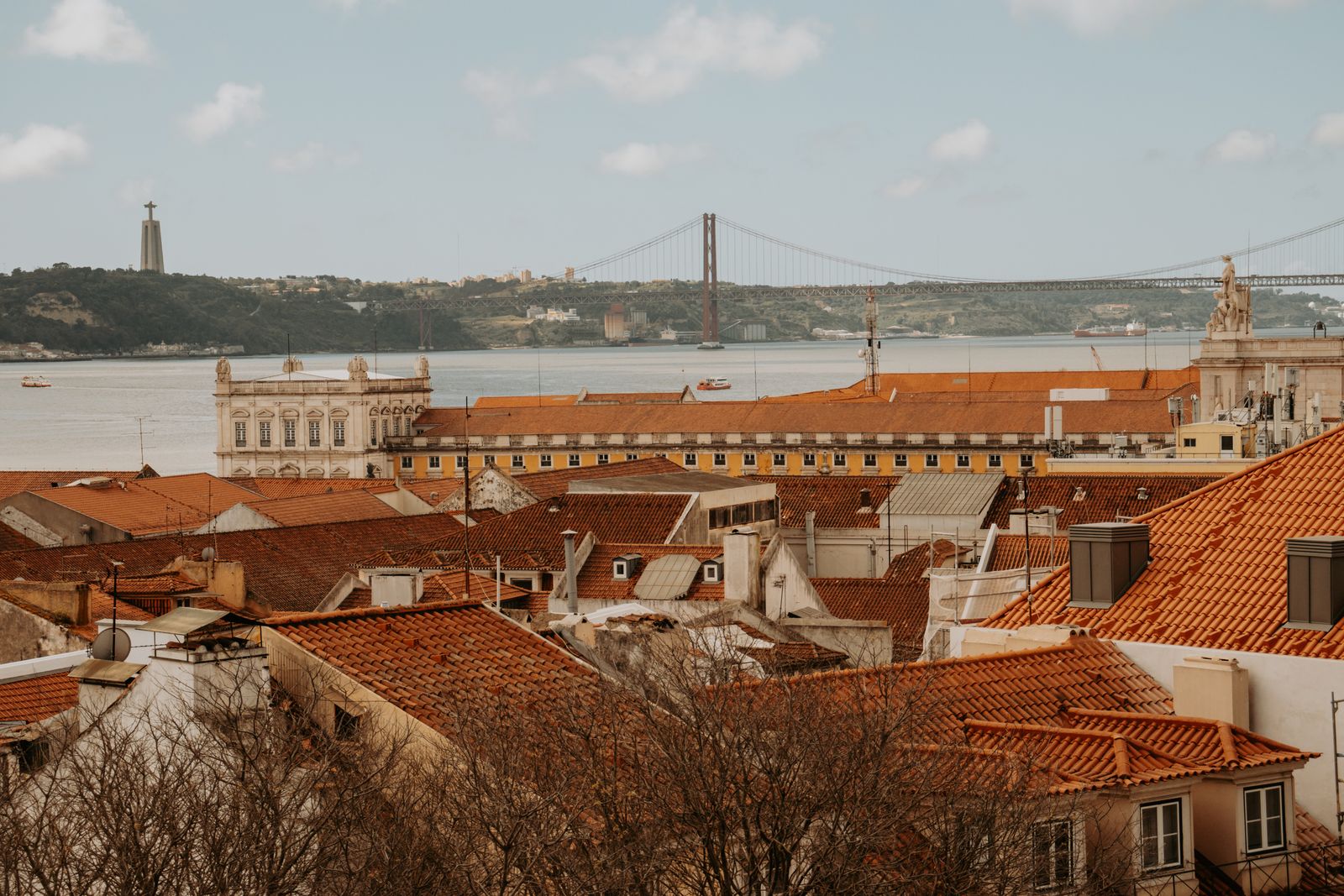
Lisbon's best things are mostly outside, mostly free, and mostly at the top of something. The honest plan is to pick one anchor a day — a hill, a monument, a boat, a palace — and let the walking between fill the rest. Two things need booking weeks ahead (Sintra, and any seafood night worth having). Everything below is in rough order of how much we'd fight to keep it in a four-day trip.
The miradouros, in the right order
Climb once, then let gravity plan your afternoon.
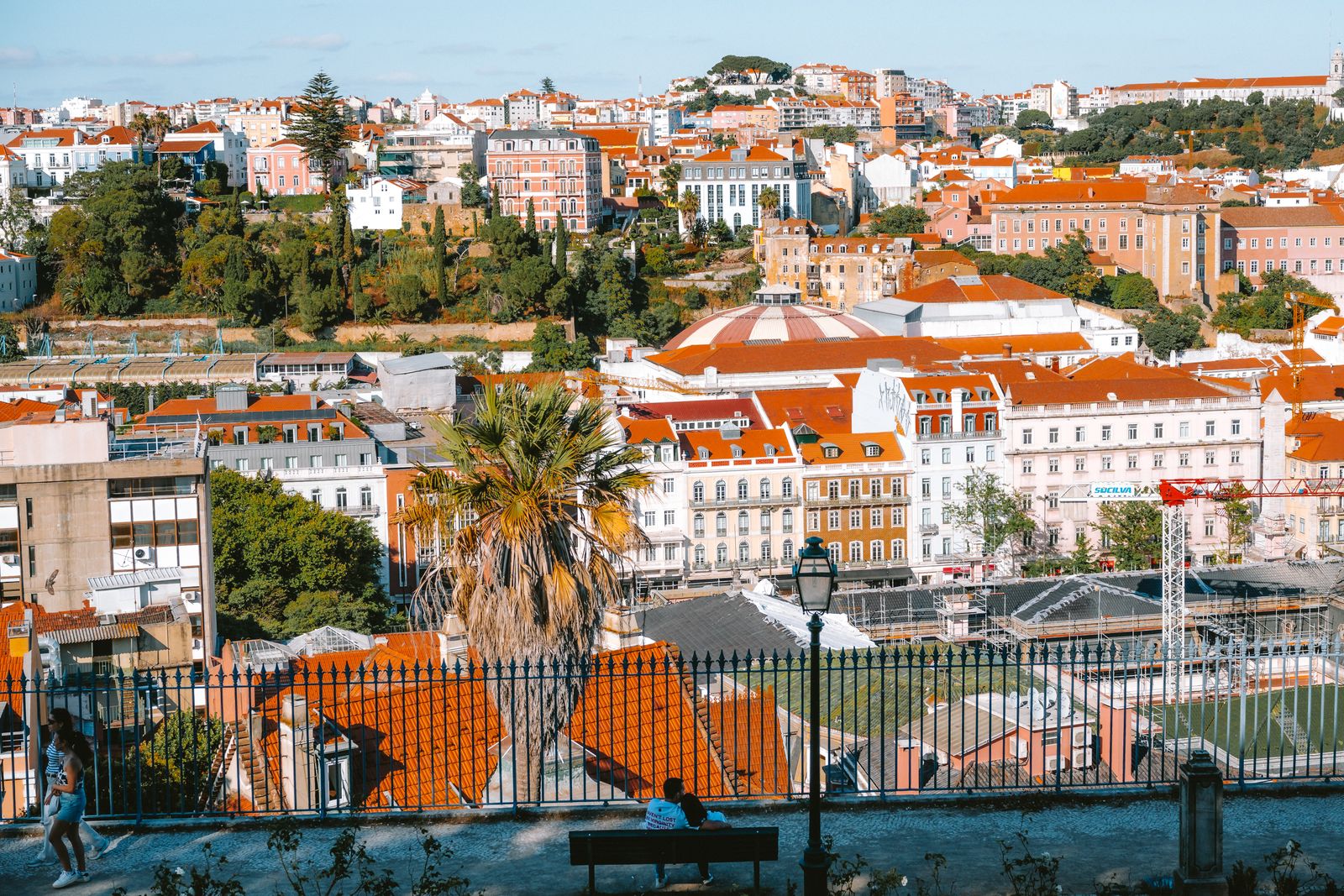
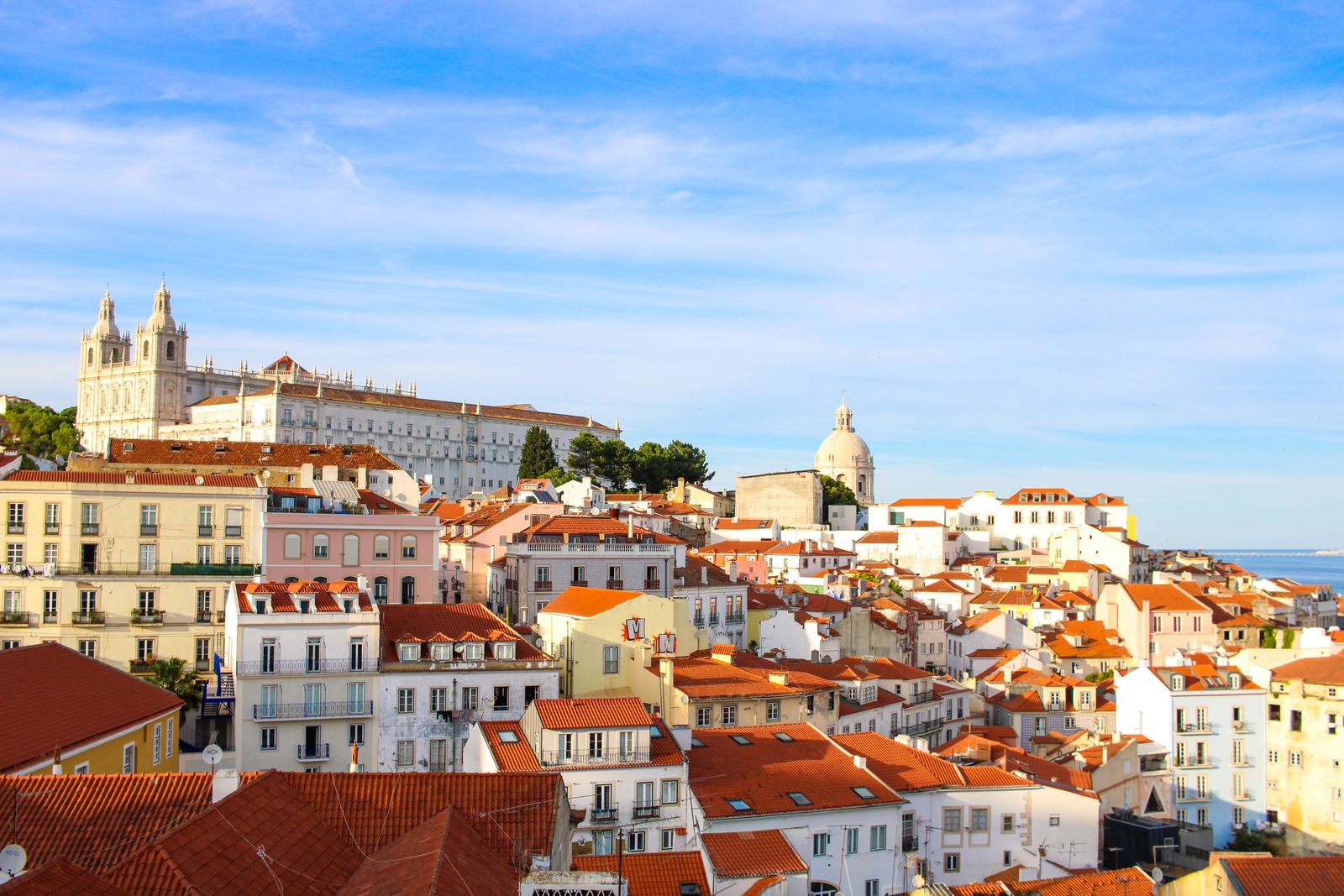
A miradouro is a terrace built specifically to look at the city, and Lisbon has dozens. Do them downhill: start at Miradouro da Senhora do Monte, the highest, best at sunset and quiet in the morning, then drop to Miradouro da Graça for a beer under the pines, then Portas do Sol and Santa Luzia for the postcard shot over Alfama's rooftops to the river. On the other side of town, São Pedro de Alcântara looks straight across at the castle and is the classic first-evening spot, and Santa Catarina — the one with the Adámaster statue — is where Lisbon's twenty-somethings drink beer on the wall at golden hour. None of them cost anything. All of them are better with a bottle from the shop below.
Take the tram or the bus up, and walk everything down. That's the entire secret to enjoying a city built on hills.— On the only rule that matters
The castle, Alfama, and tram 28
The famous ride, done in the way that doesn't ruin it.
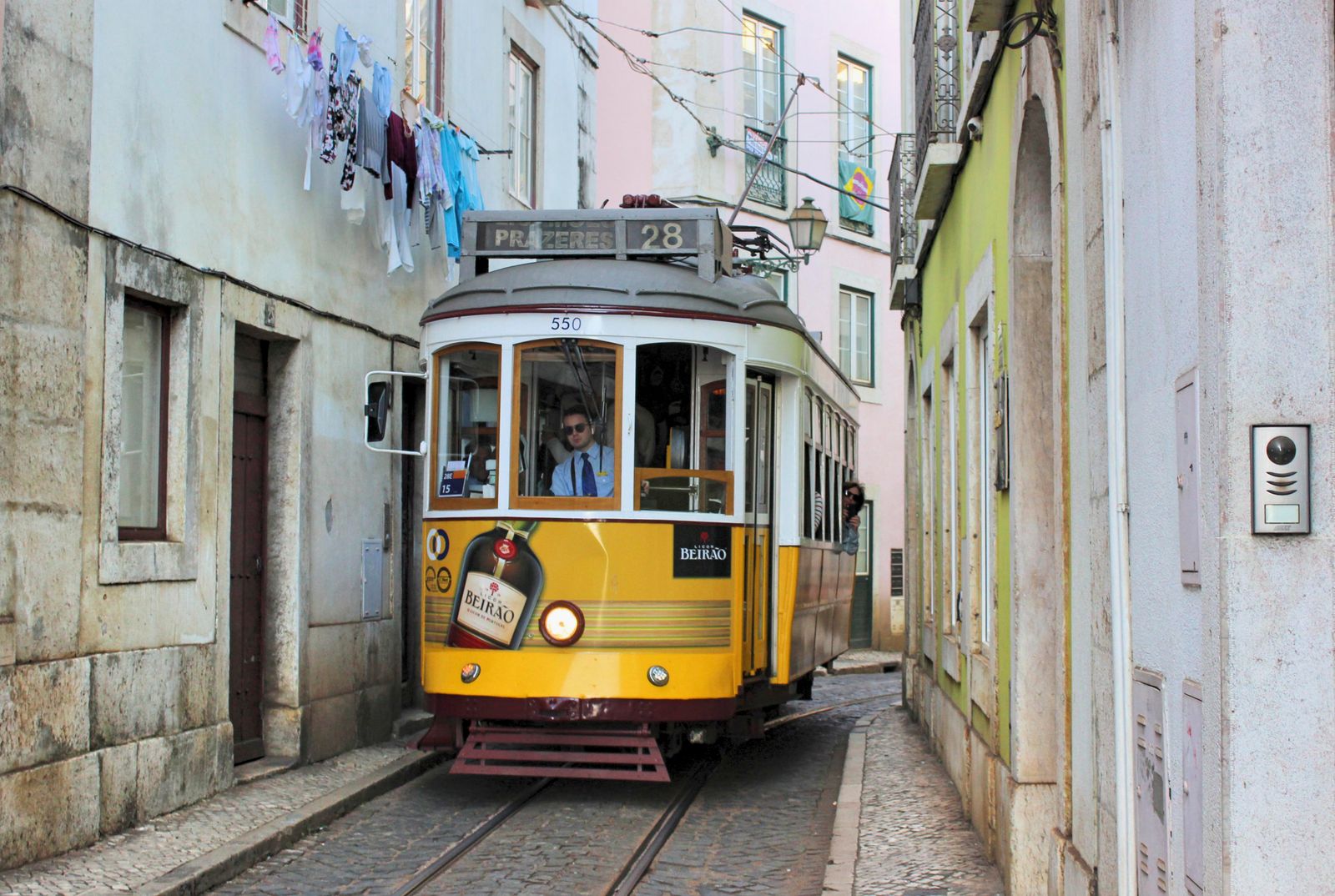
São Jorge Castle is worth it for the ramparts and the view rather than the ruins — go at opening or an hour before close, and buy online to skip the window. Below it, Alfama is the walk: no map, just down, past washing lines and tiled saints and someone's radio, until you hit the cathedral. And then there's tram 28, the yellow one from every photograph, which is a genuine 1930s Remodelado tram running a genuinely spectacular route through Graça, Alfama, Baixa, Chiado, and Estrela. Two honest warnings. It is the single most reliable pickpocketing venue in Portugal — the crush at the doors is where it happens, so keep phones zipped and bags in front, and never wear a backpack on your back on board. And boarding at the Martim Moniz terminus in the middle of the day means a 45-minute queue for a standing-room crush. Ride it early (before 9am) or from the Estrela end going the other way, or just take the near-identical tram 24 up to Príncipe Real with a seat and no crowd.
Belém in one morning
The monastery, the tower, the tarts — and out before the buses.
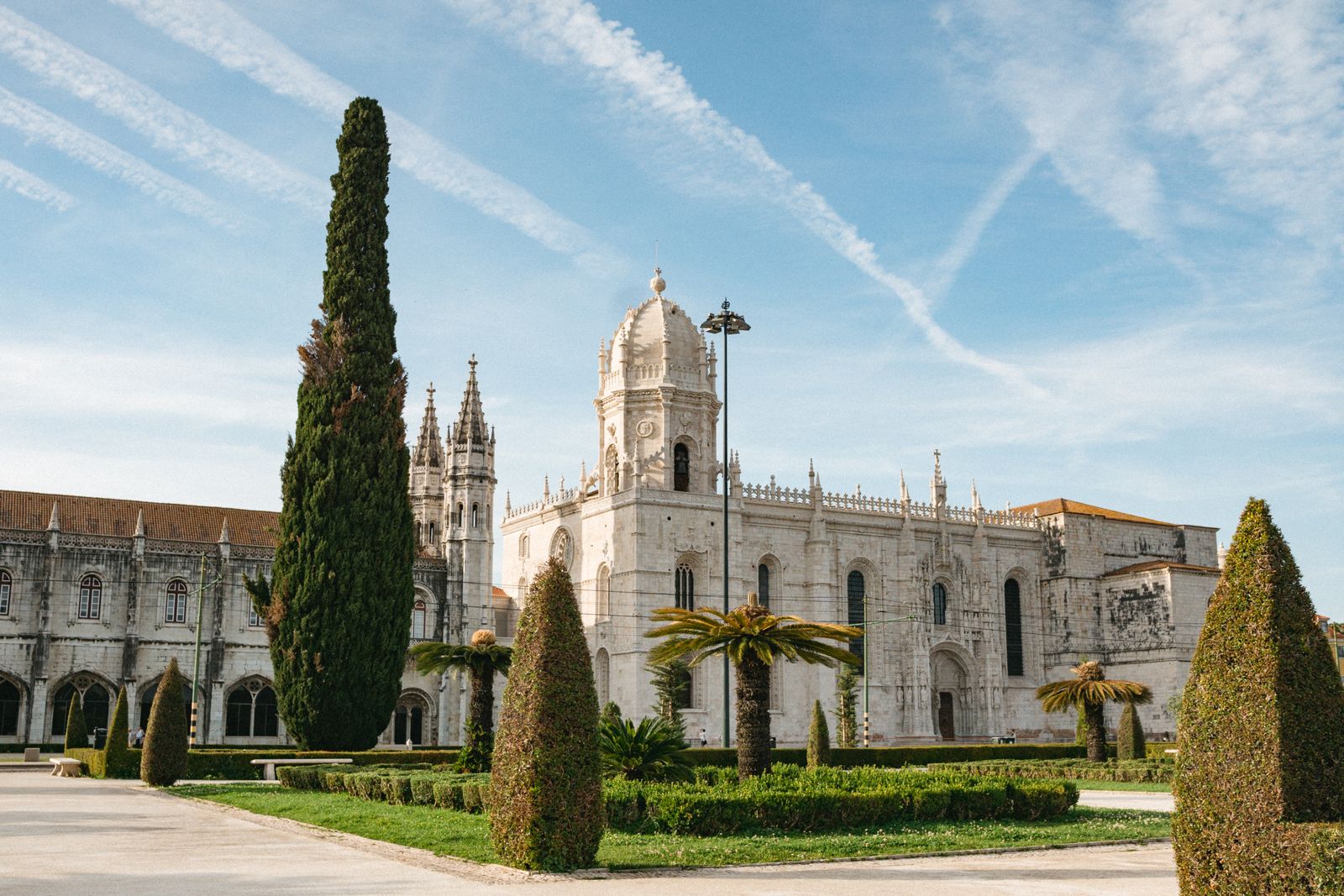
Six kilometres west, Belém is where Portugal put its money when the ships came home. The Jerónimos Monastery is the one unmissable interior in the city — the cloister is extraordinary carved limestone, and Vasco da Gama is buried in the church next door, which is free to enter. The Belém Tower is small, crowded, and beautiful from the outside; if the queue is long, look at it from the water's edge and keep your morning. Between them sit the Padrão dos Descobrimentos and the MAAT, a wave of white tile you can walk over the roof of for free. Get the 15E tram or a 20-minute Bolt out there by 9:30, do the monastery first, and finish at Pastéis de Belém. Add the Museu Nacional dos Coches if anyone in the group likes an absurd gilded carriage, which everyone secretly does.
Get on the water
A €1.50 ferry, or a sunset boat with your name on it.
The Tagus is the reason the city exists and it's criminally easy to ignore from the hills. The cheap version: the Cacilhas ferry from Cais do Sodré, ten minutes and about €1.50, with the entire city unfolding behind you — lunch at Ponto Final on the far bank, or the lift up to Cristo Rei for the view back over the 25 de Abril bridge. The splurge version: a sunset sail on the Tagus, which for a group is one of the few organised activities in Lisbon we'd actually pay for — two hours, a small boat you can book whole, wine on board, and the bridge and the Torre de Belém going pink. Book a private charter for six or more and it usually costs less per person than the shared trips. And if anyone's a surfer, Costa da Caparica is 30 minutes south with beach after beach, and Ericeira is a World Surfing Reserve an hour north.
Sintra, done properly
The palaces are worth it. The planning is mandatory.
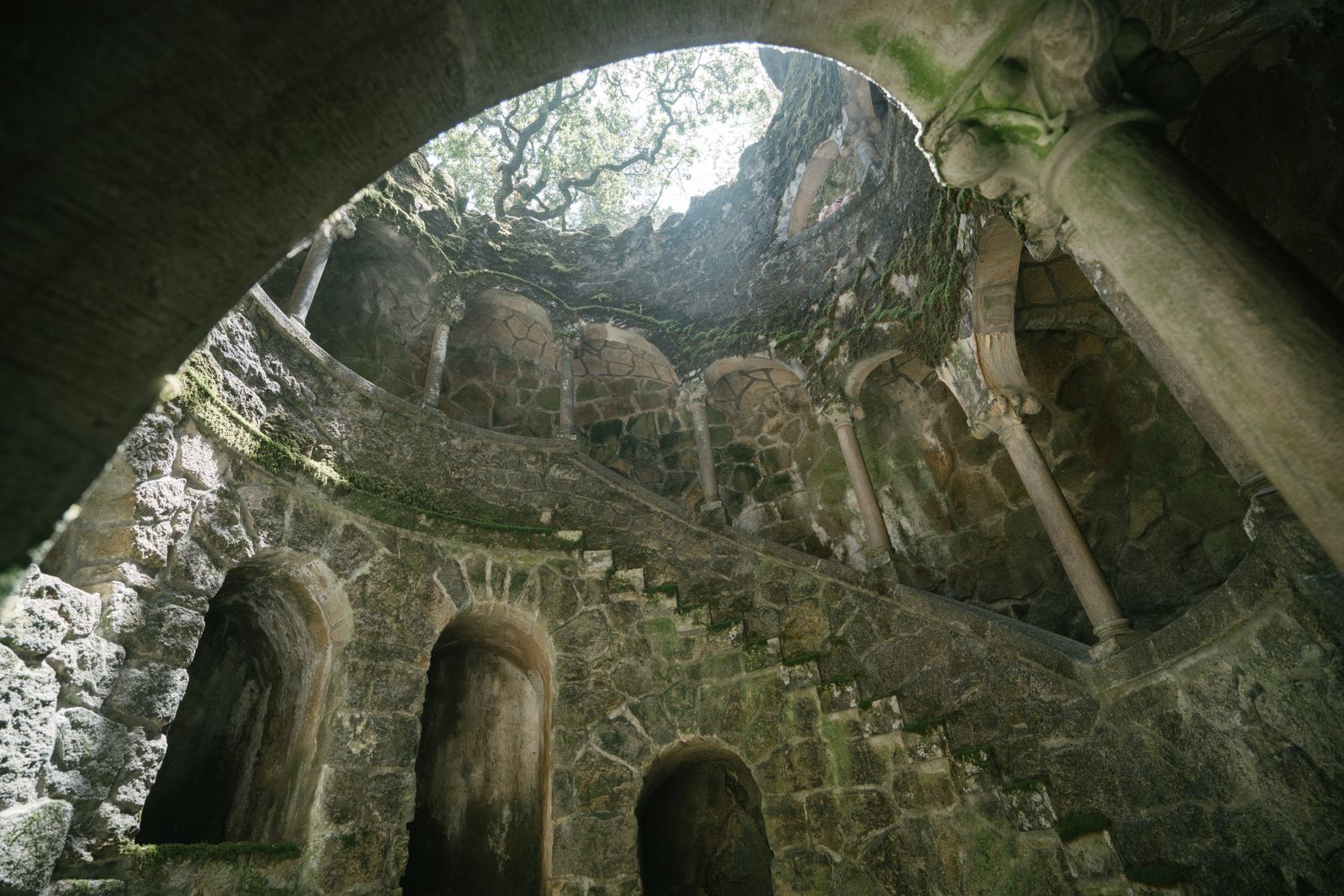
Sintra is a green, misty microclimate in the hills 40 minutes from Rossio station (about €2.40 each way), stuffed with the follies of kings and rich romantics. Pena Palace — the red-and-yellow one on the peak — runs strict timed entry and the 10am–2pm slots sell out days in advance in summer, so book the earliest slot you can stand on parquesdesintra.pt. Quinta da Regaleira, with its initiation well spiralling down into the earth, is the one people love most and also now timed — do it in the calmer late afternoon. The Moorish Castle walls in between are the best walk of the day. Getting around: the 434 bus loops the hill, tuk-tuks charge triple for the same road, and driving is a genuine mistake — the lanes are one-way, the parking doesn't exist, and you'll spend the day in a queue. Eat a travesseiro at Piriquita before the train home.
After dark
Start on a hill. End wherever the night decides.
Lisbon nights run late and start outdoors. Bairro Alto is the warm-up — tiny bars that sell you a drink to take into the street, where the whole neighbourhood becomes one loose party until about 2am. Down the hill, Pink Street at Cais do Sodré is the concentrated version, and Pensão Amor — a former brothel turned gloriously overdecorated bar — is the one to show people. For a rooftop with a view rather than a velvet rope, Park is a bar on the top floor of a Bica car park that looks straight over the city, and Topo Chiado faces the Santa Justa lift. If anyone wants a proper club, Lux Frágil down by the river is still the serious one, and it does not get going before 2am. Line the whole thing with a tasca dinner first, because Lisbon does not do drinking on an empty stomach.
Where we would book
Buy Sintra palace tickets from parquesdesintra.pt and the Jerónimos Monastery and Belém Tower from their official sites — the resellers charge more for the identical timed slot. The castle sells online too, which saves the window queue. For a group of six-plus, book a private sunset sail direct with a local operator rather than a per-seat ticket on a big platform: you get the whole boat, you control the music, and the per-person number usually lands lower. Skip the hop-on-hop-off bus in a city this walkable, skip the tuk-tuk tours (a scenic ride at four times the price of a tram), and skip anything selling “skip the line” for a place that has no line. Trams, ferries, and the Sintra train are all just the navegante card in your pocket. And every viewpoint in this guide is free — no booking, no cut, no catch.
Related guides
- Your Lisbon Travel Guide — where to stay, how to move, and when to come.
- Lisbon Food Guide — nata, seafood towers, and the tascas worth the queue.
- Lisbon Culture Guide — fado, tiles, the earthquake, and the revolution.
- Things to Do in Buenos Aires — another river-mouth city best walked neighbourhood by neighbourhood.
- Lisbon Group Trip Guide — the same city, planned for six or ten of you.