
See tango where people actually dance it
Skip the dinner show. Find a milonga.

Tango is everywhere in Buenos Aires, but most of what's sold to visitors — the glossy dinner-and-show package — is the least interesting version of it. The real thing is the milonga: a social dance night where porteños of every age come to dance with each other, governed by quiet, century-old etiquette. You don't have to dance. Buy a drink, sit at the edge, and watch a room full of locals do something genuinely beautiful. Many milongas run a beginner class early in the night, which is the most fun your group will have being bad at something together. Beyond La Catedral, Salón Canning and La Viruta in Palermo and El Beso downtown are the milongas locals actually go to.
La Catedral
A cavernous, candlelit former dairy warehouse in Almagro, draped in art and refreshingly unbothered about being cool. Come for the early class, stay for the milonga, and don't dress up. It's the antidote to every stiff tourist tango show in the city — and a fraction of the price.
Do the full San Telmo Sunday
The city's best street day, if you time it right.

On Sundays, San Telmo's Calle Defensa becomes a kilometre-plus feria — antiques, leather, mate gourds, buskers, and the city's most photogenic crowd, all spilling out from Plaza Dorrego. Go early, before the crush, haggle gently, and post up at a sidewalk café to watch impromptu tango break out on the cobbles. It's touristy and it's wonderful; both things are true. Pair it with the covered Mercado de San Telmo for an empanada and you've got a perfect lazy Sunday.
A football match is a religious experience
The loudest two hours you'll spend in Argentina.
Argentines love football the way other places love their religion, and a match at La Bombonera (Boca Juniors) or El Monumental (River Plate) is a full-body event — the stands literally bounce. Tickets for the big clubs are hard for visitors to get directly and the resale market is sketchy, so the safe, sane move is a reputable match-day experience: a guide sorts the ticket and the transfers and gets you in and out safely. If a Boca–River superclásico lands during your trip, drop everything.
You don't watch a game at the Bombonera. You survive it, grinning, with no voice left.— On a Boca home match
Walk Recoleta and its city of the dead
Marble, history, and the most famous grave in Argentina.

The Recoleta Cemetery is the strangest and most beautiful free attraction in the city — a labyrinth of marble mausoleums where presidents and Evita Perón are buried, like a tiny city of palaces for the dead. Wander without a map and let it lose you, then come up for air in the elegant streets around it: the Sunday craft fair on Plaza Francia, the grand cafés, and the lawns where the city walks its (many) dogs. It's a two-hour stroll that tells you more about Argentina than most museums.
Get out of town: the Tigre delta
A river maze an hour from the Obelisco.
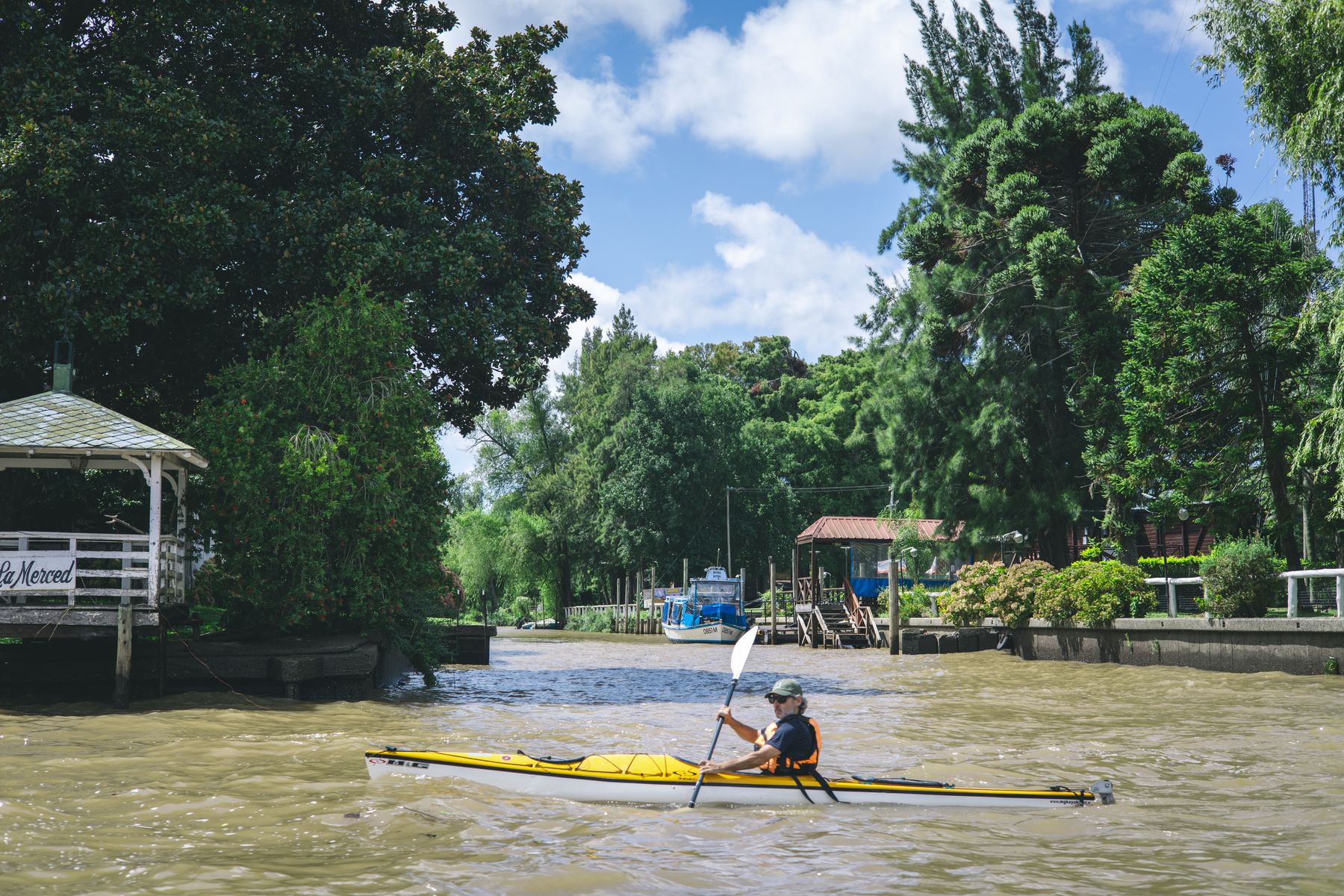
When the city gets to be too much, head an hour north to Tigre, where the Paraná River fans into a green delta of stilted wooden houses, rowing clubs, and lazy boat traffic. Take the Tren de la Costa up, hop a public lancha (water bus) into the delta, and have lunch at a riverside spot you can only reach by boat. It's a completely different Argentina — humid, slow, jungly — and the easiest day trip going. For a bigger splurge, swap it for a day at an estancia (a ranch out on the pampas) with an asado and horses.
Where we would book
Two things here are worth paying for, both because they're genuinely hard or unsafe to DIY: a match-day football experience with a trusted operator, and — if nobody dances — a milonga or tango class with a recommended teacher. The estancia day is best booked ahead too. Everything else is gloriously free: the cemetery, the San Telmo feria, the delta water buses, the dog-walking lawns of Recoleta. Pay for access and safety; never pay for the city's free pleasures. Now — what's the group's first move tomorrow?
Related guides
- The Complete Buenos Aires Guide — barrios, money, and the shape of the trip.
- Where to Eat in Buenos Aires — fuel for all this walking.
- Buenos Aires: A Culture Guide — the deeper story behind the tango and the murals.
- Things to Do in Mexico City — another capital that rewards the curious and the hungry.
- Buenos Aires Group Trip Guide — tango, fútbol, and the delta, done as a group.