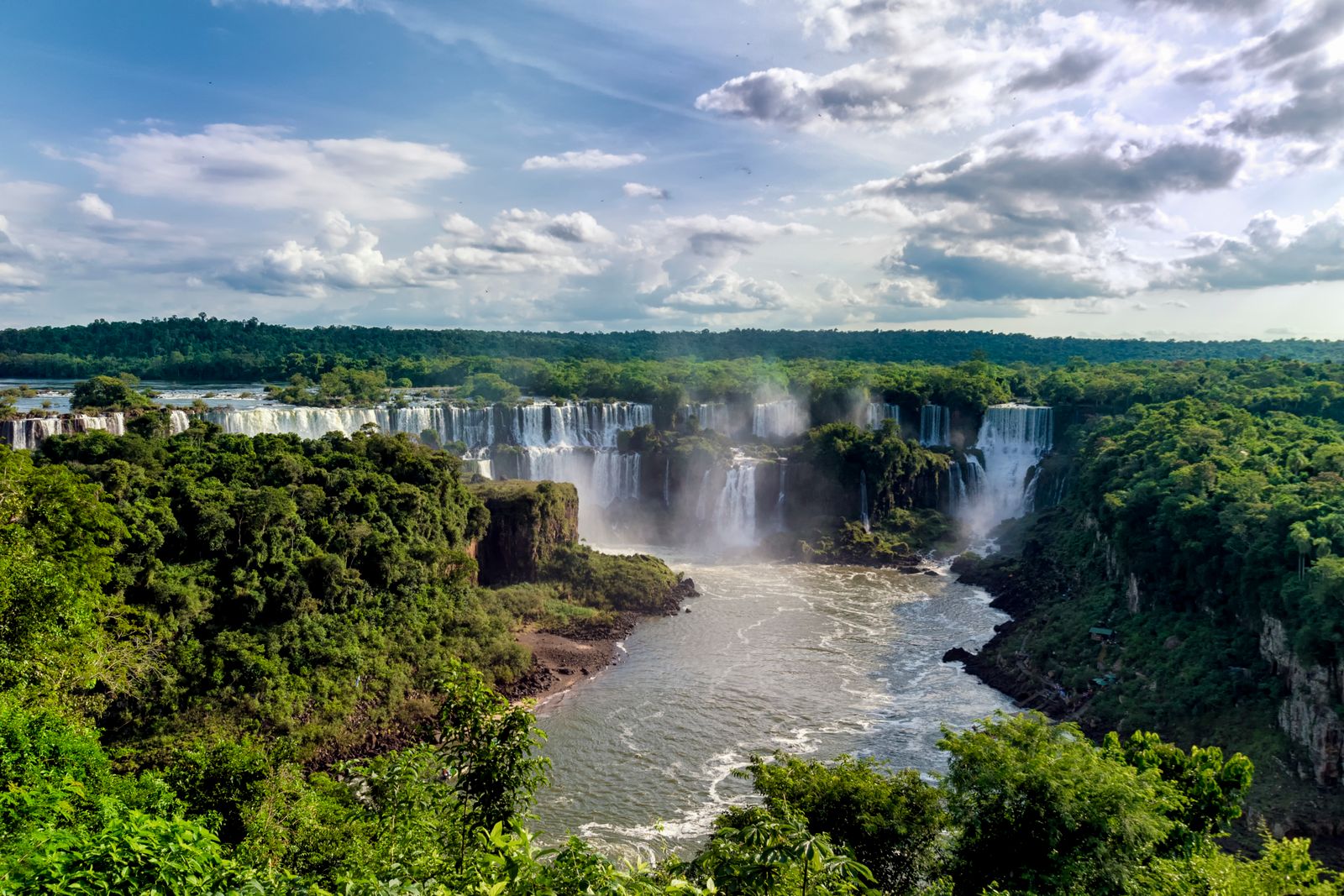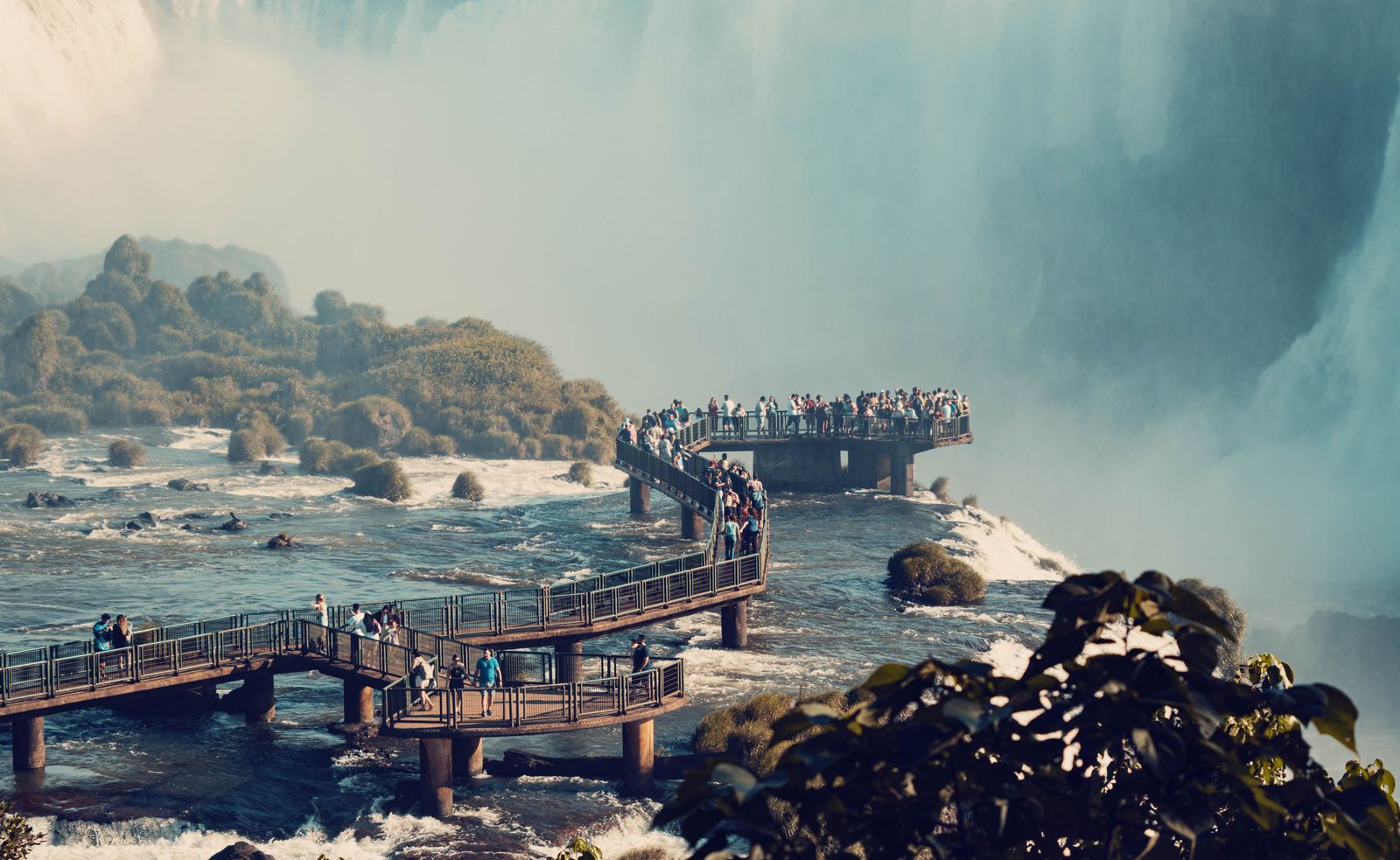
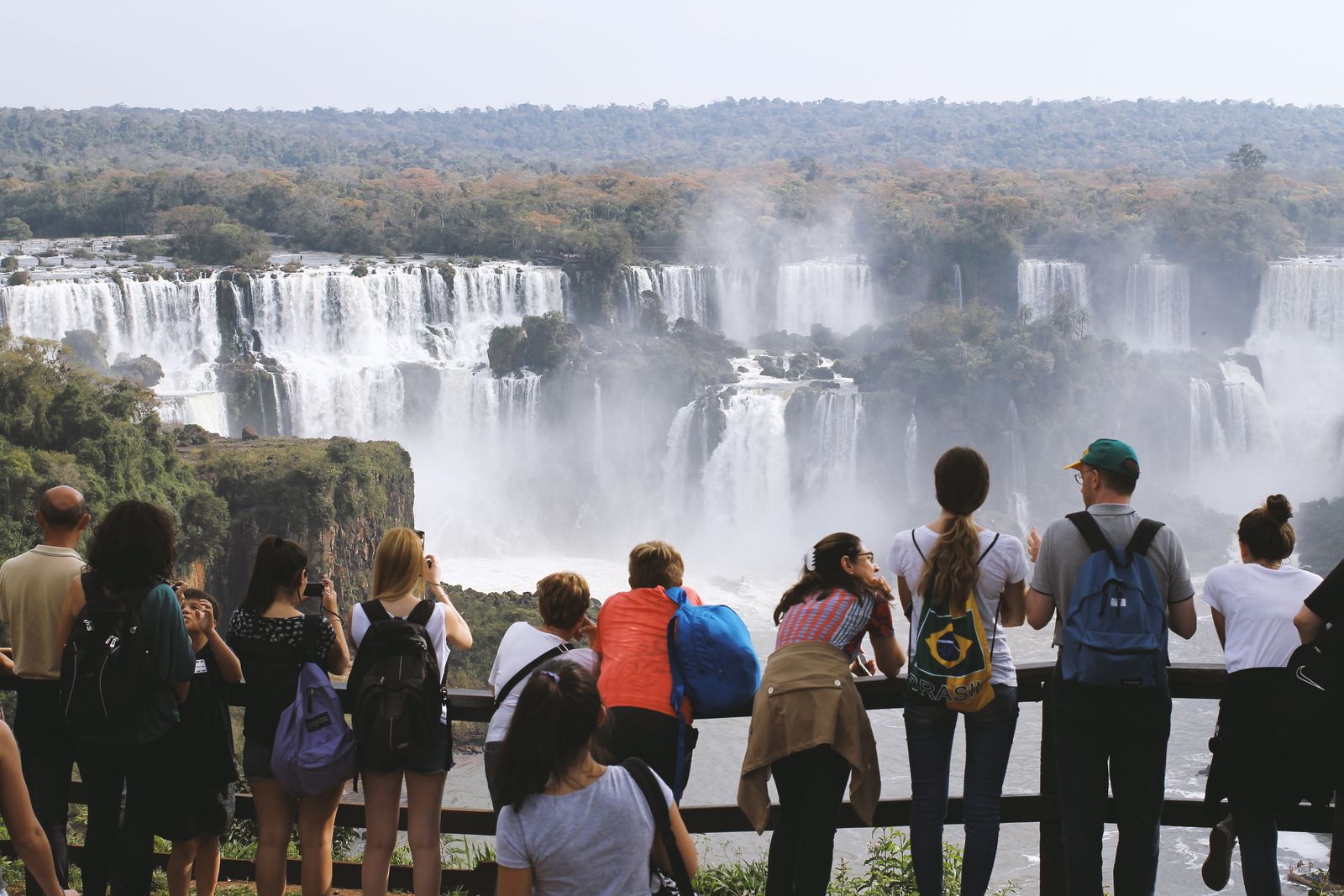
Iguazú rewards a group more than almost anywhere: the accommodation splits beautifully, the boat and the van only make sense with numbers, and the whole thing is one shared spectacle rather than a museum everyone drifts around separately. It also has more per-person admin than anywhere else on this site — two parks, two currencies, two sets of opening hours, and a border that treats your friends differently depending on their passports. Here's how to run it without one person quietly funding the trip.
Why this works better with numbers
Everything here is priced per person except the things that aren't, and those are the expensive ones.
Park entries and boat seats are per head and don't get cheaper with a group. Everything else does. A house sleeping eight in Puerto Iguazú costs less per person than four hotel rooms, by a wide margin. A booked driver to the Brazilian park and back is a fixed price whether two of you get in or seven. A remis home from dinner is small money split four ways and irritating money paid alone. And the last bus back from the park leaves at 18:30 — a group can just decide to stay for the swifts and split a car, which a solo traveller cannot.
At four to six: a three-bedroom house or apartment, the park bus in and a car back, and one person fronting the entries. At eight or more: a house with a pool in Selva Iryapú, a booked van for the Brazil day, and a genuine need for someone to be tracking the money — because at eight people across two currencies, mental accounting stops working around lunchtime on day two.
Where to put everyone
Town if you want to walk to dinner, Selva Iryapú if you want a pool and a garden.
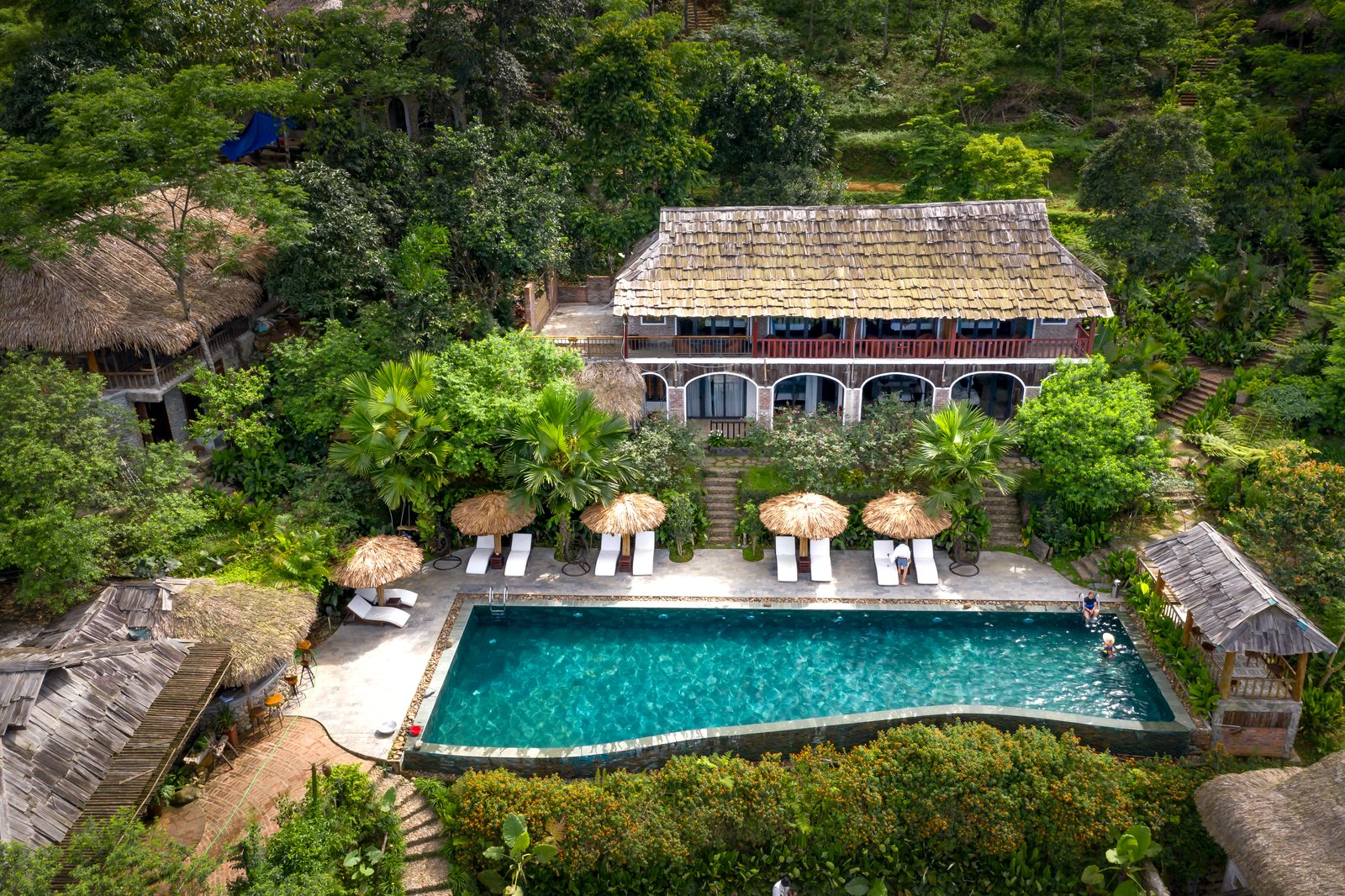
Puerto Iguazú centre is the right call for most groups: houses and apartments a few blocks from Avenida Victoria Aguirre, the bus terminal within walking distance, and every restaurant in this guide's food guide reachable on foot after a beer. Selva Iryapú — the forested zone toward the airport — has the larger houses with pools and jungle at the fence, which after a 30-degree day on the walkways is worth more than it sounds; the trade-off is that you'll be calling a car for every dinner. Foz do Iguaçu is cheaper again and has more housing stock, but putting an international border between your group and the better park creates a daily tax in time and paperwork.
The two-tab trick, and the 21% you get back
Find the house on Airbnb or Booking, then search the property's own name and photos and see whether it rents direct. In a town of eighty thousand people that lives on tourism, plenty do, and the saving is usually the platform's cut. Then, separately: foreign visitors get the 21% IVA on accommodation refunded in Argentina, automatically, as long as it's paid with a card issued outside the country or by transfer from a foreign bank — never cash. On a $900 house for four nights that's around US$155 back to the group, which is the boat trip for two people. Nominate the person with the right card as the accommodation payer, and log it in the app so they aren't out of pocket for a fortnight.
The tickets problem
Everyone needs their own, they're priced by nationality, and one side needs a time slot.
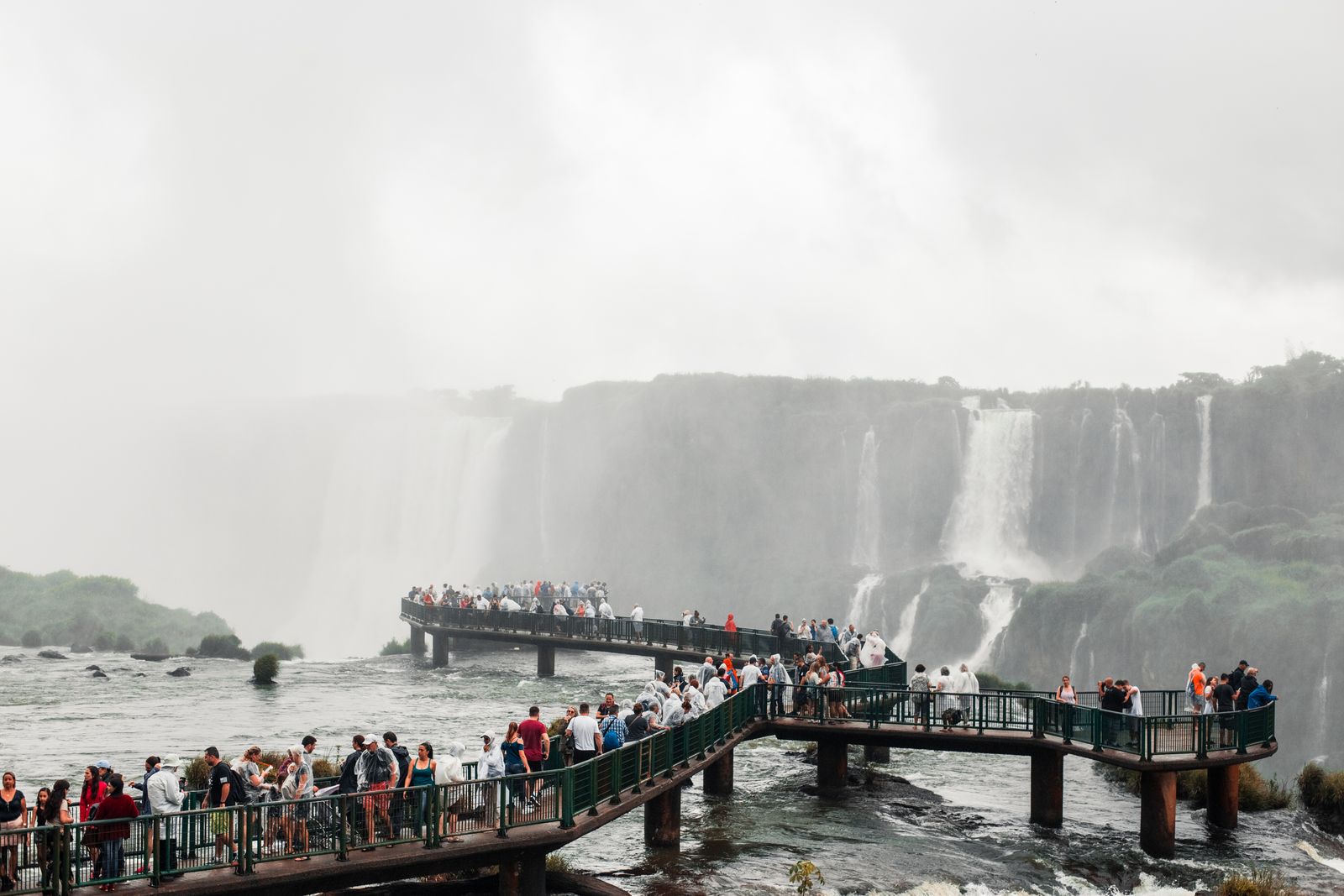
This is where groups lose money and time. Three things to get right:
- Argentine park entry is priced by who you are. $60.000 for non-residents, $25.000 for Argentines, $15.000 for students, $8.000 for Misiones residents, free for jubilados and under-sixes. A mixed group is a mixed bill, so whoever buys needs everyone's status before they're at the window, not while they're at it.
- The second day is half price within 72 hours of your first entry — but only if each ticket is kept and validated on the way out. One person losing theirs costs the group a full ticket. Collect them and put them in one bag.
- The Brazilian park sells timed slots online. R$134 for foreigners, R$121 for Brazilians and Mercosur nationals, internal bus included, and hours of 09:00–16:00 on weekdays and 08:30–16:00 at weekends. Book all your slots in one transaction so the group isn't split across two entry times.
Bought properly for a group of eight non-residents doing two Argentine days and one Brazilian one, that's $720.000 in Argentine entries — the second day at half price — plus R$1,072 in Brazil. Roughly US$680 for the group, or US$85 each, for three days of the main event. It is worth having one person own that transaction and everyone else settle to them.
The border, one passport at a time
The thing that ruins group days here isn't money. It's a visa nobody checked.
Sort this at the planning stage, out loud, with everyone's passport on the table. Argentine, Brazilian and other Mercosur nationals cross on a national ID card. Most European passports need nothing. But United States, Canadian and Australian passport holders have needed a Brazilian e-visa since 10 April 2025 — US$80.90 each, applied for online at the official VFS portal, usually issued in 48–72 hours but officially taking up to ten business days at peak, and it covers transit too.
In a mixed group that is a real planning problem, not a footnote. Two people on the wrong passports who didn't apply means either the group splits for a day or nobody sees the Brazilian side. Put it in the group chat the week you book flights, along with the yellow-fever question — one dose, recommended rather than required, and it needs ten days to take effect, so it's a booking-time decision as well.
Moving eight people
The bus is genuinely cheap. The van is genuinely worth it on the Brazil day.
For the Argentine park, take the bus and stop thinking about it: $10.000 each way from the Puerto Iguazú terminal, every twenty minutes from 06:00, no card needed, pay on board. Eight people return is $160.000, about US$105, which no transfer will beat. The one thing to run past the group: the last bus back leaves Cataratas at 18:30, so either everyone's on it or you're splitting a remis, and that decision is much easier made at breakfast than at a bus stop.
For the Brazil day, a booked driver who waits at both border posts is the better call for a group. It's a fixed price rather than a per-head one, it removes the risk of the group being split across two buses at immigration, and it means the person who gets stopped for a document check doesn't strand everyone else. Around town, ride-hailing and remises are cheap and split four ways cost less than the bus.
Feeding a group
One long table, one number at the end, and a rodízio that solves the whole problem.
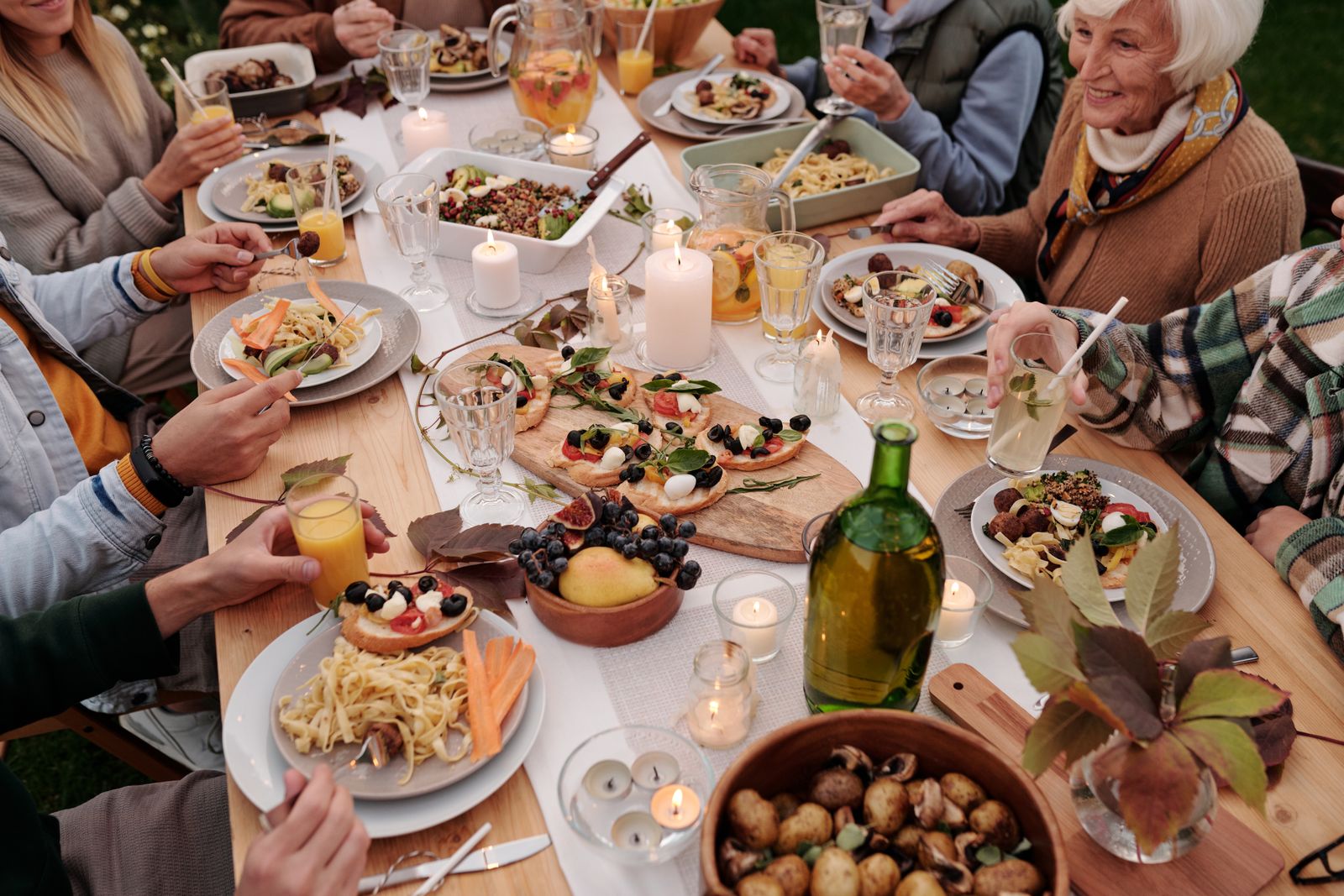
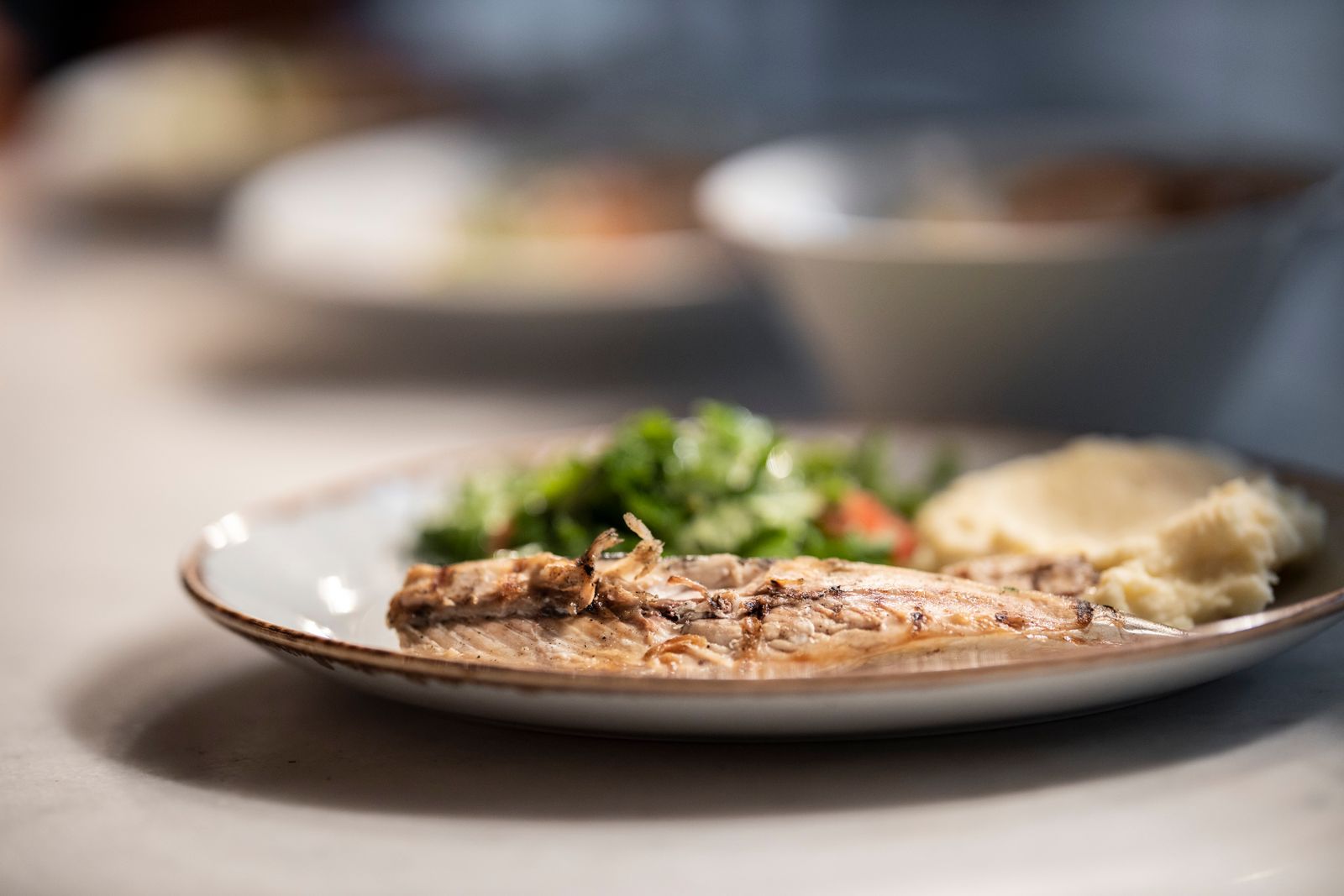
Puerto Iguazú handles groups well because it's used to them. El Quincho del Tío Querido (Av. Perón at Caraguatá) is built for a long table, does parrilla and live music, and opens at 11:30. Cerveza Patagonia's Jardín Cervecero is the easiest place in town to put ten people outdoors without booking. Aqva is the one worth reserving in advance if you want the group to eat the river fish that makes this region worth eating in — message them in the morning.
And across the bridge, Búfalo Branco in Foz is a group's dream and a treasurer's too: it's a rodízio, so the meat is a fixed price per person and there's no itemising who had what. Watch the buffet lines, which cost extra. Book for eight.
Inside the parks, pack lunch. Park prices are captive-audience prices, and eight people buying sandwiches twice is real money. Just keep everything sealed in closed bags — the coatis are organised, and they bite.
The money, and the thing you can't do here
Two currencies, an exchange rate that moves, and no Pix for visitors.
Argentina finally got boring, which is good news. As of August 2026 the blue dollar sits around $1,540 against a wholesale official near $1,496 — a gap of roughly 3%, historic lows. The entire old ritual of arriving with crisp US hundreds to beat the official rate is over. Use a card. Keep some cash for the ferias, the chipá basket and the Guaraní crafts, and stop doing arithmetic about which rate you got.
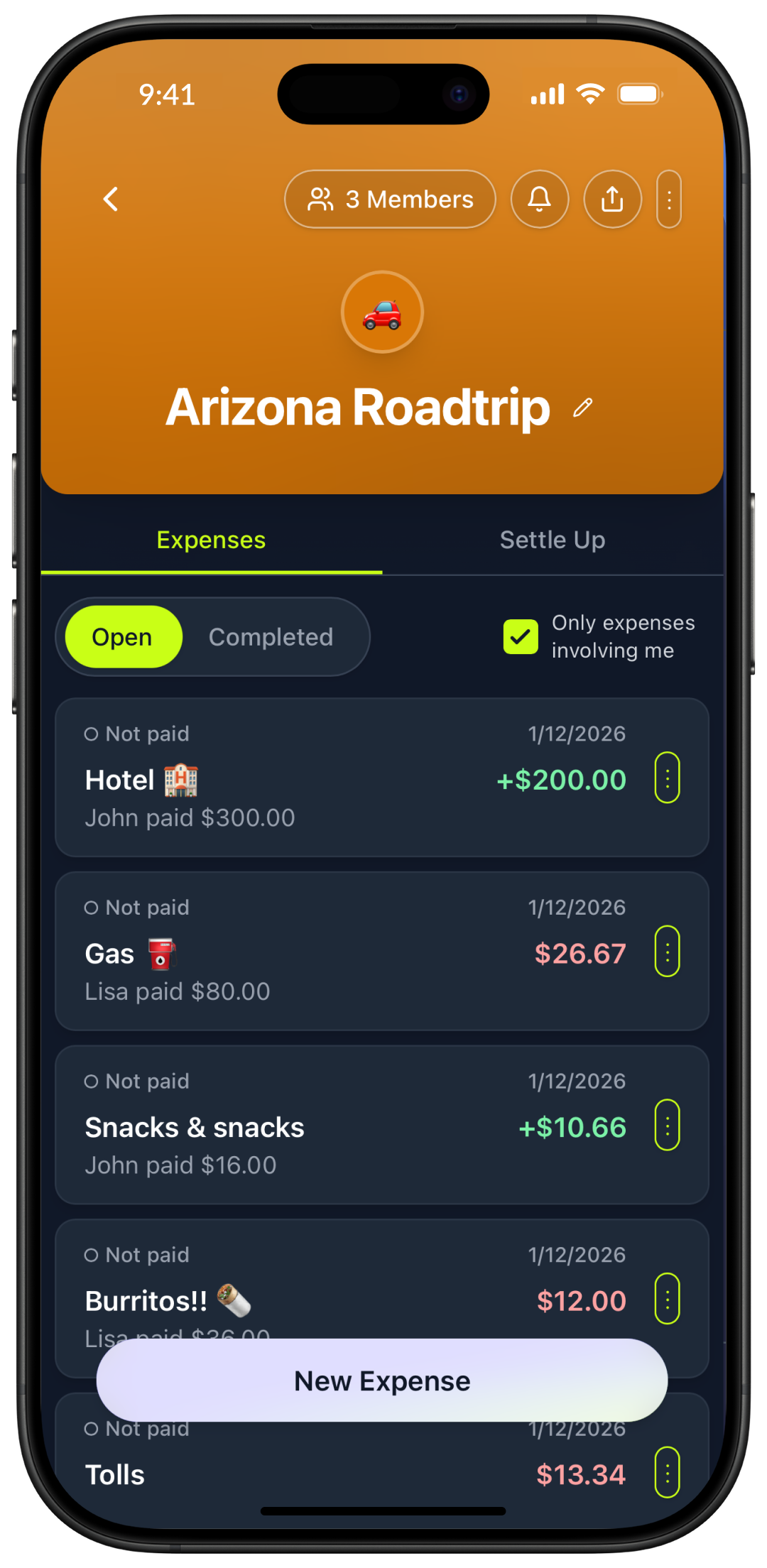
Then you cross the bridge, and everything is in reais at about 5.16 to the dollar. Now your group has spent in two currencies on the same trip, and this is exactly where informal accounting collapses — because $60.000 and R$134 do not compare in anyone's head at the end of a long day. There's one more trap: Brazil settles everything domestically by Pix, in about four seconds, and a visitor cannot use it, because a Pix key needs a Brazilian tax number. The local solution to your group's exact problem is unavailable to you. So one card carries the day and one app carries the record.
Brazil settles a shared bill in four seconds by Pix, and a visitor cannot. One card carries the day; one app carries the record.— On paying for a group across a border
Where we would book
Accommodation first and earliest, because the houses that sleep eight in Puerto Iguazú are a small number and they go. Two-tab it: platform first, then the property's own name, then book direct if it rents that way — and pay with a card issued outside Argentina so the 21% IVA on the room comes back. Park tickets direct from iguazuargentina.com and cataratasdoiguacu.com.br, all the Brazilian slots in one transaction, and let the Argentine ticket office apply the half-price second day.
The boat and the Guaraní community visits are worth booking through your accommodation or the operator directly rather than an aggregator, for a reason that matters specifically to groups: when the river cancels the boat, the local person who sold it to you can move eight people to another day, and a booking platform's chatbot cannot. Book water activities early in the trip so a cancellation leaves you room to try again.
Related guides
- Your Iguazú Falls Travel Guide — what's open, what it costs, and the border in detail.
- Iguazú Falls Food Guide — river fish, chipá and the rodízio across the bridge.
- Things to Do at Iguazú Falls — every circuit, and what the river cancels.
- Iguazú Culture Guide — Guaraní land, yerba mate and three borders.
- Rio de Janeiro Group Trip Guide — the same Pix problem, on a beach, with more people.