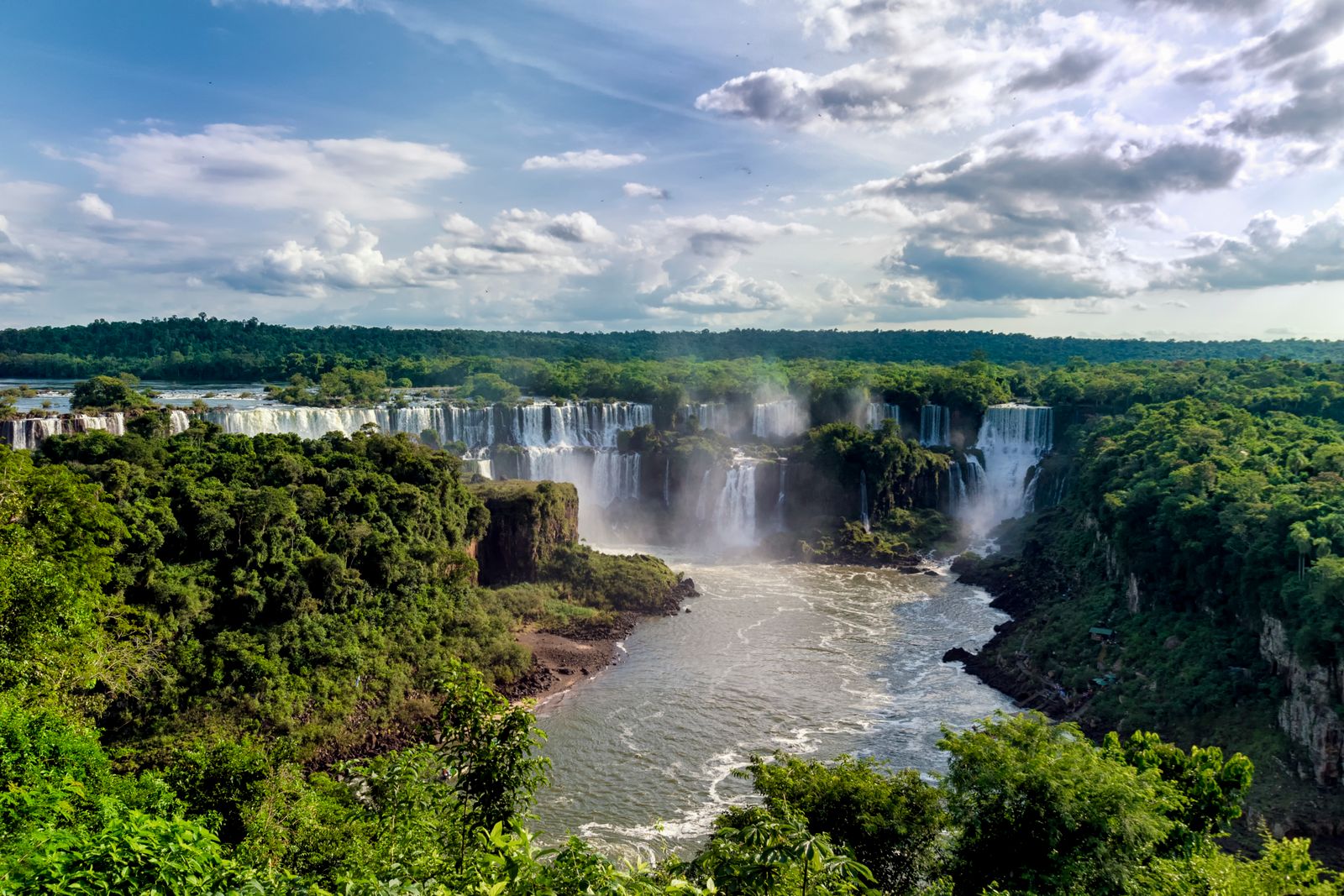
Almost everyone plans Iguazú as one place and arrives to find it is two countries with two sets of tickets, two currencies, two opening times and — for some passports — a visa they didn't apply for. Then they spend their one full day discovering it. This guide is the version we wish someone had handed us: what is actually open right now, what the entrances cost since the June 2026 increase, how to order the two sides so neither is wasted, and where the money quietly goes.
What you're actually looking at
Around 275 falls, three kilometres of them, and a national border down the middle.
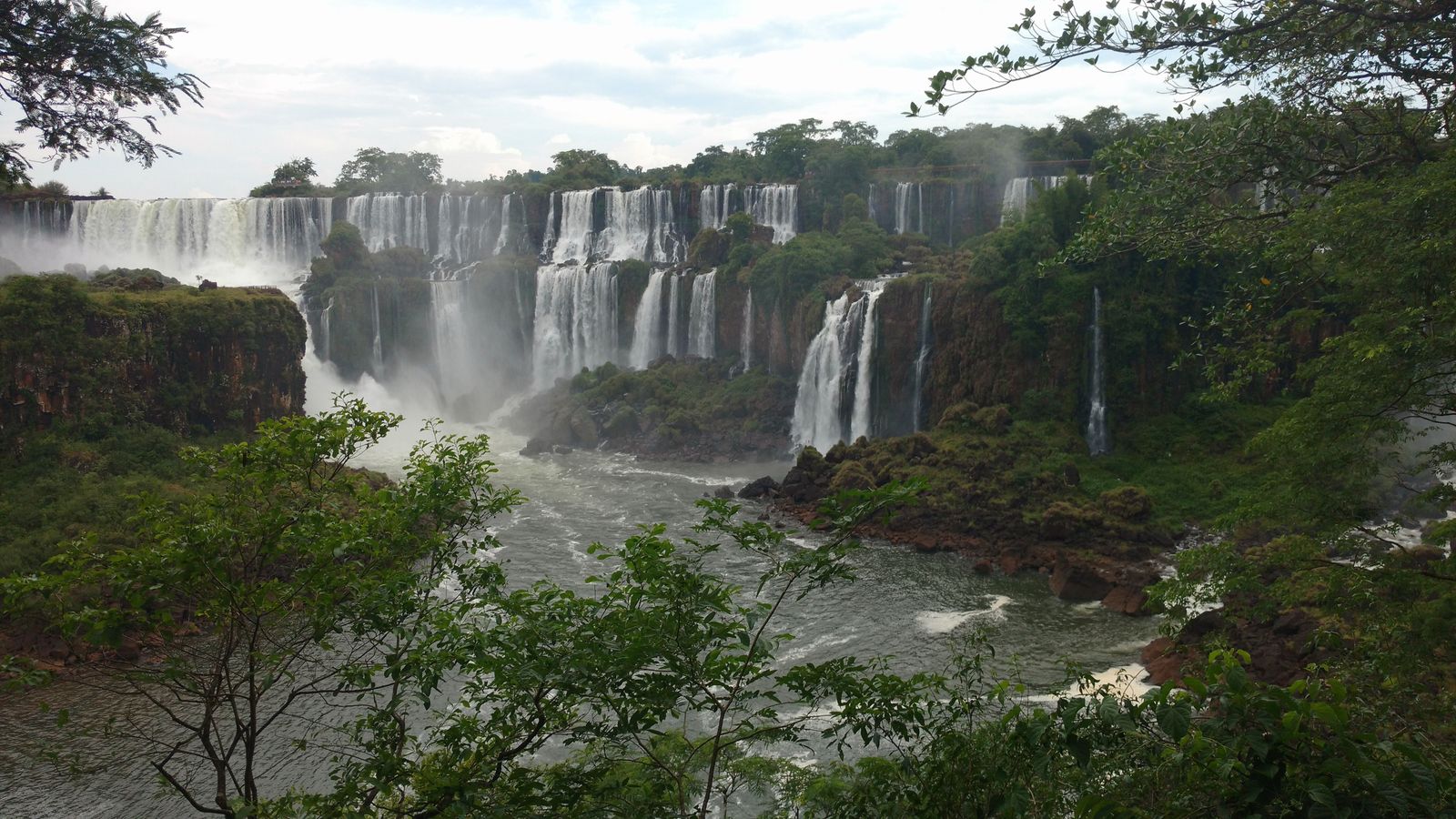
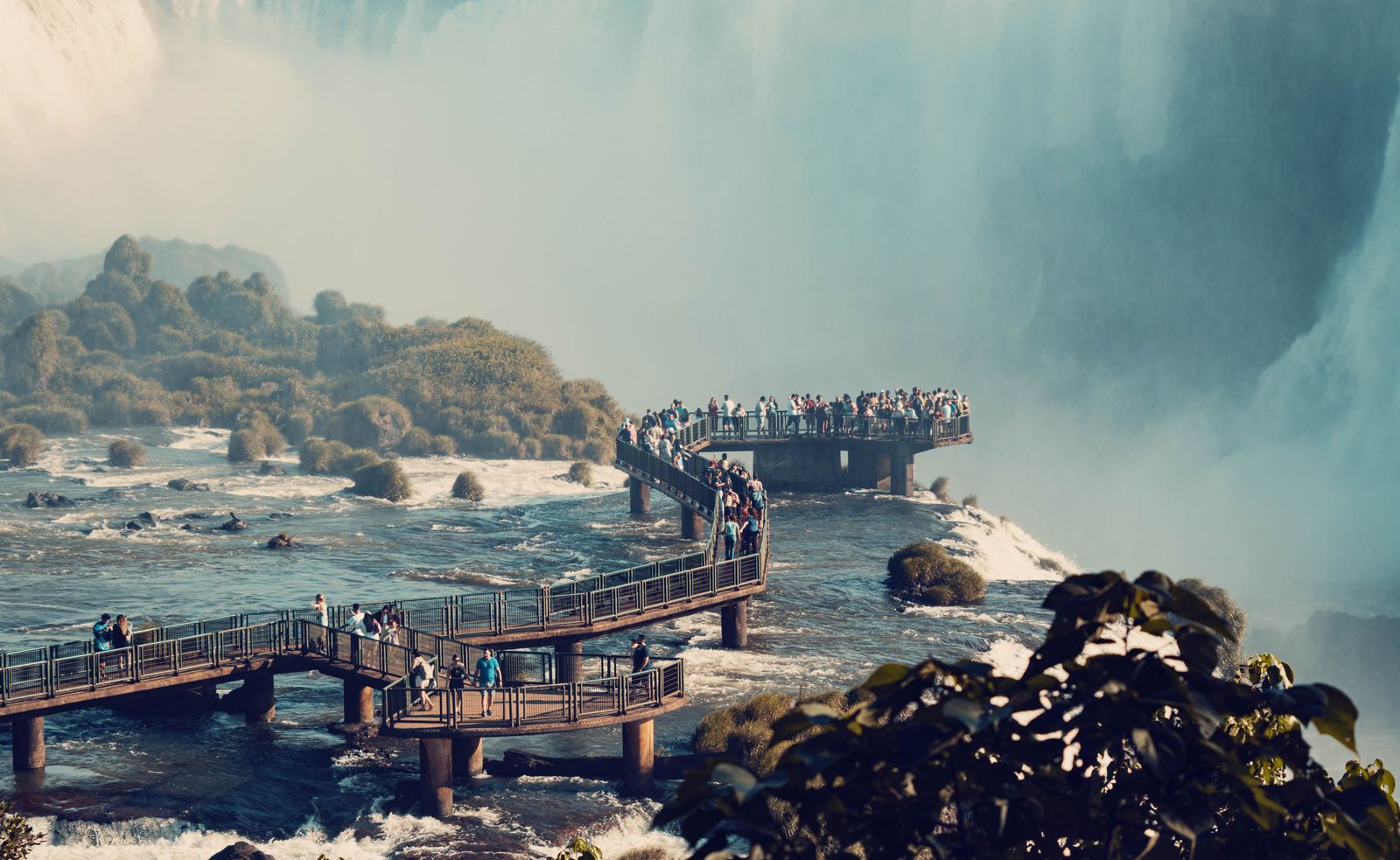
The Iguazú River drops off the edge of a basalt shelf in roughly 275 separate falls spread across nearly three kilometres, and the Argentina–Brazil border runs through the gap. About four-fifths of the falls are Argentine, which is the single fact that explains the whole trip: Argentina built walkways out over and under its falls, so you spend your day inside the thing; Brazil looks across at Argentina's falls from a cliff, so you spend two hours seeing the whole system at once. The old line — Argentina is the experience, Brazil is the photograph — is repeated so often it sounds like marketing. It is simply accurate, and it's why doing only one side is the most common mistake here.
The name is Guaraní: y guasu, big water. Both parks are UNESCO World Heritage sites, the Argentine one since 1984 and the Brazilian since 1986, and they sit inside a much larger corridor of Atlantic forest that still holds jaguars. On a normal day the river pushes something like a million and a half litres a second over the edge. In late June 2026 it pushed 8,170,000. Hold that number; it explains the next section.
What's open right now — and what isn't
The most famous walkway at Iguazú has been physically taken apart. Nobody's guidebook says so.

On 3 August 2026 the Argentine park closed the Garganta del Diablo circuit and began removing the walkway's floor panels and railings. This is not a maintenance closure and it is not a rumour: it is a deliberate, pre-emptive dismantling ahead of a projected flood, and the structure is designed for it — the railings collapse, floor sections unbolt, and the modules are built to detach rather than transmit the load to the pillars. Parks quoted a minimum of forty days and refused to name a reopening date, in their own words rebuilding the walkway only when it is safe to do so, because we don't want to start the work and have to close it again a few days later.
The reason is water. Late June brought a genuinely historic flood, and forecasters expect a strong El Niño to push flows toward ten million litres a second — around seven times normal — through September and October. Everything the river governs goes with it: Isla San Martín is unreachable, the nautical trips including Gran Aventura are cancelled whenever the river hits alert level, and the Paseo de Luna Llena, whose entire point is standing on the Garganta balcony at night, cannot run as sold while that balcony is in pieces on a truck.
What is open on the Argentine side: Circuito Superior, Circuito Inferior, Sendero Verde and the Sendero Macuco. That is still a full and genuinely spectacular day — a flood makes the lower circuit better, not worse. And the Brazilian side reopened on 26 July 2026 and has stayed open, which inverts the usual advice completely: right now Brazil is the side delivering the money shot. Before you book anything, check iguazuargentina.com and cataratasdoiguacu.com.br in the week you travel. Neither park refunds a ticket because a circuit closed after you bought it.
The river decides what's open here, not the calendar. Check it the week you go, not the month you book.— On planning around a flood
Two sides, two different days
Argentina needs a full day. Brazil needs half of one. Do them in that order if you can.
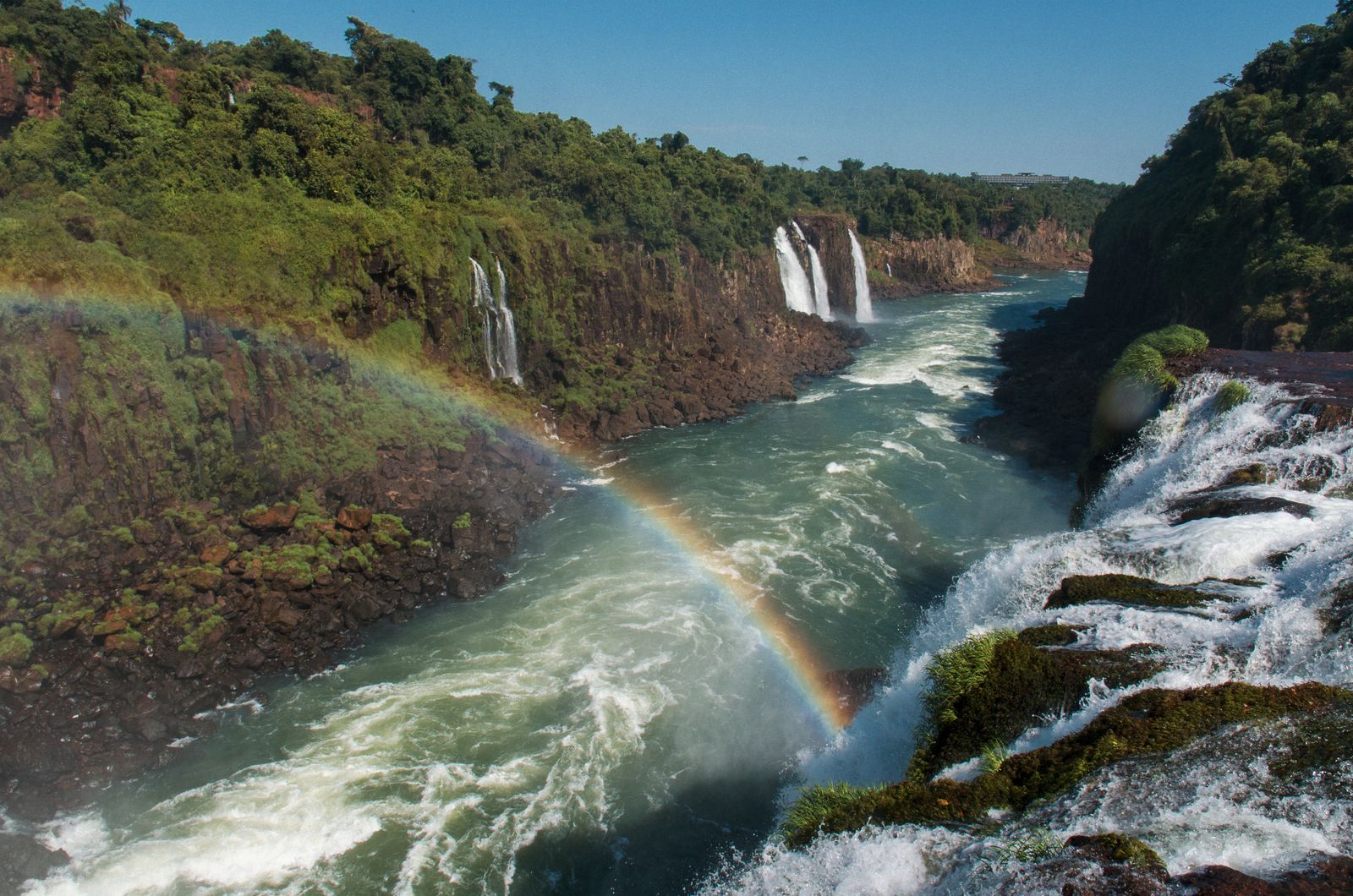
The Argentine park is a full day and can honestly take two. There's a small train, three walking circuits, a jungle trail, and enough distance between them that people who plan four hours end up jogging. Get there for opening — the light is better, the coach groups arrive from about ten, and the heat by one o'clock on the exposed Superior circuit is genuinely hard work. The clever move most visitors miss: the second day costs half price, valid for 72 hours from your first entry, as long as you keep the ticket and have it validated on the way out. Two unhurried days for one and a half tickets is the best-value decision available here.
The Brazilian park is a two-to-three hour experience and is better for it. One trail, about 1.2 km along the canyon wall, with the whole Argentine side unfolding across the water, ending at a walkway that runs out toward the base of the Garganta and gets you comprehensively soaked. Buses from the visitor centre are included in the ticket. Opening hours are shorter than people expect — 09:00–16:00 Monday to Friday, 08:30–16:00 at weekends — and tickets are sold online with a timed slot, so turning up on spec on a busy weekend can fail.
Order matters slightly. Doing Argentina first and Brazil second gives you the detail before the panorama, which is the more satisfying sequence, and leaves the shorter day for the morning you're catching a flight. If your dates land while the Garganta is dismantled, flip it: do Brazil first while you're fresh, because at the moment it is the one carrying the trip.
The border, and the fee nobody budgets for
If you hold a US, Canadian or Australian passport, crossing for the afternoon costs US$80.90 and takes days to arrange.
This is the most expensive thing people find out too late. Brazil reinstated visa requirements for United States, Canadian and Australian passport holders on 10 April 2025, and the requirement is still in force. It is an e-visa, applied for online at the official VFS portal, it costs US$80.90, and while most are issued in 48–72 hours the official window stretches to ten business days at peak. It covers tourism, business and transit. US passports get ten years multiple-entry; Canadian and Australian, five.
Read that again in the context of a trip where the second-best thing to do is on the other side of a bridge. If you hold one of those three passports, we'll pop over to Brazil after lunch is not a decision you can make at breakfast. Apply before you leave home. And if one person in your group is on a different passport from the rest, sort this out at the planning stage — not at the bridge.
- Argentines, Brazilians and other Mercosur nationals — a national ID card is enough. No passport needed.
- Most European passports — no visa for Brazil; carry the passport, not just an ID card.
- Yellow fever — not required for entry, but recommended for this region and for Paraguay. One dose, lifetime, and it needs ten days to take effect, so it's a decision you make at booking. Argentina restricted free vaccination in August 2025 to residents of the endemic provinces; everyone else pays privately.
- The Duty Free Shop on the Argentine side of the Tancredo Neves bridge needs valid ID or a passport, and you must register your exit with the customs authority of the country you're leaving before you can go in.
Getting there, and getting around
Fly in, then use the $10.000 bus and stop paying for transfers.
You fly. Cataratas del Iguazú (IGR) sits about twenty minutes from Puerto Iguazú, conveniently on the road to the park; Foz do Iguaçu (IGU) serves the Brazilian side. Buses from Buenos Aires exist and take the better part of a day — this is one of the few Argentine routes where flying is straightforwardly the right answer.
From town, the park bus is the thing to know about. Río Uruguay runs Puerto Iguazú's bus terminal to the park entrance for $10.000 each way (about US$6.60), $20.000 return, every twenty minutes or so, first departure from Tres Fronteras at 06:00 and — this is the part that catches people — the last bus back from Cataratas leaves at 18:30. No SUBE card needed: pay at the terminal windows or on the bus. Hotels sell transfers at several times that price for the same journey. The one honest caveat is the last bus: if you're still on the lower circuit at six, you're paying for a remis back, so set an alarm for the return you actually intend to take. Puerto Iguazú's own town buses cost $2.800, though almost everything in the centre is walkable.
Getting to the Brazilian park without a car means either a cross-border bus from the terminal or, more sensibly for a group, a booked driver who waits while you clear immigration. Both stop at both border posts; get off with your documents when the driver tells you to and don't assume the bus will wait if you're slow.
Where to sleep
Town for the food, Selva Iryapú for the space, inside the park for the sunrise you'll pay for.
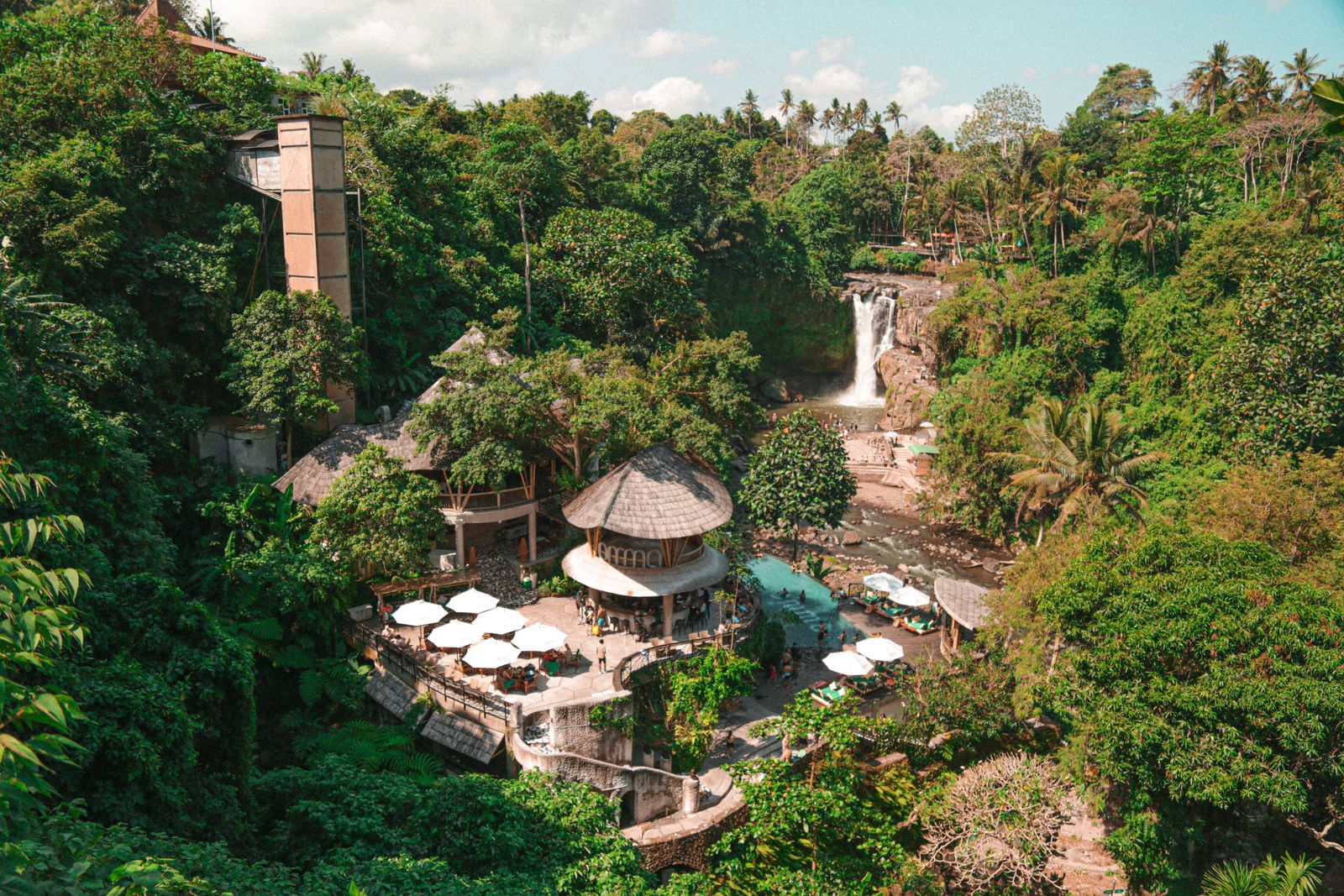
Puerto Iguazú centre is the default and the one we'd pick for most groups: you can walk to dinner, the bus terminal is right there, and it's cheap by any standard. Selva Iryapú, the forested zone between town and the airport, is where the bigger hotels sit — quiet, green, and useless without wheels or a taxi habit. Inside the Argentine park there is exactly one hotel, the Meliá, and its entire proposition is being on the walkways before and after everyone else; it costs what that's worth. Brazil's equivalent is the Belmond Hotel das Cataratas inside its own park. Foz do Iguaçu is cheaper and has more of a city around it, at the cost of putting a border between you and the better park.
The 21% nobody claims
Foreign visitors to Argentina get the 21% IVA on accommodation refunded — but only if you pay with a card issued outside Argentina, or by transfer from a foreign bank. Pay cash and you lose it. Validation went fully digital in May 2026, so in practice it happens at the hotel without you doing anything, provided you paid the right way. On a $400 room bill for a group that is roughly US$70 back for choosing the right piece of plastic. Book direct where you can, and always do the two-tab check: find the place on the platform, then search the property's own name and book the same nights on its own site, which in Puerto Iguazú is routinely cheaper because the platform commission is real money in a town this size.
What it actually costs
The entrances went up on 1 June 2026, and half the internet is still quoting last year's numbers.
Argentine park entry, since 1 June 2026: $60.000 (about US$39) for non-residents, $25.000 for Argentines, $15.000 for students, $8.000 for Misiones residents. Jubilados, under-sixes and people with disabilities go free. If you're staying a while, the three-day Flexipass is $120.000 general and $50.000 for Argentines. A lot of large tourism sites — including one government one — still publish $45.000/$15.000/$5.000, which were January 2025 prices. Use the official Parques Nacionales tariff table.
Brazilian park entry, since 19 December 2025: R$134 (about US$26) for foreigners, R$121 for Brazilians and Mercosur nationals, and R$26 on the community pass for residents of the fourteen surrounding municipalities. The internal bus is included.
So a two-country trip for one non-resident is roughly US$65 in park entries before you have done anything else. Add the boat trip at $125.000 (about US$82) when it's running, the bus at US$13 return, and food that is honestly cheap on the Argentine side, and a realistic figure is US$100–130 a day per person for a mid-range trip once accommodation is split across a group. The money that surprises people isn't the falls; it's the transfers they didn't need and the second full-price ticket they didn't have to buy.
A shape for the days
Three nights is the honest minimum. Four is the good version.
Day one: land, drop bags, and go to the Hito Tres Fronteras for sunset — three obelisks, two rivers meeting, three countries in one view, and it costs nothing. Dinner in town.
Day two: the Argentine park, from opening. Superior circuit first while the light is behind you, lower circuit after, and lunch out of your own bag rather than the park's prices. Get the ticket validated on the way out.
Day three: back into the Argentine park for half price, this time for the Sendero Macuco at opening — seven kilometres round trip on foot, free, no crowds and the only realistic chance of seeing anything with fur. Afternoon: a Guaraní community visit, or Güirá Oga, or the hummingbird garden in town.
Day four: Brazil, in the morning, then Parque das Aves opposite the entrance, then back over the bridge. If your flight is late, the Duty Free is on the way.
Where we would book
Both parks sell their own tickets, and both are the right place to buy: iguazuargentina.com on the Argentine side and cataratasdoiguacu.com.br on the Brazilian, where the timed slot is genuinely worth choosing rather than accepting. Resellers here add a margin for the privilege of buying you something you can buy in two minutes; the only reason to use one is if you want the transfer bundled, and a booked driver from town is usually cheaper bought separately. For the Argentine park, buy day one online and let the ticket office handle the half-price second day — it's a validation, not a new purchase.
Accommodation is the place a group actually saves. Puerto Iguazú has real houses and apartments as well as hotels, and the two-tab trick works well here: find the place on a booking platform, then search the property's own name and book direct for the same nights. Pay with a card issued outside Argentina so the 21% IVA on the room comes back to you. Excursions — the boat, the Guaraní community visits, Itaipu — are better booked directly with the operator or through your accommodation than through an aggregator, because when the river closes something, the person who sold it to you locally is the person who can move you onto something else.
Related guides
- Iguazú Falls Food Guide — river fish, chipá, and where to eat on both sides of the bridge.
- Things to Do at Iguazú Falls — every circuit, the trail nobody walks, and what the river cancels.
- Iguazú Culture Guide — Guaraní land, yerba mate, and life on three borders.
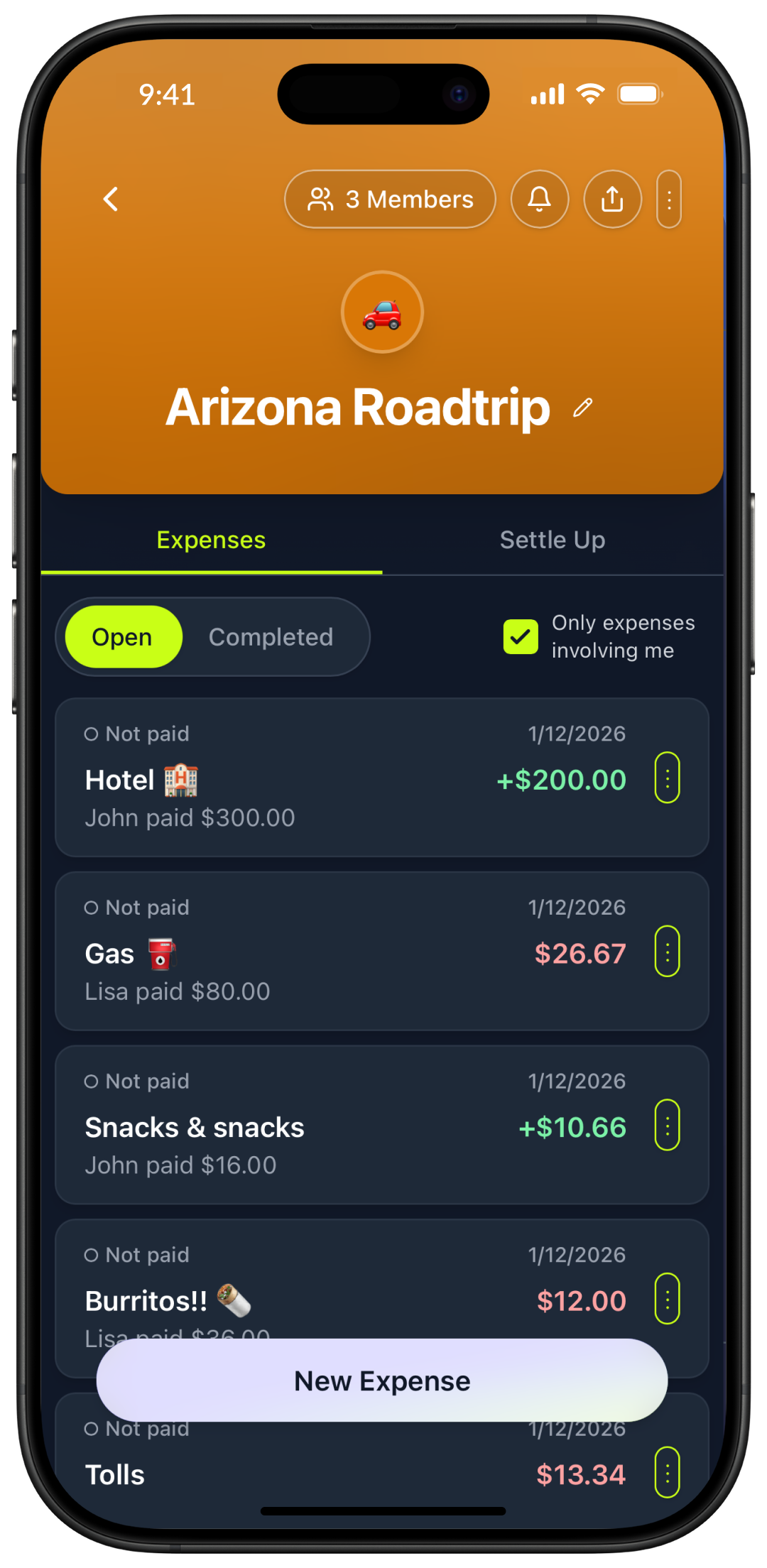
- Iguazú Falls Group Trip Guide — two parks, two currencies, and how not to lose track of who paid.
- Rio de Janeiro — the other half of the Brazil trip, if you're already crossing the bridge.