Most people give Iguazú one day, walk two circuits, take the photograph and leave feeling they've done it. They've done about a third of it. Here is everything the two parks actually contain, in the order that makes sense, with an honest note about the things the river takes away — which right now includes the most famous walkway of the lot.
The Argentine circuits, in the right order
Superior first, Inferior second, and be at the gate when it opens.
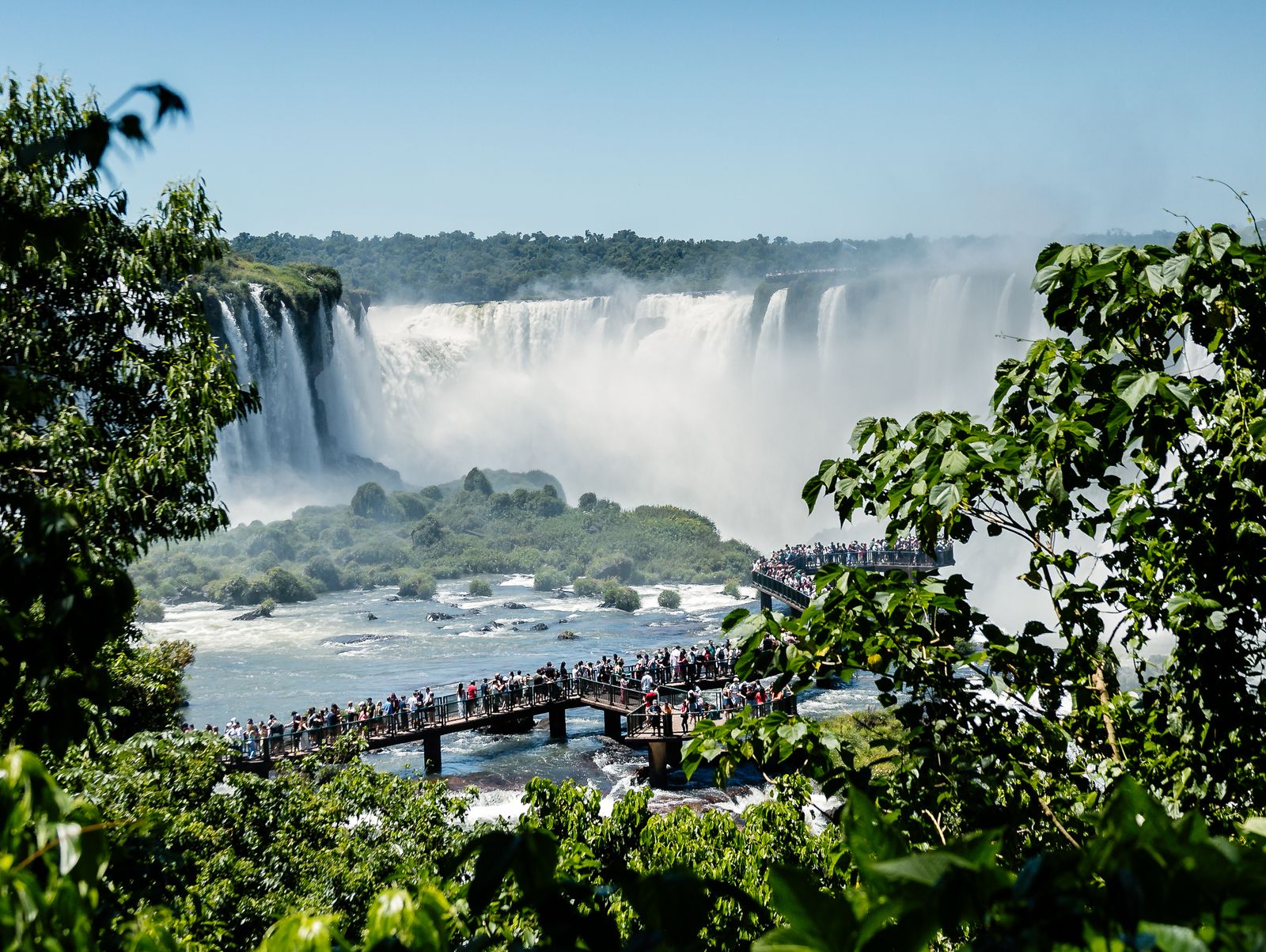
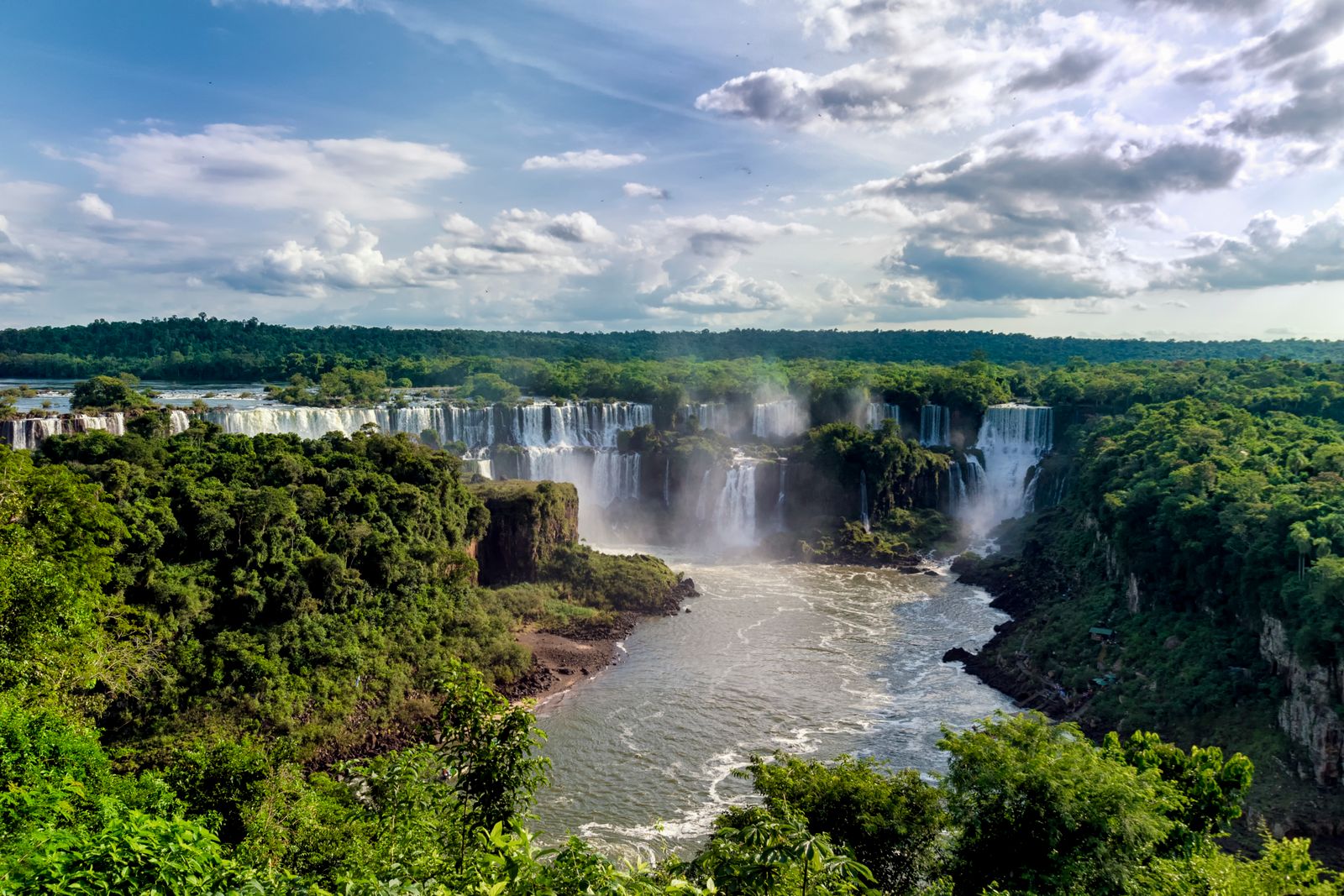
The Argentine park is organised around a small train and three walkways, and the order genuinely matters because of light and heat. Circuito Superior is about 1.75 km of flat boardwalk along the tops of the falls — no stairs, wheelchair-passable for most of it, and best early when the sun is behind you rather than in the lens. Circuito Inferior is roughly 1.7 km with real stairs, and it takes you down to the base, past Salto Bossetti, into spray heavy enough to soak a phone. It is the better of the two, and it is the one that gets better in a flood. Sendero Verde is the short connector from Estación Central that everyone walks without noticing.
Go at opening. The coach groups land from about ten, the Superior circuit has almost no shade, and by one o'clock in summer the heat is a genuine problem rather than a complaint. Two more things: your phone will have no signal on much of the lower circuit, so agree a meeting point before you split up; and keep your ticket and have it validated on the way out, because the second day is half price within 72 hours and it's the best-value thing on offer here.
The one that isn't there
The Garganta del Diablo walkway has been dismantled and stored. Plan without it.
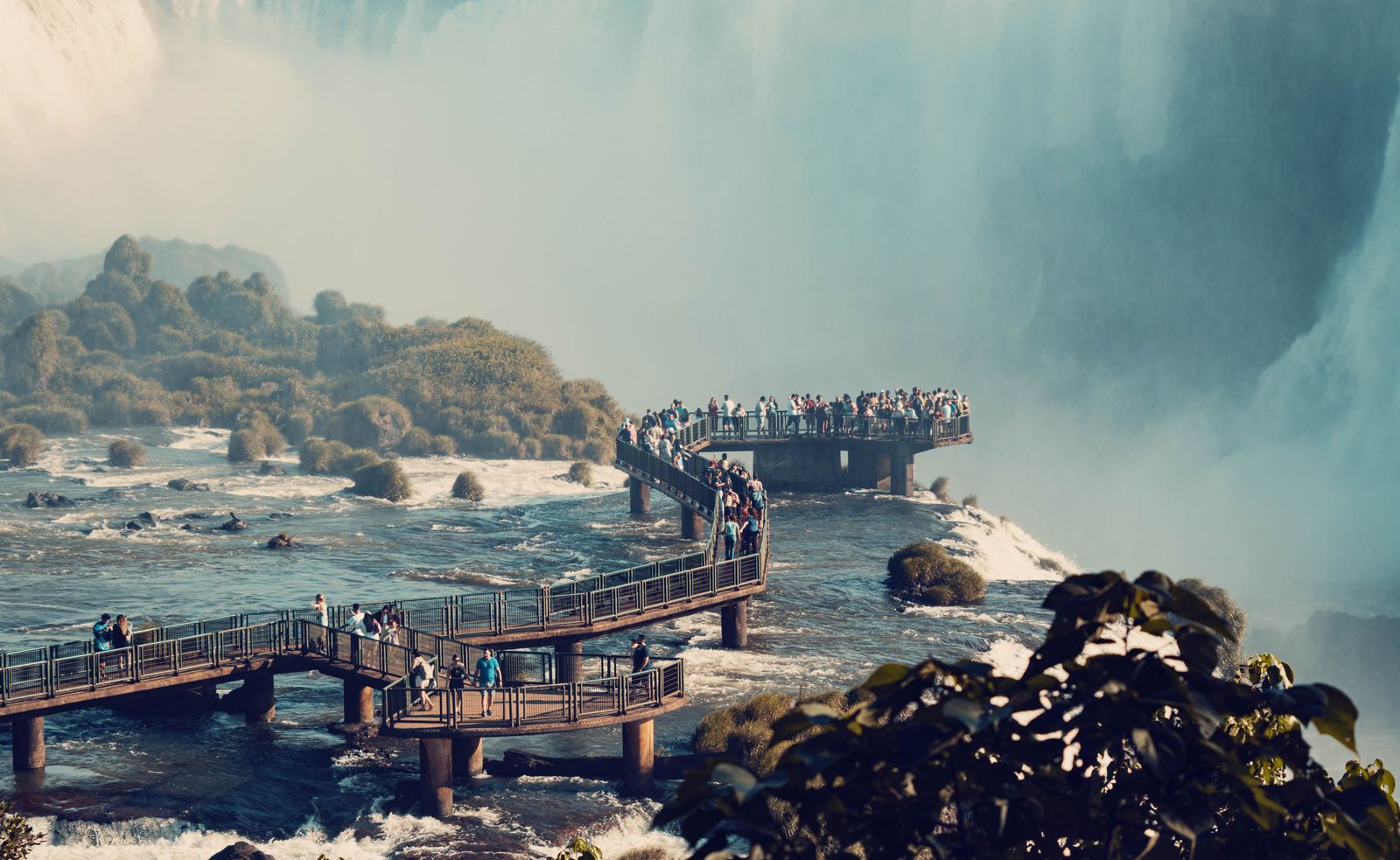
The 1.1 km walkway out to the Devil's Throat — the single most photographed structure at Iguazú — closed on 3 August 2026 and is being taken apart, floor panels and railings removed, ahead of a projected flood. The park quoted a minimum of forty days and pointedly refused to give a reopening date, saying they will rebuild it only when it is safe rather than start work and close again days later. Late June flows hit 8,170,000 litres a second, against a normal of around a million and a half, with forecasts pointing toward ten million through September and October.
What that means for your day: the Superior, Inferior, Sendero Verde and Macuco trails are all open and the park is still worth every peso, but the Garganta and everything that depends on it are off the table. Check iguazuargentina.com in the week you travel rather than trusting any article — including this one — about what is open. And if the Garganta is the reason you're coming, the Brazilian side's panoramic walkway runs out toward the base of the same Throat, reopened on 26 July 2026, and has stayed open since.
Sendero Macuco: the trail nobody walks
Seven kilometres on foot, free, and the only place in the park with any wildlife left in it.
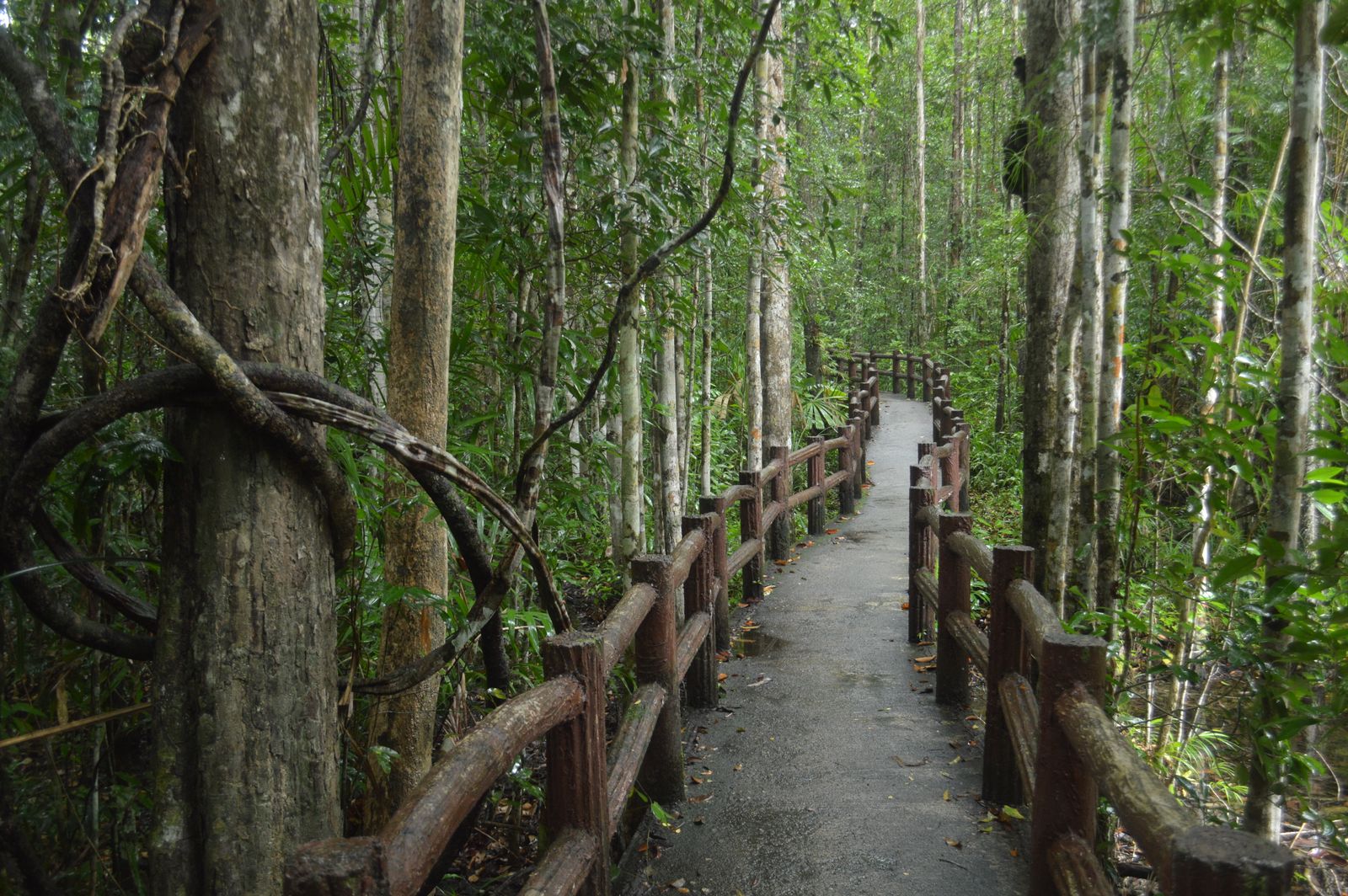
Ninety-something percent of visitors never leave the walkways, which is exactly why the Sendero Macuco is the best thing in the Argentine park that isn't a waterfall. It's about seven kilometres there and back on an unpaved forest track, it costs nothing on top of your entry, and it ends at Salto Arrechea — a single fall into a pool where, when the river allows, you can swim. Along the way it is quiet enough to hear the forest, which on the main circuits you cannot.
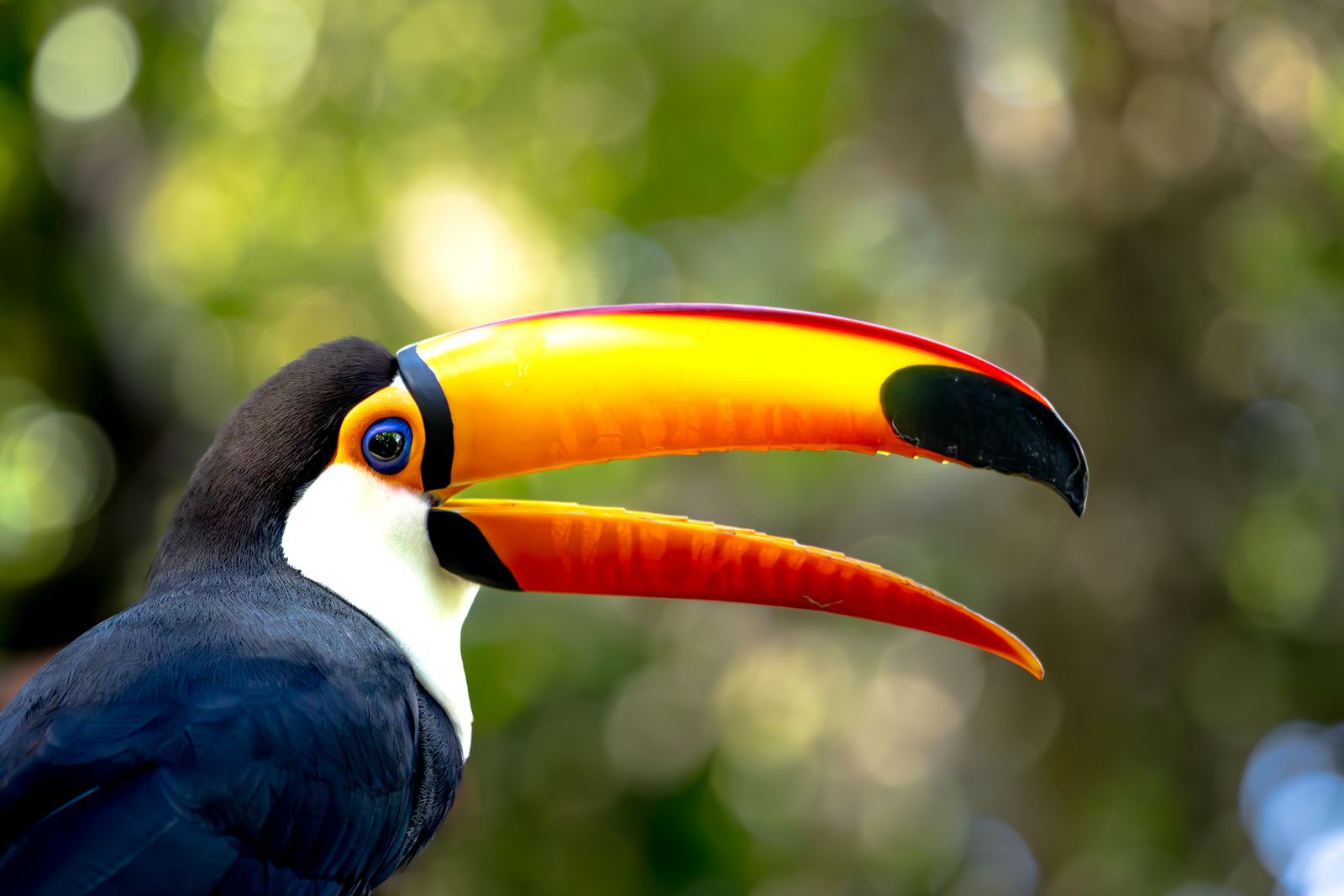
Do it at opening, for two reasons: animals are active early, and the trail has a cut-off time for entry so that nobody is out there at dusk. Take more water than you think, wear something you don't mind getting muddy, and use repellent. Realistically you'll see toucans, monkeys and butterflies in absurd numbers; the yaguareté is out there — the Green Corridor population climbed from roughly 40 animals in 2003 to near 90 by 2018 and held, and a binational census with 260 camera traps started in March 2026 — but you will not see one, and that is fine. Knowing it's there is most of the point.
Everyone photographs the water. The good half of this park is the part with no handrail.— On the Sendero Macuco
The Brazilian side, in half a day
One trail, two hours, and the view the Argentine side can't give you.
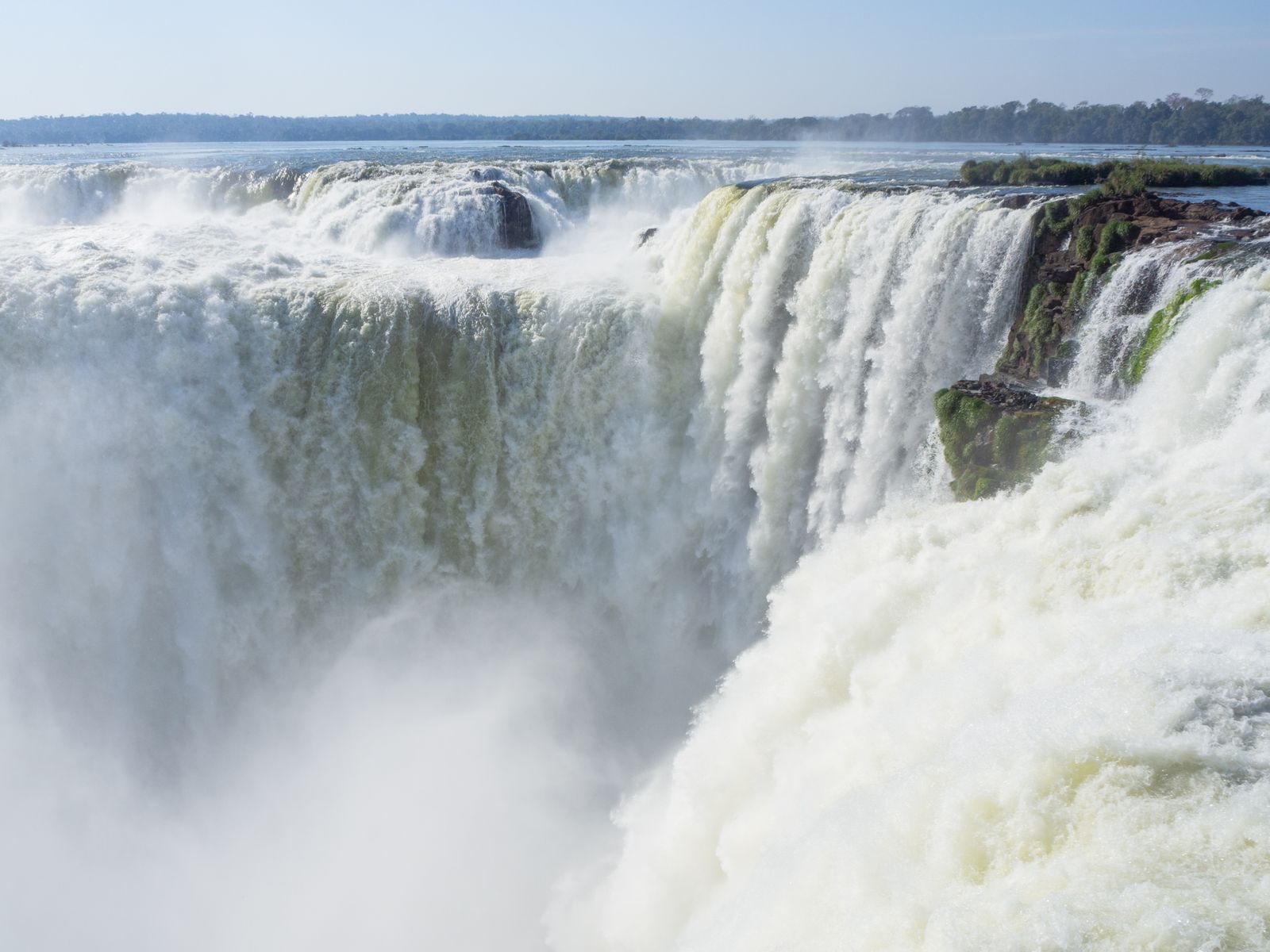
Brazil's park is a single main experience and is better for the focus: the Trilha das Cataratas, about 1.2 km along the canyon wall, with the entire Argentine side of the falls unfolding across the water as you walk. It ends at a walkway that pushes out toward the base of the Garganta and delivers a soaking that people queue for. The double-decker buses from the visitor centre to the trailhead are included in the ticket price.
Practicalities that catch people out: entry is R$134 for foreigners and R$121 for Brazilians and Mercosur nationals as of December 2025; tickets are sold online with a timed slot; and the park's hours are shorter than the Argentine side's — 09:00–16:00 on weekdays and 08:30–16:00 at weekends. That is a last-entry time, not a closing time, but plan the morning rather than the afternoon. Directly opposite the entrance is Parque das Aves (R$149,99 full, R$99,99 half), a serious rehabilitation and breeding centre with 1,300-odd birds of 130 species in walk-through aviaries — toucans at arm's length. It is the best hour anywhere near here for anyone travelling with children, and honestly for everyone else too.
Water, and when they cancel it
The boat is the best ride at Iguazú, right up until the river says no.
Gran Aventura on the Argentine side is the one everyone books: a truck through the forest, then an inflatable up the river and directly into the spray under Salto San Martín. It costs $125.000 (about US$82), $107.000 for 12-to-16-year-olds and jubilados, and under-12s are not allowed. Macuco Safari is the Brazilian equivalent, from R$384, with no age limit and a gentler run. Both put you under a waterfall in a boat, and both are worth the money.
Both are also the first thing cancelled when the river rises to alert level, and no amount of having paid changes that. The same applies to Isla San Martín, which is only reachable when the water is low, and to the Paseo de Luna Llena — the five-nights-a-month moonlight walk at $95.000 for adults and $47.500 for ages 6–12, in slots at 19:45, 20:30 and 21:15 — which exists to put you on the Garganta balcony at night and therefore cannot run while that balcony is dismantled. Book water activities for early in your stay, so a cancellation leaves you a day to try again.
Beyond the falls
There is a surprising amount here, and most of it is cheap.
- Hito Tres Fronteras — free. Three obelisks, the Iguazú meeting the Paraná, and Brazil and Paraguay in the same view. Go for sunset; there's a craft fair and a twenty-minute water-and-light show after dark.
- Güirá Oga — a rescue and rehabilitation centre for injured and confiscated birds on the road to the park. Guided, honest about why each animal is there, and a much better use of an hour than the roadside attractions near it.
- Jardín de los Picaflores — someone's back garden in Puerto Iguazú with dozens of hummingbirds at arm's length and a small entry donation. Twenty minutes, and one of the nicest things in town.
- La Aripuca — a house-sized structure built from enormous salvaged hardwood trunks, with a workshop and shop attached. A quick stop rather than a morning.
- Itaipu on the Brazilian side — one of the largest hydroelectric dams on earth, with tours from R$48 up to R$185, and a Friday and Saturday evening illuminated visit at 19:00. It is the human-scale counterweight to a weekend of natural spectacle.
- San Ignacio Miní — the great Jesuit-Guaraní ruin, $12.000 for foreigners and $7.000 for Argentines. Worth saying clearly: it's about four and a half hours' drive each way, so it belongs to a Posadas trip, not an Iguazú day.
The swifts, at dusk, for free
The Argentine park's emblem is the great dusky swift, a small dark bird that flies straight through the falling water to roost and nest on the wet rock behind it. In the last hour of light thousands of them come back at once, and they hit the water columns like they're going through a curtain. It costs nothing, needs no booking, and is on nobody's itinerary. Position yourself at the Salto Bossetti end of the lower circuit in the late afternoon and look up rather than down. It's the single most memorable thing most people never see here.
Wildlife rules that actually matter
Two of these will save you a hospital visit, and one is just good manners.
Coatis are the practical danger. They patrol the walkways in packs, they have no fear of people, and they bite and scratch around food — the park signs it because bites happen regularly. Food goes sealed inside a closed bag, nobody hand-feeds anything for a photograph, and small children don't walk around holding snacks. If one gets aggressive, put the food down and step back rather than holding it up.
The barriers are the other one. Every year somebody climbs one for a better photograph. The current above the falls is not survivable and the rock is slick with spray even where it looks dry. There is no photograph on the far side of the railing.
And the manners: don't feed anything, don't play music on the walkways, and if you're carrying a drone, both parks ban them. The forest is loud enough on its own.
Where we would book
Park entries go direct — iguazuargentina.com and cataratasdoiguacu.com.br — and on the Brazilian side booking direct is the only way to choose your time slot rather than take what a reseller has left. For the Argentine park, buy the first day online and let the ticket office apply the half-price second day; it's a validation on your existing ticket, not a new purchase, and resellers can't do it for you.
Gran Aventura and Macuco Safari are run by the concessionaires inside the parks, so booking direct or through your accommodation is both cheaper and — more usefully — means there's someone local to move you to another day when the river cancels you. That is worth more than a small discount. Itaipu sells its own tickets. Güirá Oga, the hummingbird garden and the Guaraní community visits in our culture guide are all walk-up or arranged locally, and the money stays much closer to the people doing the work.
Related guides
- Your Iguazú Falls Travel Guide — the whole trip, including the border and the budget.
- Iguazú Falls Food Guide — river fish, chipá and where to eat on both sides.
- Iguazú Culture Guide — Guaraní land, yerba mate and three borders.
- Iguazú Falls Group Trip Guide — booking six seats on a boat without one person carrying it.
- Things to Do in Rio de Janeiro — the other Brazilian half of the trip.