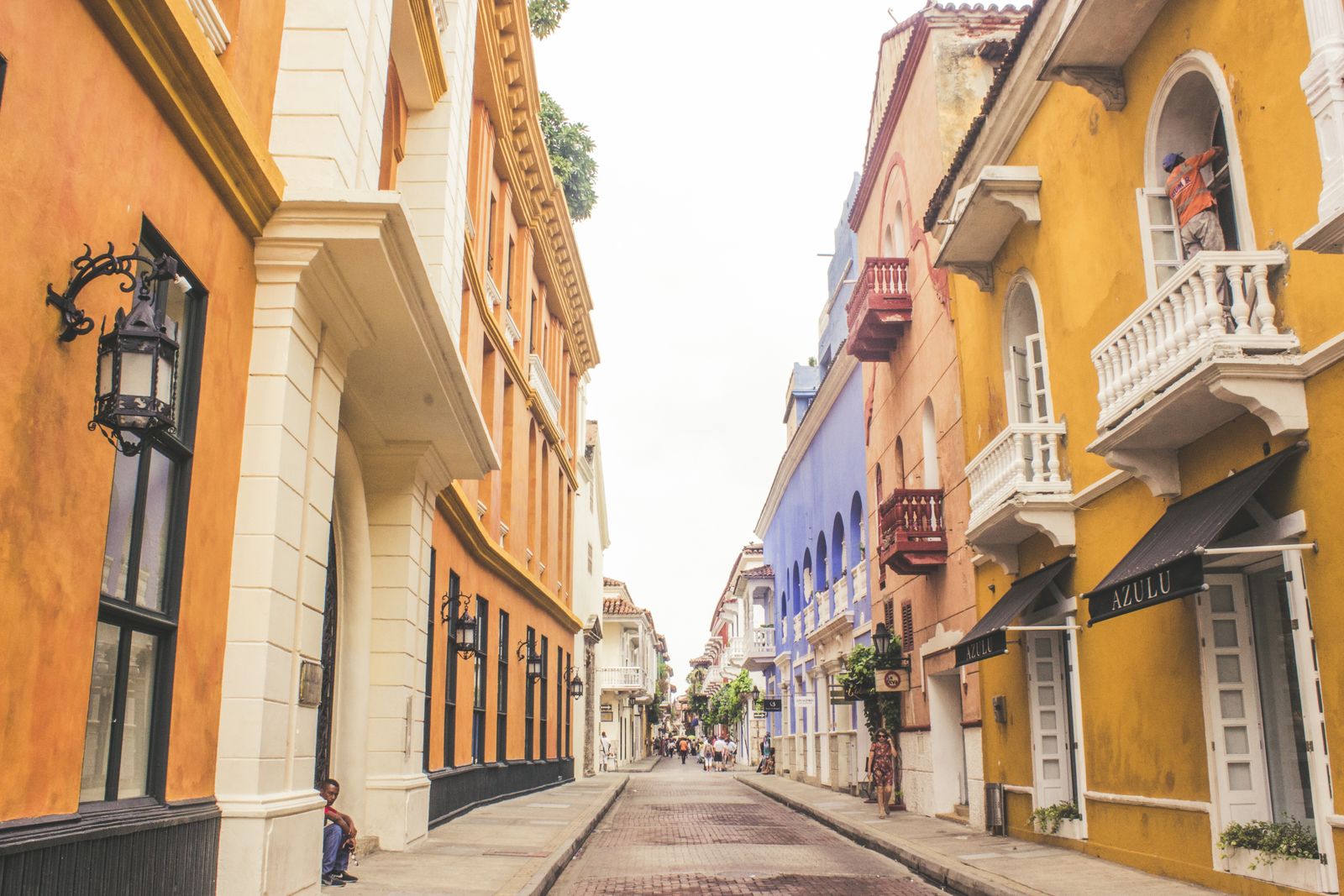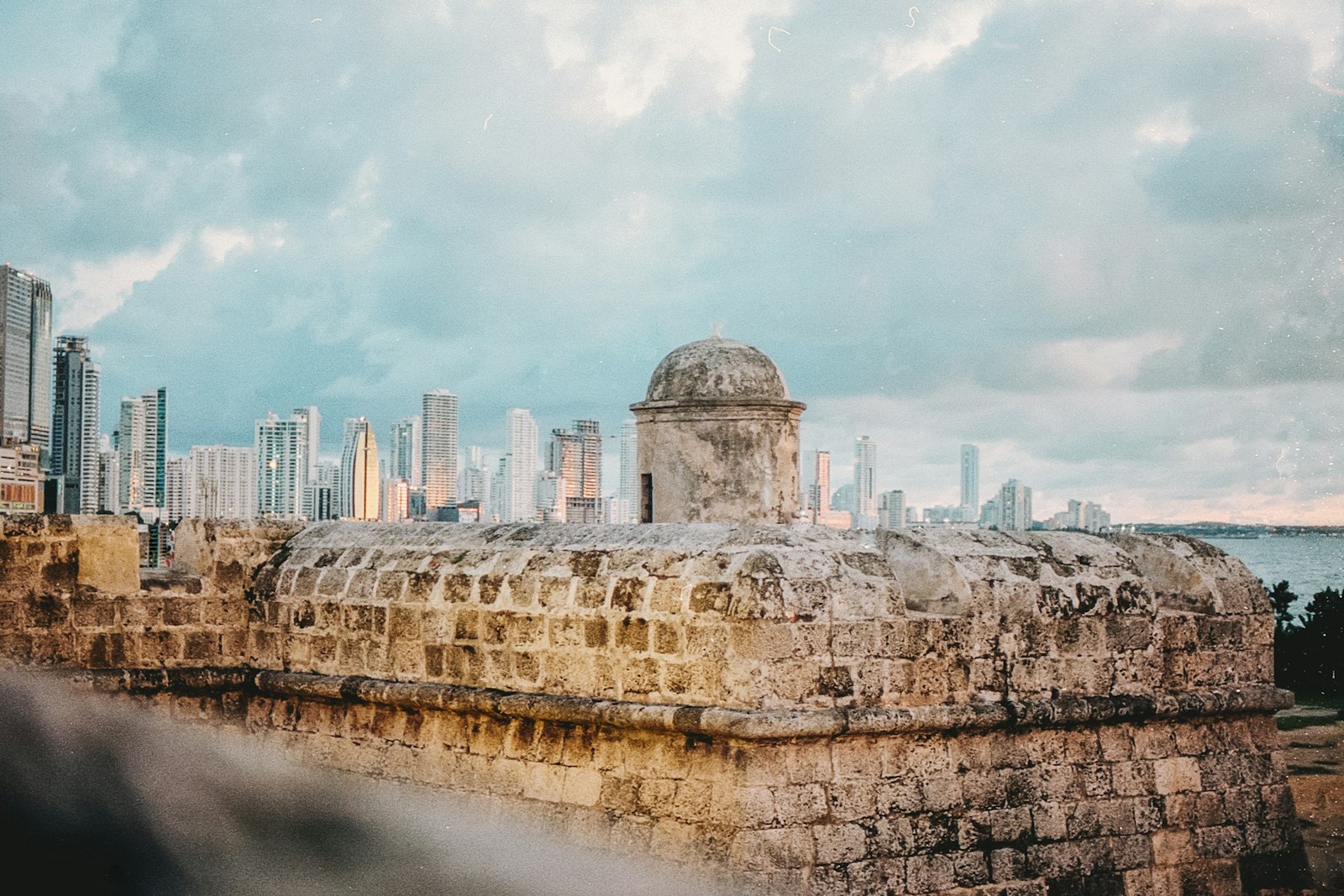
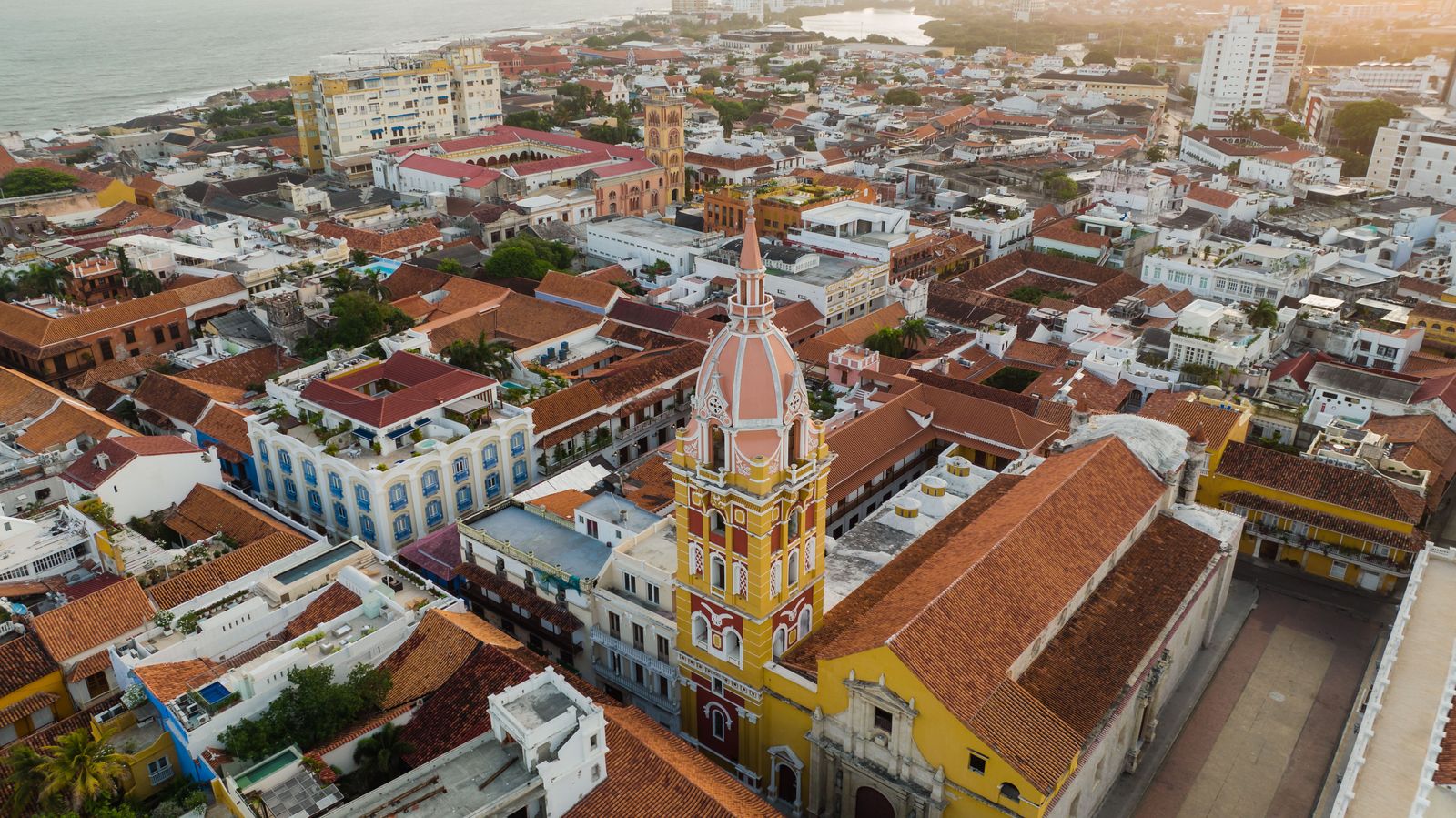
Cartagena is the most photographed city in Colombia and the photographs are all of the same thing: a wall. It is worth knowing what the wall was for, because the answer is the beginning of everything else in this guide — the music, the language spoken an hour down the road, the women selling fruit in the plazas, and the party on the 11th of November.
This is not a heavy guide. It is a guide that puts things in the right order.
Chapter one: the walls are a receipt
Fortifications this expensive were protecting something specific.
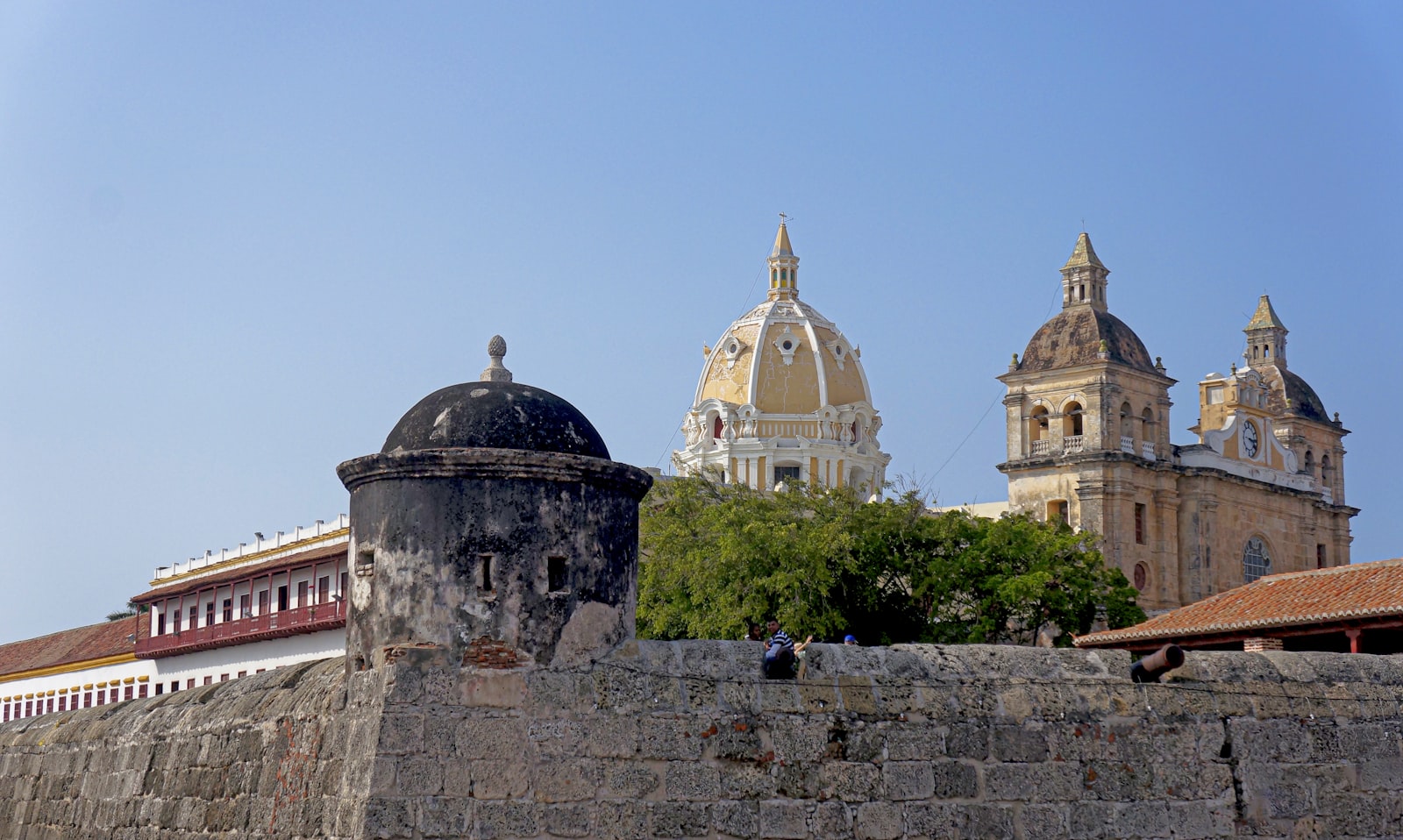
Cartagena de Indias was the Spanish empire's great Caribbean port, and two things moved through it. Silver and gold went out. Enslaved Africans came in — this was the principal slave port of Spanish South America, the point of arrival for hundreds of thousands of people who were sold here and dispersed across the continent from this bay.
The walls, the bastions and the fort on the hill exist because that traffic was worth defending from the English, the French and the pirates who kept trying to take it. So when you walk the murallas at sunset — and you should, it is the best hour of the day here — you are walking on the infrastructure of that trade. The city does not hide this, exactly. It just does not lead with it, and the postcard version leaves it out entirely.
Chapter two: the tribunal on the plaza
One of only three Inquisition courts in the Americas sat here.
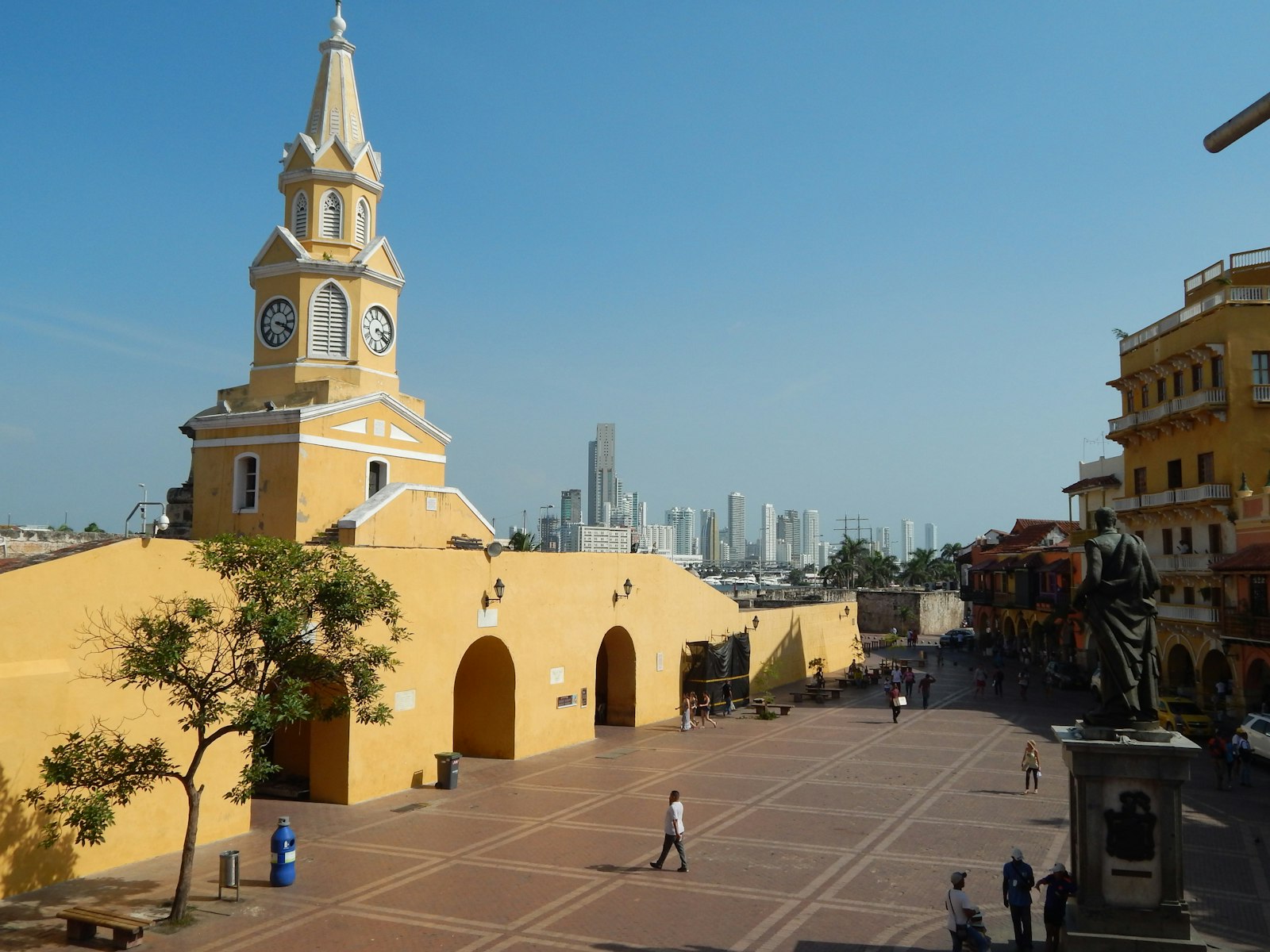
The Palacio de la Inquisición, on Plaza de Bolívar, housed one of just three Holy Office tribunals in the Spanish Americas. The building is beautiful in the way the whole Centro is beautiful, and there is a small window on the side street where denunciations were posted. The museum inside is uneven — part colonial history, part instruments of torture, part city museum — but the point of going is standing in the room where it was administrative.
Adults COP 15,000, children COP 9,000. Monday to Saturday 09:00–18:00, Sundays and holidays 10:00–16:00. Prices here drift, so treat that as the shape rather than a promise.
Chapter three: the first free town in the Americas
An hour from the walls, people who freed themselves built a town and kept it.
People escaped the Cartagena slave market, went inland, fortified a settlement, defended it for decades, and eventually the Spanish crown gave up and recognised their freedom by decree. That town is San Basilio de Palenque, about an hour inland from here, and it is understood as the first free town in the Americas.
It is not a museum. It is a working town of a few thousand people, and what survived there is extraordinary: they still speak Palenquero, a creole with Spanish vocabulary and African grammatical structure — the only language of its kind in the world — and UNESCO inscribed the town's cultural space as a Masterpiece of the Oral and Intangible Heritage of Humanity in 2005. It is also the birthplace of champeta, the music you will hear coming out of every sound system in Getsemaní, and of bullerengue.
How to visit without being a problem
Go with a community-run operator — Kombilesa Tours is the village's own agency, and the music collective Kombilesa Mi, who played NPR's Tiny Desk, are from there. Ask before photographing people, homes or anything that looks like a private moment; buy fruit, sweets and crafts directly from families rather than through an intermediary. Palenque is a town with schools and jobs and a rhythm of its own, not a stop on a circuit, and the visit is much better when you treat it that way.
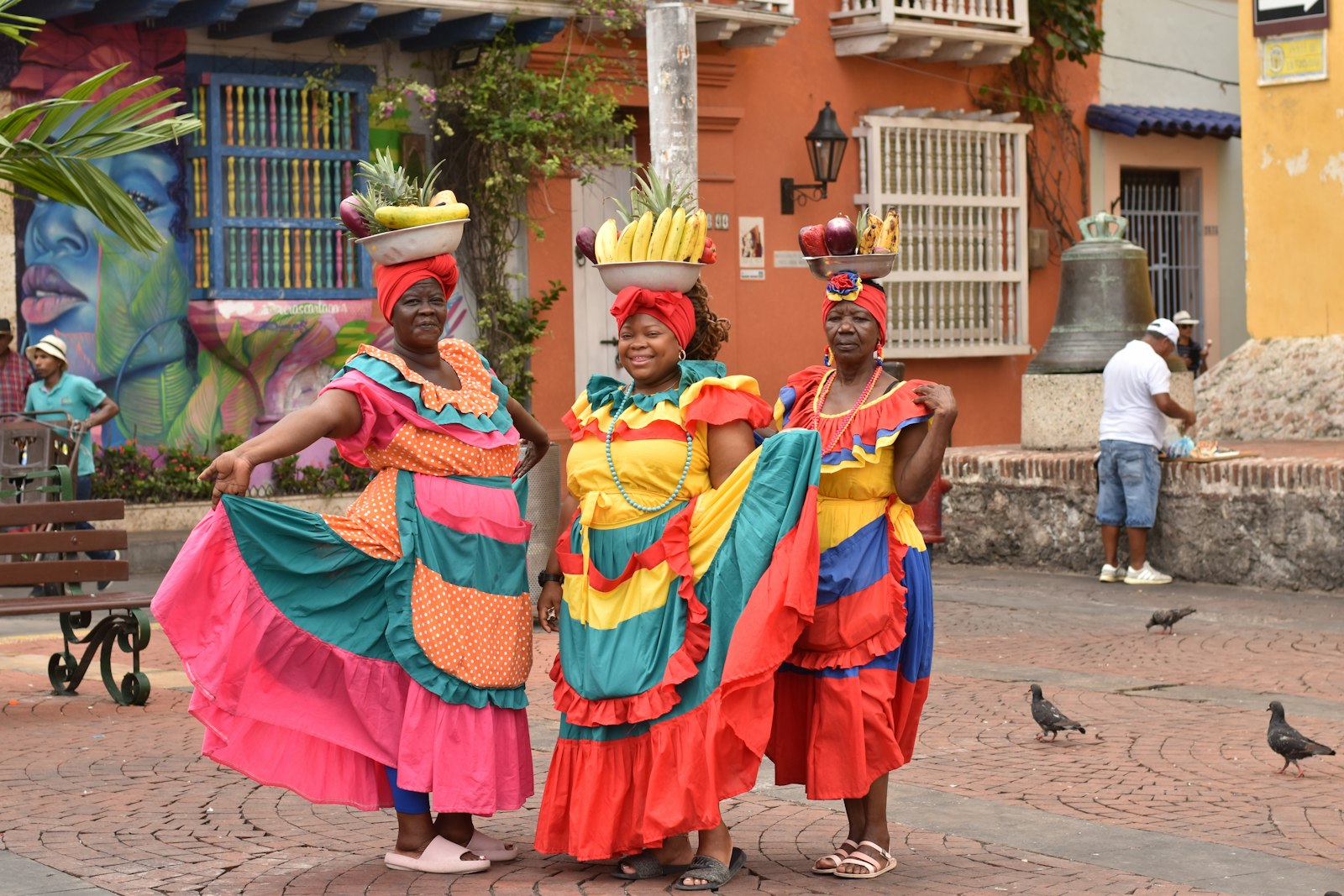
And when you get back to the city, you will recognise the palenqueras in the plazas — the women in the ruffled polleras with the fruit bowls, most of whom trace to that town. The photograph has a fee. Agree it first; it is a job.
Gabo, who arrived to study law and did not
Cartagena is where García Márquez started, and where he ended up.
Gabriel García Márquez came here in May 1948 to study law, started writing for the local paper instead, and never really left the city behind — Love in the Time of Cholera and Of Love and Other Demons are both set in this walled town, and once you have walked it you can see exactly which streets he meant.
His ashes, and those of Mercedes, were interred at the Claustro de La Merced at the Universidad de Cartagena on 23 May 2016, in a monument with a small room of his effects beside it. A restoration of the cloister was announced in 2025, so access varies — check locally on the day rather than turning up expecting an open door.
The 11th of November, which is the living version of all of this
Cabildos, comparsas, gaita bands and champeta, in the streets, for a week.
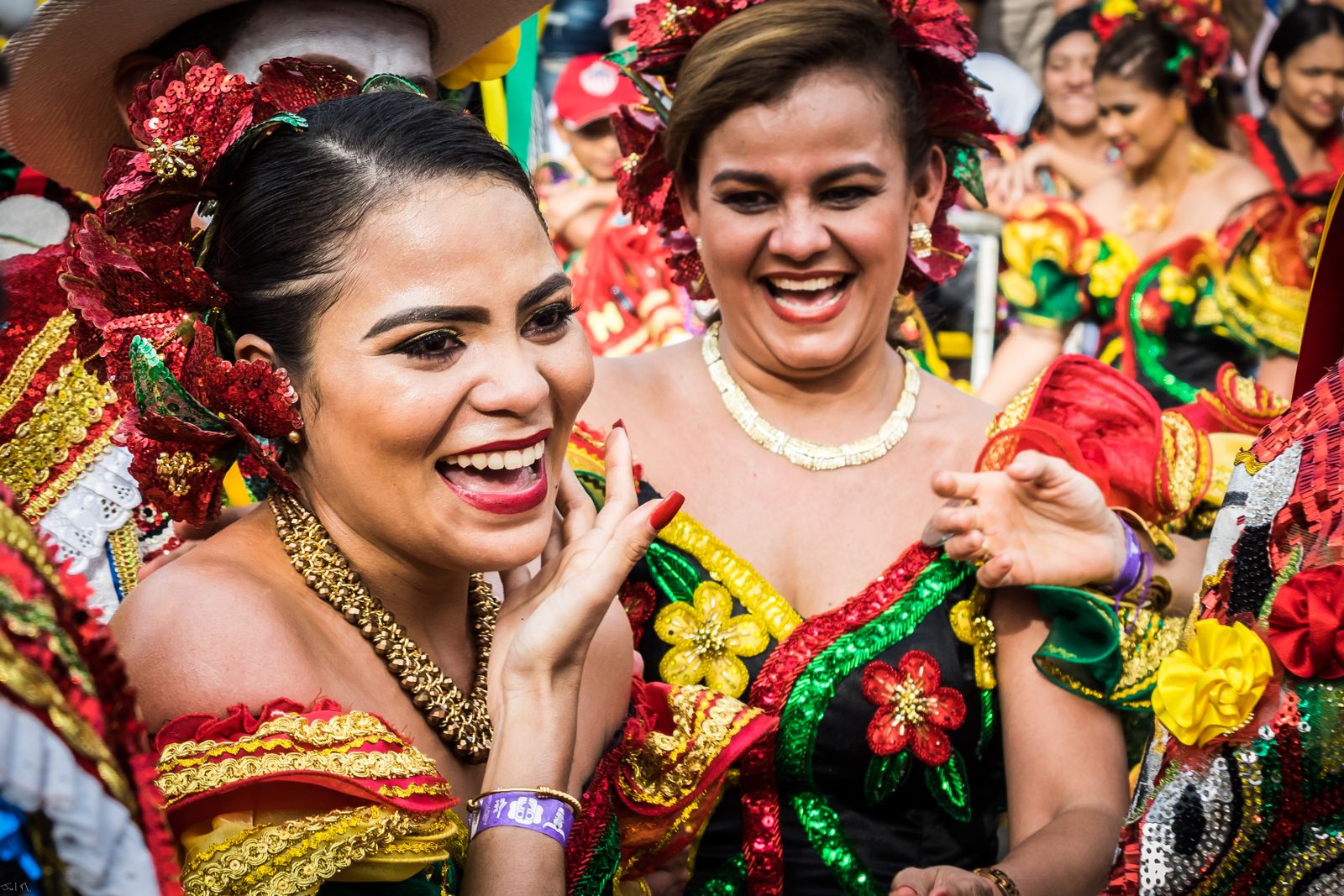
Cartagena declared independence on 11 November 1811, and the Fiestas de Independencia are the result: a week of cabildos, comparsas, gaita bands, champeta sound systems and parades through the Centro and Getsemaní. The 2026 edition is programmed for roughly the 6th to the 12th of November, under the motto “La fiesta que nos une”.
It falls in the rainy season and it is the best week of the year to be here, and those two facts are not in conflict. If your dates are flexible and you do not mind getting wet, aim at it.
The other date worth knowing is the Hay Festival, which ran 29 January to 1 February in 2026 and brings 180-odd writers from 25 countries into the same small walled city — a completely different crowd and a very good week for accidentally ending up at something.
The music you'll dance to in Getsemaní was invented by the descendants of people who escaped the market inside those walls.— On champeta
Where we would book
Book the Palenque day through a community operator rather than a generic Cartagena agency — the difference is where the money lands and whether you meet anybody. It is a full day; do not try to bolt it onto a beach morning.
The Palacio de la Inquisición and the Claustro de La Merced both just want you to walk up, and both are better in the first hour after opening. If your week includes the 11th of November, book your accommodation months out, because the whole city books out with it.
And spend an evening at Café Havana or in Plaza de la Trinidad with the champeta going, which is the only part of this guide that requires no ticket at all and is arguably the most important one.
Related guides
- Cartagena Comprehensive Guide — how the week fits together.
- Cartagena Food Guide — the cocadas, and who is selling them.
- Cartagena Activities Guide — the wall, the fort and the boat.
- Cartagena Group Trip Guide — doing all of it with eight people.
- Rio de Janeiro Culture Guide — the other great arrival port, and the culture it produced.