
Tango is the city's heartbeat
Born in the port, in the longing of people far from home.

To understand Buenos Aires, start with tango — not the rose-in-teeth cliché, but the real thing: a music and a dance born in the immigrant tenements and dockside dives of the late 1800s, out of the loneliness of a city full of people who'd left everywhere else behind. It's melancholy and proud and a little dangerous, and it never really left. You'll hear it leaking from doorways, see couples practicing in plazas, and — if you find a milonga — watch a whole room speak it fluently. Read up on Carlos Gardel, the genre's patron saint, before you come; his face is still on walls all over the city.
Carlos Gardel's Abasto
The barrio of Abasto was Gardel's turf, and it still trades on him — there's a museum in his old house and his image tiled across the streets. Even if you skip the museum, walk the neighborhood with one of his recordings in your ears. The most famous voice in tango history sounds different on the pavement that made it.
The café notable is the city's living room
Where porteños go to think, argue, and sit for three hours.

Buenos Aires runs on café culture the way Paris likes to think it does. The cafés notables — protected historic cafés with their original marble, mirrors, and dark wood — are where the city has done its talking for over a century. The grand Café Tortoni (open since 1858) is the famous one, full of tourists but genuinely beautiful; for a quieter version, try gilded Las Violetas in Almagro, La Biela beside the Recoleta cemetery, or the tiny El Gato Negro on Corrientes — a single cortado buys you a table for as long as you want it. Nobody rushes you. Bring a friend, order coffee, and solve the world for an afternoon.
In Buenos Aires, a coffee isn't a transaction. It's a lease on a table and a license to stay.— On the café notable
A city that genuinely reads
More bookshops per person than almost anywhere on earth.
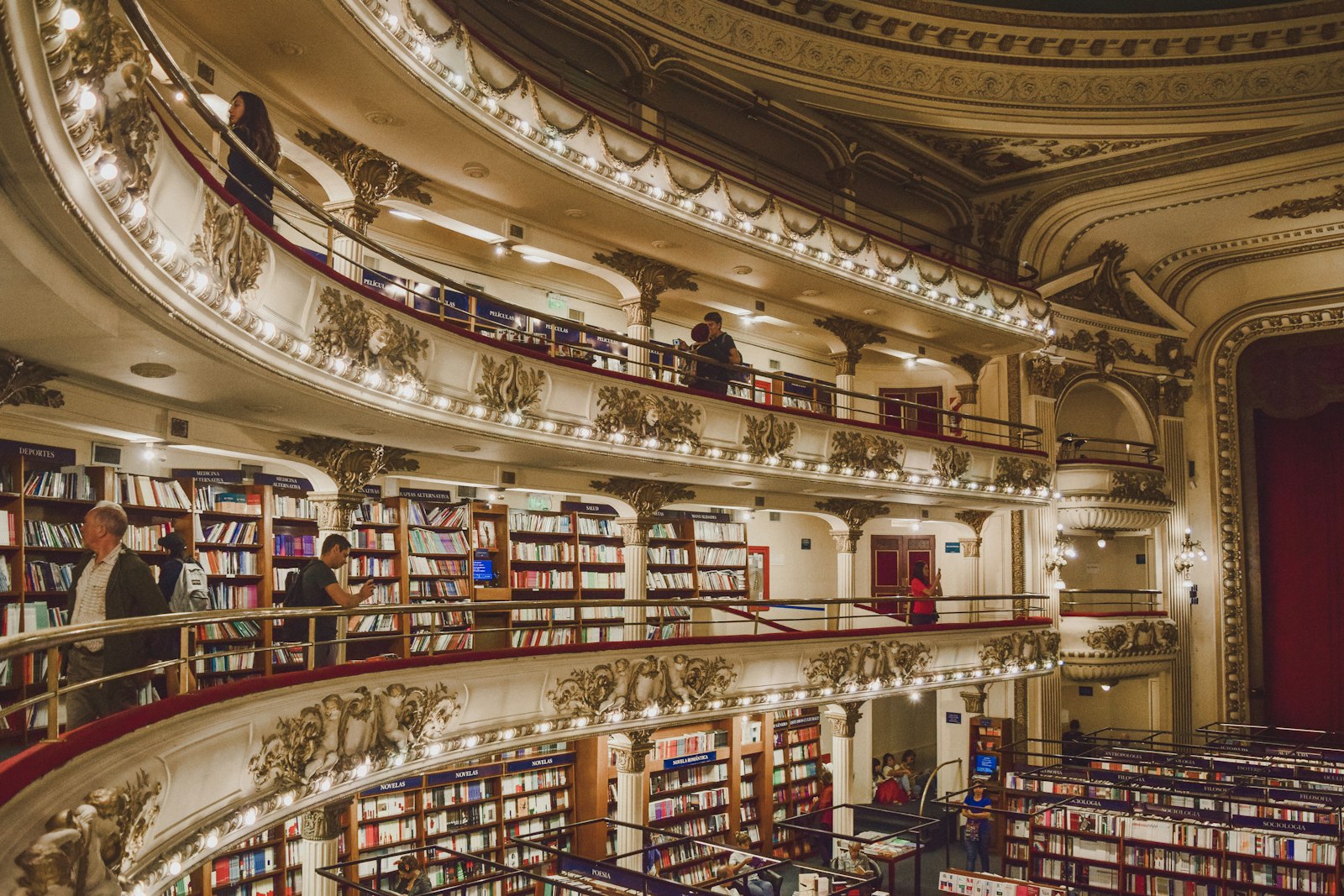
Buenos Aires is a bookish city — it has more bookstores per capita than nearly any other, and it shows. The crown jewel is El Ateneo Grand Splendid, a 1919 theater turned bookshop where you browse in the old opera boxes and read on the former stage under a painted ceiling; it's regularly called the most beautiful bookshop in the world, and for once the hype is right. This is also Borges's city — the great writer worked in its libraries and set his labyrinths in its streets. You don't have to read him to feel it, but a stop at El Ateneo is non-negotiable, even if you can't read a word of Spanish.
Art, from MALBA to the murals
World-class collections and the best street art in the Americas.
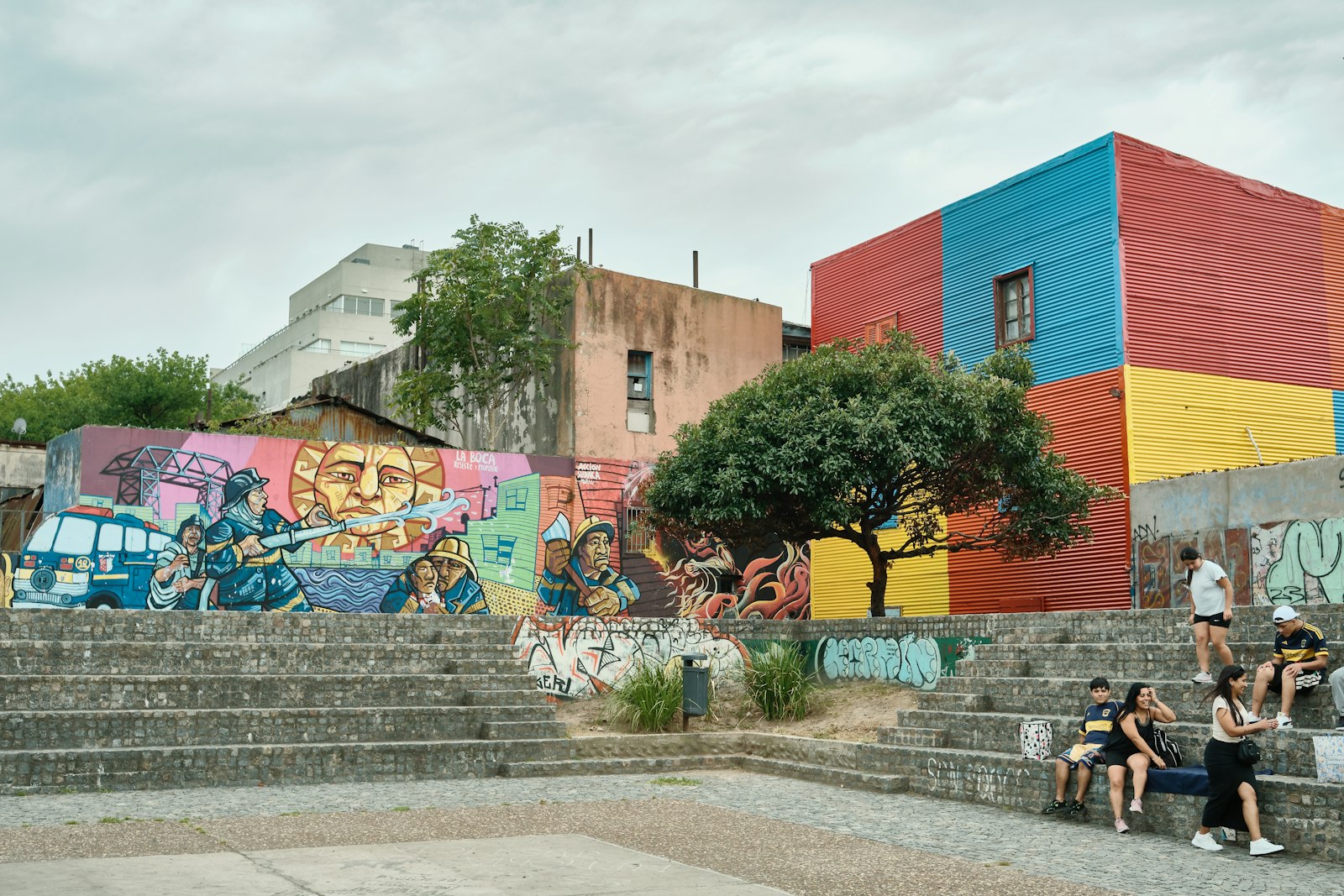
For art, point the group at MALBA (the Museum of Latin American Art) for a sharp, walkable collection — Frida Kahlo, Diego Rivera, and the Argentine greats — and the free Museo Nacional de Bellas Artes for everything from Goya to local masters. But the best gallery here is the street: Buenos Aires has a thriving, legal mural scene, with enormous works splashed across Villa Crespo, Palermo, and Coghlan. Look, too, for fileteado porteño — the ornate, swirling sign-painting style, born here and now UNESCO-listed, that you'll spot on old shopfronts once you know to look.
Evita, and the politics in the air
You can't read the city without its ghosts.
Argentina wears its history loudly, and Buenos Aires is where most of it happened. Stand on the Plaza de Mayo, where the white headscarves of the Madres are painted onto the paving in memory of the disappeared, with the pink Casa Rosada at one end — the balcony where Evita Perón addressed the crowds. Evita is buried in the Recoleta Cemetery, and her face still towers over Avenida 9 de Julio. You don't need to take a side to feel the charge in these places; just stand a while and read the plaques. The city will tell you the rest. Now — coffee to talk it over?
Where we would book
Almost everything in this guide is free or nearly so: the cafés cost the price of a coffee, El Ateneo and the murals cost nothing, and Bellas Artes is free to enter. The two things worth booking are a real milonga night or tango class with a recommended teacher (far better than any dinner show) and, if your group likes context, a walking tour on the city's history or street art — a good guide turns a pretty wall into a whole story. Spend on understanding, not on spectacle.
Related guides
- The Complete Buenos Aires Guide — how to put the whole trip together.
- Where to Eat in Buenos Aires — the café notables and the city's tables.
- Things to Do in Buenos Aires — milongas, markets, and matches.
- Mexico City: A Culture Guide — another capital where history sits on every corner.
- Buenos Aires Group Trip Guide — the cafés notables and milongas, planned for ten.