A city that has been doing this for 700 years
Seven centuries of civilization. Still stacking.
Mexico City sits on top of Tenochtitlan, the Aztec capital, which sat on top of older settlements going back to 1325. Spanish colonial Mexico City sits on top of that. Independence-era Mexico City on top of that. Diego Rivera's revolutionary Mexico City on top of that. Today's CDMX — the one you fly into — is the most recent layer of a continuous 700-year stack.
The point of going to museums and seeing murals here isn't to fill a checklist. It's to start to feel that stack underfoot. This guide is how we'd actually do it.
The non-negotiables (three, maybe four museums)
Start with the foundation.
Museo Nacional de Antropología
The one we keep coming back to. Olmec heads, the Sun Stone, Pakal's tomb. Three hours minimum. Closed Mondays. $210 MXN (residents $105).
Museo Nacional de Antropología
The point of going to museums and seeing murals here isn't to fill a checklist. It's to start to feel that stack underfoot.— On the museums
The one we keep coming back to. World-class collection of pre-Hispanic civilizations — Olmec, Maya, Mexica, Toltec, Zapotec — laid out so you understand the timeline. The Sun Stone (often called the Aztec calendar), the colossal Olmec head, the full-scale reconstruction of Pakal's tomb from Palenque. Three hours minimum. Closed Mondays. $210 MXN (residents $105), kids and seniors free. The cafeteria at the back is decent if you need a break.
How to read it: start in the central courtyard with the giant umbrella fountain (the Paraguas), then enter the Mexica hall (room 7, the centerpiece). After that the rooms run roughly chronologically — Olmec, Teotihuacán, Maya, Oaxaca, the Gulf cultures. The ethnology floor upstairs covers contemporary indigenous Mexico and is often empty and excellent.
Templo Mayor
The Aztec main temple, found by accident in 1978 when an electric company was digging a cable trench in front of the cathedral. The site is now a step pyramid in cross-section, half-excavated, with the museum at the back. $210 MXN (residents $105), closed Mondays. The museum's eight rooms are arranged around the temple's seven construction phases — each emperor built on top of the last.
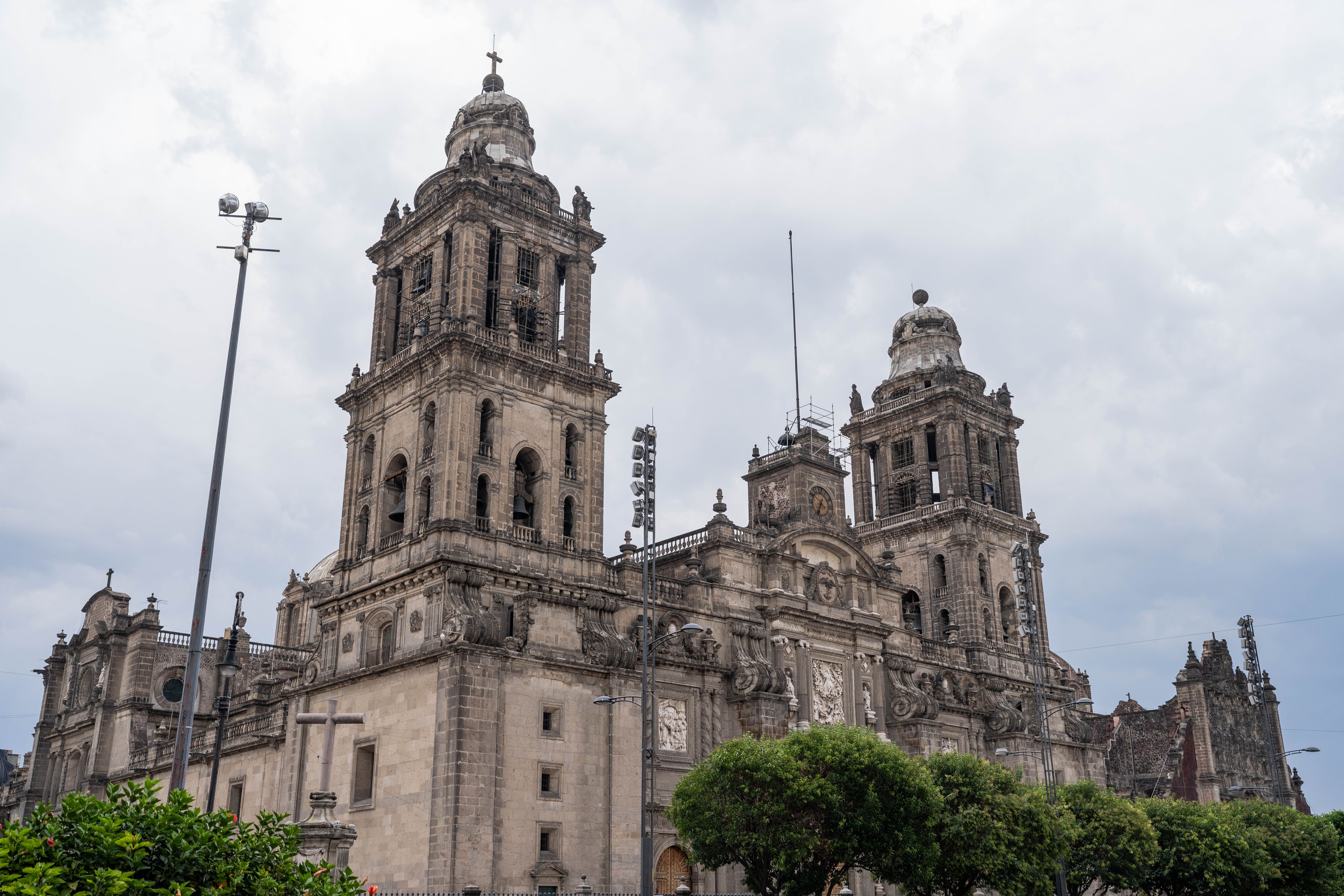
Plan it for the same day as the cathedral and the Zócalo so you can feel how three civilizations are stacked on top of each other in 200 meters of city block.
Diego Rivera at Palacio Nacional
Rivera spent twenty years (1929–1951) painting the staircase and main wall of the National Palace with a mural that tells Mexican history from pre-Hispanic times through the revolution. The Epic of the Mexican People in their Struggle for Freedom and Independence. It is genuinely one of the great works of 20th-century art and admission is free.
Bring your passport — you'll need ID to enter, since the Palace is also the president's office. Open Tuesday–Sunday 10am–5pm. Plan an hour. Right next door to the cathedral.
Casa Azul (Museo Frida Kahlo)
Coyoacán, the house where Frida lived and died. Smaller than the line suggests. Mandatory online booking — don't try to walk up. $320 MXN. The bedroom with the mirrored ceiling she could see herself in while bedridden, the kitchen she shared with Diego, the garden she painted constantly. About an hour inside.
The next layer (worth your time if you have it)
When you have a second afternoon.
Museo Soumaya + Museo Jumex
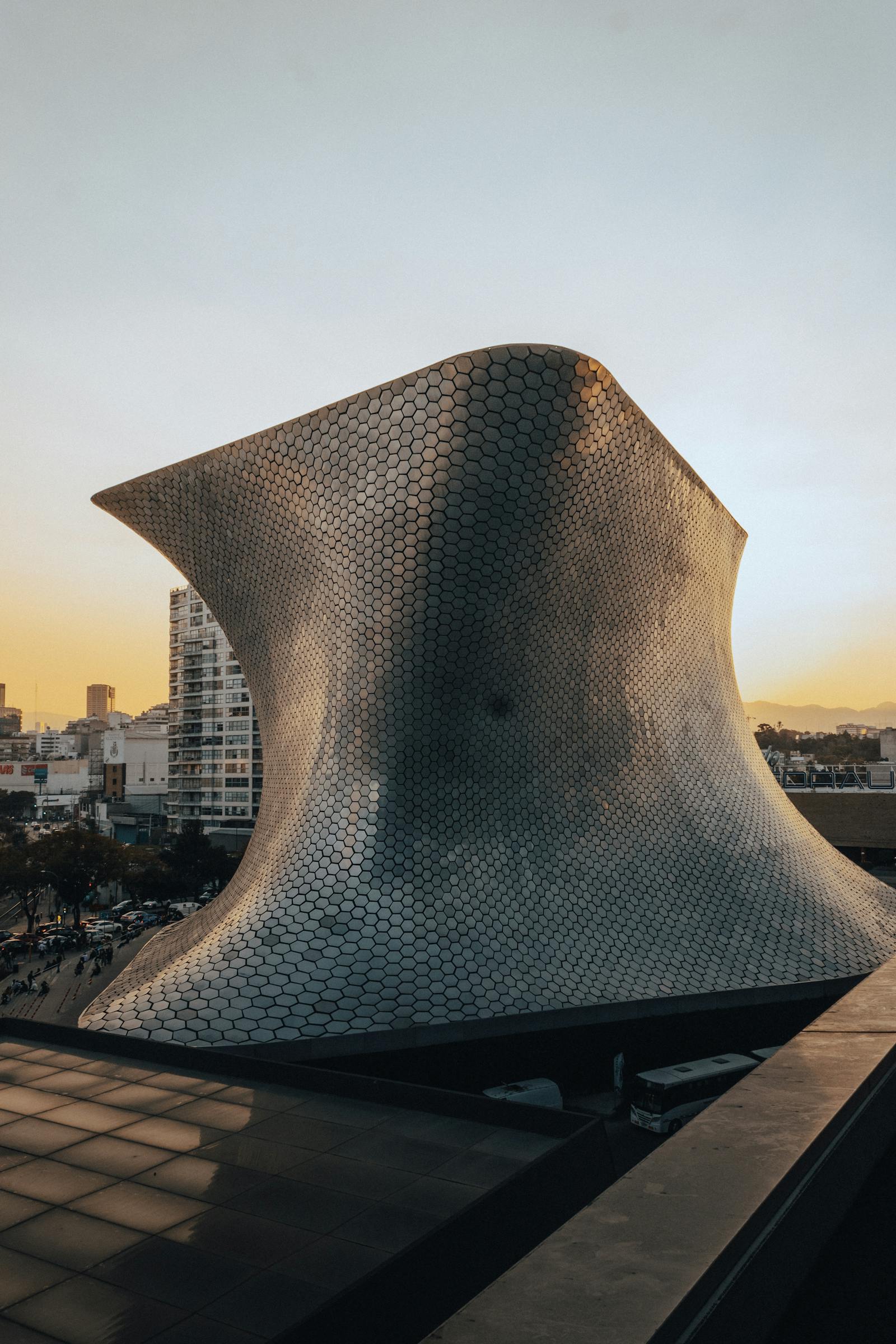
Side by side in Polanco. Soumaya is the silver Frank Gehry building that Carlos Slim built to house his collection — 66,000 works including the second-largest Rodin collection in the world. Free. Jumex is the architect David Chipperfield's contemporary art space next door, paid, and curates international shows.
You can do both in three hours. They make a strong half-day, and the Polanco lunch options after are excellent.
Murals everywhere else
The muralist movement (Rivera, Orozco, Siqueiros) is most visible at a few specific sites:
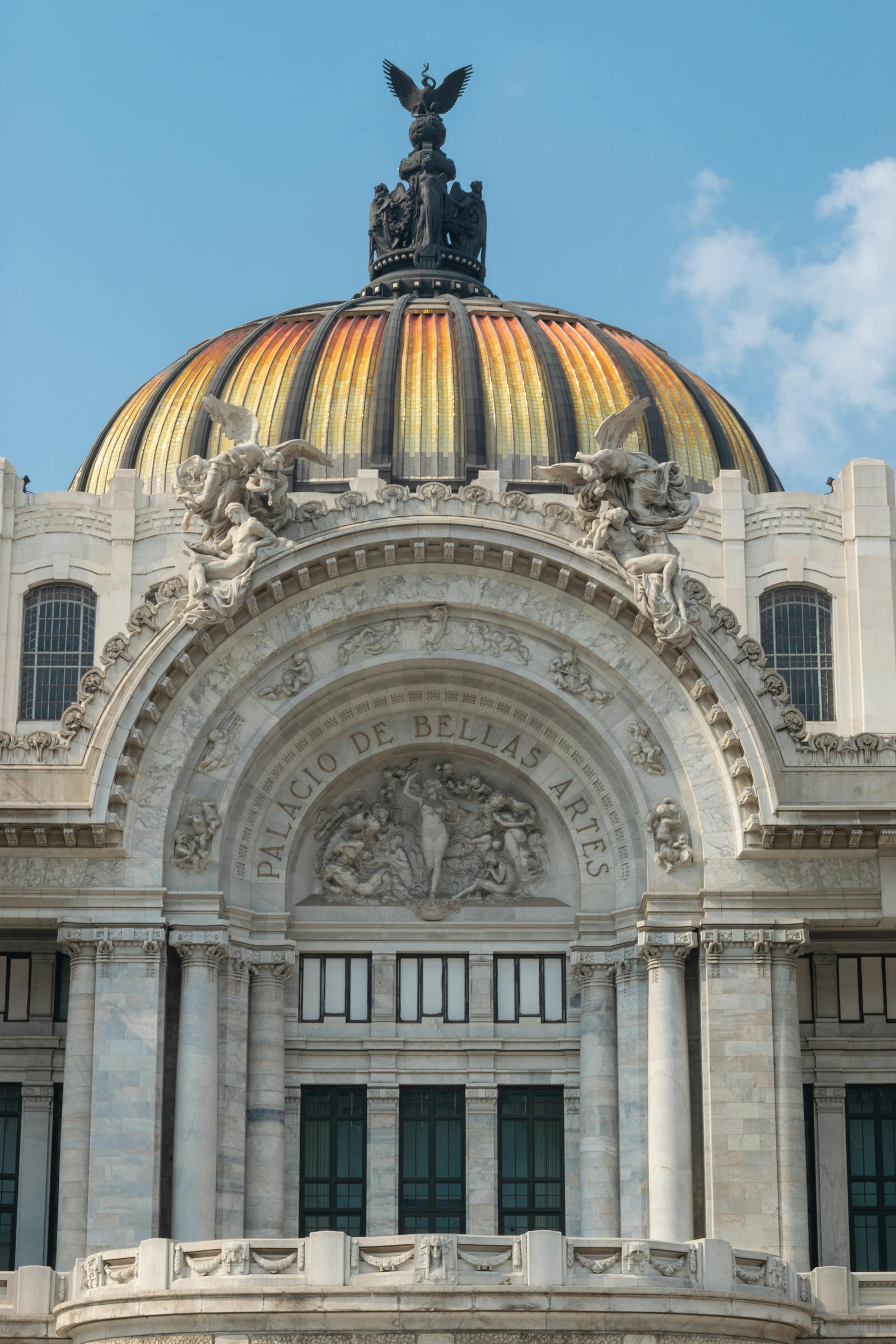
- Palacio de Bellas Artes (Centro) — the second-floor Rivera, Orozco, and Siqueiros murals are the easiest concentrated look at all three. Bellas Artes also hosts the Ballet Folklórico if you want a culture night.
- Secretaría de Educación Pública (SEP) (Centro) — Rivera's most ambitious mural cycle, 235 panels across two courtyards. Free, weekdays only, bring ID. Wildly underrated.
- UNAM Central Library — Juan O'Gorman's mosaic-covered library tower (the whole exterior is a mural made of natural stones). UNESCO-listed. Worth the trip south.
Anahuacalli
Diego Rivera spent the last decades of his life building a pre-Hispanic-styled temple in southern Coyoacán to house his personal collection of 50,000 pre-Columbian artifacts. The building itself is the experience — volcanic stone, deep shadows, a strange and obsessive structure. Bundle with Casa Azul tickets to skip queues.
Architecture as culture
Pink walls and yellow light.

Luis Barragán
Mexico's Pritzker-winning modernist. Casa Luis Barragán in Tacubaya — his own home and studio, now a UNESCO site — is the one to book. Guided 90-minute tours, booked weeks ahead, $400 MXN. Pink walls, yellow light through translucent panels, the courtyard pool. Casa Gilardi (his late masterpiece with the indoor pool) requires a separate booking and is harder to get, worth it if you're already in deep.
UNAM and the Ciudad Universitaria
The university campus is a UNESCO World Heritage site — modernist Mexico's clearest single statement. Free to walk around. O'Gorman's library is the postcard. The Olympic Stadium has a Diego Rivera bas-relief on its facade. The Espacio Escultórico (a contemporary land-art piece made of volcanic stone) is the sleeper highlight.
Colonial Centro
The cathedral, Palacio Nacional, Palacio de Bellas Artes, Casa de los Azulejos, Templo Mayor — all within a 15-minute walk of the Zócalo. One morning walking it slowly is the easiest art-history class you'll ever take.
The festivals worth knowing about (even when you're not there for them)
Even when you are not there for them.

Día de Muertos (October 31 – November 2)
Not Halloween. Not the parade in the movie. The real Día de Muertos in CDMX is a quiet, beautiful, multi-day vigil in cemeteries — Mixquic and San Andrés Mixquic in the south are where to go if you're there for it. The official parade on Reforma (which only started in 2016 after a James Bond scene) is fine but secondary. Hotel prices triple, restaurants book months out.
Independence Day (September 15–16)
The Grito de Independencia at 11pm on the 15th — the president shouts '¡Viva México!' from the Palace balcony, the Zócalo fills with 100,000 people, fireworks. Then a military parade on the morning of the 16th. Loud, packed, joyful. Book everything months out if you want to be there for it.
Guelaguetza (Oaxaca, July)
Worth mentioning even though it's in Oaxaca — the most important indigenous festival in Mexico. If you're combining CDMX with an Oaxaca side-trip in July, plan around it.
How to be a decent visitor
Two things worth saying plainly.
Two things worth saying plainly:
Even crooked Spanish is welcomed and English-only is mildly rude in a way that adds up.— On speaking Spanish
Learn a hundred words of Spanish. Por favor, gracias, perdón, la cuenta, ¿cuánto cuesta? — even crooked Spanish is welcomed and English-only is mildly rude in a way that adds up. The hospitality industry in CDMX will switch to English instantly, but the warmth changes when you try.
Pay full tip on the actual price. 10–15% on the final check, cash where possible, even on cheap meals. Service in Mexican restaurants is structurally underpaid and the propina is not optional in any meaningful social sense.
Don't say 'Tenochtitlan was destroyed by the Spanish' as a complete sentence. The fall of Tenochtitlan in 1521 took two years of siege, was won partly because of smallpox and an alliance with the Tlaxcala (the Mexica's longtime enemies), and the Mexica didn't disappear — they became most of the people walking around CDMX today. The casual framing of 'conquest' elides a more interesting and ongoing story.
If you only have half a day for culture
Anthropology Museum. Long lunch. Done.
Anthropology Museum, late morning. Long comida at a Polanco restaurant after. That's the half-day. You'll have seen the foundation.
If you have a full day
Morning temples. Afternoon murals. Evening mezcal.
Morning: Templo Mayor, the cathedral, Diego Rivera at the Palacio Nacional, lunch at Azul Histórico. Afternoon: Bellas Artes for the murals. Evening: dinner in Roma Norte, mezcal at La Clandestina. That's a complete culture day.
Where we would book
For Casa Luis Barragán and Casa Azul tickets, book directly through their official sites (Barragan.org, museofridakahlo.org.mx) — both control their own ticketing and the resellers add fees with no advantage. For Anthropology, Templo Mayor, and most public museums, walk-up tickets are easy and there's nothing to book ahead. For the muralist-walking tour with a knowledgeable guide, GetYourGuide has the deepest inventory of English-speaking historians; the half-day private walk is the best value.
Related guides
- Your Mexico City Travel Guide: Four Days, Honestly Done — the full overview.
- Mexico City Food Guide — what to eat between the museums.
- Mexico City Activities Guide — Teotihuacán, Xochimilco, lucha libre, day trips.
- NYC Museum Guide — if you're stringing the two cities together.
- Mexico City Group Trip Guide — the same city, planned for six or ten of you.