The good news: it's a city, not a checklist
Wander first. Plan second.
Mexico City rewards wandering more than it rewards itineraries. The best activities are the long ones — a Sunday at Chapultepec, an evening at lucha libre, a day-trip pyramid morning that ends in a long lunch. We've ordered this guide by how we'd actually spend the days.
Day 1: get oriented in Centro Histórico
The Zócalo, the ruins, the rooftop view.
Mexico City rewards wandering more than it rewards itineraries.— On planning
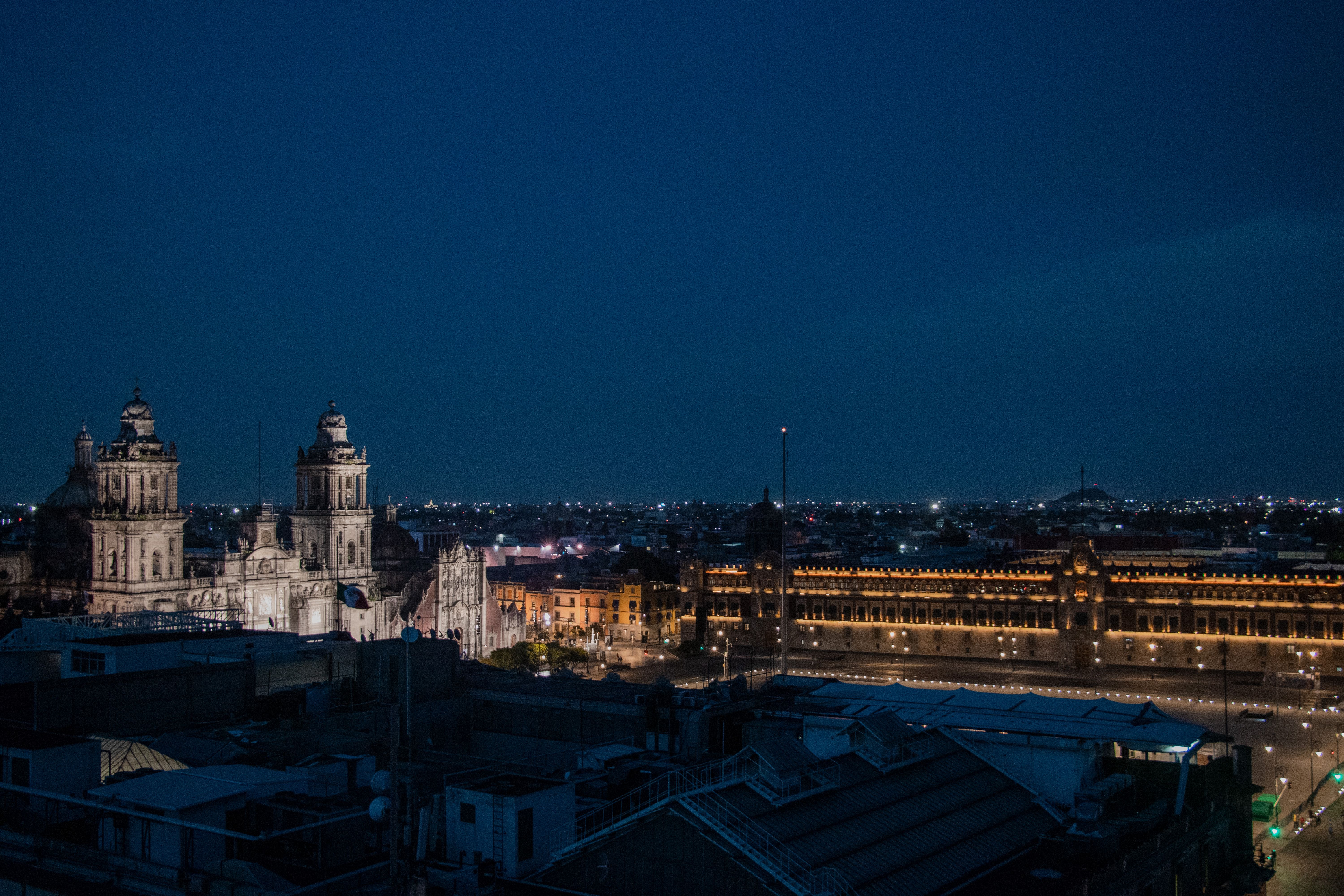
Start at the Zócalo — the giant flag, the cathedral, the flag-lowering ceremony at 6pm if you're around. Walk to Templo Mayor (the Aztec ruins literally a block from the cathedral, $210 MXN (residents $105), closed Mondays). The on-site museum is excellent and most people skip it.
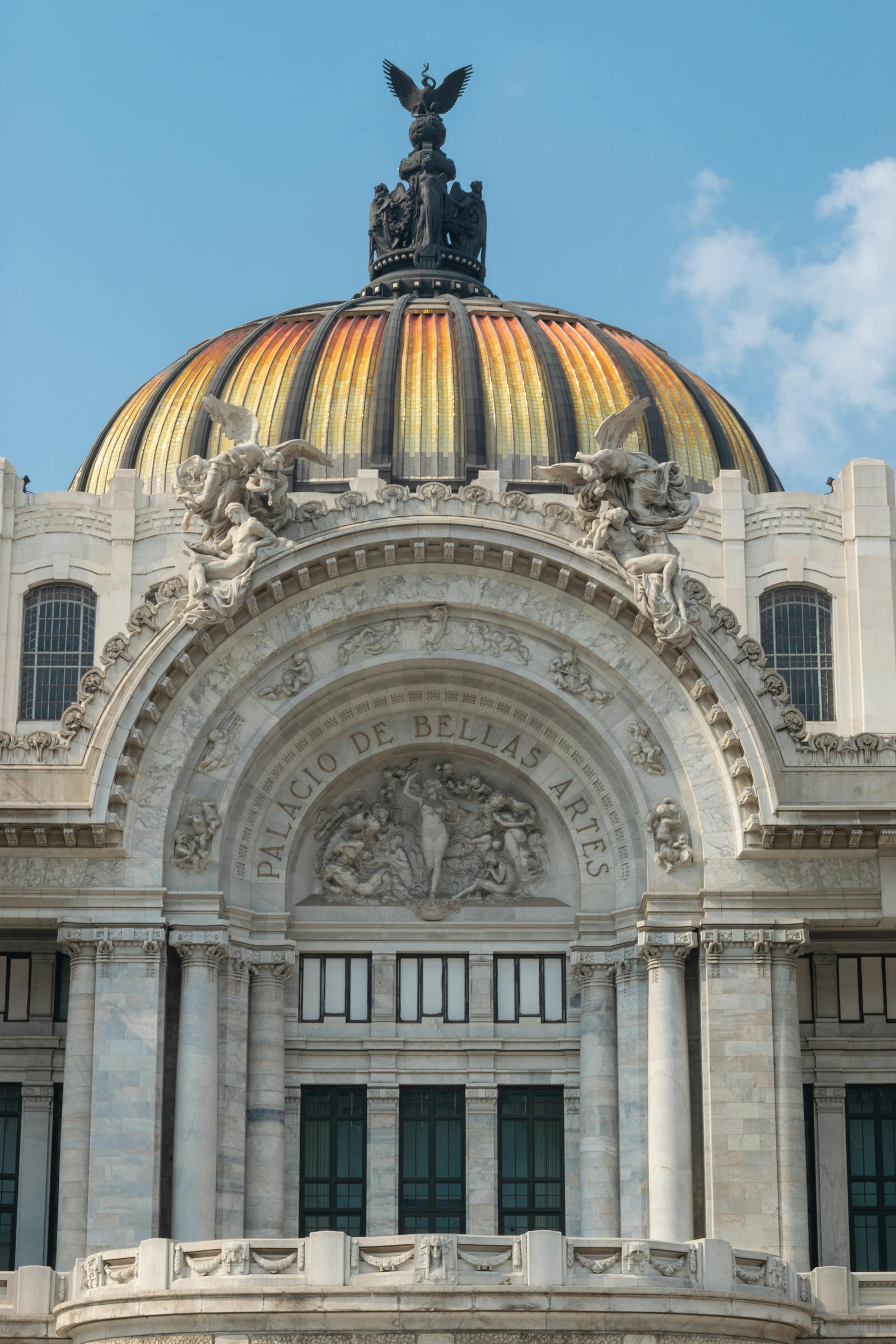
From there, walk Madero (pedestrianized, full of street performers) to Casa de los Azulejos for the tile facade and the Sanborns inside, then duck into Palacio de Bellas Artes for the Diego Rivera murals on the second floor. Torre Latinoamericana across the street has the best skyline view from the 44th-floor open-air deck — go at golden hour if you can, the smog haze actually looks beautiful in that light.
End at Café de Tacuba or Azul Histórico for late lunch. Walk back through Alameda Central. That's a full first day.
Day 2: Coyoacán + the south
Frida's house. Trotsky's study. The slow side.
Coyoacán is a different city. Cobblestone streets, colonial Mexico, the slow-pace south. Casa Azul (Museo Frida Kahlo) needs to be booked online weeks ahead — don't just show up, the line for walk-up is brutal and often turned away.
From Casa Azul, walk to Mercado de Coyoacán for tostadas at the long counter, then the central plaza (Jardín Centenario and Jardín Hidalgo) for an afternoon coffee and people-watching. Museo Casa de León Trotsky is a five-minute walk if you want the historical chapter where Trotsky was assassinated in his study.
If you have stamina, push twenty minutes south to Museo Anahuacalli — Diego Rivera's hand-built fortress for his pre-Hispanic art collection, a strange and wonderful building. Bundle with Casa Azul tickets to save the queue.
Day 3: Chapultepec + Anthropology Museum
The one museum you have to do.

If you do one museum in Mexico City, do the Museo Nacional de Antropología. It's one of the great museums of the world — the Olmec heads, the Sun Stone, full-scale reconstructions of pre-Hispanic temples. Plan three hours minimum. Closed Mondays. Skip the audio guide; the placards are bilingual and good.
The museum sits inside Bosque de Chapultepec, CDMX's central park, which has its own ecosystem: the lake with the pedal boats, the Castillo de Chapultepec (Mexico's only royal castle, with the murals and the city view), the Museo Tamayo (small, modern, sharply curated), and the Museo de Arte Moderno.
Sundays the whole park gets a different energy — families everywhere, vendors, music. Worth picking a Sunday for this day if you can.
Day 4: Teotihuacán
The pyramids are worth the early start.
Hot-Air Balloon at Sunrise
$150–200 USD. Leaves at 6am. You're over the Avenue of the Dead at sunrise. If the budget allows and the weather cooperates, it earns its price.
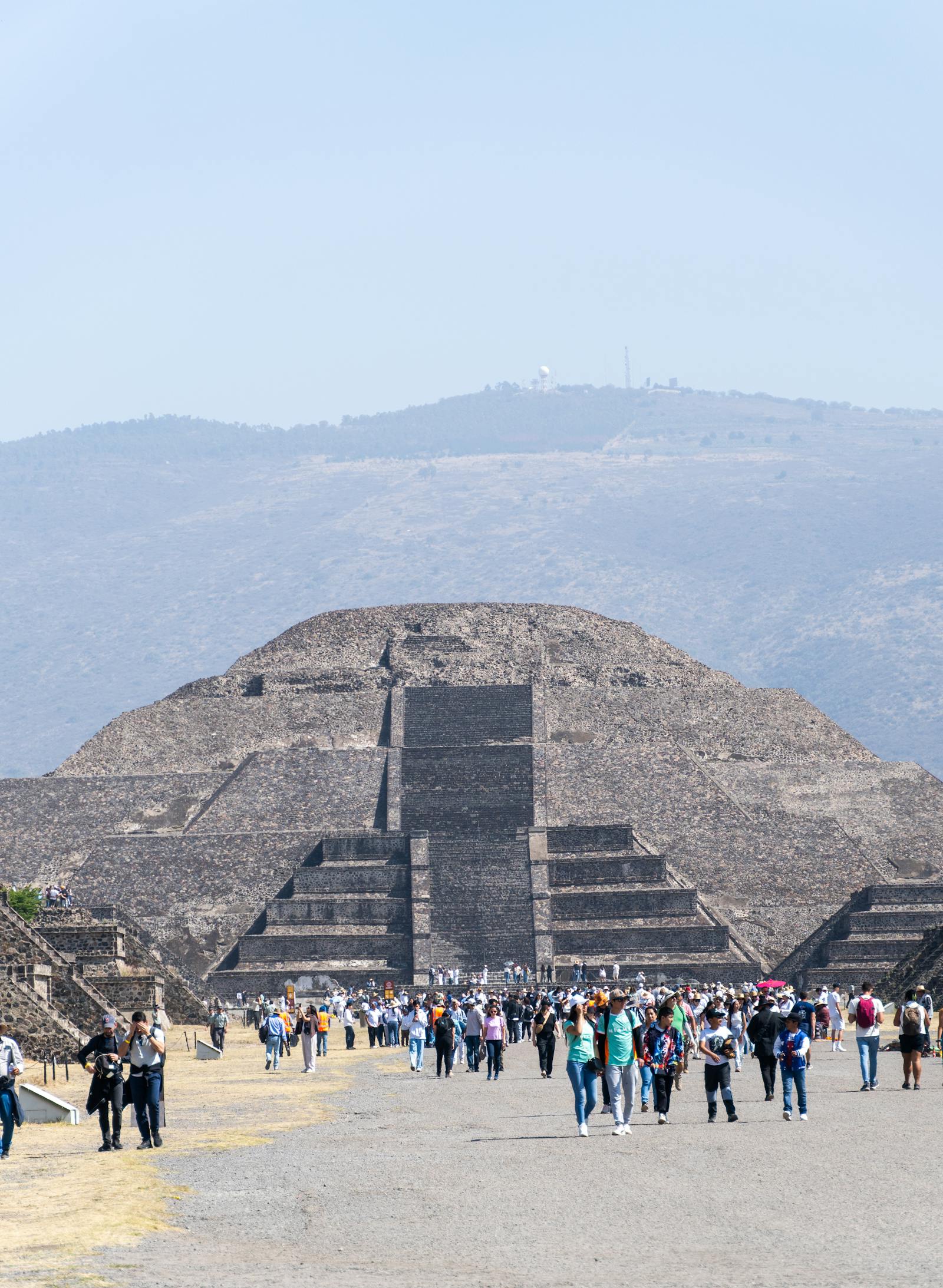
The pyramids are 50 km northeast of the city — Pirámide del Sol, Pirámide de la Luna, the Avenue of the Dead. They're enormous, older than the Aztecs, mysterious. Worth the early start.
How to get there:
- Small group tour with hotel pickup — 7am pickup, back by 3pm. Most operators include the obsidian/tequila demo (a sales pitch you can decline). $50–80 USD per person. The easiest option, and worth it for the guide context.
- Uber both ways — about $40–60 USD round trip if you book a long-distance ride. Faster, no group, no sales pitch.
- Bus from Terminal Norte — $130 MXN round trip, 1.5 hours each way, runs every 20 minutes. The cheap option that locals use.
Go early — gates open at 9am, and by 11 the sun is brutal and the buses have arrived. Bring water, sunscreen, a hat, and walking shoes you don't mind getting dusty. You can no longer climb to the top of the Sun Pyramid (the rope barrier went up in 2020), but you can climb the Moon Pyramid most days.
The hot-air balloon at sunrise over the pyramids is the splurge — $150–200 USD, leaves at 6am, you're over the Avenue of the Dead at sunrise. If the budget allows and the weather cooperates, it's the kind of thing that earns its price.
Xochimilco — the canal day
Rent a boat. Bring a cooler. Bring friends.

The pre-Hispanic floating gardens in the south of the city. You rent a trajinera (a flat-bottom party boat) by the hour, bring food and drink, and float through the canals while mariachis pull alongside and play for tips. Bigger groups make it better — pile in 8–12 people, bring a cooler, plan a Sunday afternoon.
The official rate at the embarcaderos (Cuemanco is the cleanest pier) is around $600 MXN per hour for the boat regardless of group size. Negotiate, then pay at the boat. Three hours is the sweet spot — short enough to stay fresh, long enough to deserve the trip out.
Bundle Xochimilco with a morning at the Museo Dolores Olmedo nearby (the largest collection of Frida Kahlo paintings) if it's reopened — check current status before you go.
Lucha libre — the Friday or Sunday night
More circus than sport. Exactly right.
Two venues. Arena México (Colonia Doctores, Friday nights) is the big one — 16,000 capacity, the marquee fighters, more circus than sport. Arena Coliseo (Centro, Sunday afternoons) is smaller, smokier, more old-school.
Buy ringside seats if you can — they're shockingly cheap by US standards ($400–800 MXN), the action happens in front of you, and you'll be in among regulars who've been coming for thirty years. Skip Friday night if you don't like crowds; the energy is intense. Cervezas are everywhere, masks are sold outside, and the whole thing ends by 10pm.
Sunday-only things
When the city shifts gears.
- Paseo de la Reforma car-free (8am–2pm). The main avenue closes to cars and fills with cyclists, runners, families. Rent a bike from any EcoBici station and ride from the Angel of Independence all the way to Chapultepec.
- Tianguis Cultural del Chopo (Buenavista). The punk/goth/metal market that's been running since the '80s. Records, leather, tattoo booths. Stranger than it sounds, more wholesome than it sounds.
- El Bazaar Sábado (technically Saturday but the same vibe — San Ángel, art and crafts in a colonial plaza).
Architecture + Luis Barragán
Pink walls and yellow light.
If you care about modernism, the Casa Luis Barragán tour is essential — Mexico's most famous architect, his own home, pink walls and yellow light and Mexican modernism in its purest form. Tours are guided, 90 minutes, must be booked online weeks ahead. $400 MXN.
Casa Gilardi (his late masterpiece with the indoor pool) requires a separate booking and is harder to get into — worth it if you're already in deep.
Day trips beyond Teotihuacán
When four days is not enough.
- Tepoztlán (1.5 hr south) — a magic town with a pyramid hike, mezcal bars, and a Sunday market. Easy long day from CDMX.
- Puebla (2 hr east) — colonial city, mole poblano, talavera tiles. Worth an overnight, possible as a long day.
- Cuernavaca (1 hr south) — 'the city of eternal spring.' Weekend getaway for CDMX residents. Hassan's coffee, the cathedral, the gardens.
Practical movement
Uber is the answer. The metro is the backup.
Don't drive yourself. The traffic is psychologically expensive, and you'll spend more on a rental car than the entire week's worth of Ubers.— On getting around
Uber is the default — cheap, plentiful, and the safety case is well documented (your trip is logged, the driver is identified, there's a record). Pool/Cabify both work too.
The Metro is efficient and $5 MXN flat, but its crowded cars are the city's main pickpocket territory — phones especially — and rush hour is the worst of it, with no air-conditioning as a bonus. Useful for crossing the city in 20 minutes when Uber would take 60 in traffic: ride off-peak, phone zipped, bag in front; the front cars are reserved for women and children.
The Metrobús (rapid bus on dedicated lanes) goes up and down Reforma — useful for Chapultepec runs.
Don't drive yourself. Parking is hard, the traffic is psychologically expensive, and you'll spend more on a rental car than the entire week's worth of Ubers.
Where we would book
For Teotihuacán tours and the Casa Luis Barragán slot, GetYourGuide is the inventory we check first — both have reliable English-speaking operators and last-minute availability often shows up. For hotels we'd be looking at the boutique side of Roma Norte and Condesa first; Booking.com has the broadest inventory there. CityPASS doesn't operate in CDMX, so individual museum tickets (most $80–120 MXN, walk-up is fine for everything except Casa Azul) are pay-at-the-door.
Related guides
- Your Mexico City Travel Guide: Four Days, Honestly Done — the full overview.
- Mexico City Food Guide — where to eat between the activities.
- Mexico City Culture Guide — museums, murals, and pre-Hispanic context.
- Things to Do in NYC — if you're stringing the two cities together.
- Mexico City Group Trip Guide — the same city, planned for six or ten of you.