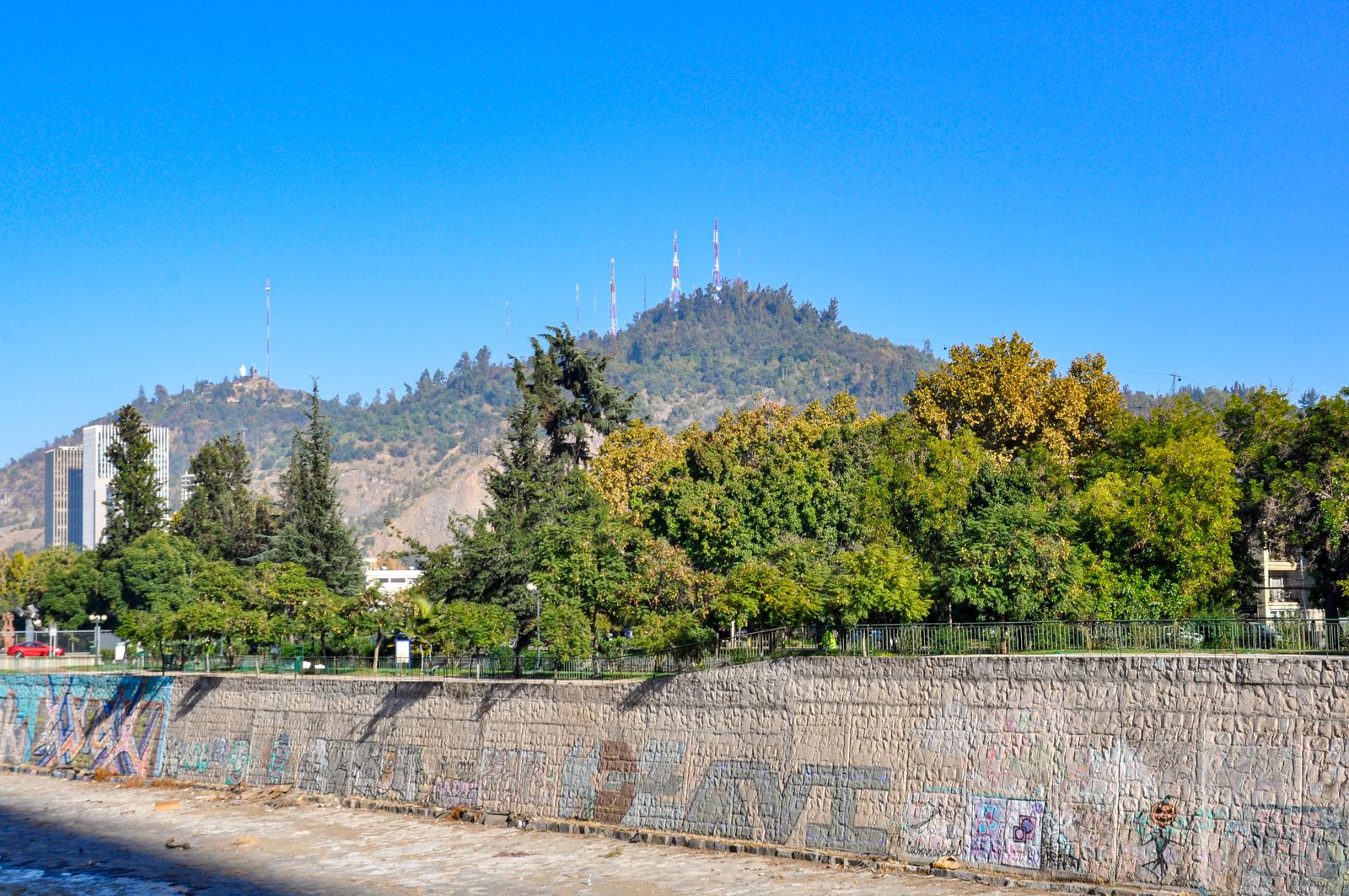
Go up the hill first
One afternoon on Cerro San Cristóbal and the whole city makes sense.
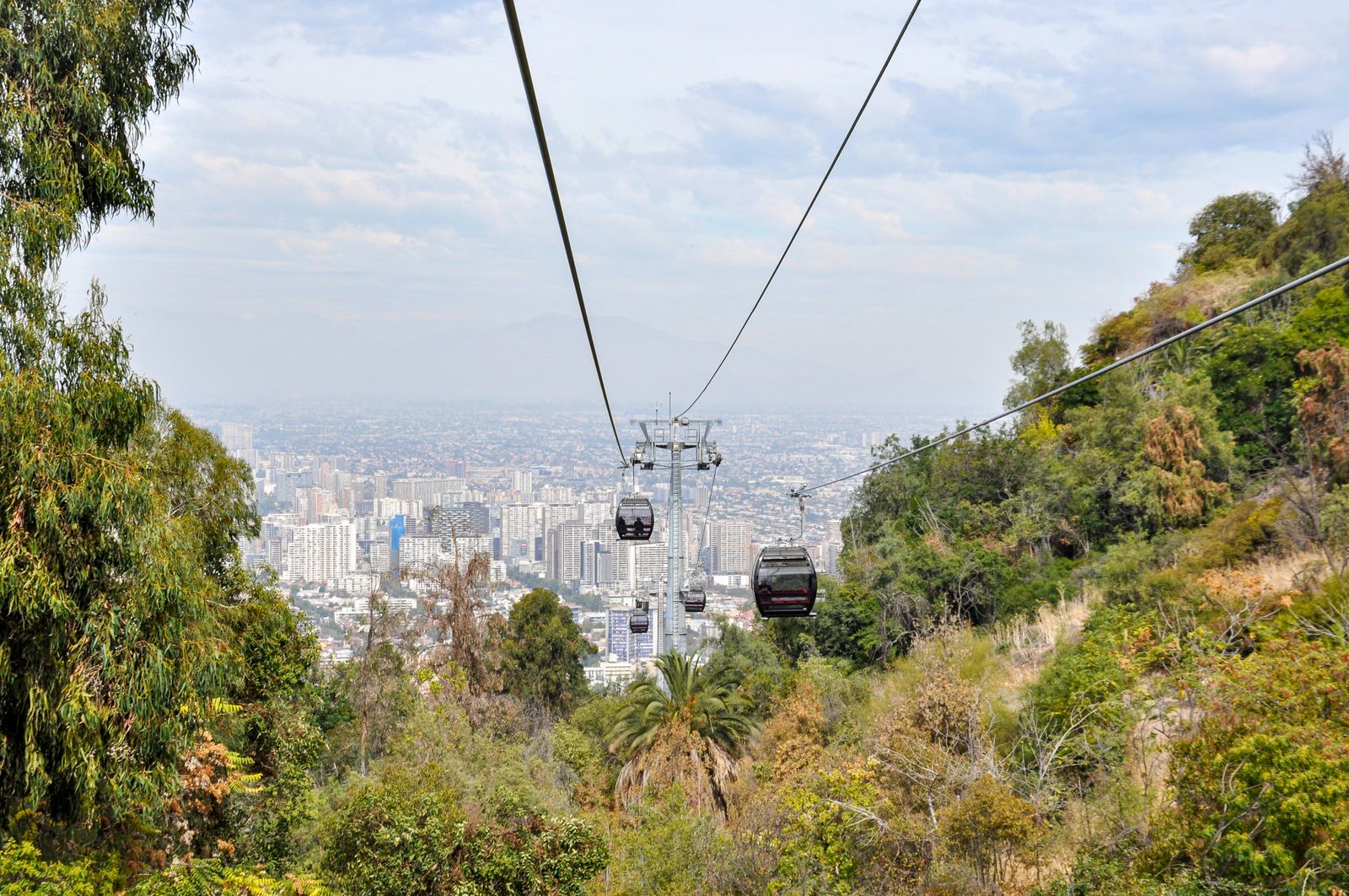
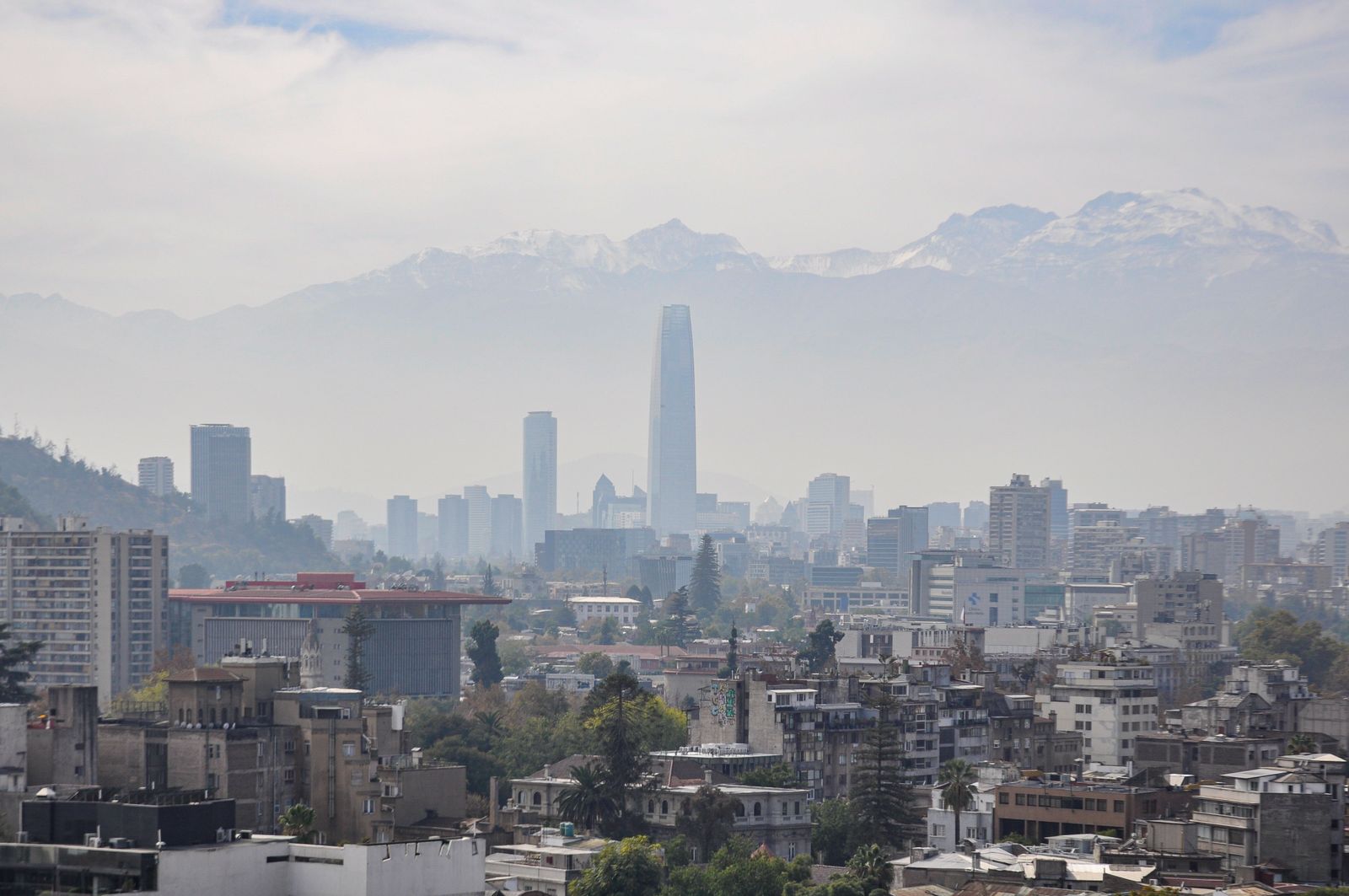
Santiago is a grid in a bowl and you cannot read a grid from inside it. Cerro San Cristóbal rises out of the middle of the city and from the top you can see the shape of the thing: the towers of Sanhattan clustered east, the old centre low and dense to the south-west, the cordillera standing behind all of it. Do this on your first clear morning, not your last.
There are two ways up and they are priced strangely. The funicular from Pío Nono has been climbing since 1925 and runs Tuesday to Sunday, 10:00 to 18:45 in winter and 10:00 to 19:45 in summer; a return is $2,250 Tuesday to Friday and $2,060 at weekends and holidays, with one-way from $1,580. The teleférico starts at $2,000, with the Oasis–Tupahue–Cumbre return at $3,650 Tuesday to Friday and $4,380 at weekends — and a new route opened on 24 March 2026.
Read those two lines again: the funicular gets cheaper at the weekend and the cable car gets dearer. Nobody will explain this to you. For a group of six on a Saturday, going up on the funicular and down on the cable car is about 4,000 pesos each (~US$4.40) and gets you both machines and both views.
The coast, in a day, without a car
Valparaíso is ninety minutes away and it is the best day trip in Chile.
Buses to Valparaíso leave Terminal Pajaritos — on the metro, so no taxi needed — every fifteen to thirty minutes from six in the morning to ten at night, and take ninety minutes. Pullman, TurBus and Condor all run it and you buy at the counter on the day. Return runs about US$16 to US$24 a head.
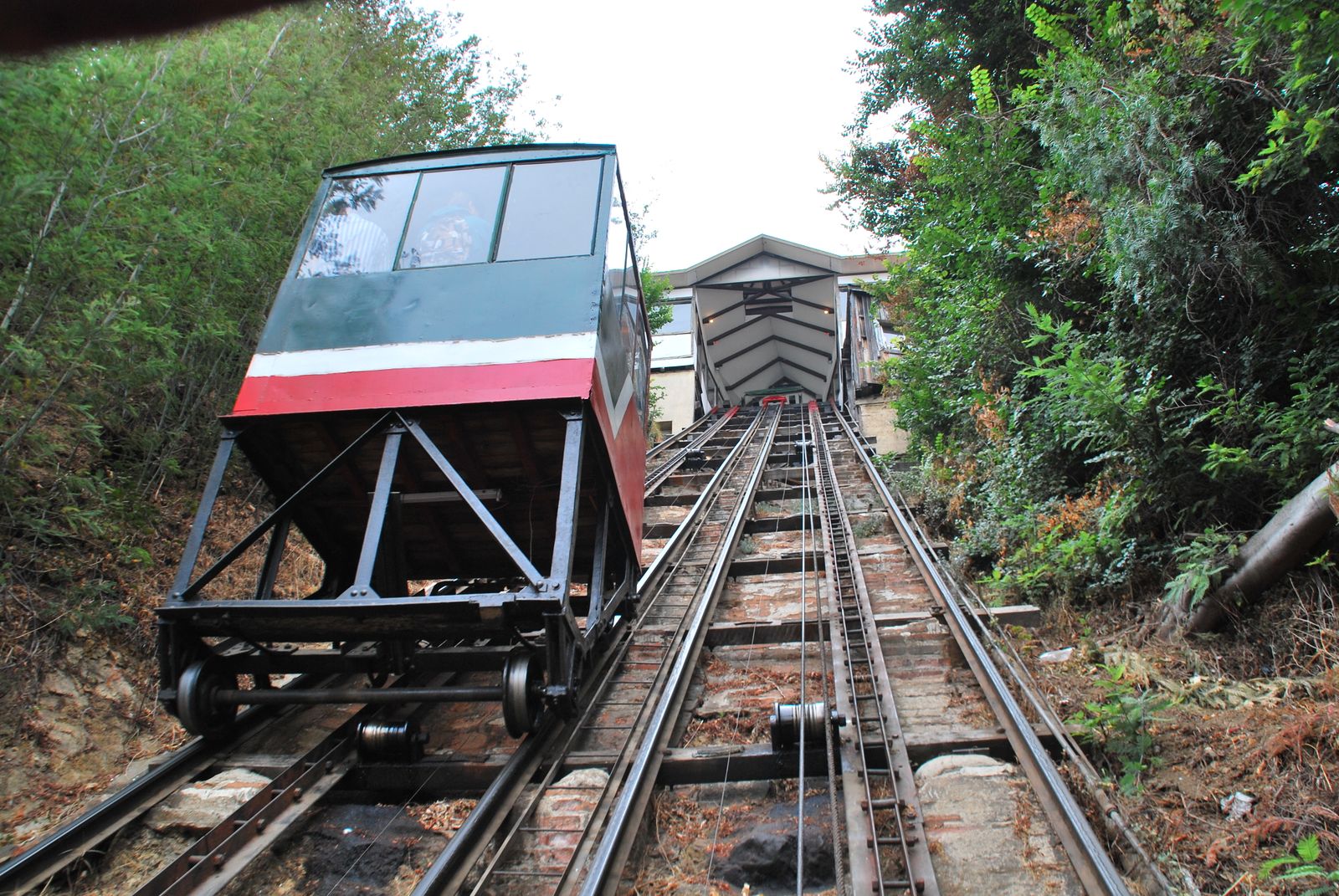
What you find is a port city built up forty-odd hills, painted every colour anyone had, and stitched together by ascensores — funiculars, some over a century old, that still run as ordinary public transport at $300 to $500 a ride. Stack three: Artillería for the harbour view, El Peral for the drop into Cerro Alegre, Concepción for the oldest one. Not all of them run on any given day — they go in and out of service for repairs — so treat the list as a menu rather than an itinerary and take whichever is turning.
Leave Santiago by 8:30 and you get eight hours there, which is enough for the hills, lunch and the ascensores. Go on a weekday if you can; the weekend brings the whole of Santiago with you.
Into the Andes, but check the calendar first
The reservoir is two hours away and shut for a good chunk of the year.
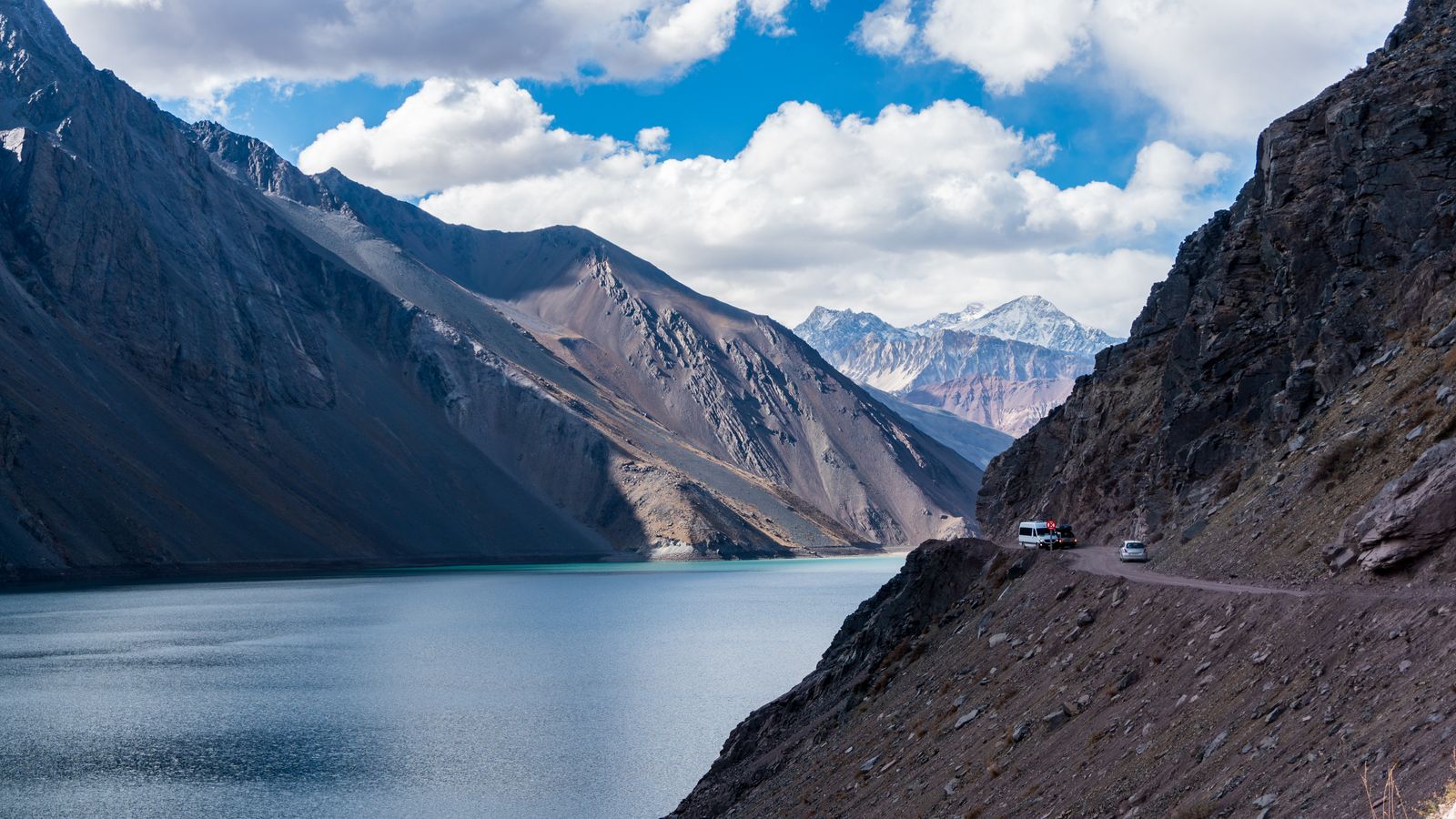
The Cajón del Maipo runs south-east out of the city into a canyon, and about two hours up it sits Embalse El Yeso — a reservoir at 2,568 metres, an improbable turquoise, ringed by bare rock. It is the photograph people come back with.
The honest logistics: it is roughly an hour to San José de Maipo on decent road, then another hour on gravel that genuinely wants clearance, and the road to the reservoir and up to Baños Colina closes in winter under snow. October to April is the reliable window. Public buses from Baquedano get you to San José and no further, so this is a car or a tour, and group day tours run US$40 to US$60 a head.
For a group of six, a private van and driver for the day usually lands in the same neighbourhood per head as the seat-on-a-bus tour, and you get to leave when you want and stop where you want. Ask for the quote for the whole vehicle, then divide it yourself before you compare — operators quote per person by default and the two numbers are rarely the same.
Cerro Santa Lucía
The free one, and the one people skip. A small rocky hill in the middle of downtown, landscaped in the 1870s into a stack of stone terraces, staircases and fountains that looks like somebody transplanted a piece of a European folly into the centre of Santiago — which is roughly what happened. Twenty minutes to climb, a view over the old centre at the top, and it costs nothing. Best in the hour before sunset. It closes in the evening, so don't leave it until after dinner.
Snow, an hour from the office
Very few capital cities have a serious ski domain inside a ninety-minute drive.
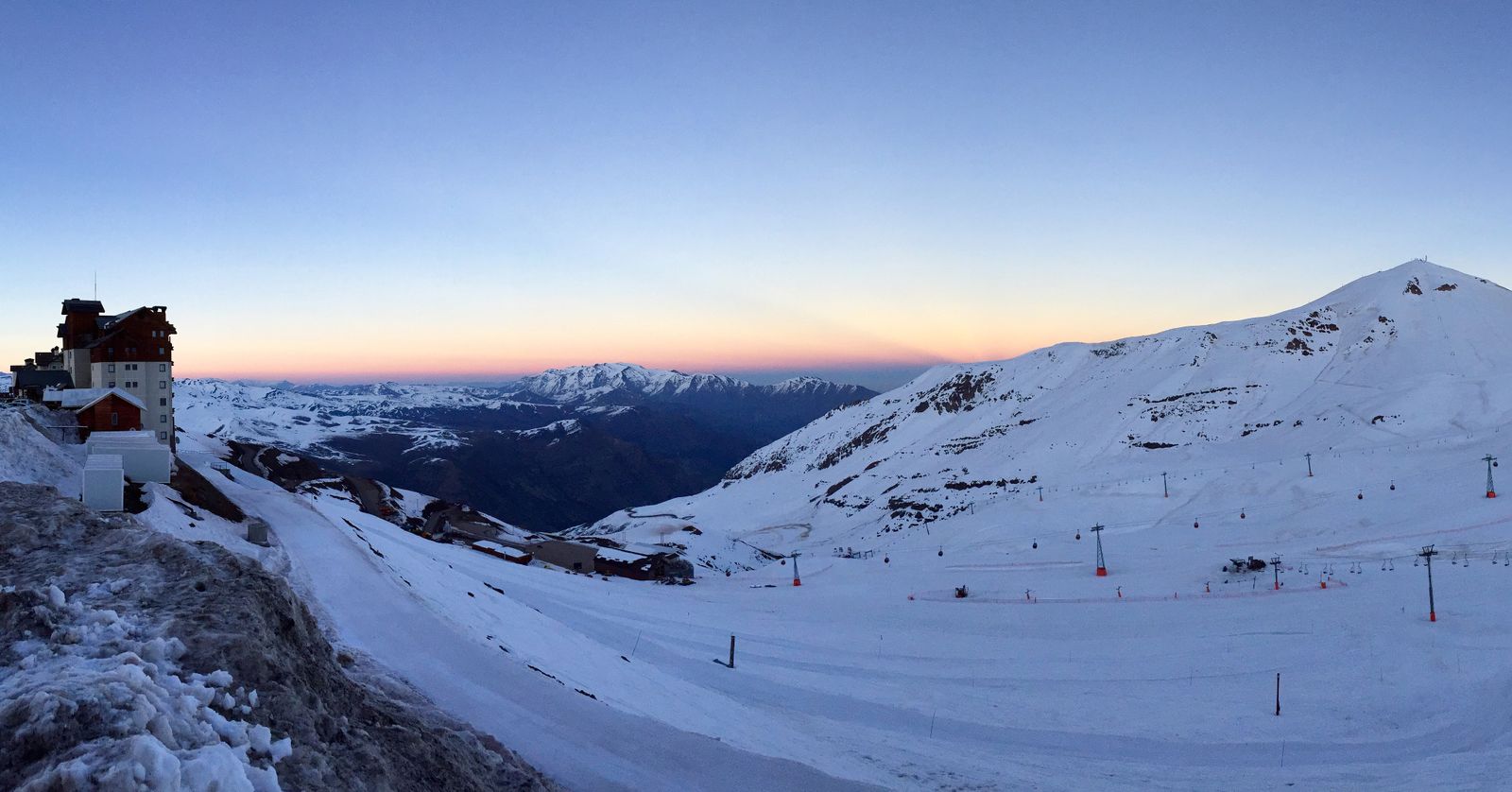
Santiago has three linked resorts — Valle Nevado, La Parva and El Colorado, collectively the Tres Valles, 120-plus runs on a combined pass — 60 kilometres and about an hour and a quarter up Route G-21, a road of switchbacks that is exactly as dramatic as it sounds. El Colorado's 2026 season is estimated at 27 June to 27 September, and the others run to a similar calendar.
Two practical notes. Valle Nevado loads lift tickets onto a reusable Valle Plus card with a $6,000 issuance fee on top of the ticket itself, and its Flex tickets are good on any day of the season rather than a fixed date. And prices are published by date rather than as a season-long table, so we are not going to quote you a day rate that will be wrong by the time you read it — check the resort's own site for the week you are going.
You can be on a chairlift by half past nine and back in a Lastarria bar by seven. There are not many cities where that sentence is true.— On the G-21
Wine, an hour in the other direction
Two valleys, two completely different glasses, both a day trip.
Maipo starts about thirty minutes south of the city and is the classic red country — Concha y Toro, Santa Rita and Undurraga all run visits, and Maipo cabernet and carmenère are what most of the world means when it says Chilean wine. Casablanca, about an hour and fifteen towards the coast, is the cold one: sauvignon blanc, chardonnay, pinot noir, all shaped by fog coming off the Pacific.
Book direct and book early. The big names cap daily visitor numbers and fill one to two weeks ahead off-season and three to four in high season, and turning up hopefully at a gate in Maipo is how you spend an afternoon driving between locked ones. As with the canyon, get the whole-vehicle quote and divide it yourself.
Where we would book
Direct for the wineries, on the day for the coast, whole-vehicle for the mountains.
Wineries: their own websites, weeks ahead, and confirm the language of the tour when you book. Funicular and teleférico: the operator's own site, or the ticket window — no reseller adds anything. Valparaíso buses: buy at the Pajaritos counter on the day, because they run every fifteen minutes and a pre-booked seat only ties you to a departure time. Cajón del Maipo and the ski road: ask two or three operators for a whole-vehicle price rather than a per-person one, then divide it by your headcount — for four or more that is usually the better number, and it is the only line item here that improves as the group grows. Lift tickets: the resort's own site, in the week you travel.
Related guides
- Your Santiago Travel Guide — the basin, the metro, and the 19% you don't owe.
- The Santiago Food Guide — the lunch menu, La Vega, and what to drink.
- The Santiago Culture Guide — 1973, 2019, and a square with two names.
- Santiago Group Trip Guide — once, the 19%, and eight people at one table.
- Things to Do in Mendoza — the same range, approached from the east.