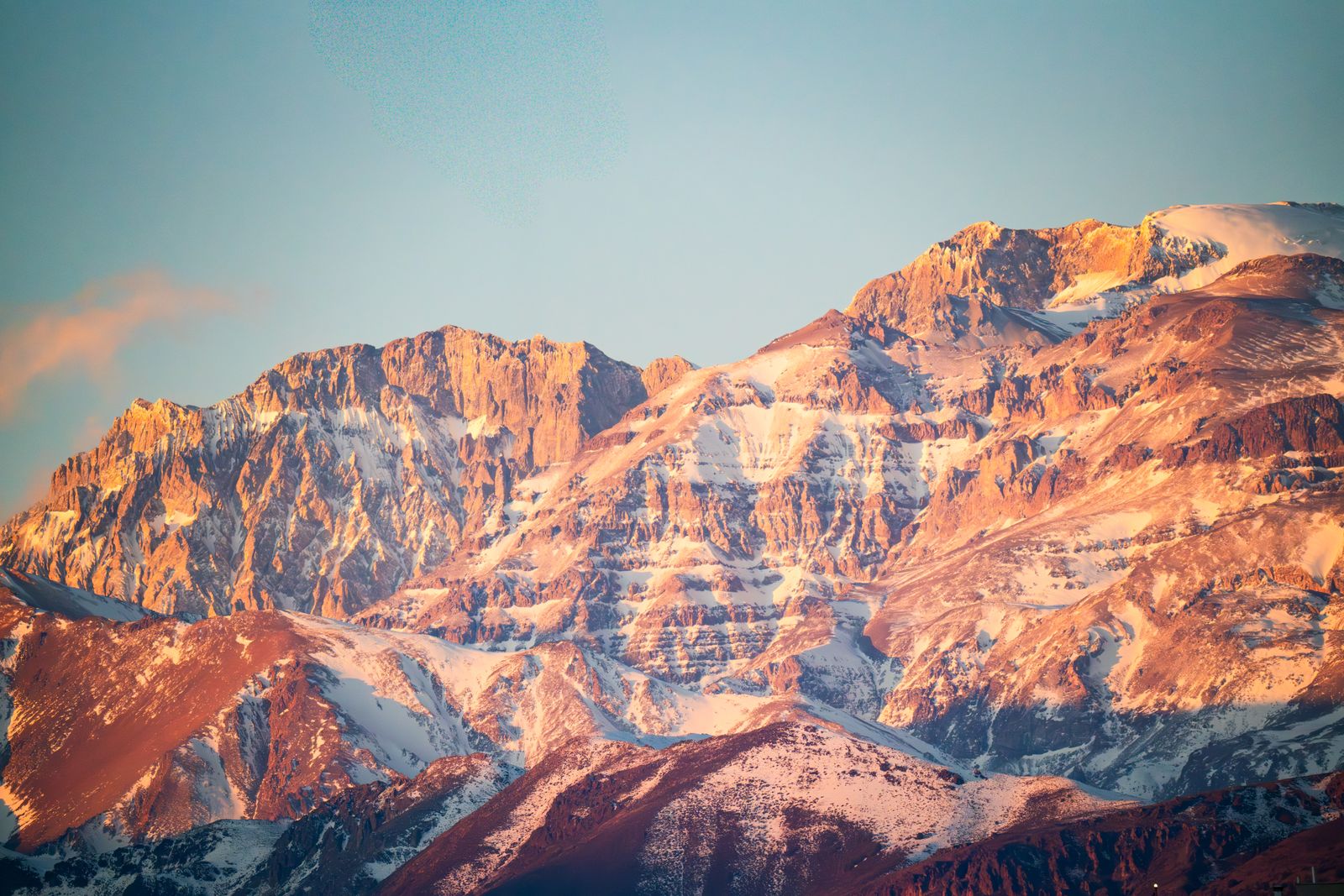
Mendoza gets sold as a place you sit down in, which undersells it badly. The Andes start about an hour from the city and the highest mountain outside Asia is a day trip. There's a river with rafting on it, thermal baths at the bottom of a canyon, and a wine zone flat enough to ride a bicycle around all afternoon. Here's the version of the week where you actually move.
The bike day in Maipú
Flat, cheap, and the one day you don't need a driver.
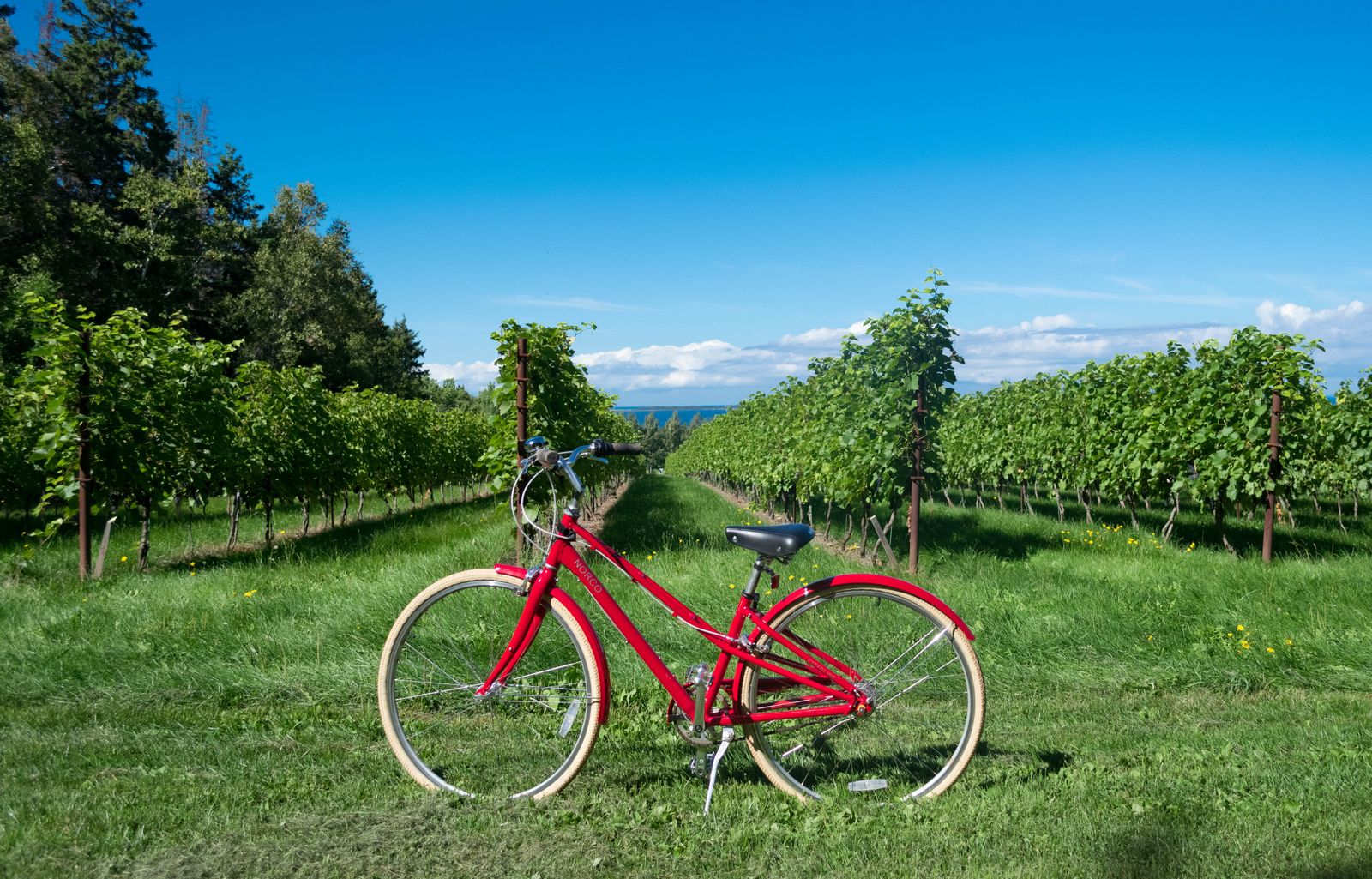
Maipú is about 15 minutes by bus from the city, and the whole zone is set up for this: rental operators clustered near the bus stop — Mr Hugo Bikes is the famous one, Bikes and Wines the other — hiring bikes for roughly USD 5 to 10 for the day, with maps, a suggested route and mechanical help on call if something goes wrong out there.
What makes it work is the terrain. Maipú is flat, there are cycle paths on several stretches, the bodegas have bike stands, and it's consistently named as the easiest and safest of the three zones to ride. You pedal between old brick cellars and olive-oil producers with vines on both sides, and the whole thing has a pace no minibus can reproduce.
The honest caveat, since it would be strange for us to spend a whole guide on not driving and then skip it: a bicycle doesn't repeal the problem, it relocates it. You're still on a public road, still in traffic, and four tastings deep on a bike is its own kind of bad idea. Space them out, use the spittoon like the staff do, eat properly at lunch, and treat the riding as the point rather than the transport between drinks.
A bike doesn't repeal the problem, it relocates it. Space the tastings out and the riding becomes the point.— On the Maipú loop
Ruta 7, as far as it goes
Potrerillos, Uspallata, Puente del Inca — and a border that may well be shut.
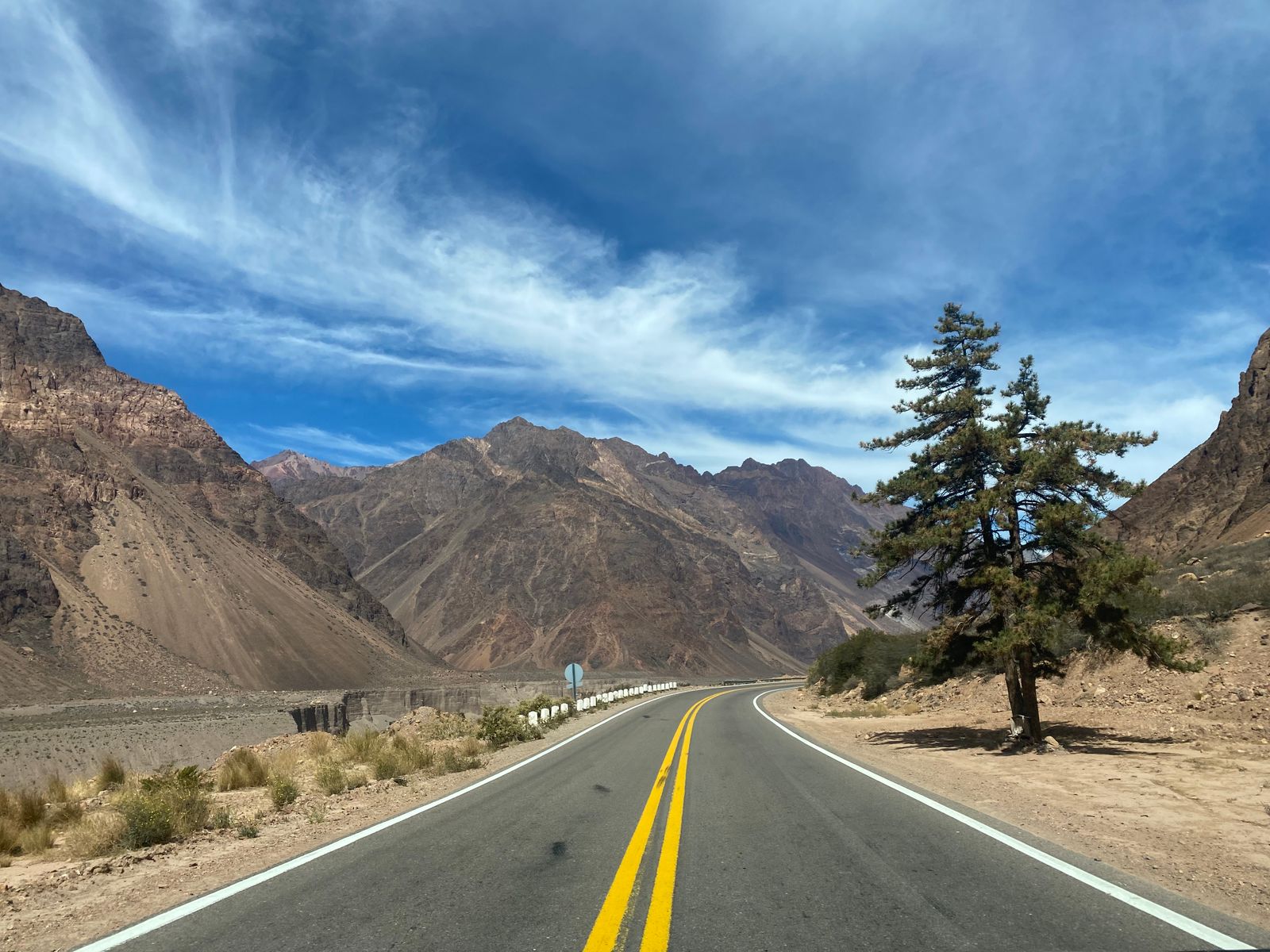
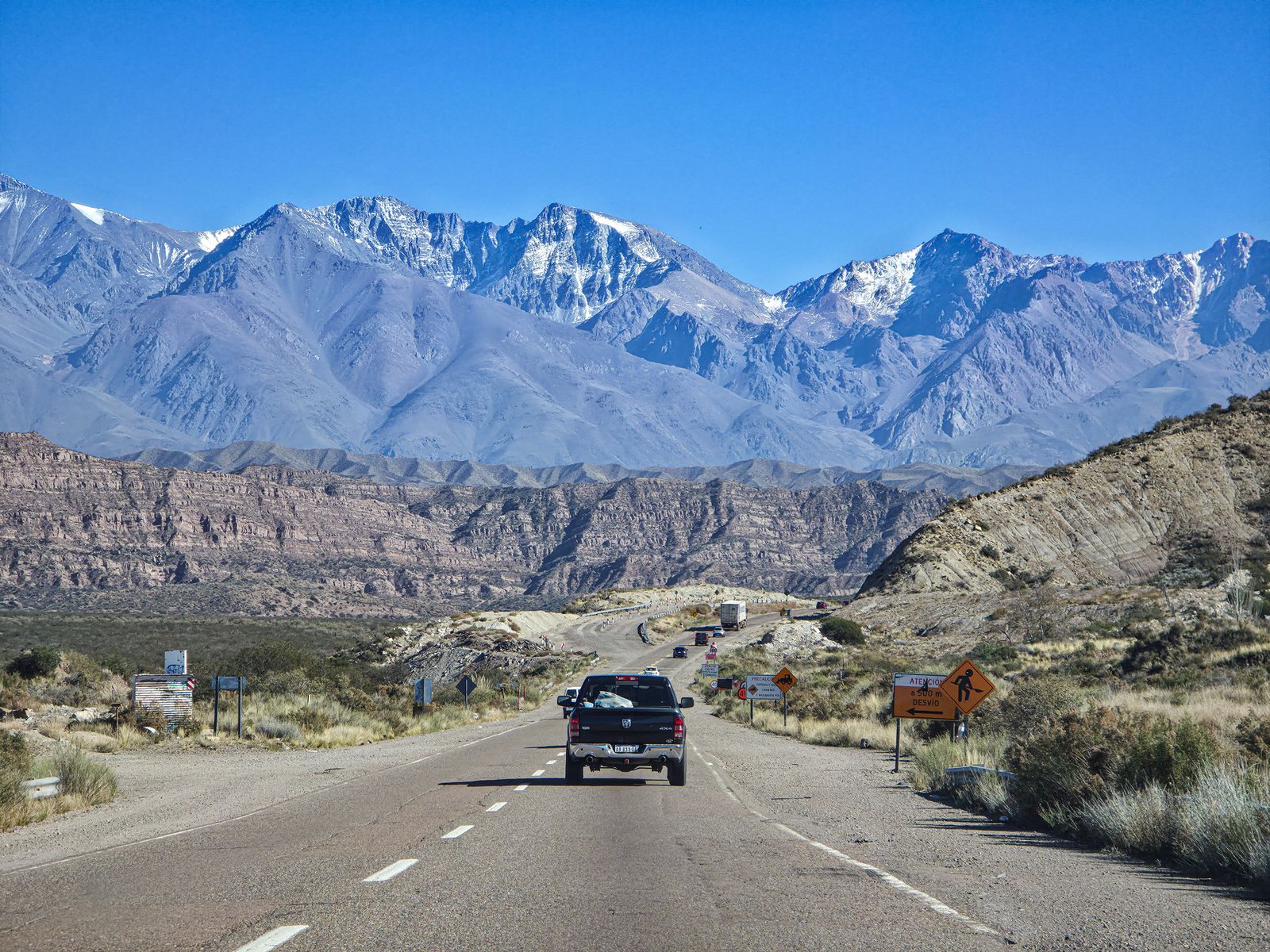
Ruta 7 climbs west out of Mendoza toward Chile, and the drive is the attraction: the reservoir at Potrerillos, the wide valley at Uspallata, then the road narrowing into properly big mountains through Punta de Vacas and Penitentes to Puente del Inca, where mineral-laden water has cemented a natural bridge over the river in rust and ochre.
Check the road before you commit to the day. As of mid-August 2026 the Paso Cristo Redentor into Chile has been closed for more than a month on snow and storms, with thousands of trucks stranded and no reopening date confirmed — so we're not giving you one. What has stayed open is internal traffic on Ruta 7 as far as Uspallata, Polvaredas, Punta de Vacas, Penitentes, Puente del Inca and the Aconcagua park entrance. Beyond that, to the tunnel mouth, it's shut.
Which means: the day trip is on, and the statue at the pass and the crossing into Chile are not. That's a fine trade, and it's the sort of thing that changes week to week in winter, so ask locally or check Vialidad Nacional the morning you go rather than trusting a blog. In snow, this is a road for a driver who does it for a living.
Aconcagua, without an expedition
7.5 km, 570 metres, no online registration, no guide required.
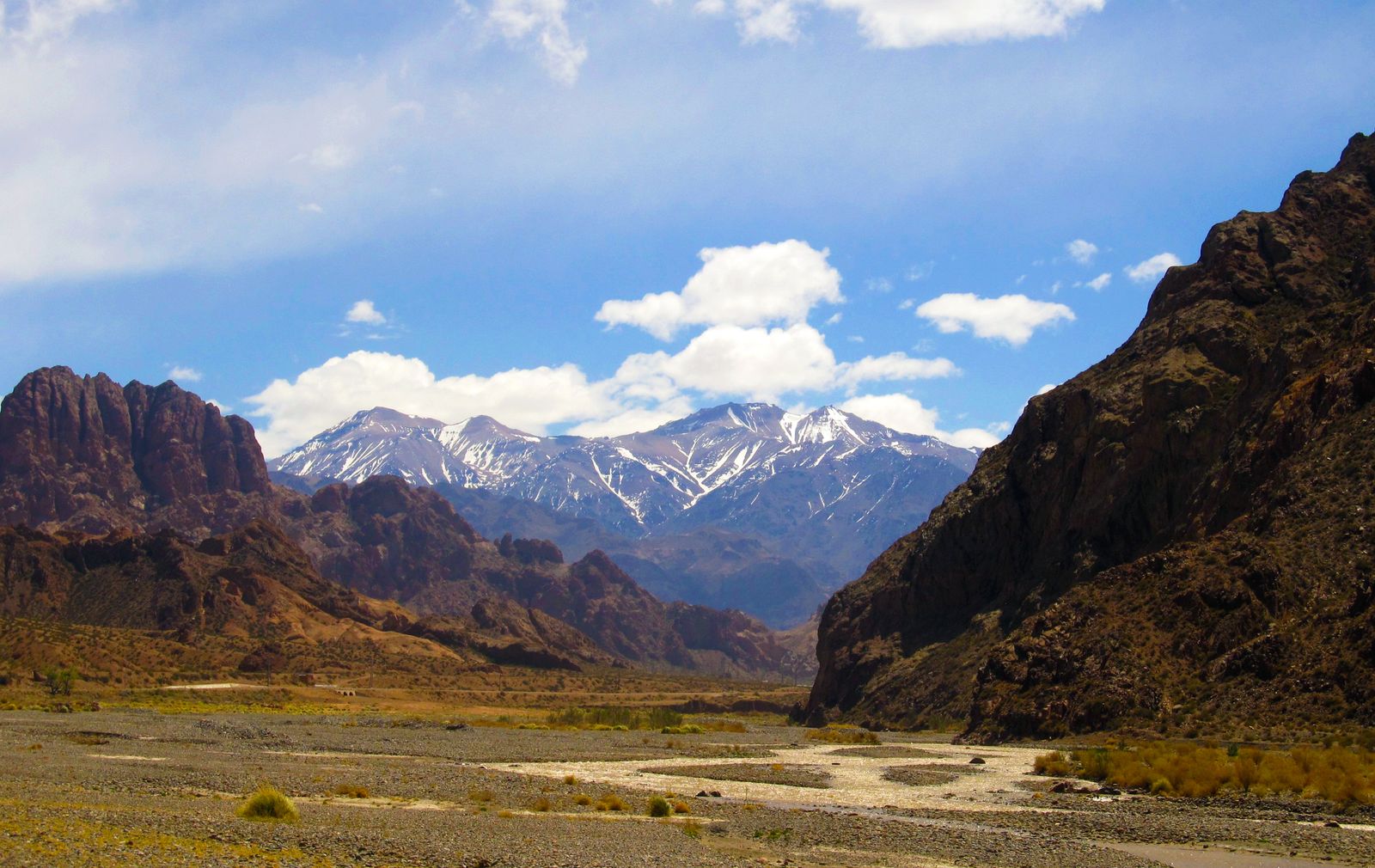
People assume Aconcagua is off the table unless you have three weeks and a duffel bag of crampons. The summit, yes. But the Horcones to Confluencia day trek inside Aconcagua Provincial Park is a walk, and it is startlingly accessible: 7.5 km, 570 metres of gain, three to four hours, and — the part almost nobody knows — no advance online registration at all. You arrive, you buy the permit at the park, you walk.
Day-trekking permit prices for the 2025–26 season were AR$15,000 for Mendoza residents, AR$25,000 for Argentine residents, AR$45,000 for Latin American visitors and AR$55,000 for foreign visitors. New prices come out around October each year, so treat those as the shape rather than the number.
The window matters more than the price. The park's summer season runs 1 November to 30 April, and day trekking is enabled 15 November to 10 April. Outside those dates the walk is closed even when the road reaches the gate — which is exactly the trap in winter, when Ruta 7 will happily take you to the park entrance for a photograph and nothing more.
If you want more than a day, short, long and ascent permits exist with validity from one to twenty days, and they have to be collected in person in Mendoza city — not online, not at the gate. Build a morning in town around it.
Confluencia is the best-value day in the province
Foreign visitors paid AR$55,000 for the 2025–26 season — less than one paired lunch — for four hours on foot inside the park at the base of a 6,961 m mountain, with no booking, no guide and no gear beyond boots, water, sun cover and a warm layer. Take the layer. The weather up there changes without consulting anyone.
Water: rafting at Potrerillos, thermal baths at Cacheuta
The best non-wine day, and it's an hour from the city.
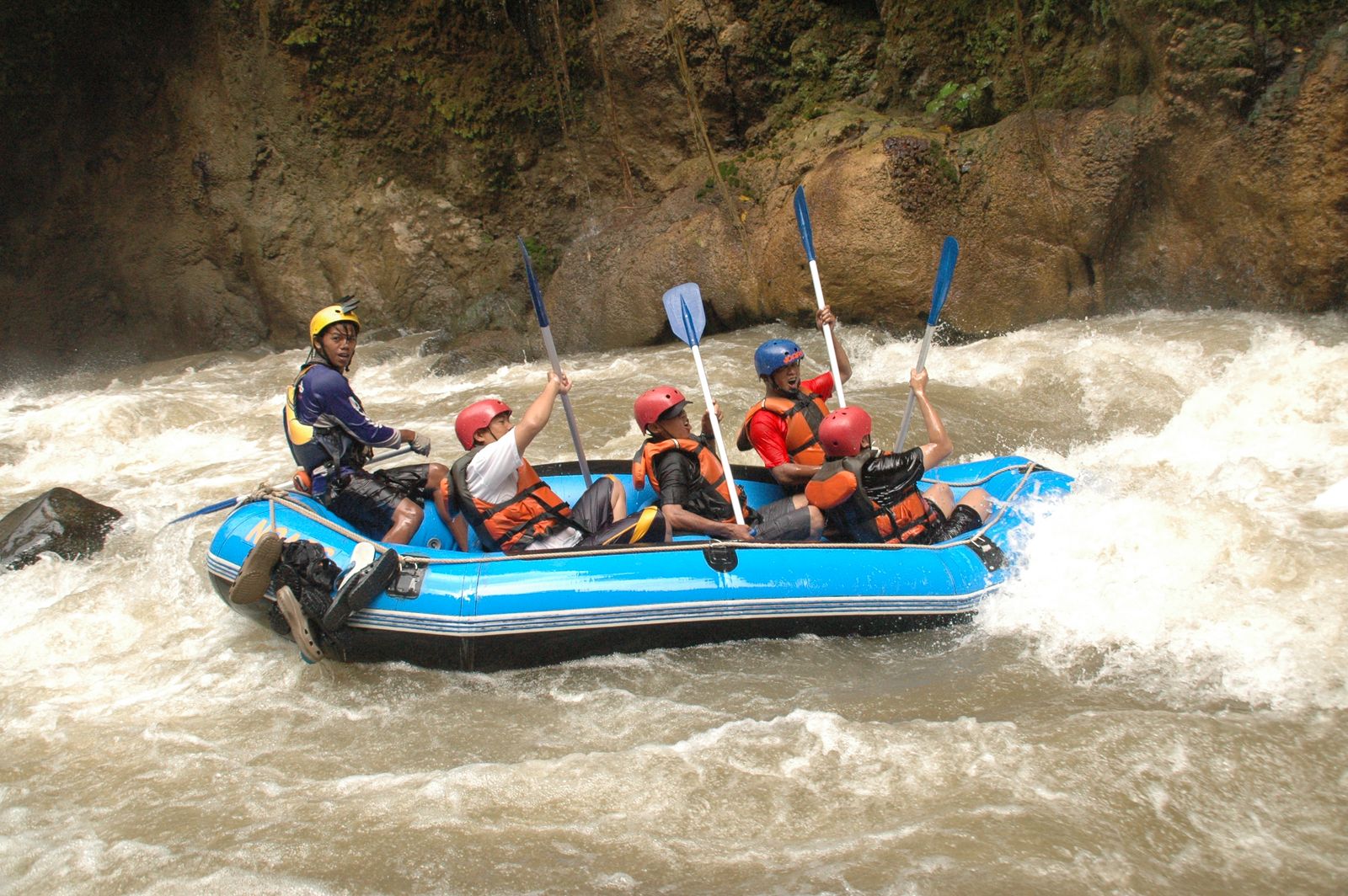
The Mendoza river runs out of the mountains through a canyon that has both the rafting and the hot springs, close enough together to do in one day, which is why almost everyone sells them as a combo.
Potrerillos rafting is intermediate grade over a 12 km section, with thermal and safety gear provided — this is snowmelt, so the wetsuit isn't decorative. Termas de Cacheuta sits on the river in the pre-cordillera and comes in two versions that people constantly confuse: a hotel and spa, and a separate water park. The park is the one with slides and pools and families; the spa is the quiet one. Know which you're booking.
Prices, stamped, because they move: a combo of Potrerillos rafting + zipline + Termas de Cacheuta was AR$120,000 paying cash as of 31 December 2025, and a thermal park + rafting + picnic package was AR$99,000. Transfers are usually included, which quietly solves the driving problem for this day too.
If you're going as far south as San Rafael, the Cañón del Atuel is the other rafting option, with descents roughly AR$25,000 to AR$35,000 depending on the section and grade. It's a different trip rather than a day out from Mendoza — five hours or so each way — so treat it as its own leg.
The city on foot
Five plazas, a very large park, and a hill you should climb in daylight.
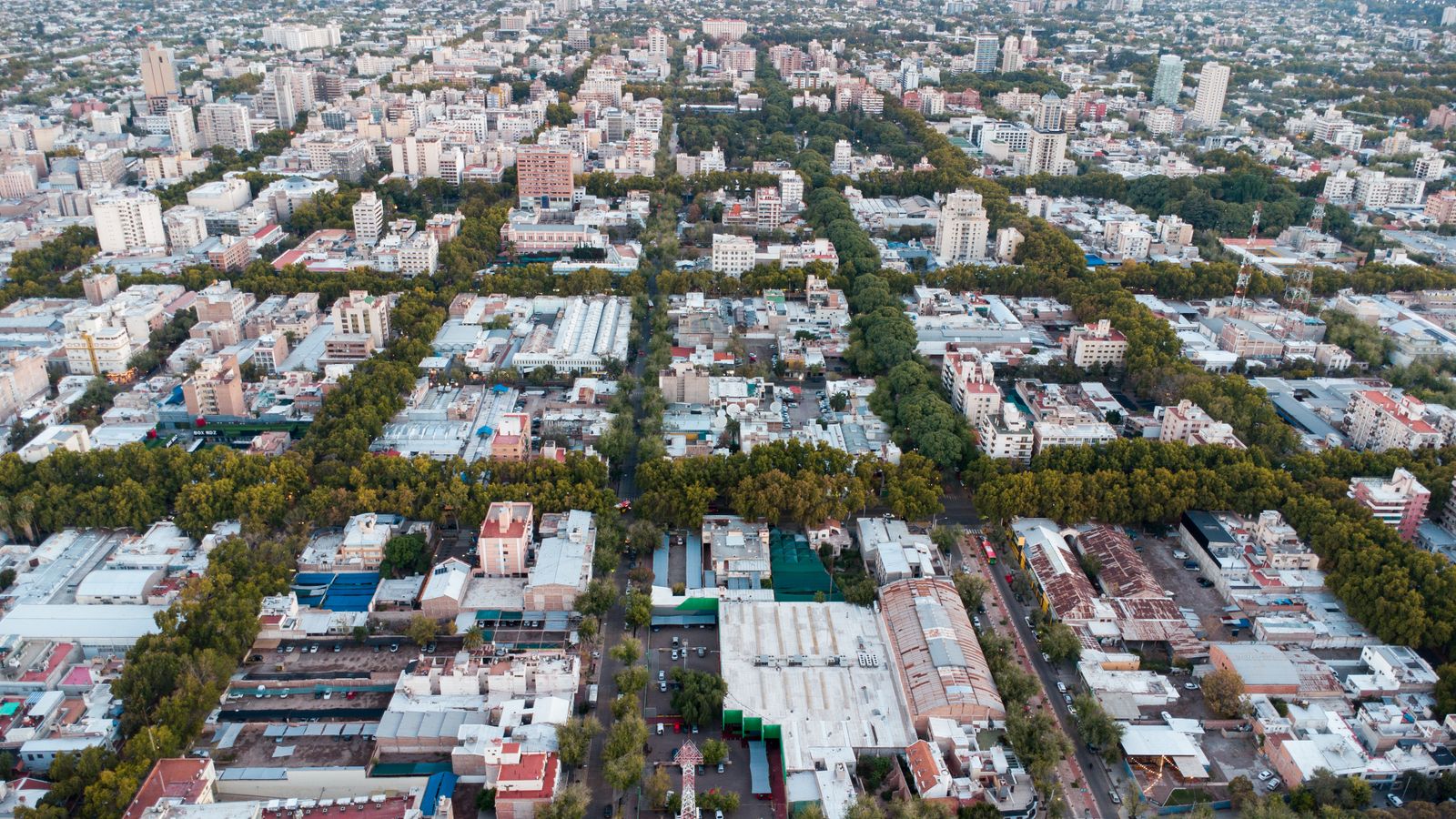
Mendoza's centre is unusually walkable for an Argentine city, and it's walkable on purpose — wide streets, wide pavements, and five big plazas laid out around Plaza Independencia with San Martín, España, Italia and Chile at the corners of the grid. Plaza España is the one worth going out of your way for, tiled and shaded and mostly full of people doing nothing.
Parque General San Martín is the enormous green one on the west side, and Cerro de la Gloria inside it gives you the whole city with the Andes behind. Go up in daylight. The park and the bus terminal are both named locally as higher-risk spots, so this is a daytime plan with company, phone in a pocket rather than a hand, and a taxi or remis back rather than a walk out through the park as it gets dark. That's not a reason to skip it — the view is the best free thing in Mendoza — it's a reason to do it at four in the afternoon rather than at nine at night.
And keep an eye on the wind. A Zonda day, with gusts over 60 to 70 km/h and dust in the air, is not a day for the hill, the bike or the park. It's a day for a cellar and a long lunch, and the good news is that Mendoza has an unfair number of both.
Where we would book
Bikes need no booking at all: get the bus to Maipú, walk to the rental operators by the stop, and take one. If you want a specific bodega on the route, book that bodega direct.
For Aconcagua, buy the day-trekking permit from the provincial park system rather than paying an agency to do it, since the Confluencia walk needs no registration and no guide. Agencies are worth their fee for the higher permits, which require an in-person collection in Mendoza city and some genuine admin.
Rafting and the thermal complex both sell direct, and Termas de Cacheuta's own site does the combos with transfers included — which is the version to take, because it means nobody in your group is driving a mountain road after a day in hot water. For Ruta 7 in winter, hire a driver who does that road for a living instead of a rental car, and check the road state the morning you leave.
Related guides
- Mendoza Comprehensive Guide — the transport decision that comes before everything else.
- Mendoza Food Guide — nine Michelin stars, and the market that beats most of them.
- Mendoza Culture Guide — the earthquake, the canals and Vendimia.
- Mendoza Group Trip Guide — the same days out, planned for six or ten of you.
- Bordeaux Activities Guide — the other wine region where the best day out is on the water, and you get there without a car.