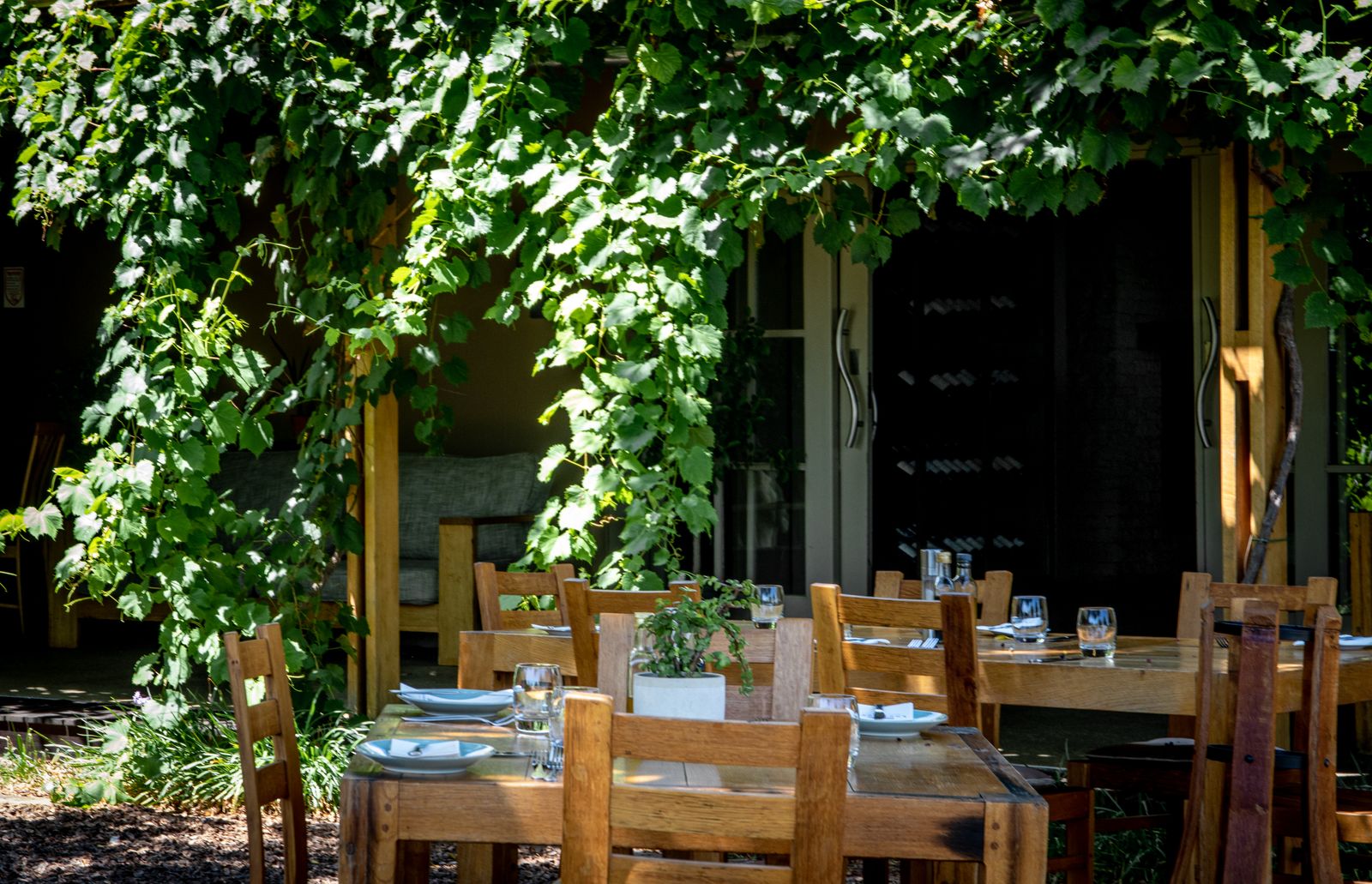
Something happened to Mendoza's food while everyone was still describing it as a wine trip with lunch attached. It now holds more Michelin stars than Buenos Aires. Not more per head — more, full stop. That's worth knowing before you plan your eating, and it's also worth arguing with, because the best meal you have here might still cost AR$8,000 and come from a market stall that closes for the afternoon.
Mendoza now has more Michelin stars than Buenos Aires
Nine of Argentina's 14, and the guide only landed in July 2026.

The MICHELIN Guide Buenos Aires & Mendoza 2026 came out on 13 July 2026: 89 restaurants, one two-star, 13 one-star, 11 Bib Gourmand. Fourteen stars across the country, and nine of them are in Mendoza province. Buenos Aires keeps the only two-star, Aramburu, and that's a real thing to keep — but on raw count, the wine country has taken over.
Three of Mendoza's stars are new this year. Cal, in the Uco Valley at winemaker Matías Michelini's Sitio La Estocada, which also took a Green Star for sustainability and is the most interesting thing on this list — terroir cooking pushed further up into high-altitude country than anyone had bothered to take it. Centauro, in Mendoza city. And La VidA.
The six holding stars tell you where the eating actually is, which is mostly inside wineries. Angélica Cocina Maestra sits at Catena Zapata in Agrelo, Luján de Cuyo. Riccitelli Bistró is at Matías Riccitelli Wines, also Luján de Cuyo, built out of remodelled shipping containers planted among old vines, with Juan Ventureyra cooking — and it's the one we'd send a first-timer to, because it is a serious kitchen that has not decided to be solemn about it. Zonda Cocina de Paisaje is at Lagarde. Casa Vigil is in Chachingo, Maipú, about 30 minutes from the city, built around Dante's Divine Comedy, which sounds like a lot and is a lot. Brindillas, in Chacras de Coria, seats 18 people per service and changes the menu with the season. And Azafrán, on Sarmiento in the city centre, does a sharpened version of classic Argentine cooking — slow-cooked lamb shank, prawns with onion jam — and its cellar lead Camila Torta was named MICHELIN Best Sommelier 2026. If you want one starred dinner where the wine list is the reason, that's the one.
Start at the market, because the cheap version is the good version
Av. Las Heras 279 — and it shuts in the middle of the day.
The Mercado Central is a covered market in the middle of the city at Av. Las Heras 279, and it is the single most useful address in this guide. Fresh produce, meat, fish, olives, olive oil, alfajores, wine — and a food court doing milanesas, empanadas, pizza, parrillada and chivito at market prices to people who work nearby.
The hours matter, because the siesta here is real: Monday to Saturday 08:30–13:30 and 17:00–20:30, Sunday 09:00–13:30. Turn up at three in the afternoon and you'll find a shuttered building and decide Mendoza has no street food, which would be the wrong conclusion drawn from correct evidence.
Go twice. Once to eat lunch standing up, once to buy olive oil and olives to take home, because Mendoza's oil is genuinely excellent and absurdly cheap next to what the same quality costs anywhere else.
Eat mendocino, not just Argentine
More onion in the empanada, and a stew nobody outside Cuyo has heard of.
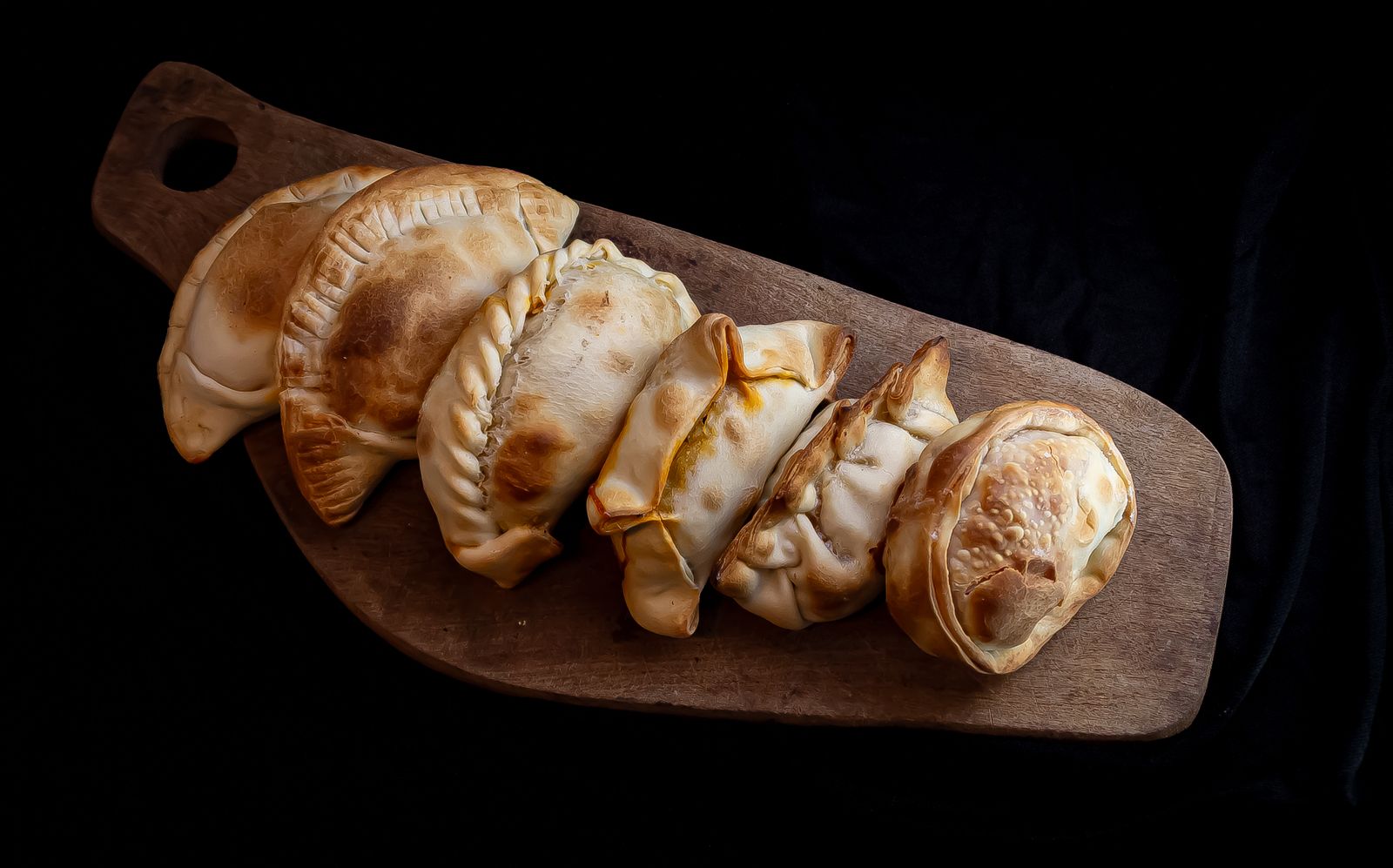
Argentina's regional cooking is more different province to province than anybody outside the country expects, and Mendoza's version has specific tells.
Empanadas mendocinas are baked, medium-sized, and carry noticeably more onion than versions from other provinces, with olive and hard-boiled egg in there too. Order a dozen and you'll taste the difference against a Salta empanada immediately — these are softer, sweeter, less about the meat.
Tomaticán is the one to go looking for, and almost no visitor does. It's a stew of tomato, onion, bread, sweet paprika, eggs and oregano, and its lineage is written into the ingredients: Spanish beef, eggs and onion sitting on top of Huarpe corn, tomato and pepper. Los Andes puts it on the podium of mendocino home cooking alongside carne a la olla and humita, and all three are food you'll find in a neighbourhood restaurant rather than a starred one.
Chivo — kid goat — is the emblem of cordilleran cooking here and in the province's south: lean, tender, mild, usually slow-cooked or on the grill. And Maipú's olive groves sit right in among the vines, which is why the local speciality is aceitunas rajadas, split green olives, sold everywhere and eaten with everything.
Order the tomaticán
It's on menus in the city and in Maipú, it costs a fraction of anything with a star next to it, and it is the only dish here with 500 years of argument between two cuisines cooked into it. Ask where they do a good one — people have strong opinions, which is the point.
The bodega lunch, and whether it's worth it
AR$20,000 for a tasting or AR$90,000 for lunch. Both are correct answers.
The paired lunch at a winery is the signature Mendoza experience and it runs AR$50,000 to AR$90,000 a head. A tasting on its own is AR$20,000 to AR$50,000, and a guided visit with three glasses starts near AR$8,000. Concretely: Zuccardi's classic guided visit is around AR$18,000, and Trapiche's five-course paired menu was AR$42,000 in March 2026.
Here's our honest read. The long lunch at a good bodega is one of the great meals available in South America, and the setting is doing a lot of the work — you are eating outside, in vines, with the Andes in front of you, and no city restaurant can buy that. It's also four hours you can't spend anywhere else, and at the top of the range it's more than a week's transport budget.
So do one. Pick the day you're already in the Uco Valley and not driving anywhere afterwards, put the good lunch in the middle of it, and let every other meal be the market, a parrilla and a AR$18,000 tasting. That's a better week than four expensive lunches in a row, and it costs about a third as much.
An AR$90,000 lunch is real money. Do it once, on the day nobody's driving, and let the rest of the week be the market.— On the one splurge
The parrilla night, and the one after it
You are in Argentina. At some point the answer is fire and a knife.
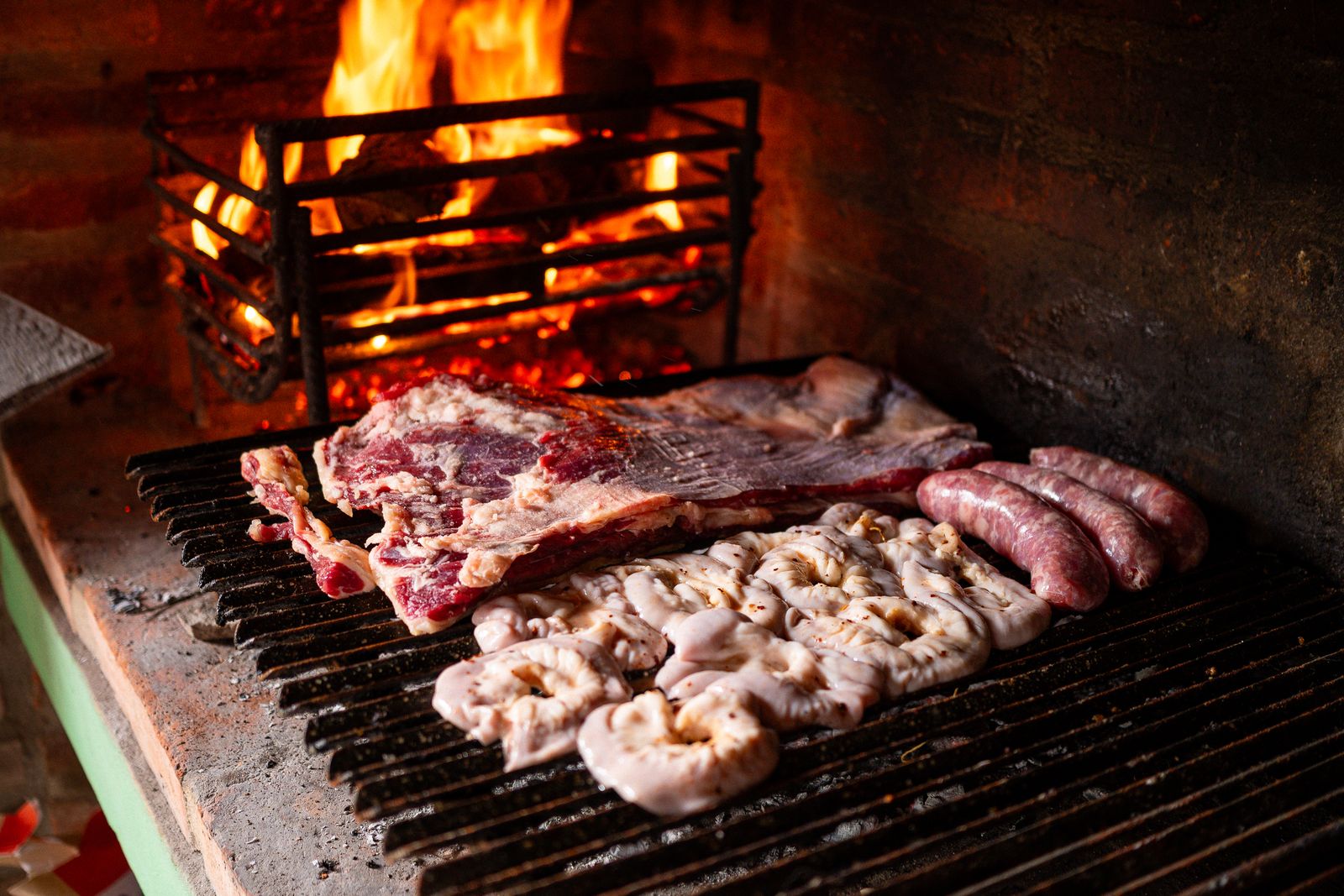
Somewhere in the week you want a night that isn't curated: a parrilla, a bottle of something local that costs a tenth of what it would abroad, and enough food that everybody argues about who ordered the extra chorizo. Mendoza does this as well as anywhere in the country, and the wine advantage is absurd — you are drinking Luján de Cuyo Malbec at the price it leaves the gate.
For a sit-down version with some polish, Chacras de Coria is where we'd go. María Antonieta has a garden, handmade pasta and Mediterranean cooking with an Argentine accent, and it's the kind of place where a group of six settles in and stops looking at the time. Anna Bistró, in the city, is the reliable mid-week answer when nobody can agree. And for straight-ahead asado, Don Mario is the parrilla locals name first when you ask where the steak is.
One practical note that saves an evening: Argentine dinner starts late and Mendoza is no exception. A 21:00 reservation is normal, 20:00 is early, and turning up at 19:30 hungry gets you an empty room and a kitchen that isn't ready. Have a glass of something first. That's what the acequia-lined plazas are for.
Where we would book
Book the starred restaurants and the bodega lunches direct, and book them early — the winery kitchens in particular have small dining rooms attached to a tasting schedule, and Brindillas seating 18 people a service tells you everything about how quickly those tables go. Email works better than forms at the small ones.
For the bodega lunches, book the winery visit and the meal together rather than separately, because the kitchen is usually part of a timed slot and turning up for lunch alone can be awkward or impossible. If your Spanish is fine, phone. If it isn't, email in English is normally answered.
Nothing at the Mercado Central needs booking and nothing there takes a reservation. Bring cash for the stalls, go inside the hours, and eat standing up.
Related guides
- Mendoza Comprehensive Guide — the transport decision that comes before everything else.
- Mendoza Activities Guide — the bike day, Aconcagua and the rafting.
- Mendoza Culture Guide — the earthquake, the canals and Vendimia.
- Mendoza Group Trip Guide — the same eating, planned for six or ten of you.
- Bordeaux Food Guide — the other wine city where the best meal is often the cheapest one, and the oysters are the argument.