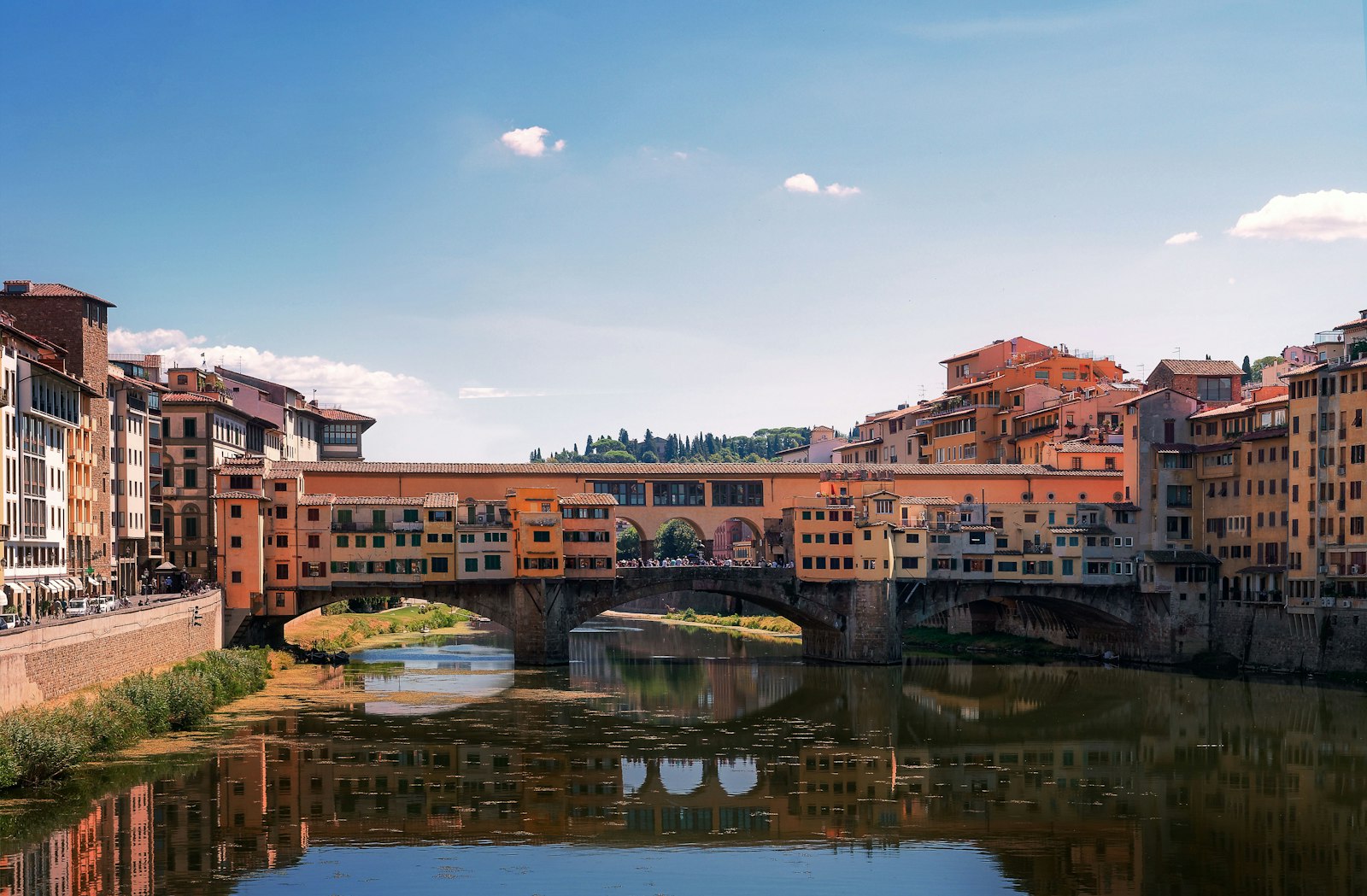
Florence rewards the planner
Book four things. Wing the rest.
Florence is the easiest great city in Europe to do badly. Show up without tickets in May and you'll spend your trip in queues, eating at the restaurants with picture menus, wondering what the fuss is about. But it's also the easiest to do well: book four things before you fly — the dome climb, the Uffizi, the Accademia, and one serious dinner — and the rest of the trip plans itself at walking speed.
This is how we'd do three days with a group. Not every church, not every Medici. The version where you come home having actually seen it, fed and rested and already planning the Tuscany trip.
The city in five pieces
Twenty-five minutes corner to corner.
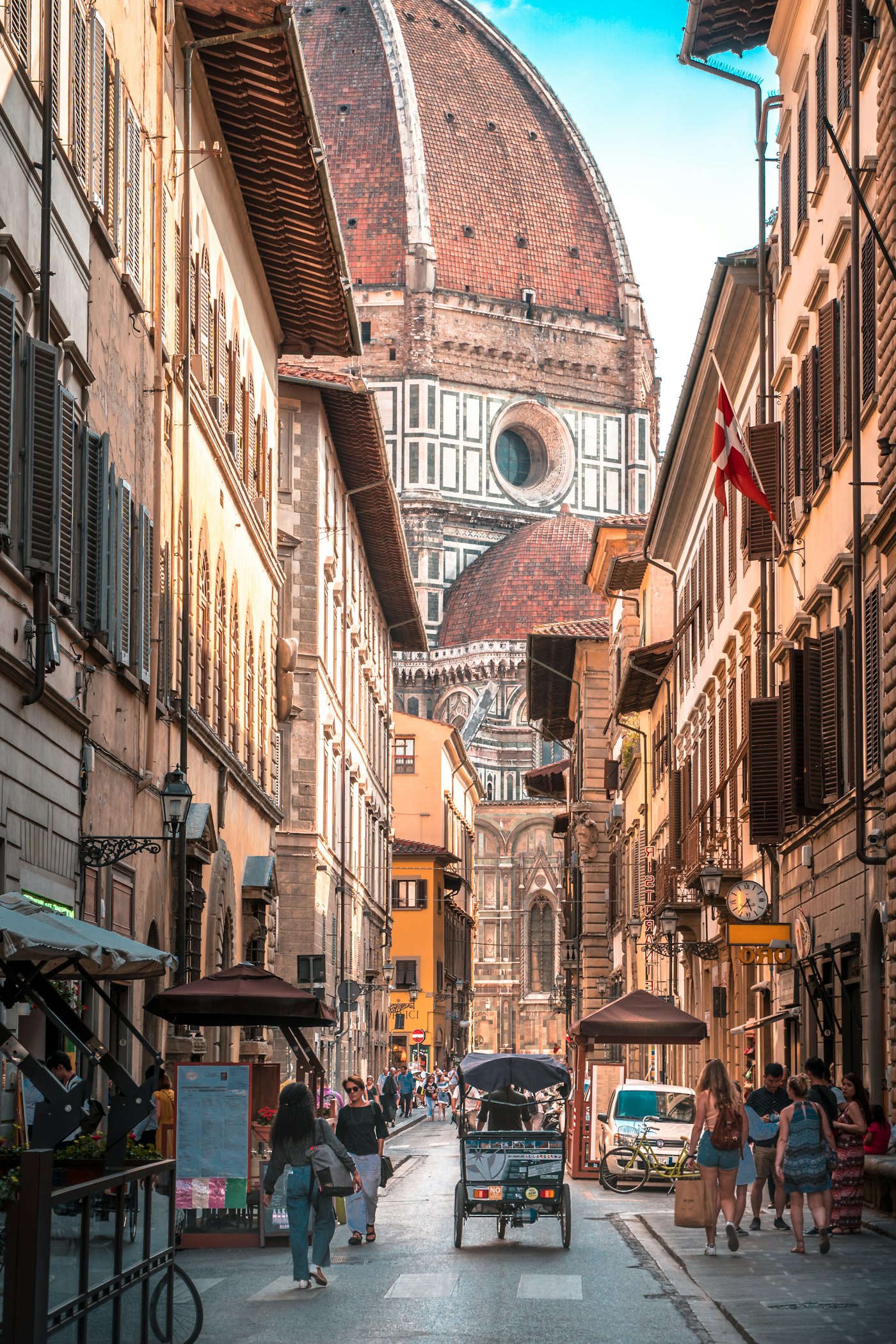
The historic center is small enough that neighborhoods are really just moods, but they're useful for planning:
- Duomo and the center — the marble core. Cathedral, Uffizi, Ponte Vecchio, and the densest crowds. Great from 7 to 9am, hard work at 2pm.
- San Lorenzo / San Marco — the Medici quarter. Mercato Centrale, the Medici Chapels, the Accademia. Studenty, a touch scruffy, full of good cheap lunches.
- Santa Croce / Sant'Ambrogio — east of the center. The basilica with the famous tombs, the market locals actually shop at, and the best aperitivo streets on this side of the river.
- Santa Maria Novella — the station end. Useful, well-connected, home to the great green-and-white basilica and the 800-year-old pharmacy.
- The Oltrarno — across the river. Santo Spirito, San Frediano, artisan workshops, wine bars, and the evenings you'll talk about after. If we're choosing where to stay, we're choosing here.
Before you fly: the booking list
Four reservations. Thirty minutes. Do it now.
- Brunelleschi's dome — timed slots sell out one to two weeks ahead in season. Buy the Brunelleschi Pass (about €30), which also covers the baptistery, bell tower, and cathedral museum over three days.
- The Uffizi — book the timed entry on the official site, not a reseller. Aim for 8:15am or after 4pm.
- The Accademia — same logic. Fifteen-minute visit windows; the David doesn't need more than an hour.
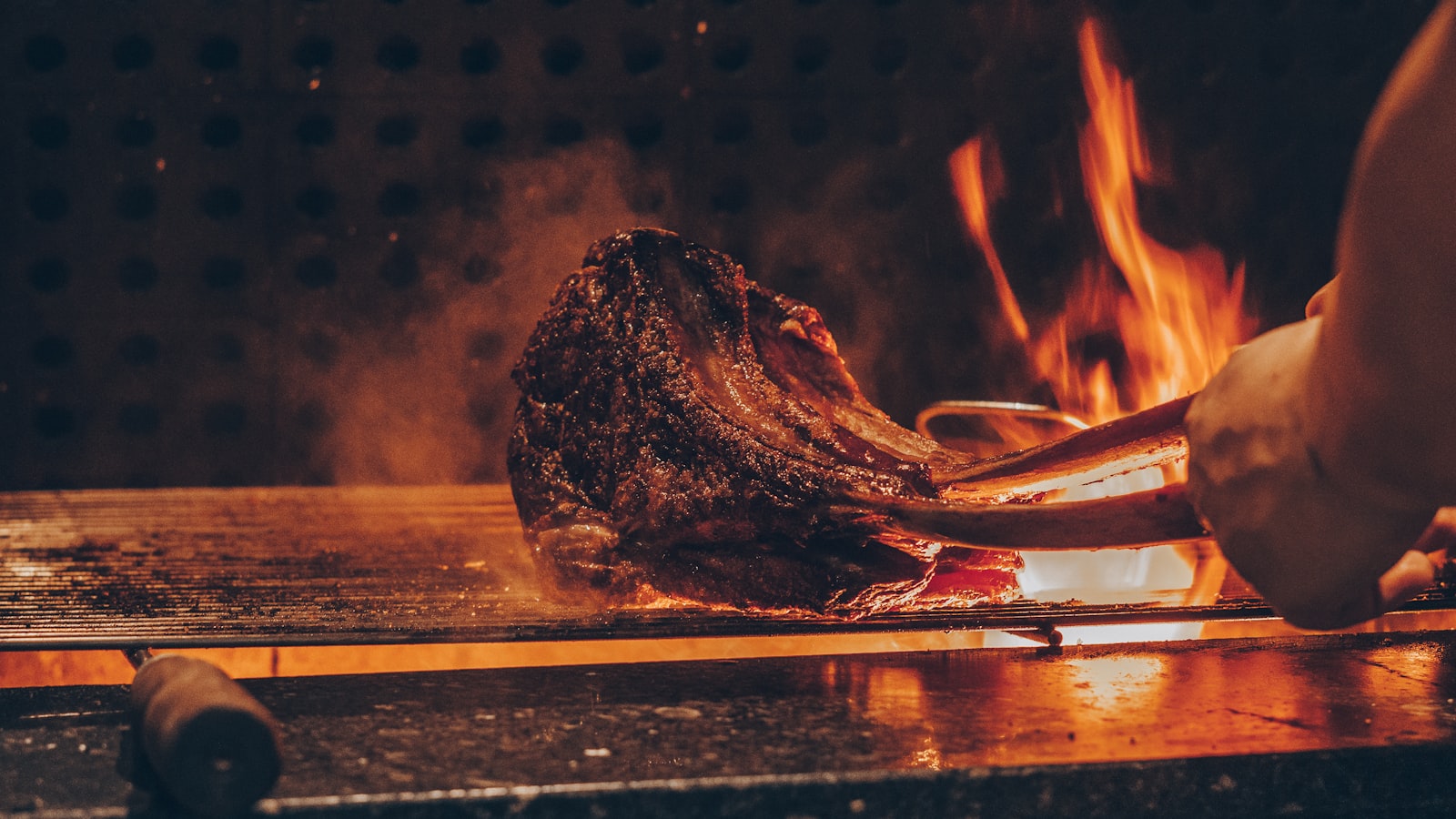
- One dinner — whichever trattoria you've picked for the bistecca night. The good ones book out a week or more. Our shortlist is in the food guide.
Both big museums are closed Mondays. Build the itinerary around that before anything else.
Day one: the Renaissance core
Climb first. Art after lunch.
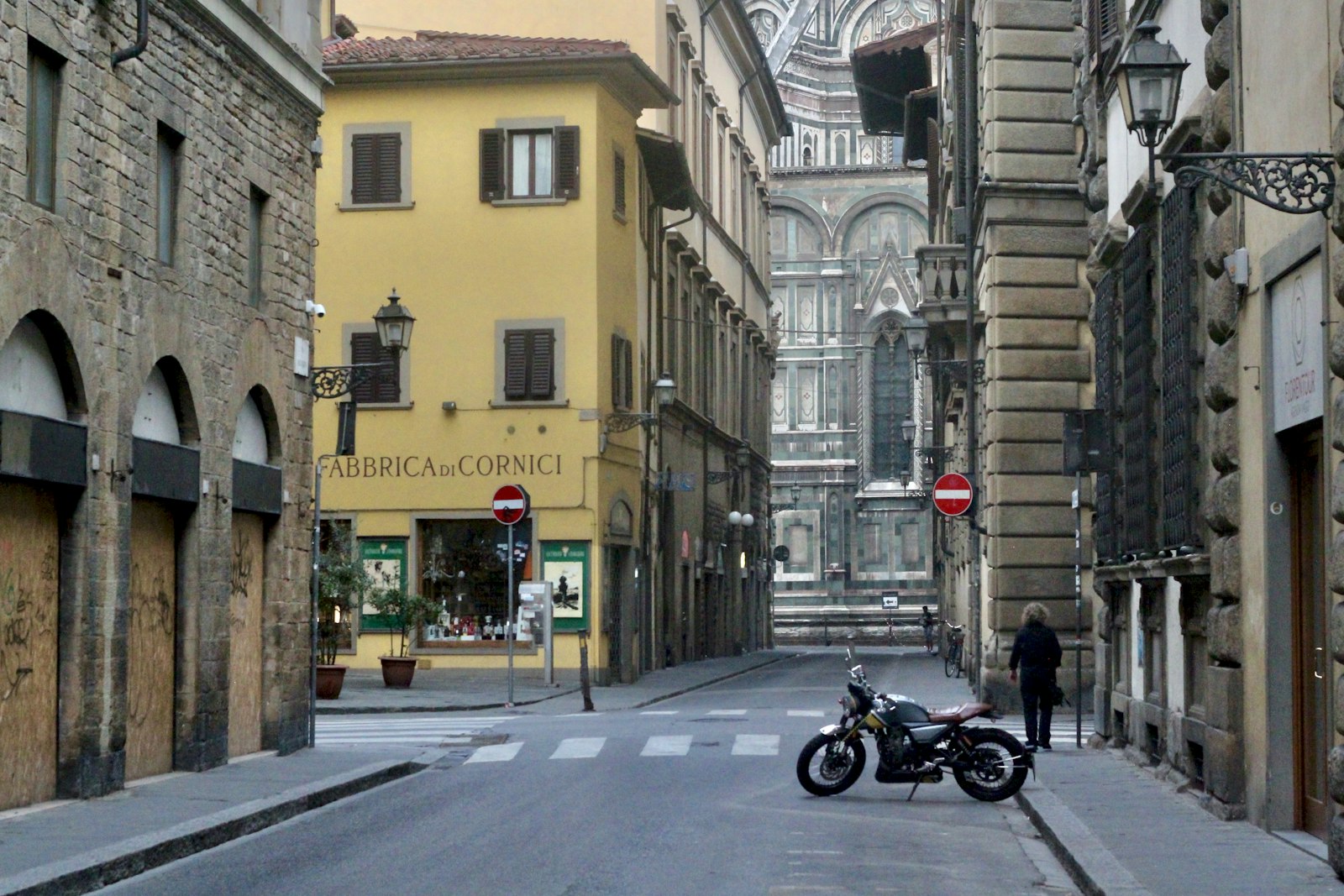
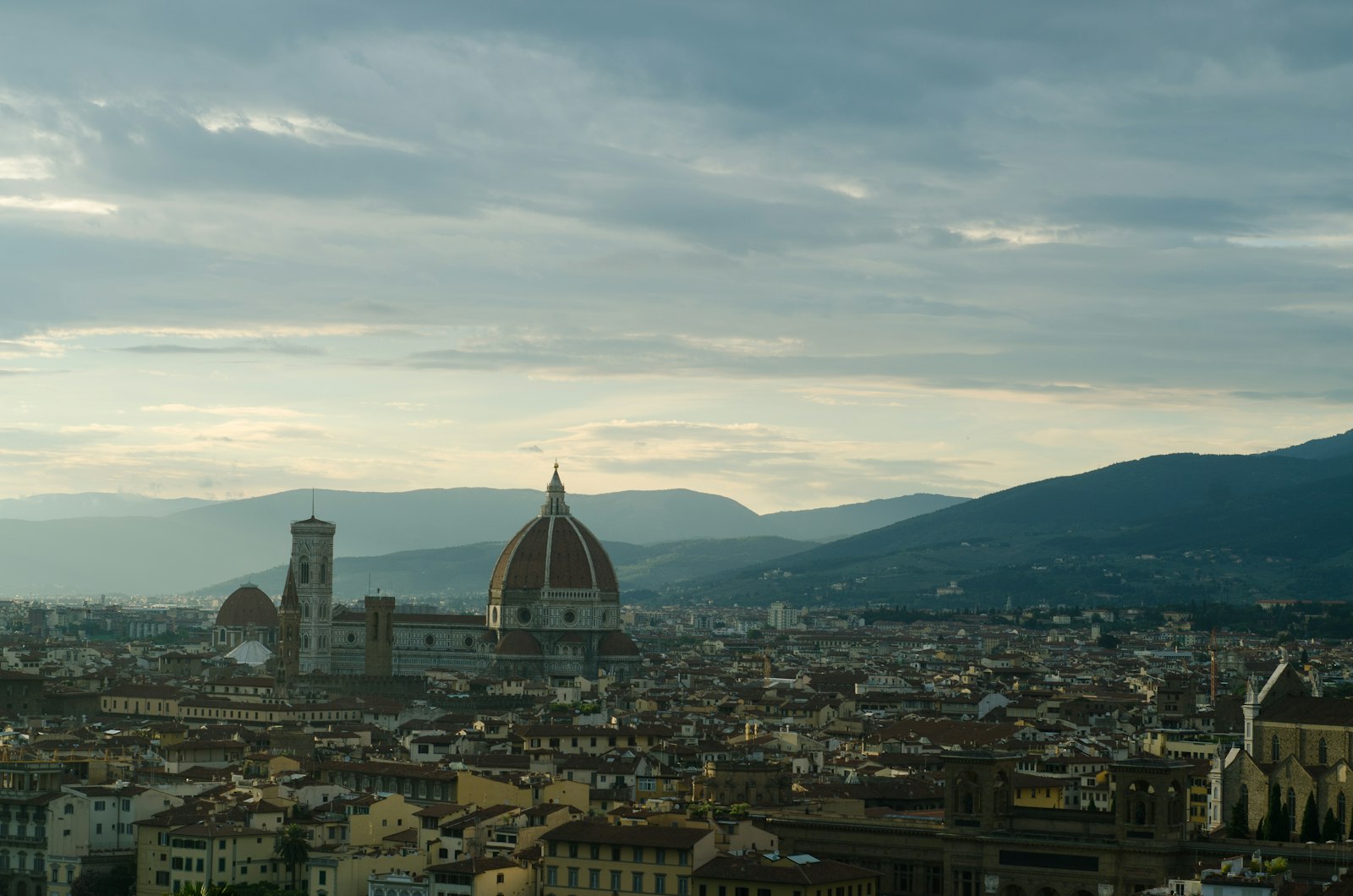
Take the earliest dome slot you can get. The climb is 463 steps through the double shell of the dome itself — narrow, strange, and the single best thing you can do in Florence. From the top, the whole city is terracotta and hills. Down by 10, coffee standing at a bar like a local (a euro and a half, two minutes), then the baptistery's golden ceiling, which your pass already covers.
Lunch long and Tuscan near San Lorenzo, then give the afternoon to the Uffizi with a late slot — Botticelli's Primavera and Birth of Venus, Leonardo's Annunciation, Caravaggio's Medusa. Two hours is plenty for a first pass; our room-by-room strategy is in the culture guide. Cross the Ponte Vecchio at dusk when the goldsmiths' windows glow, and eat in the Oltrarno.
Day two: David, markets, and the Oltrarno
One statue, one market, one slow afternoon.
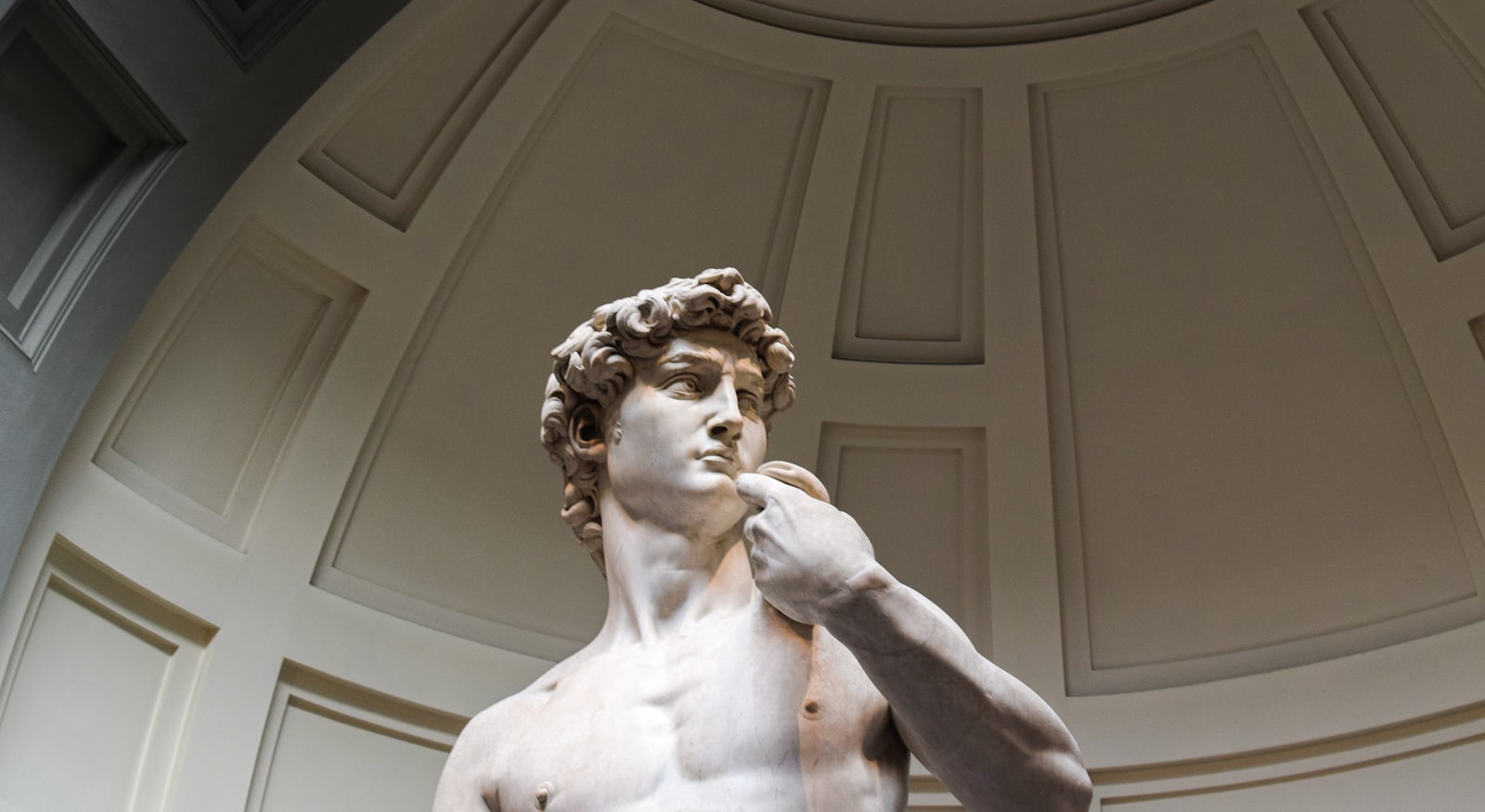
Accademia first thing — the David is genuinely worth the hype, and the unfinished Prisoners lining the hall toward him are arguably more moving. Then walk five minutes to San Marco for Fra Angelico's frescoes, painted one per monk's cell, where you'll have entire rooms to yourself.
Lunch at Mercato Centrale or, better, at the Sant'Ambrogio market with the locals. Spend the afternoon across the river: the artisan workshops of San Frediano, a wine window pour through a hole in a palazzo wall, aperitivo on the steps of Santo Spirito as the square fills up. This is the day with no tickets and it's usually everyone's favorite.
Book four things before you fly. The rest of the trip plans itself at walking speed.— On planning Florence
Day three: the hill, the garden, or the hills
Pick one. Don't stack them.
The hill: walk up through the rose garden to Piazzale Michelangelo, then ten minutes further to San Miniato al Monte — a thousand-year-old basilica with the best view in the city and, if you time it right, Gregorian chant at the evening service.
The garden: Palazzo Pitti and the Boboli Gardens, with the quieter, prettier Bardini garden on the same combined ticket and a postcard view of the dome through wisteria in April.
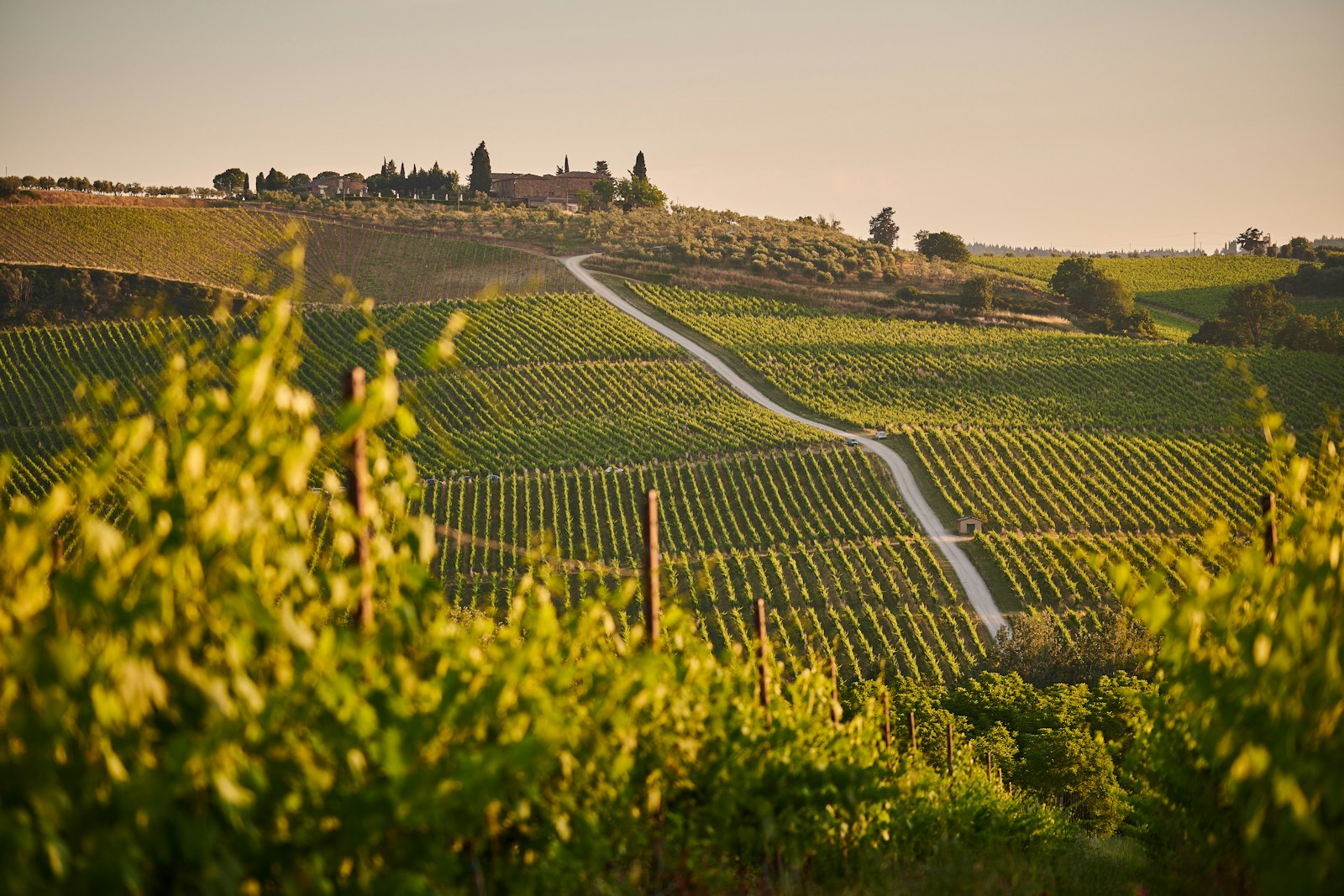
The hills: a day trip. Siena by bus, Chianti with a driver, or Fiesole if you only have half a day — the 20-minute city bus to a Roman theater and a view back over Florence. The full rundown is in the activities guide.
Where to stay
Oltrarno for the evenings. Center for the steps.
For groups, an apartment in the Oltrarno (Santo Spirito or San Frediano) is the move — you get the wine bars and trattorie at your door and the monuments a ten-minute walk away. Santa Croce / Sant'Ambrogio is the same idea on the other bank. Hotels cluster around the Duomo and Tornabuoni, where you pay for marble and proximity. Avoid anything more than 20 minutes' walk out — Florence's whole advantage is that you never need transit.
Getting in and around
Your feet. That's the list.
- From the airport: the T2 tram runs to the center in about 20 minutes, every few minutes, a couple of euros. A taxi is a flat ~€25.
- By train: Santa Maria Novella station is a 10-minute walk from the Duomo. Fast trains reach Rome in 1h30 and Bologna in 40 minutes.
- In town: walk. Everything in this guide is within 25 minutes of everything else. Skip renting a car unless you're leaving for the countryside — the ZTL camera zone around the center fines rental cars automatically and mercilessly.
Money, coperto, and the rhythm
Cards work. Tips don't.
Cards are accepted nearly everywhere now, including markets; keep some cash for gelato and lampredotto carts. The coperto on your bill (€2–4 a head) is normal, not a scam. Tipping is not expected — round up if you loved it. Restaurants seat dinner from about 7:30pm; turning up at 6 marks you as a tourist and gets you the worst table. Sunday afternoons and Mondays are quiet — plan the big walks for those.
Where we would book
For apartments, we look on Booking.com first — Florence's group-sized inventory there is strong, especially in the Oltrarno — and at Plum Guide for the splurge tier. Museum tickets we book only on the official Uffizi and Opera del Duomo sites; resellers add fees for nothing. For Chianti and Siena day trips with a driver, GetYourGuide has the most reliable small-group operators, and a cooking class booked there is the best rainy-day insurance in the city.
Related guides
- Florence Food Guide — the bistecca rules, the markets, and the wine windows.
- Florence Activities Guide — climbs, gardens, day trips, and the Oltrarno.
- Florence Culture Guide — museum strategy without the burnout.
- Your Mexico City Travel Guide — a very different city, the same honest treatment.
- Florence Group Trip Guide — the same city, planned for six or ten of you.