The two-museum rule
Your feet give out before the art does.
Florence holds more first-rate art per square meter than anywhere on earth, which is exactly the problem. Museum fatigue is real, it arrives around hour three, and it doesn't care that the next room is Botticelli. Our rule for groups: one major museum per day, two cultural stops maximum, and at least one of them should be a church or a garden where nobody has to perform appreciation.
Everything here closes its ticket office 30–60 minutes before closing time, and the two giants — Uffizi and Accademia — are closed Mondays. Build the week around that.
The Uffizi, done right
Two hours. One direction. No completism.
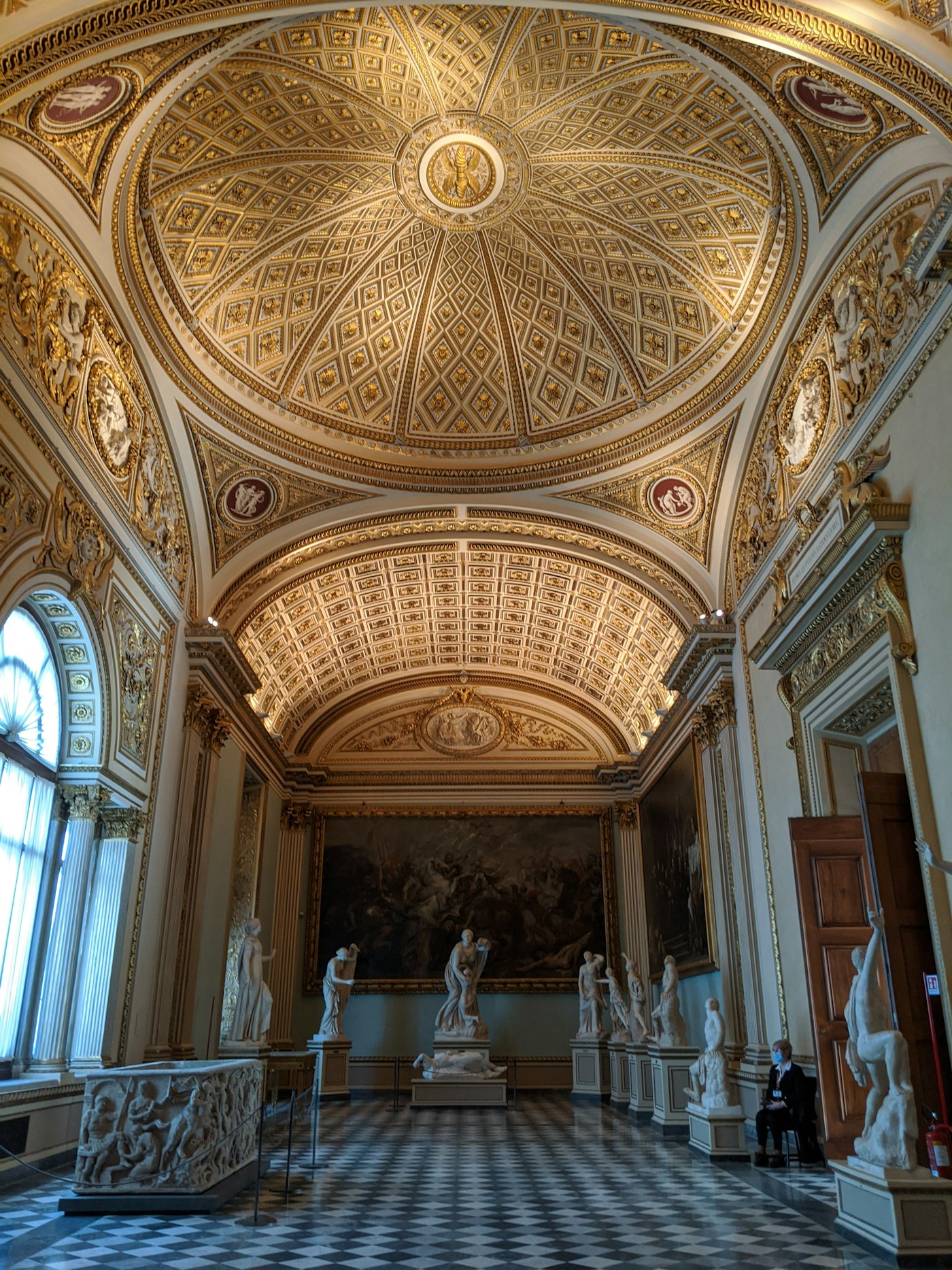
The Uffizi is a corridor museum: the collection runs chronologically in a U-shape on the top floor, which means you can see the spine of the Renaissance in two focused hours without doubling back. Book the 8:15am slot or a late-afternoon one — midday belongs to the cruise groups.
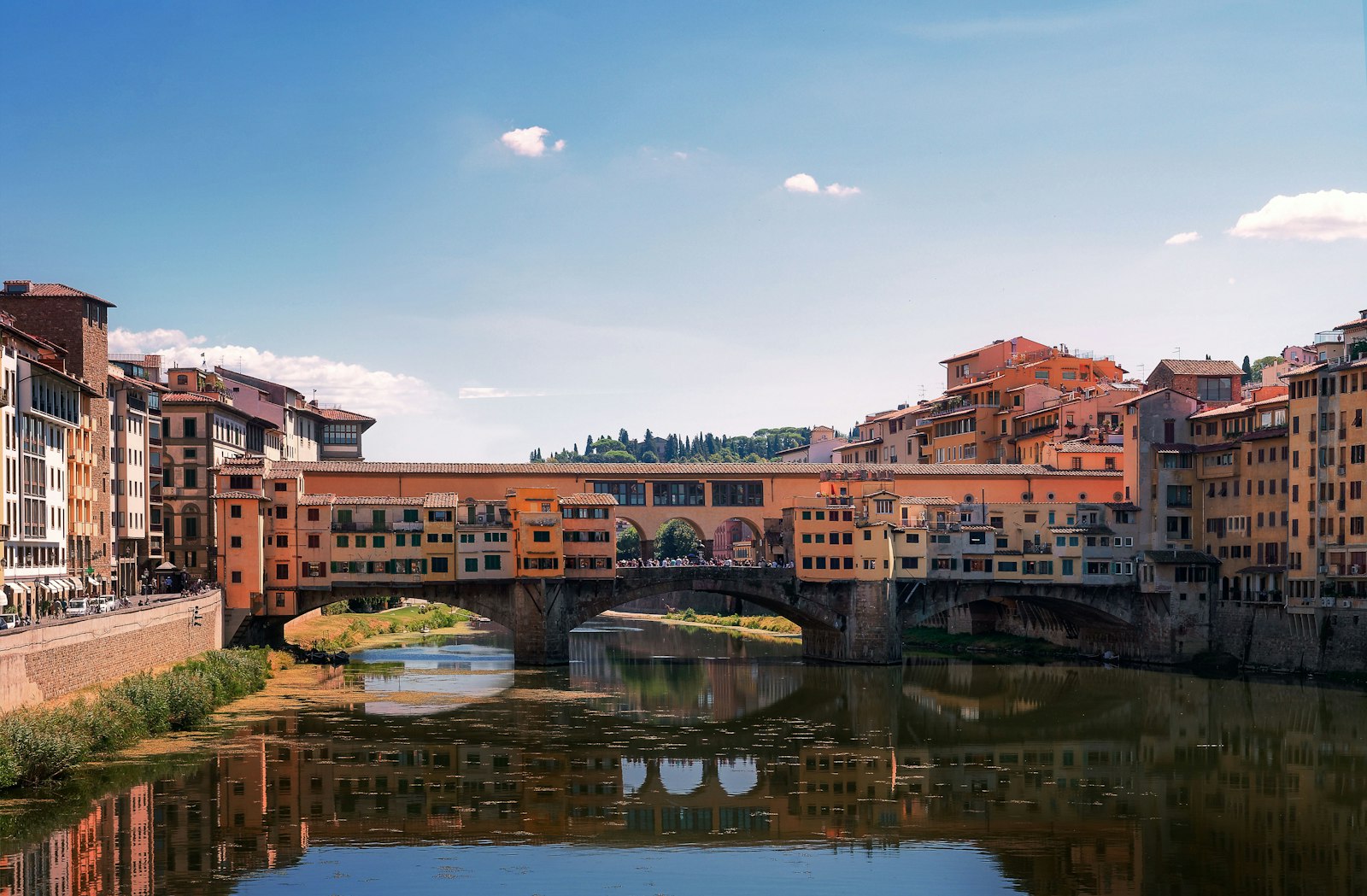
The non-negotiables: Giotto's Ognissanti Madonna (room one, where it all starts), Botticelli's Primavera and Birth of Venus, Leonardo's Annunciation, the Michelangelo Doni Tondo, Raphael, and — easy to miss downstairs — Caravaggio's Medusa. See those properly, glance at everything between, and leave while you still like art. The view of the Ponte Vecchio from the corridor windows is itself a masterpiece; the rooftop café is a fine place to declare victory.
The Accademia and the David
Worth it. Genuinely. Book it anyway.
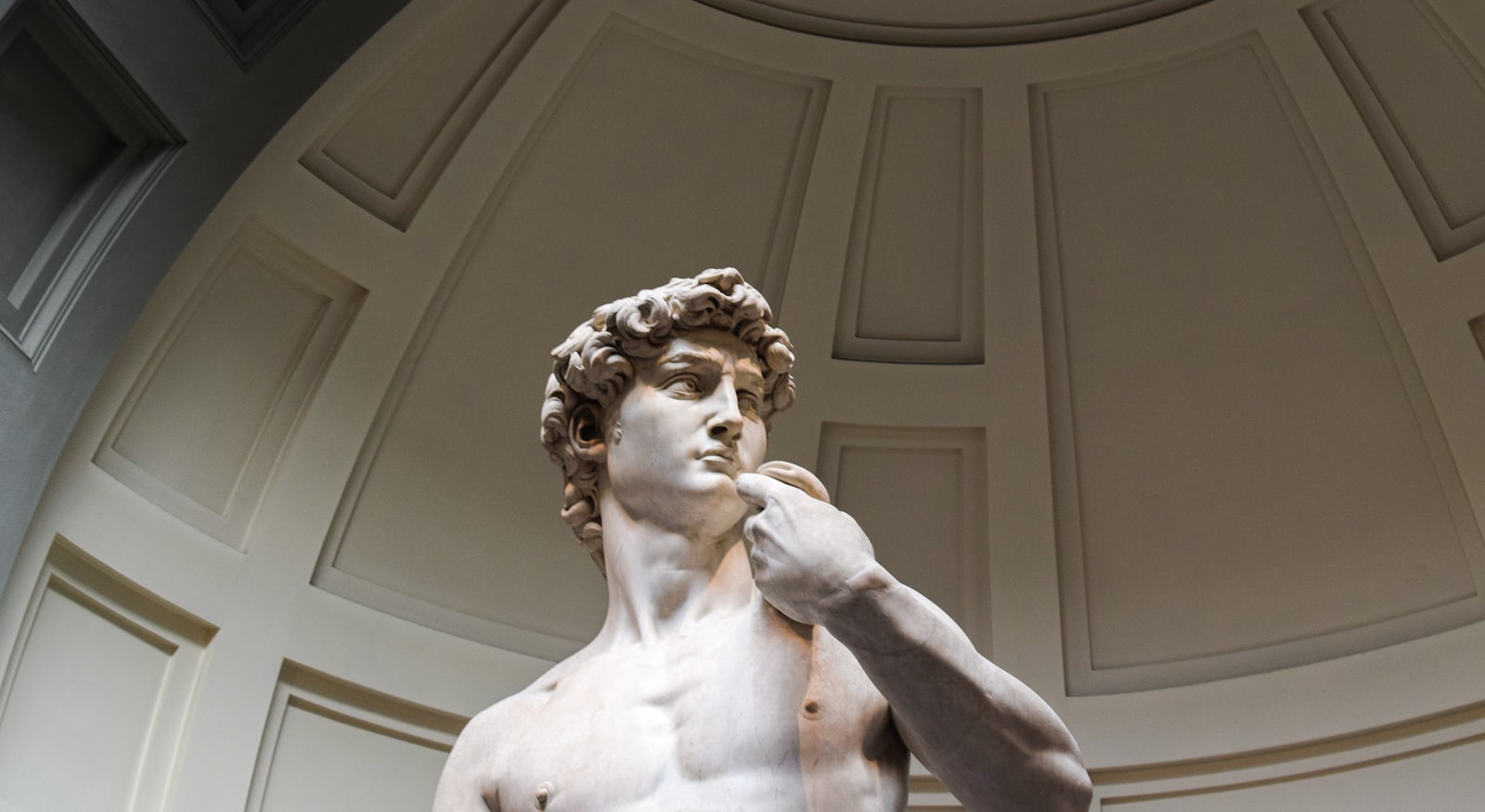
Cynics will tell you to skip the Accademia and see the replica outside Palazzo Vecchio. The cynics are wrong. The David at full scale, under the dome built for him, is one of the few famous artworks that exceeds its reputation — and the unfinished Prisoners lining the approach, figures fighting their way out of raw marble, are the most affecting things Michelangelo left us.
The museum is small: 45 minutes covers it honestly. First slot of the morning, then walk five minutes north to San Marco while everyone else queues.
The David is one of the few famous artworks that exceeds its reputation.— On the Accademia
The underrated tier
Empty rooms, first-rate art.
The Bargello
Donatello's bronze David — the first freestanding nude since antiquity — plus Michelangelo's Bacchus and the competition panels that launched the Renaissance, in a medieval fortress you'll practically have to yourself. The best sculpture museum in Italy, at a tenth of the Uffizi's crowd.
- Museo di San Marco — Fra Angelico painted a fresco in each monk's cell of this Dominican convent. Quiet, devotional, and ten minutes from the Accademia: the natural pairing.
- Medici Chapels — Michelangelo's New Sacristy, where Night and Day recline over Medici tombs. Architecture and sculpture by the same hand, twenty minutes well spent.
- Brancacci Chapel (Oltrarno) — Masaccio's frescoes, where Renaissance painting effectively begins. Timed entry, small groups, book a day or two ahead.
- Palazzo Vecchio — the city's town hall for 700 years and still in use. The Salone dei Cinquecento is the most theatrical room in Florence, and the tower is an alternative climb when the dome is sold out.
- Museo dell'Opera del Duomo — included in your dome pass and routinely skipped: Ghiberti's original Gates of Paradise, Donatello's harrowing Magdalene, and Michelangelo's late Pietà. Go.
The churches
Shoulders covered. Voices down. Coins for the lights.

- Santa Croce — the pantheon. Michelangelo, Galileo, and Machiavelli are buried here, Giotto frescoed the chapels, and Brunelleschi's Pazzi Chapel sits off the cloister. The most rewarding paid church entry in the city.
- Santa Maria Novella — the green-and-white façade is the city's finest, and inside are Masaccio's Trinity (perspective's birth certificate) and Ghirlandaio's gossipy fresco cycles.
- San Miniato al Monte — Romanesque, luminous, free, and up the hill with the best view in Florence. Evening services often come with Gregorian chant.
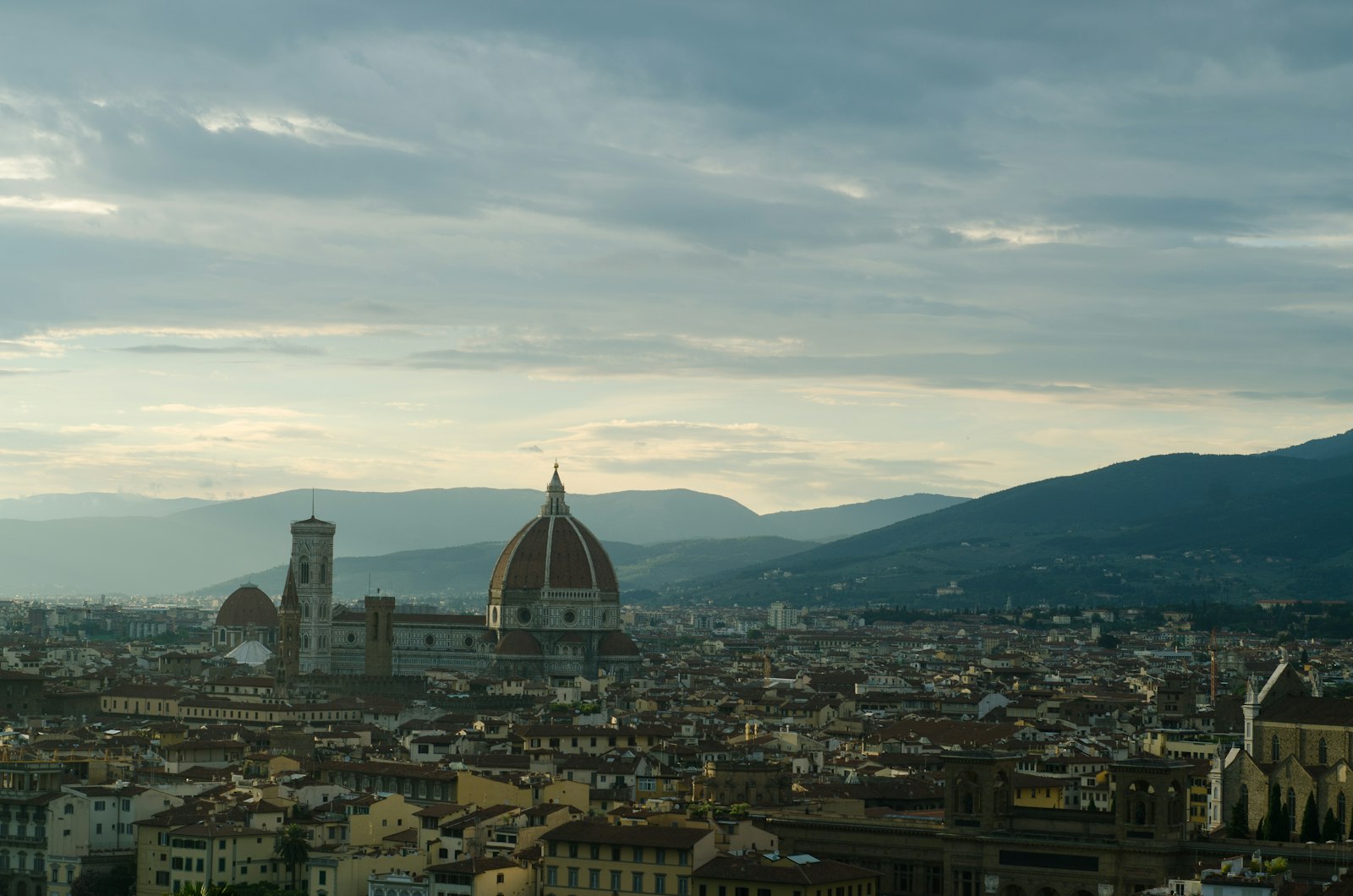
- The Duomo itself — free to enter, and the interior is famously plainer than the exterior promises. The queue is for the free entry; if you hold a dome or pass ticket, your time is better spent on the climbs and the museum.
Dress codes are enforced at all of them: covered shoulders and knees, hats off, flash off. Carry a light scarf in summer and the problem disappears.
Tickets, passes, and closed Mondays
Official sites only. Mondays are for the Oltrarno.

- Book direct: the official Uffizi and Opera del Duomo sites sell the same timed slots resellers mark up 30%.
- The Brunelleschi Pass (~€30, 3 days) is the only bundle that's automatically worth it.
- The Firenze Card (€85, 72 hours) only pays off if you'll genuinely do five-plus paid sites in three days — do the math before buying, and note it doesn't skip the Uffizi reservation requirement.
- Free first Sundays (state museums, October–March) are real and really crowded. Good for the Bargello; bad for the Uffizi.
- Closed Mondays: Uffizi, Accademia. The Duomo complex and most churches stay open — Monday is dome-and-Oltrarno day.
How to be a decent visitor
The city is a workplace, not a set.
Florence hosts more visitors per resident than almost any city in Europe, and it shows in the rules: don't picnic on church steps (the 'decoro' fines are real), don't drag luggage through the Uffizi piazza at dawn yelling about gate times, and book the artisan workshop visit instead of photographing someone's workbench through the door. Learn buongiorno, per favore, and il conto — three words move every interaction from transaction to welcome. And spend money outside the center: the Oltrarno bottega, the Sant'Ambrogio counter. That's the version of tourism this city is trying to keep.
Where we would book
Museum and dome tickets only from the official Uffizi and Opera del Duomo sites — everything else is a markup. For a first morning, a small-group guided Uffizi tour on GetYourGuide is the one guided thing we'd pay for in Florence; a good guide turns the corridor into a story. Stay near the art: Booking.com's apartment inventory around Santa Croce puts every museum in this guide within a 15-minute walk.
Related guides
- Your Florence Travel Guide: Three Days, Honestly Done — the full plan.
- Florence Activities Guide — climbs, gardens, and day trips for the non-museum hours.
- Florence Food Guide — where to recover from the Uffizi.
- NYC Museum Guide — the same skip-the-lines strategy, applied to Manhattan.
- Florence Group Trip Guide — the same museums, with the timed tickets bought for ten.