How to eat here
The world's most famous food city is also a great cheap-lunch town.
Copenhagen spent two decades as the center of the food world, and the legacy isn't just the tasting menus — it's that the ambition trickled down into everything. The bakeries are run like restaurants, the hot-dog carts are organic, and the corner bistro plates like it has something to prove. You can eat enormously well here on three budgets at once, which is exactly what a group needs.
The shape of a good eating day: pastry and filter coffee in the morning, smørrebrød at lunch (this is when Danes eat it — it is not dinner food), something from the new-bistro generation at night, and natural wine in between. Book the dinner places two to three weeks out; walk into everything else.
Smørrebrød, properly
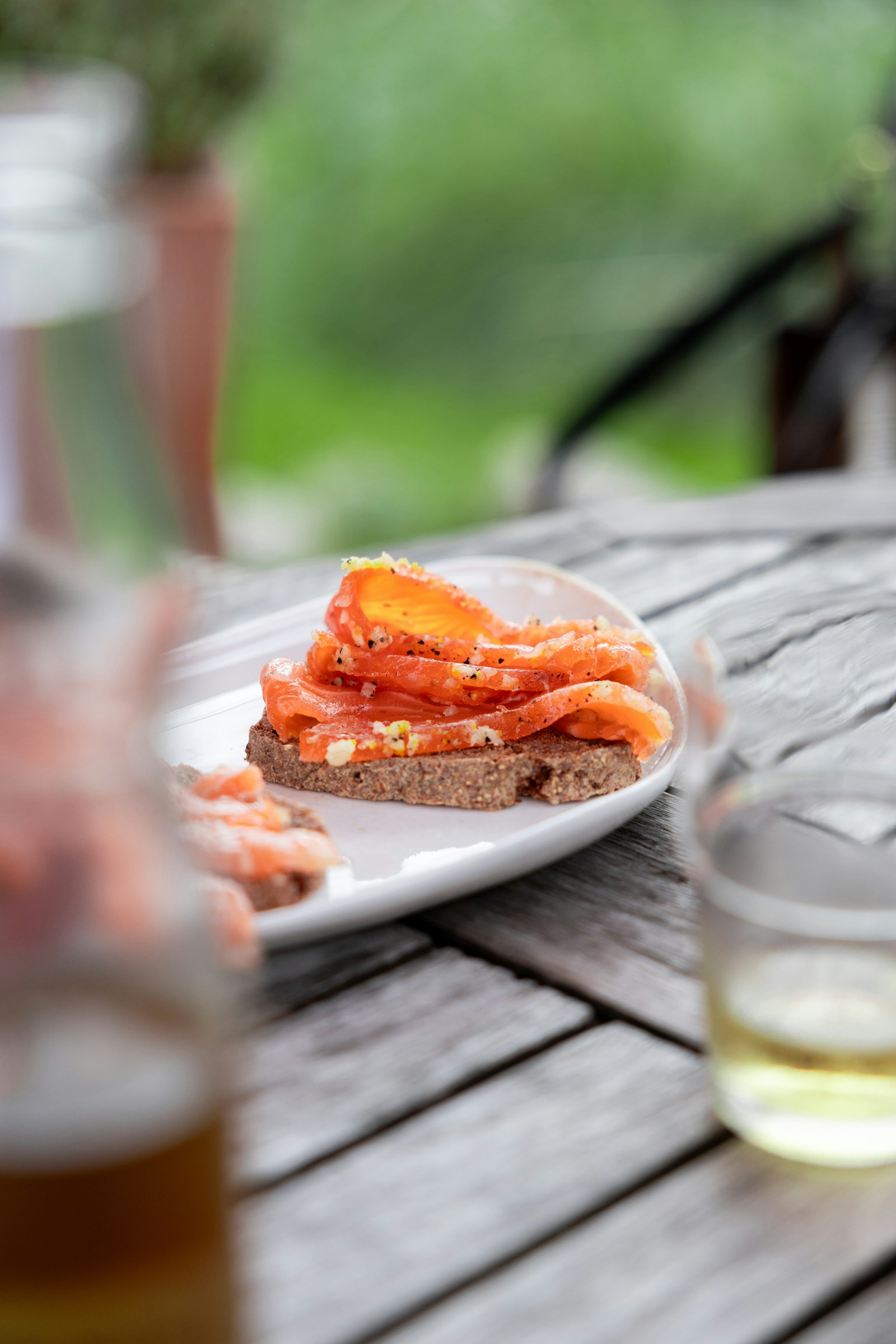
Open-faced, rye-based, non-negotiable.
Smørrebrød is dense rye bread carrying something glorious — and the rules matter. You order two or three pieces each, fish before meat, and you eat them with a knife and fork. A cold beer or an aquavit alongside is not a cliché; it's the correct pairing and the whole table should commit.
Schønnemann has been doing this since 1877 in a cellar that looks it — the herring selection alone justifies the booking, and yes, you should book. Aamanns 1921 is the modern restatement: same tradition, lighter hand, organic rye they mill themselves. For the casual version, the smørrebrød counters at Torvehallerne market let you point, pay, and eat outside within five minutes. Start with the fried plaice with remoulade. Thank us later.
The pastry the world calls a Danish is here called wienerbrød — and it's better at home.— On bakery culture
The bakery tier list
Yes, you queue. Yes, it's worth it.
Juno the Bakery
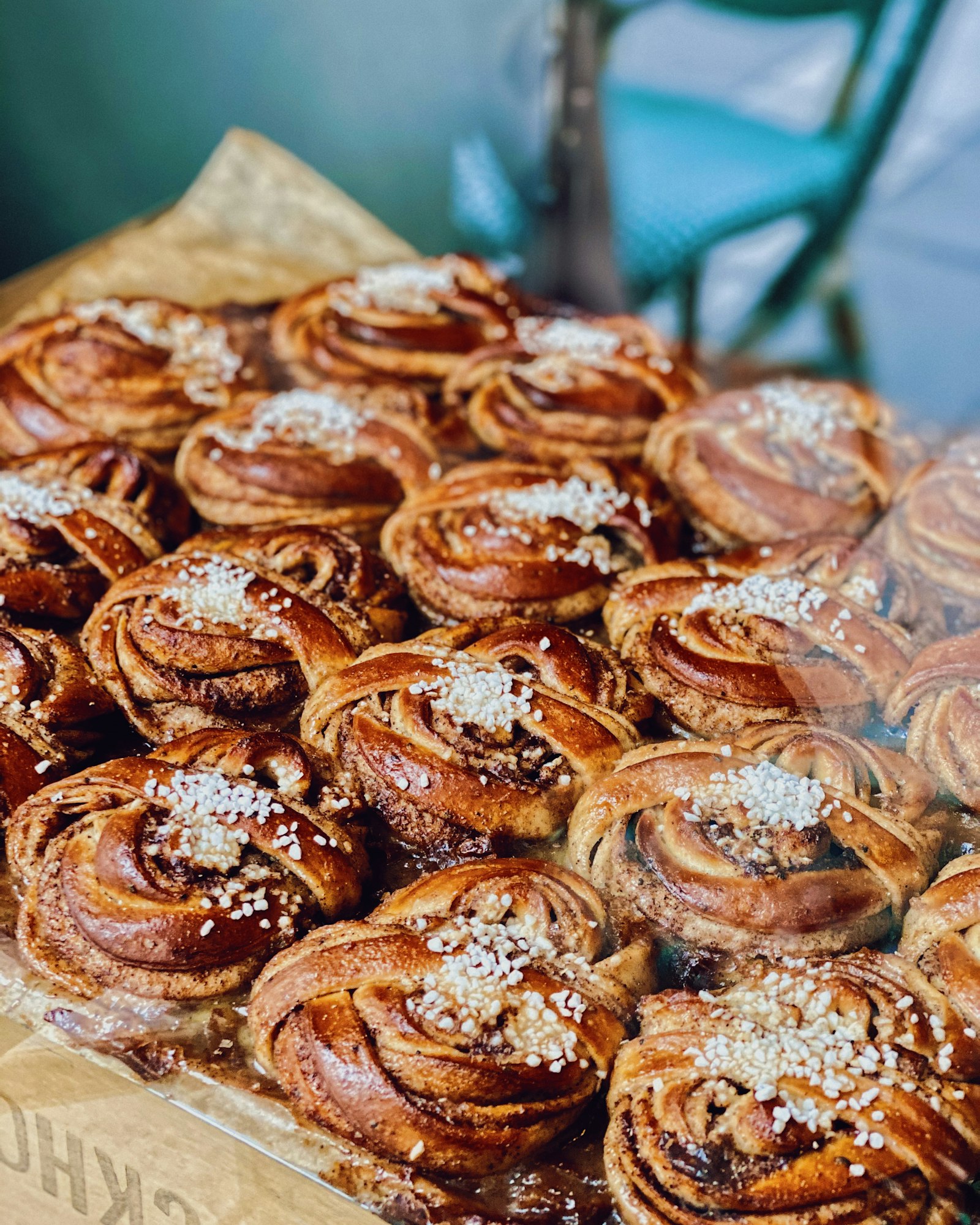
An Østerbro side street, a former Noma baker, and a cardamom bun that has rearranged people's flight schedules. The line moves fast, the buns come warm in waves, and the only mistake is ordering one. Go before 10am, take them to the nearby Sortedams Lake bank, and watch your group go quiet.
The rest of the podium: Hart Bageri in Frederiksberg, founded by Richard Hart of Tartine fame, where the sourdough and the morning bun are the argument; and Andersen & Maillard on Nørrebrogade, a bakery-roastery hybrid whose croissant ice-cream sandwich is the most Copenhagen dessert in existence. Everywhere, the move is the kanelsnegl — the cinnamon snail — measured against wherever you had your last one.
Dinner: the mid-range sweet spot
Where the city actually celebrates.
The best eating in Copenhagen right now is the 400–700 kr (~$60–100) dinner — ex-fine-dining cooks running rooms that are loud, candlelit, and bookable by normal humans. Barr, in Noma's original harbor-front space, does Northern European comfort at full craft: the schnitzel is famous for a reason, and the beer list treats lager with sommelier seriousness. Høst delivers the candlelit New Nordic evening at a price that still feels like a gift — the set menu is one of the city's best deals. Bæst in Nørrebro makes pizza with house-made mozzarella and charcuterie from its own farm, and it's the single easiest restaurant in this city to make six people happy. Sanchez, in Vesterbro, is what happens when a Noma pastry chef opens a taqueria — Mexico City standards, Danish produce, zero irony.
For fish, Kødbyens Fiskebar in the Meatpacking District is the reliable big-group room: oysters, fish and chips, and industrial concrete that somehow reads romantic by the second glass.
The big night: tasting menus, honestly
Extraordinary. Expensive. Optional.
The flagship tasting menus — Geranium, Alchemist, Kadeau — are genuinely among the best meals money can buy, and money is the operative word: expect 2,500–4,500 kr (~$360–650) per person with pairings, booked months ahead. Our honest take for groups: do it only if food is the reason for the trip, and only if everyone's in. One person quietly gritting their teeth through a 20-course dinner they didn't want is worse for the trip than skipping it entirely. The mid-range list above is not a consolation prize — it's the same talent, relaxed.
Street food and cheap eats
The under-100-kr canon.

Copenhagen's cheap tier is small but proud. DØP, the organic hot-dog cart by the Round Tower, is the dignified version of Denmark's national snack — get the ristet with everything. Reffen (April to September) puts 30-plus street-food stalls on an old shipyard with sunset views; it's the easiest group dinner in the city because nobody has to agree on a cuisine. The shawarma strip on Nørrebrogade is the city's true late-night kitchen, and a flæskestegssandwich — roast pork, crackling, pickled cucumber — from a market stall is the local hangover plan. None of it will ruin your appetite for dinner. Order accordingly.
Natural wine and serious beer
The city drinks low-intervention and hops with intent.
Copenhagen helped make natural wine a mainstream habit, and the bars prove it nightly: Den Vandrette on the harbor front for the golden-hour glass, Pompette in Nørrebro for the neighborhood version where the staff will talk you into something cloudy and correct. Beer people get Mikkeller's Vesterbro cellar bar and Warpigs in Kødbyen — a Texas-barbecue brewpub collaboration that also solves the where-can-eight-people-sit problem. Carlsberg exists too, and the locals drink it happily at the harbor baths. So will you.
Where we would book
Restaurant bookings direct on each restaurant's own site — Copenhagen runs on open booking systems and there's no markup, just calendars that open about a month out. Schønnemann and the mid-range dinner rooms (Barr, Høst, Bæst) are the ones that need two to three weeks of lead time for a weekend table of four or more. Torvehallerne, the bakeries, Reffen, and the wine bars take no bookings at all — they take timing. Go early or go patient.
Related guides
- Your Copenhagen Travel Guide: Three Days, Honestly Done — the full plan.
- Copenhagen Activities Guide — the harbor swims to earn the kanelsnegl.
- Copenhagen Culture Guide — museums and castles between meals.
- Florence Food Guide — the same merit-first eating, applied to Tuscany.
- Copenhagen Group Trip Guide — the same tables and bakeries, sized for the whole group chat.