
The one-big-thing rule
Copenhagen's culture works in half-days, not marathons.
Copenhagen's museums are world-class but mercifully human-scaled — nothing here demands the six-hour forced march of a Louvre. The rhythm that works: one big cultural stop per day, paired with a swim, a bakery, or a long lunch. The city makes this easy because its best institutions are genuinely pleasant places to be, not endurance tests with gift shops.
One planning note before anything else: most museums here close on Mondays — Louisiana, SMK, the Glyptotek, the Designmuseum, all of them. Monday is for castles, churches, towers, and Christiania, and we've planned this guide accordingly. Also worth knowing: the Copenhagen Card covers 80-plus attractions and all transit, and unlike most city passes the math can actually work — do the arithmetic against your real shortlist before buying, not after.
Louisiana, the day trip you build a day around
A modern-art museum on a cliff, 35 minutes from town.
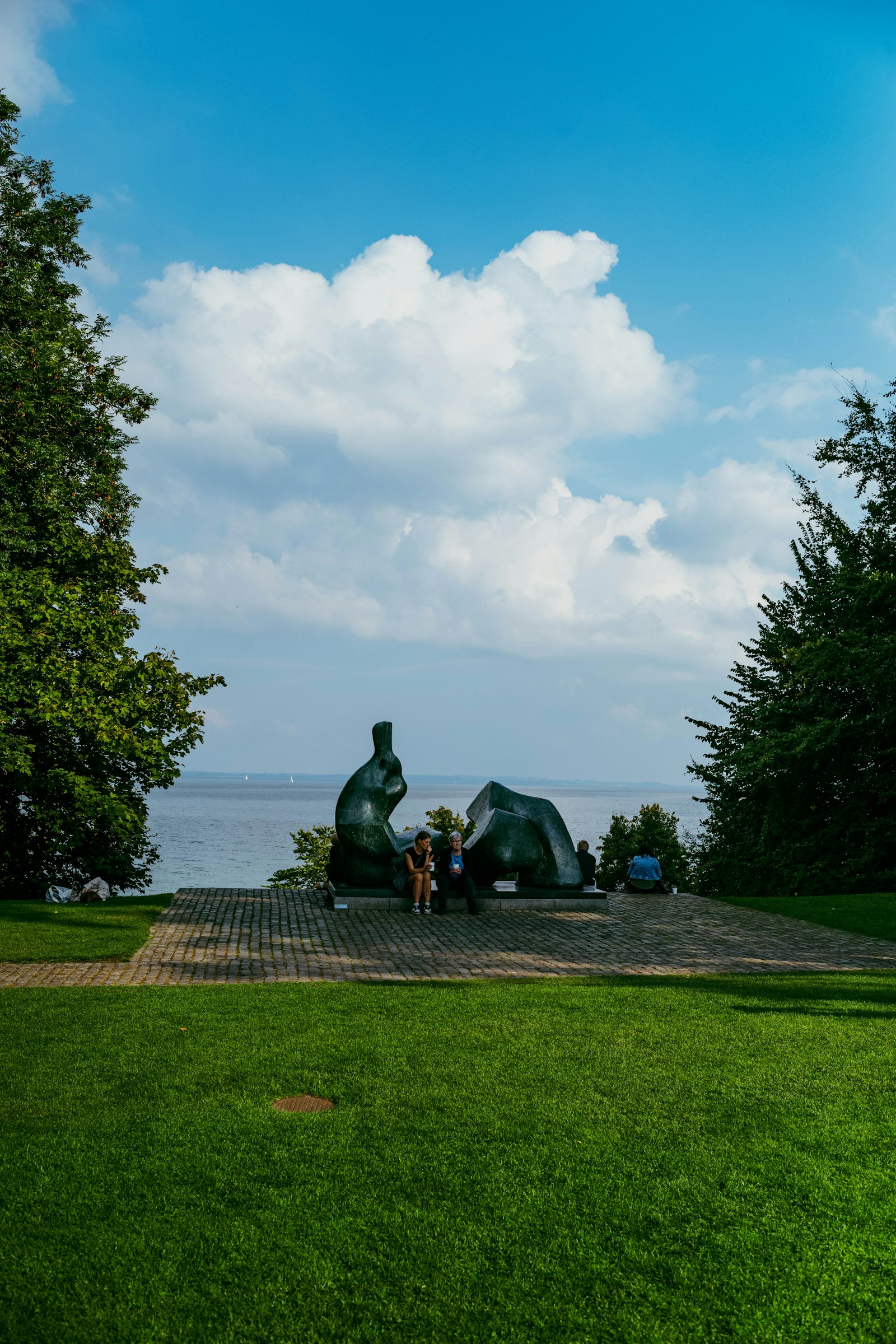
The Louisiana Museum of Modern Art sits on the Øresund coast at Humlebæk, 35 minutes north by train, and it's less a building than a conversation between art, garden, and sea — low glass corridors connecting villas, a sculpture park rolling down to the water, Sweden visible across the strait. The Giacometti gallery with its wall of glass onto green is one of the great rooms in the museum world; the Kusama infinity room and the Calder terrace carry the famous-name load, and the rotating exhibitions are reliably the best in Scandinavia.
Go for the full day, not the afternoon: arrive by noon, lunch in the café on the terrace (the buffet is part of the institution), and let the slow walkers walk slow. The museum is the one cultural booking in Copenhagen we'd organize the whole trip calendar around — and on summer Tuesdays and Wednesdays it stays open to 10pm, which is the connoisseur's slot.
Louisiana is less a building than a conversation between art, garden, and sea — and everybody wins.— On the Øresund coast
The city's own museums
Sculpture under palms, Vikings under glass.
The Ny Carlsberg Glyptotek is the beer money made beautiful: Carl Jacobsen's collection of Rodin, Degas, and Mediterranean antiquities arranged around a palm-filled winter garden that doubles as the city's most civilized rainy-day refuge. Go for the French wing, stay for coffee under the dome. The SMK (National Gallery) holds the Danish Golden Age — Hammershøi's quiet gray interiors are the national mood, rendered in paint — alongside a serious Matisse room. And the National Museum earns its hour with the Viking exhibits and the Bronze Age sun chariot; it's also the strongest wet-weather option for a mixed group, because everyone finds something.
The Designmuseum Danmark, in an 18th-century rococo hospital, explains why every chair you've ever liked is Danish — the corridor of chairs is the Instagram moment, but the deeper galleries on how design became the national religion are the actual point.
Castles and crowns
Real jewels, working palaces, one free tower.
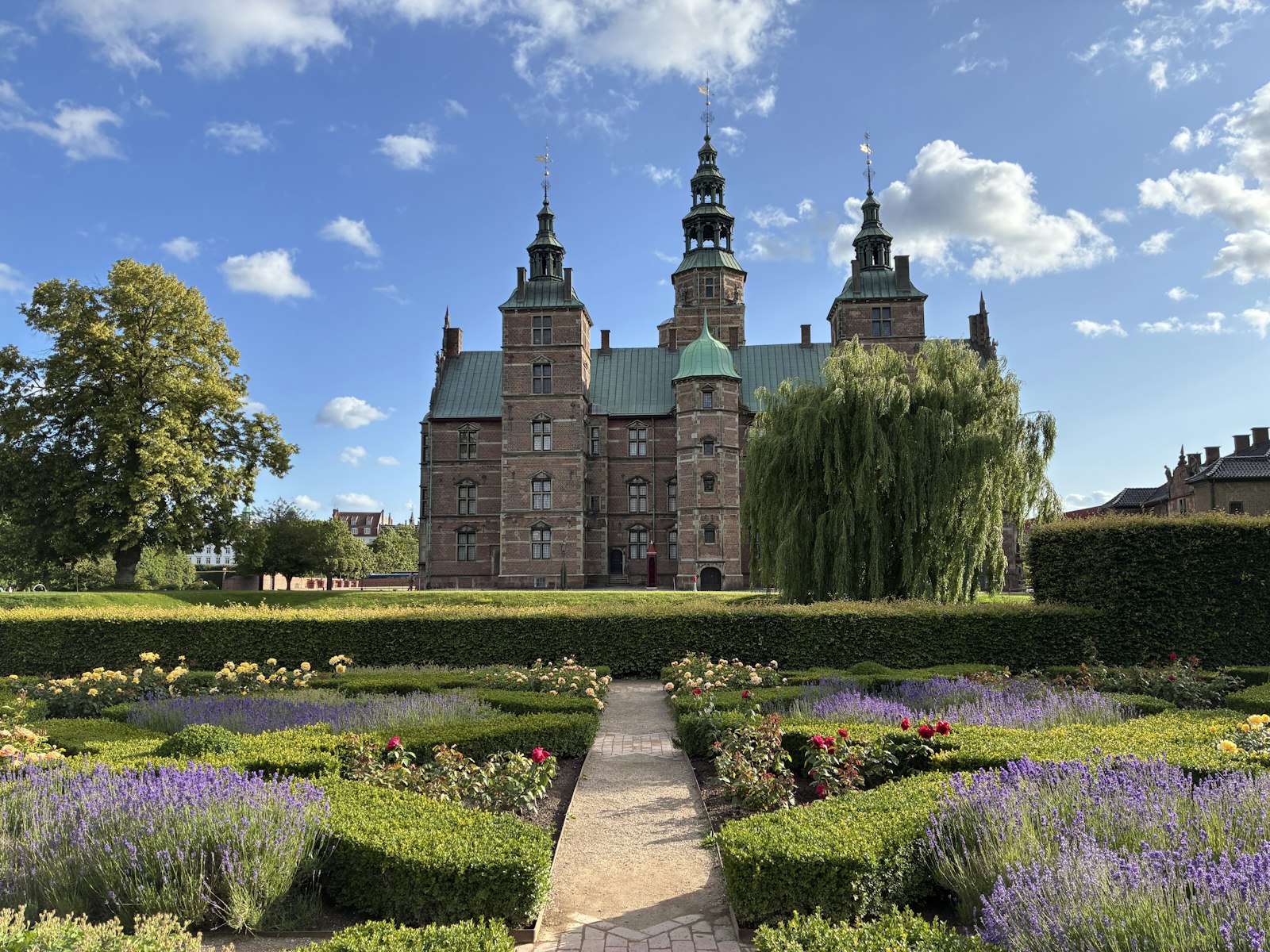
Rosenborg Castle is the keeper: a compact 1606 pleasure palace in the King's Garden where the crown jewels glow in a basement vault and the throne is guarded by three life-size silver lions. It does in 90 minutes what bigger palaces fail to do in four hours. Christiansborg — parliament, royal reception rooms, and ruins of the original 1167 castle in the basement — has the city's best free view from its tower, no ticket required, elevator included. Amalienborg is where the royals actually live; the changing of the guard at noon is pleasantly low-pomp, soldiers in bearskins walking through normal traffic. If the group has castle stamina left, Kronborg at Helsingør is in the activities guide's day-trip list — Hamlet included.
Climb something
The city's best galleries are its staircases.
Copenhagen's skyline is a competition of spires, and three of them sell tickets. The Round Tower is the gentle one — a 1642 observatory climbed by a brick spiral ramp built wide enough for a horse and carriage. The Church of Our Saviour in Christianshavn is the dramatic one: the final 150 steps wind outside the golden spire, narrowing as they rise, with the harbor spread below and a railing you will hold. And the Christiansborg tower, again, is the free one. Do Our Saviour on a clear morning, the Round Tower when it rains, and the free tower whenever you're passing.
Christiania, visited like a guest
A 50-year experiment, not a photo op.
Freetown Christiania — the self-governing commune that took over an abandoned naval base in 1971 — is one of Europe's strangest and most interesting urban experiments: hand-built houses, workshops, music venues, and a community that has outlasted every government that tried to end it. Visit it the way you'd visit someone's home, because you are. Follow the posted rules (no photos on the main street, full stop), buy a coffee or lunch at the cafés to be a guest rather than a spectator, and walk the lakeside path past the famous self-built architecture — it's the part most visitors miss and the best argument for the whole experiment. Skip it entirely if your group wants a theme park; it isn't one.
Design as a civic religion
The city itself is the permanent collection.
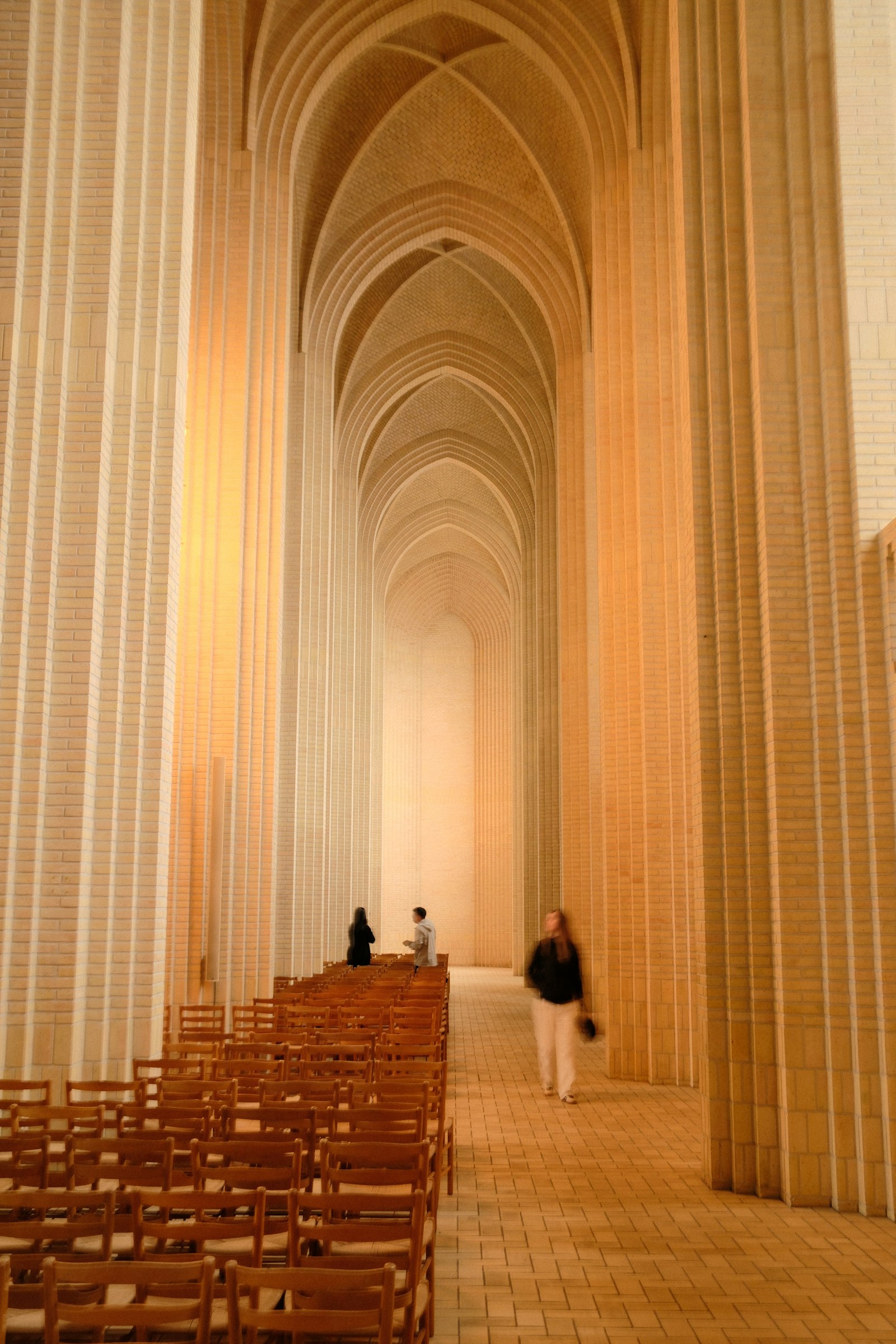
Grundtvig's Church
A 20-minute bike ride into Bispebjerg, and suddenly: an expressionist cathedral built from six million yellow bricks, rising like a church-sized pipe organ. Free to enter, nearly empty on weekdays, and the interior — pale brick gothic with almost no ornament — is the most quietly stunning room in Denmark. The detour is the point.
The rest of the open-air collection: BLOX and the Danish Architecture Center for the exhibitions, Superkilen in Nørrebro for public space as world atlas, the harbor-front Opera House and the Black Diamond library for the bookend monuments — the Diamond's atrium is free and its waterfront steps are a legitimate lunch spot. Copenhagen's real cultural argument is that none of this is roped off. The design is for using. So use it, then go compare notes over a kanelsnegl.
Where we would book
Louisiana and the Glyptotek tickets direct from the official sites — no resellers needed, no markups to dodge, and Louisiana's combined train-plus-entry ticket from DSB is the rare bundle that beats buying separately. The Copenhagen Card from the official app if — and only if — your three-day list includes Rosenborg, Christiansborg, the National Museum, and a Louisiana trip; at that point it pays for itself in transit alone. Tower climbs and Christiania need no tickets, just timing and manners respectively.
Related guides
- Your Copenhagen Travel Guide: Three Days, Honestly Done — the full plan.
- Copenhagen Activities Guide — the swims and boats between museums.
- Copenhagen Food Guide — where to debrief after Louisiana.
- NYC Museum Guide — the same anti-fatigue strategy, applied to Manhattan.
- Copenhagen Group Trip Guide — the same city, planned for six or ten of you.