How Copenhagen actually works
Small capital, long light, no taxis required.
Copenhagen is a city of 650,000 people that behaves like a well-run town. Everything a visitor wants sits inside a circle you can cycle across in 25 minutes: the medieval center (Indre By), the canal-laced island of Christianshavn, meatpacking-district Vesterbro to the west, and Nørrebro — the city's loudest, youngest, best-fed neighborhood — across the lakes to the north.
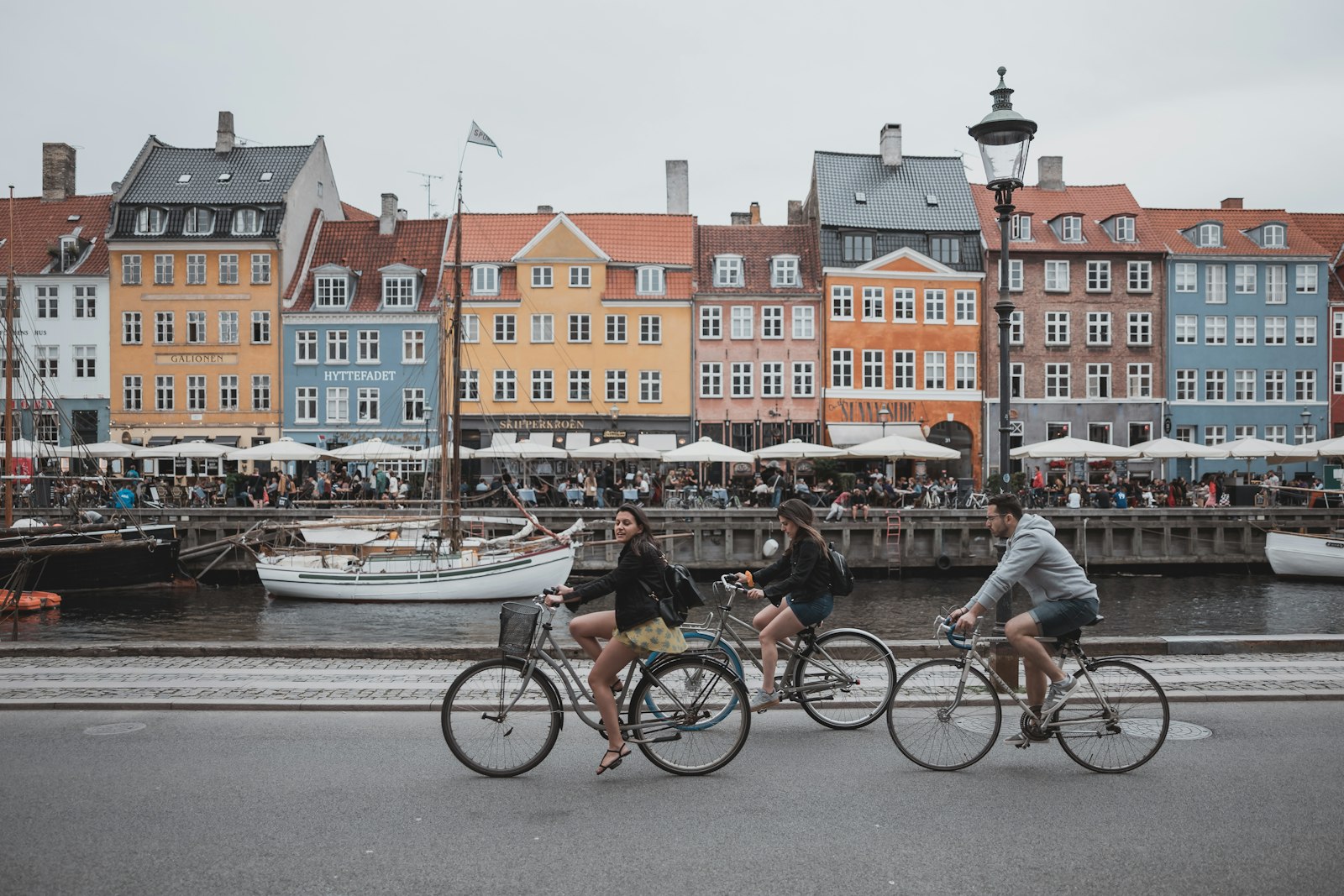
Two practical truths shape every day here. First, Denmark is functionally cashless: cards and phone wallets work everywhere, including public toilets and hot-dog carts, and nobody wants your coins. Second, the bike is not a novelty — it's the default. Rent one on day one and the city reorganizes itself around you. Distances shrink, the harbor becomes a route instead of an obstacle, and you stop checking transit apps entirely.
It's an expensive city — there's no way around that — but it front-loads its generosity: the harbor baths are free, the parks are free, the best views are free, and the light in June lasts until almost 11pm. Spend your money on dinner.
Where to stay
Vesterbro for the base, Nørrebro for the personality.
Vesterbro is the move for most groups: former red-light district turned the city's most livable quarter, with the Kødbyen (Meatpacking District) restaurants on your doorstep, Central Station ten minutes away on foot, and bike lanes radiating everywhere. Nørrebro trades a little convenience for a lot of character — this is where the natural wine bars, the kebab counters, and the city's best bakery all live, and where Copenhagen feels least like a postcard. Indre By puts you between the palaces and Strøget's shopping crush; fine for a first, short trip, but you'll pay more to sleep in a museum district that goes quiet at 9pm. Christianshavn is the romantic option — canals, masts, cobbles — with a metro stop that puts everything else eight minutes away.
Hotel prices are Scandinavian, which is to say painful. For groups of four-plus, an apartment in Vesterbro or Nørrebro usually beats two hotel rooms on both price and breakfast logistics — and gives you a kitchen for the bakery haul you're going to accumulate anyway.
Day one: the postcard, before the crowds
Nyhavn at eight, a spire by noon, Tivoli by dark.
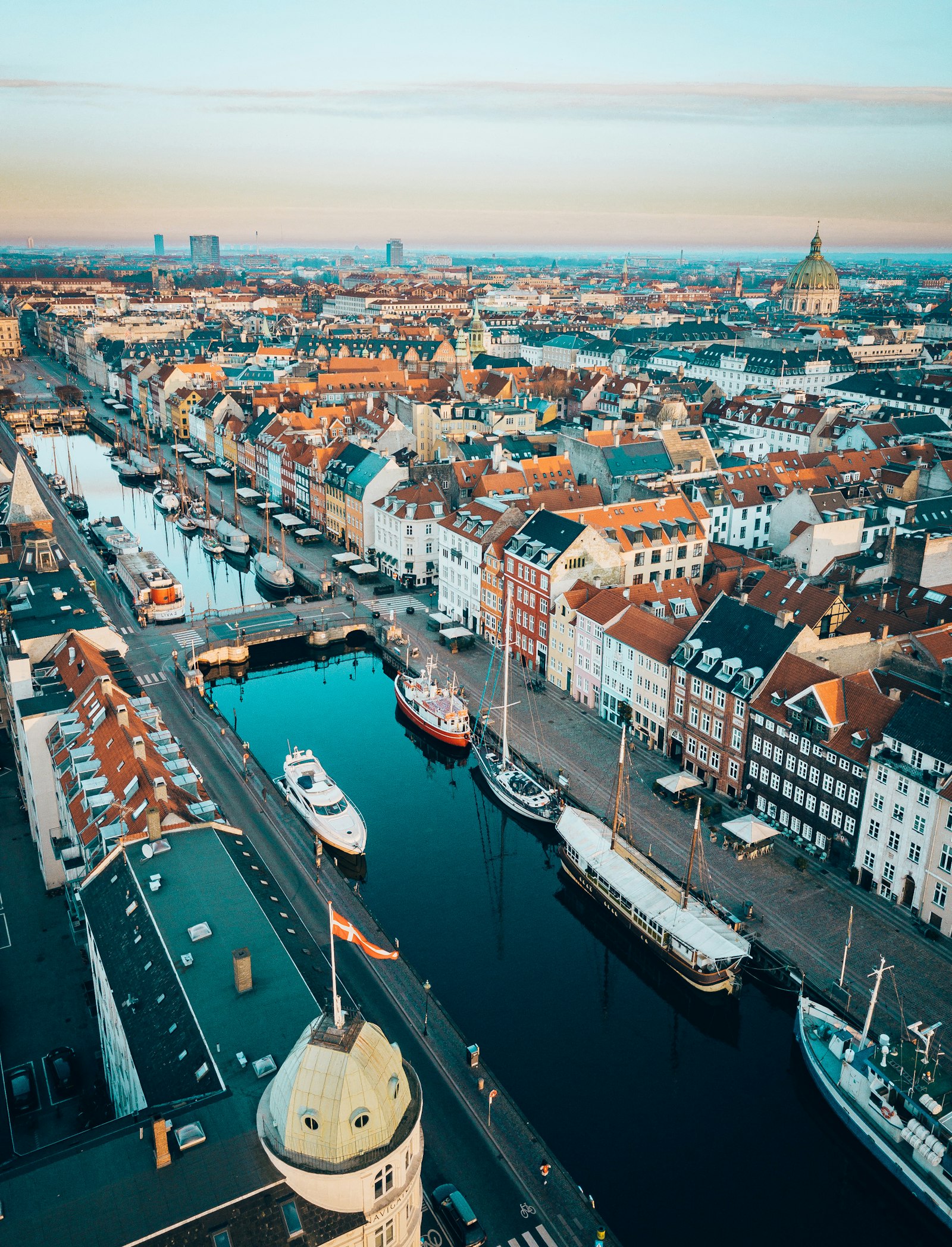
See Nyhavn first thing in the morning, when the colored facades have the light and not the crowds — by 11am it's a slow river of tour groups paying double for coffee. Walk the harbor front, then cross the bike-and-pedestrian bridge to Christianshavn and get lost along the canals for an hour. If your knees are willing, climb the Church of Our Saviour spire — the last 150 steps spiral on the outside of the tower, and the view is the best in the city precisely because the climb filters out the undecided.
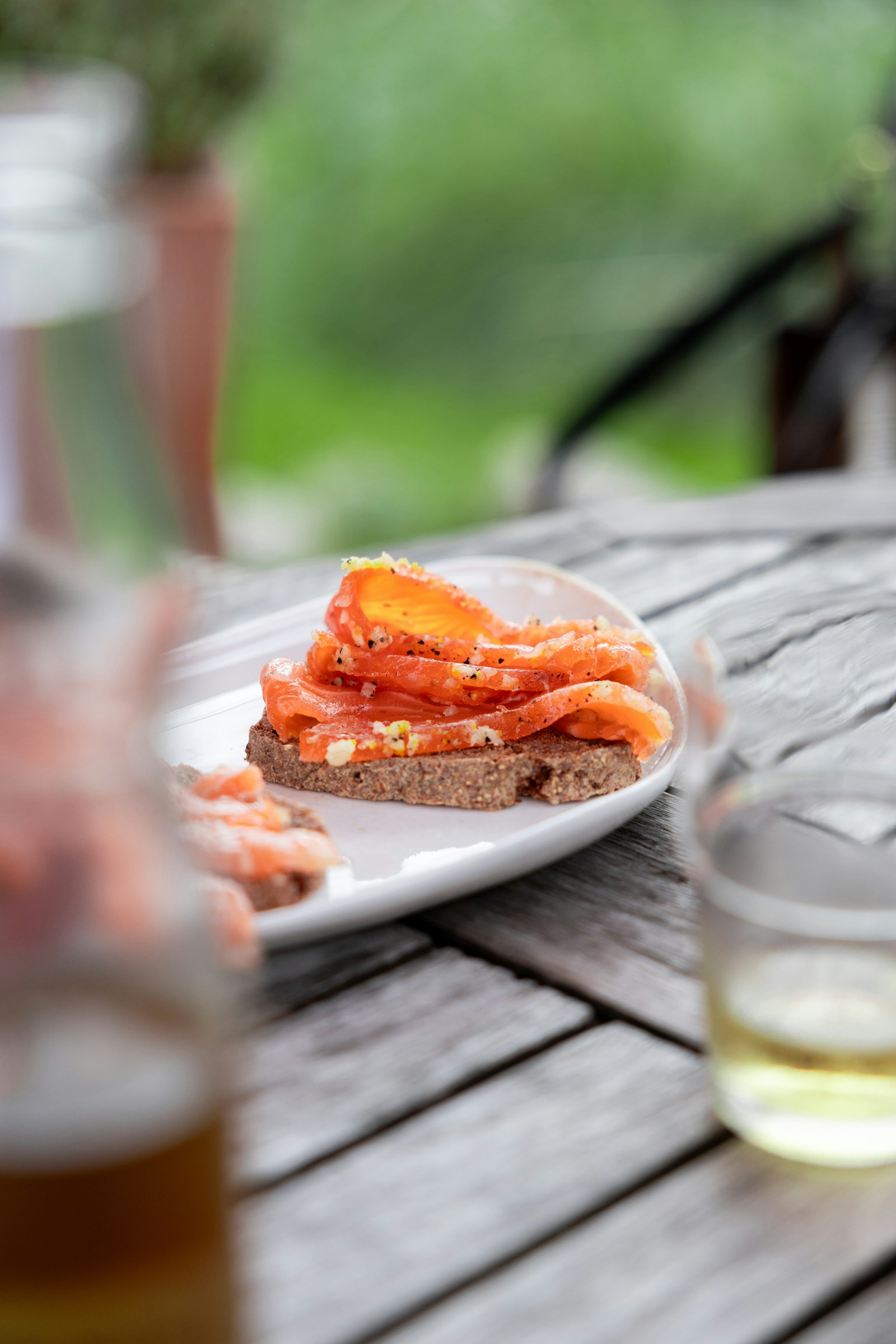
Lunch is smørrebrød — this is non-negotiable on day one, and our specific orders are in the food guide. In the afternoon, walk the King's Garden and Rosenborg Castle, where the crown jewels sit in a basement vault looking exactly as a child would draw them. Finish at Tivoli Gardens after dark, when the lamps come on and the 1843 amusement park turns into the most sincerely romantic place in Scandinavia. Locals genuinely go — it's not a tourist trap, it's the city's living room with roller coasters.
Day two: Nørrebro and the city locals keep
Cross the lakes and stay there.
Start at Torvehallerne, the glass market halls by Nørreport — coffee, a cardamom bun, maybe an early smørrebrød scout — then cross Dronning Louises Bro, the lake bridge where some 40,000 cyclists pass daily and half the city poses on the railing all summer. You're now in Nørrebro.
Spend the day the way the neighborhood does: a slow loop through Assistens Cemetery, which sounds macabre and is actually the city's most beloved park — Copenhageners sunbathe on the lawns between the graves of Hans Christian Andersen and Kierkegaard, and nobody finds this strange. Then Jægersborggade, one ridiculous street stacked with ceramicists, coffee roasters, and small restaurants, and Superkilen, the kilometer-long park assembled from objects donated by 60 countries — the red square at its heart is the most photographed pavement in Denmark.
Stay for dinner. Nørrebro and neighboring Vesterbro hold most of the restaurants in this city we'd actually queue for, and the food guide has the shortlist. End at a natural wine bar — the city is mad for the stuff — and bike home along the lakes. Carefully.
Day three: the water
The harbor is the point, not the backdrop.
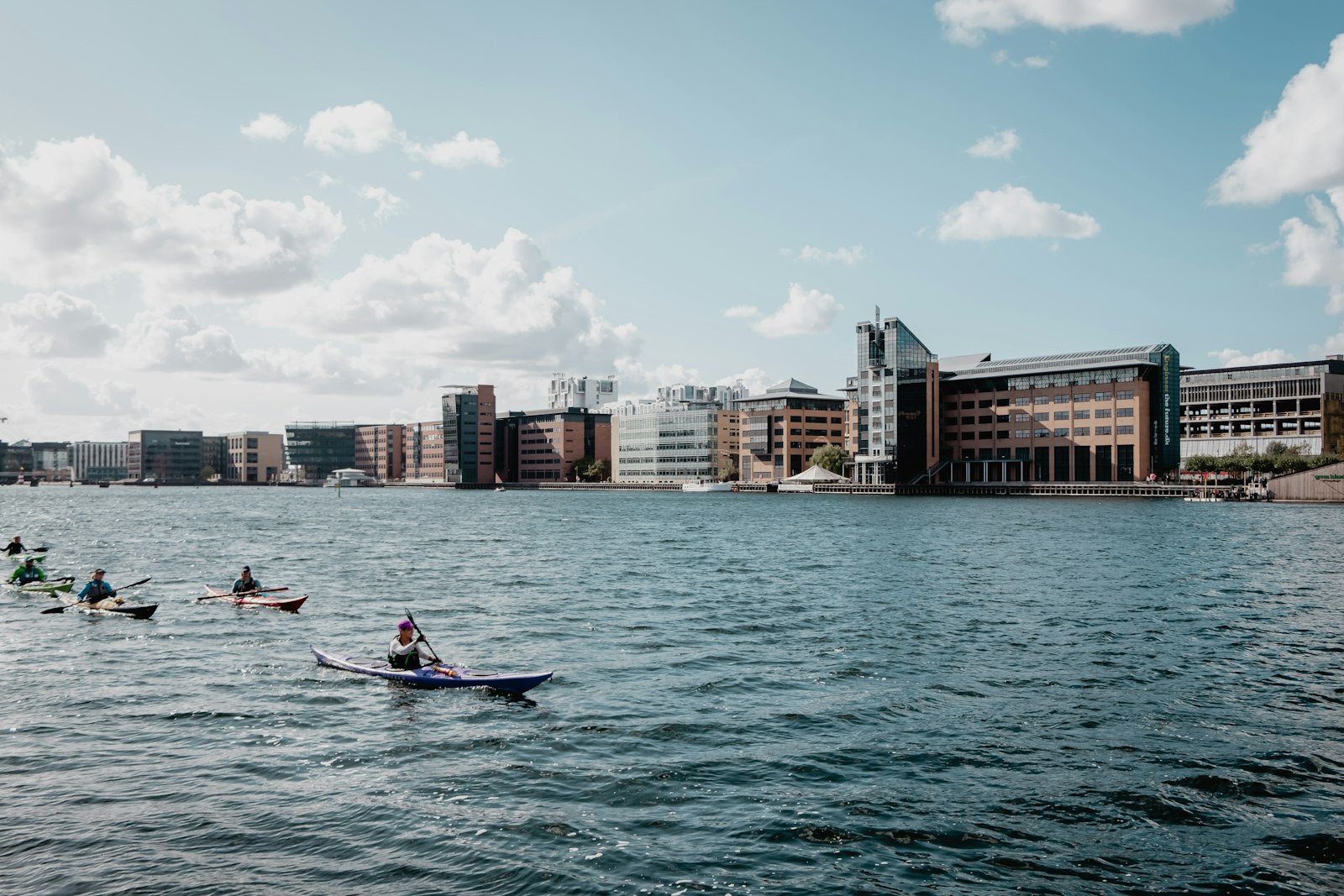
Copenhagen spent twenty years cleaning its harbor, and the result is the rare capital where the water is infrastructure for joy. Morning: swim at Islands Brygge Harbour Bath, free and open all summer, where the lifeguarded basins sit right in the main channel with the city skyline as the far wall.
Islands Brygge Harbour Bath
Five basins, two diving towers, zero admission. Locals arrive with towels and supermarket beers, stay for hours, and treat the whole thing as a beach that happens to be downtown. The water is measured for quality daily — if the flag flies, you swim. This is Copenhagen's whole philosophy in one free public facility.
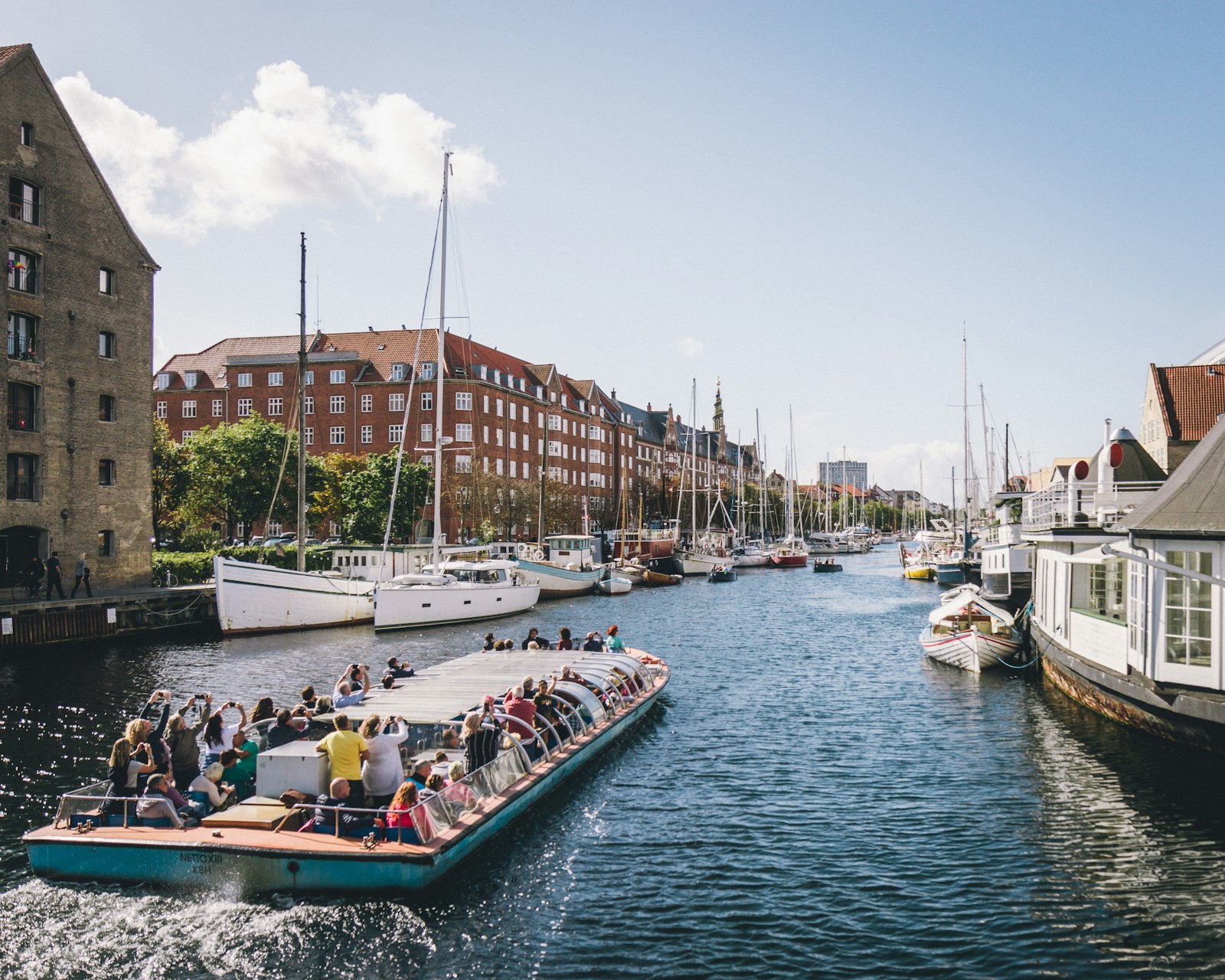
Afternoon: rent a GoBoat — solar-electric picnic boats, no license needed — and put six people, a table's worth of snacks, and two unhurried hours on the canals. Evening: take the harbor bus (it's a regular city ferry, your transit ticket covers it) to Reffen, the street-food market on Refshaleøen's old shipyard, where 30-odd stalls feed you while the sun sets over the water. If there's energy left, CopenHill — the power plant with a ski slope on its roof — has a walkable rooftop trail with the city laid out below.
Copenhagen is a city you join, not a city you watch.— On the harbor baths
When to come
May to September is the show. December is the encore.
The long-light months are the city at full strength: harbor baths open, Reffen running, Tivoli in season, daylight stretching past 10pm around midsummer. May and September are the sweet spots — summer's infrastructure without August's crowds. December is its own argument: Tivoli's Christmas market, candlelit windows, and hygge deployed as a civic strategy. February is dark, wet, and honest about it; come then only if museums and restaurants are the whole plan — which, to be fair, is a fine plan.
Getting around
Bikes first. Everything else is backup.
- Bikes — Donkey Republic rents by the hour or day from orange bikes parked everywhere. Ride on the right, signal with your hand, never stop in the lane. You'll be fluent in a day.
- Metro — driverless, spotless, runs 24/7. The M3 ring connects Central Station, Nørrebro, and Østerbro; the M2 runs straight to the airport in 15 minutes.
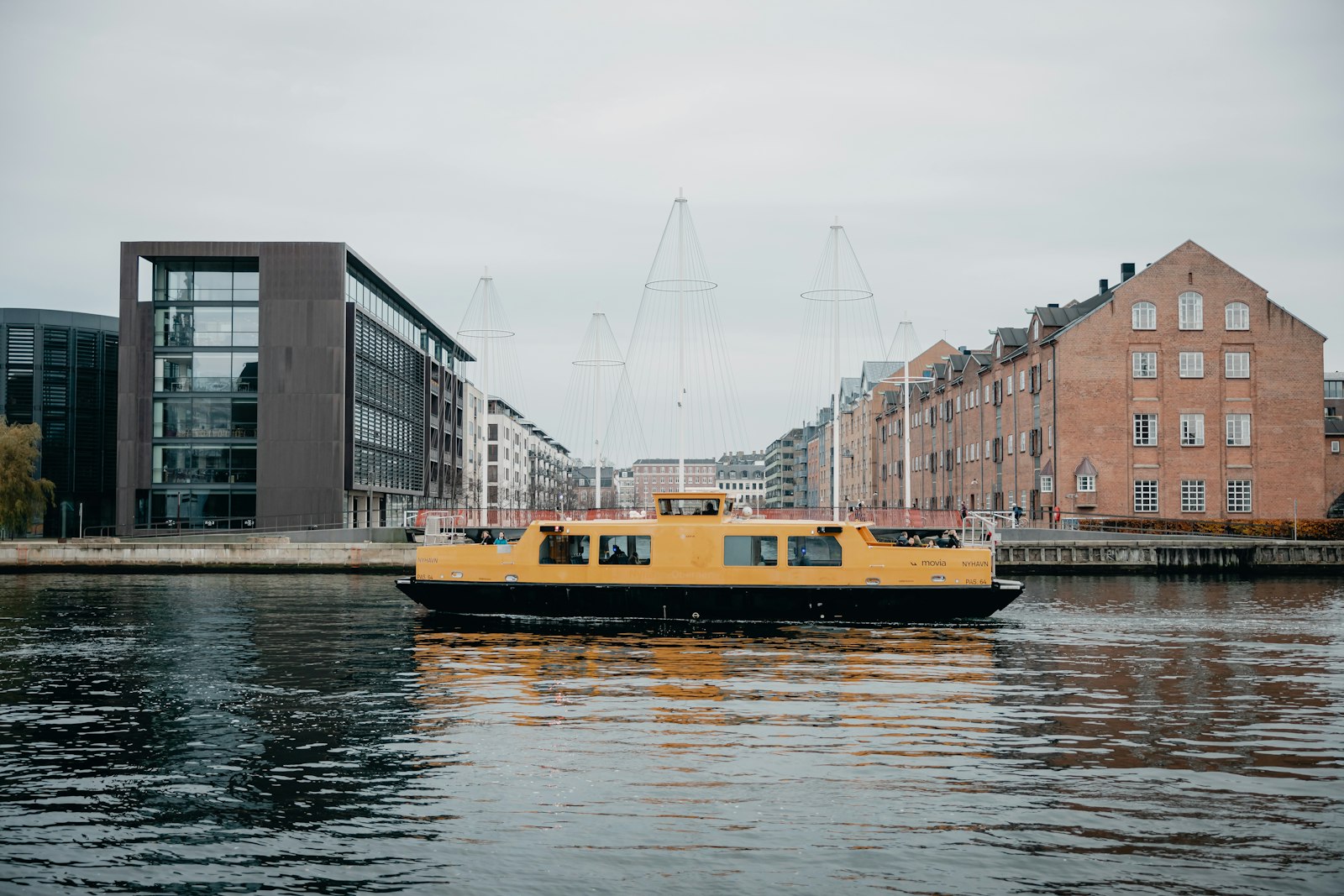
- Harbor buses — yellow commuter ferries on the main channel, covered by a normal transit ticket. The cheapest harbor cruise in the city.
- Tickets — buy zone tickets in the DOT app; nobody queues at machines. Contactless cards also work at metro and S-train gates.
- Walking — the center is compact, but mind the bike lanes. They are not sidewalks. They will be enforced by bell.
Where we would book
Tivoli tickets direct from the official site — third-party sellers add fees to an attraction that doesn't sell out. Restaurants that take bookings (Barr, Høst, Bæst) are direct too, two to three weeks ahead for weekend tables. For sleeping, Booking.com's apartment inventory in Vesterbro and Nørrebro consistently beats hotel pricing for groups of four or more. Bikes through the Donkey Republic app, trains to the day trips through the DSB app, and nothing in this city needs a tour bus.
Related guides
- Copenhagen Food Guide — smørrebrød orders, bakery rankings, and the tasting-menu question.
- Copenhagen Activities Guide — harbor swims, boats, and the day trips worth a train.
- Copenhagen Culture Guide — Louisiana, the Glyptotek, and a spire you climb on the outside.
- Your Florence Travel Guide — the same three-day honesty, applied to the Renaissance.
- Copenhagen Group Trip Guide — the same three days, planned for six or ten of you.