Bariloche looks like a mountain town in central Europe, and people usually explain that with immigration — Swiss and German settlers, a bit of Italy, chocolate as the natural result. That's about a third of the story. The look was commissioned, by a government, in 1940, as tourism policy. And the building it was commissioned as is also the building that houses the museum explaining what was done to the people who lived here first.
The Alpine look is state policy, and it has a date
The Centro Cívico opened on 17 March 1940. Everything else follows from it.
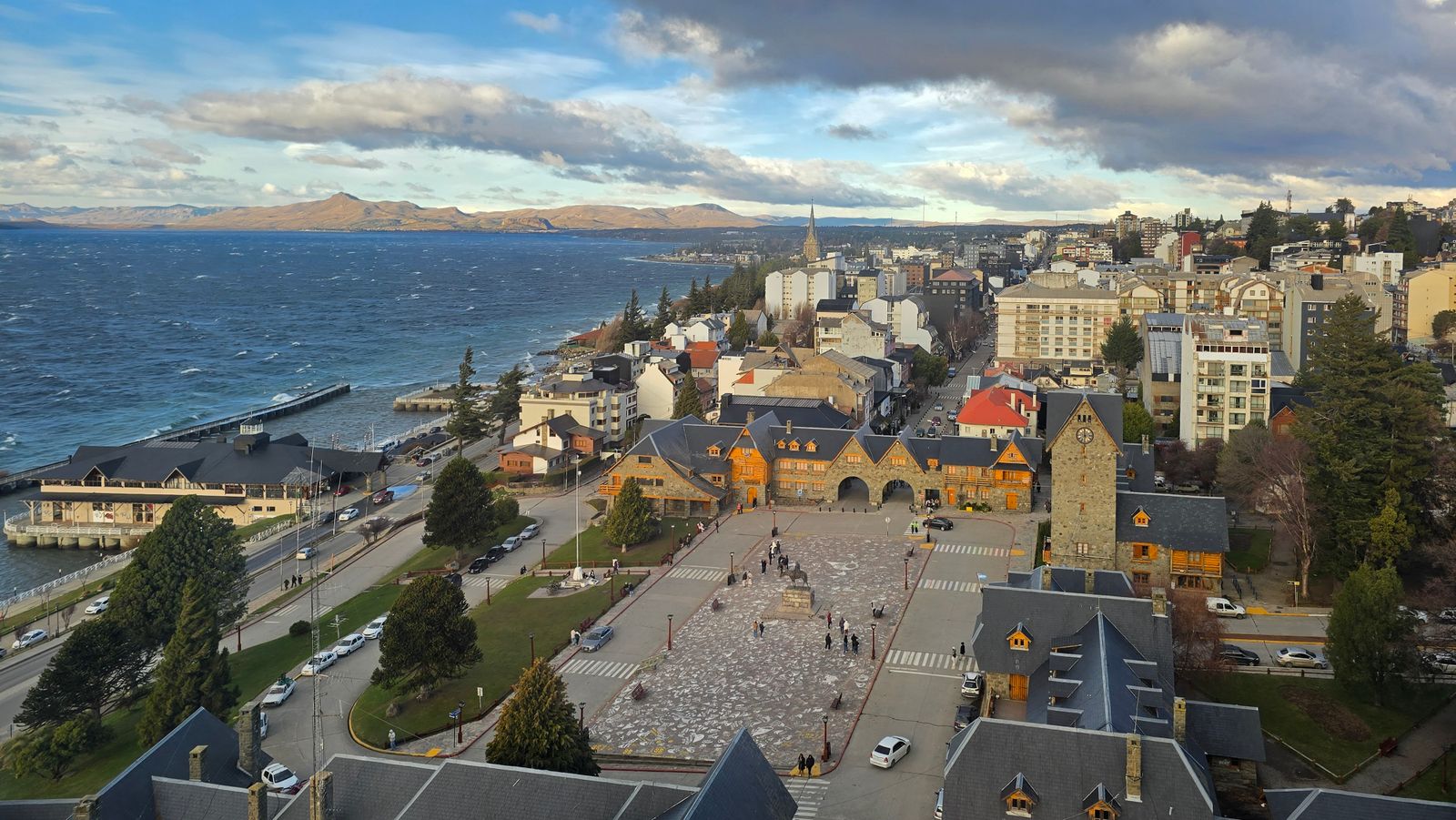
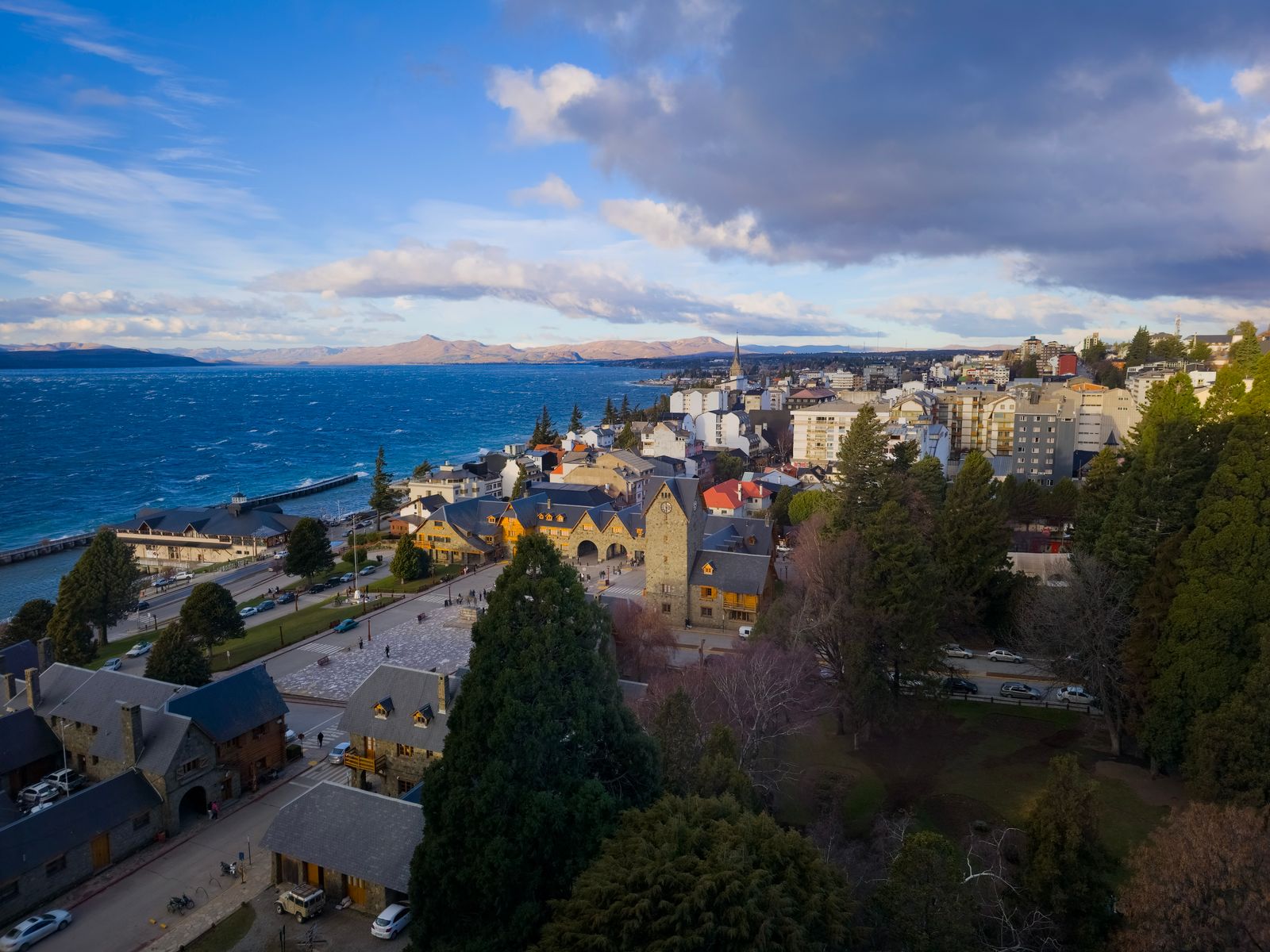
The Centro Cívico — the grey stone-and-timber horseshoe with the arcade, the clock tower and the statue of Roca on a horse in the middle — was inaugurated on 17 March 1940. It was commissioned by the national government to promote what was then a remote and barely-known ski town, and designed by the architect Ernesto de Estrada in a style that deliberately borrowed from European and North American mountain-resort architecture. It is now a National Historic Monument.
The same programme produced the Llao Llao hotel out at km 25, built 1938–40 to Alejandro Bustillo's designs, and the road that connects them. Put together, this was a state deciding what a place should look like in order to sell it, and then building that.
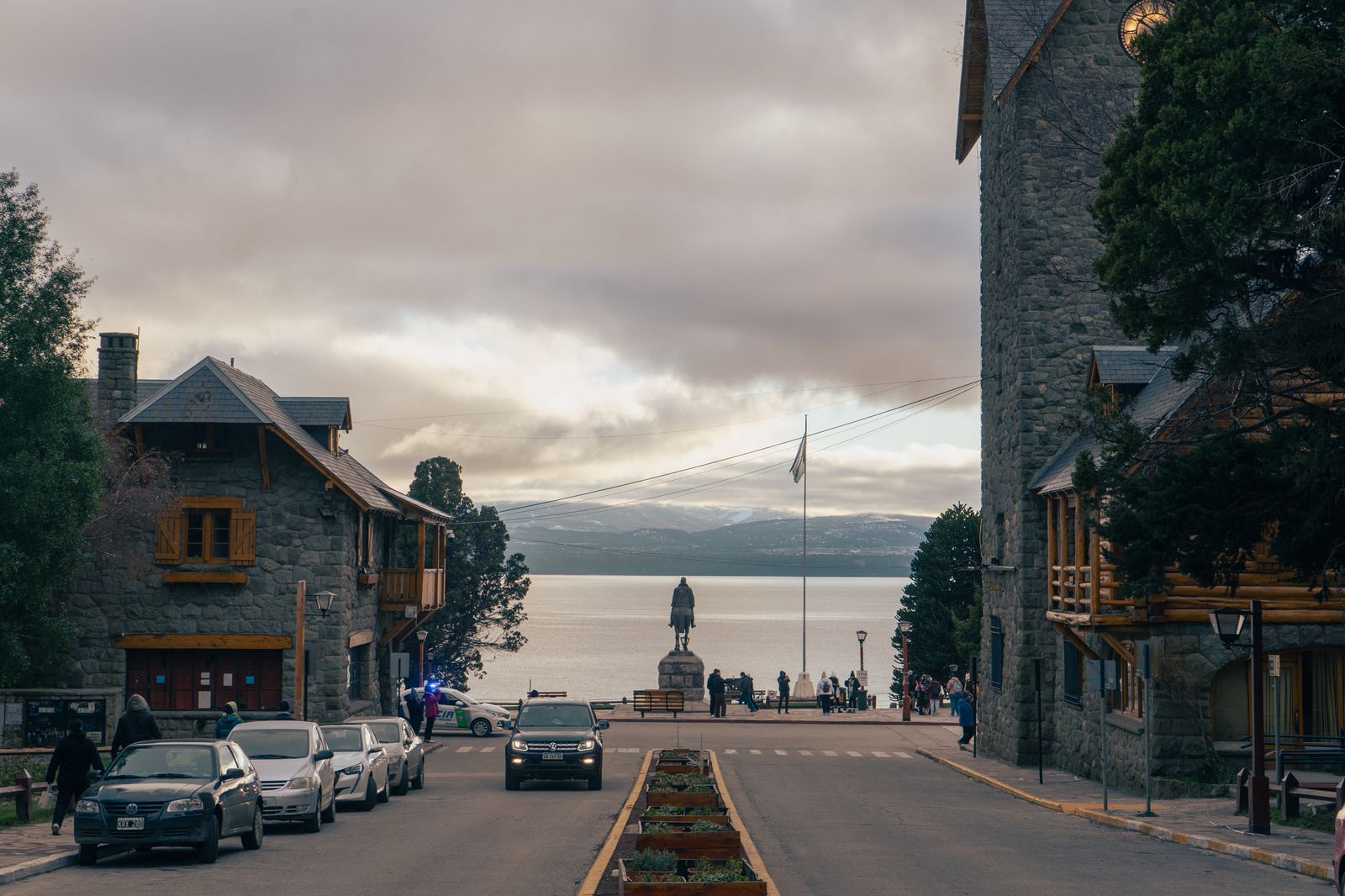
The remarkable part isn't the cynicism. It's that it worked so completely that it stopped being a costume. Eighty-six years on, the chocolate is real, the mountain club is real, the wood-and-stone building tradition is real and locally made. Bariloche was branded into existence and then grew into the brand. Stand in the arcade at dusk with the lake going metal-grey behind you and it doesn't feel like a stage set at all.
The museum in the east wing
Free entry, and it narrates the cost of the thing it's standing inside.
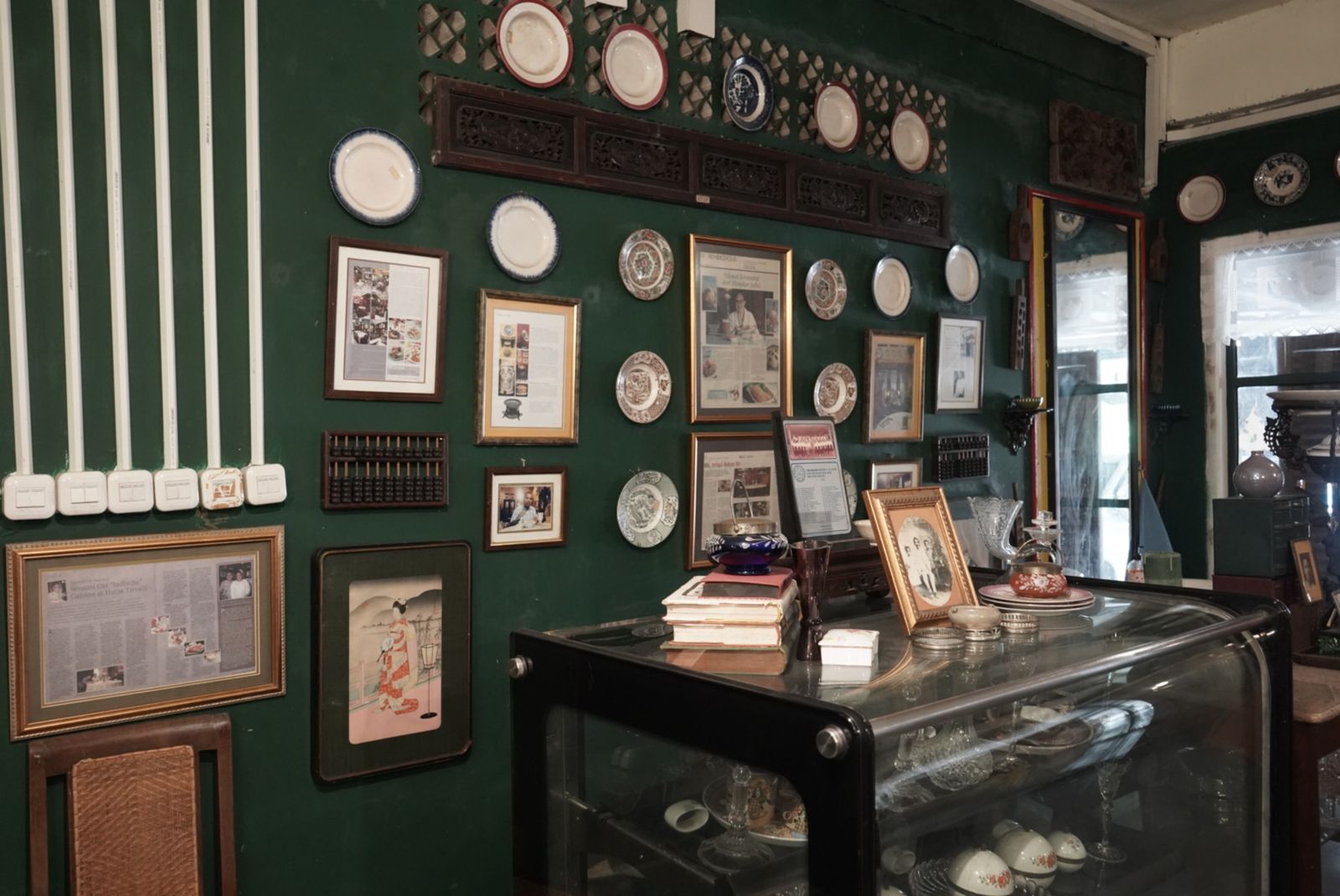
In the east wing of that same Centro Cívico, opened the same day in 1940, is the Museo de la Patagonia Francisco P. Moreno — named for the explorer who donated the land that became Argentina's first national park. It's a small, old-fashioned, genuinely absorbing museum, and it is the most important room in town.
Its displays cover the peoples of Patagonia — Tehuelche, Pehuenche, Mapuche and Yámana — their tools and textiles and ways of living, and then the Conquista del Desierto, the military campaign of the late nineteenth century that dispossessed and dismantled them and opened this land for exactly the kind of settlement the building outside was later designed to advertise. The museum built as part of the founding gesture narrates the cost of the founding gesture, thirty metres from the statue of the general who led it.
Museo de la Patagonia
East wing of the Centro Cívico. Entry is free — there's a suggested donation of AR$300 for Argentines and AR$500 for foreigners, which is a rounding error, so put something real in the box. Open Tuesday to Friday 10:00–12:30 and 14:00–19:00, Saturday 10:00–17:00. Give it 90 minutes on a day the weather has cancelled something else.
And then fifty years of not talking about it
The Priebke chapter, straight, because the town has finally done the same.
This part gets told badly almost everywhere — as a thriller, with bunkers and rumours and a submarine. The real version is quieter and much worse.
Erich Priebke, an SS officer, arrived in Argentina after the war and lived openly in Bariloche for roughly fifty years. He was a well-regarded local figure. He rose to direct the Colegio Alemán, the town's German school. In 1994 the ABC News reporter Sam Donaldson found him and put the question to him in the street, on camera; he was placed under house arrest and, in 1995, extradited to Italy to be tried for the Fosse Ardeatine massacre of 24 March 1944, in which 335 civilians were killed in reprisal outside Rome, some of them teenagers.
The reckoning came slowly and locally. The filmmaker Carlos Echeverría made a documentary about Priebke's Bariloche life, Pacto de silencio — pact of silence — and premiered it in the town in September 2006. The school body that allowed it to be screened on their premises was formally reprimanded for doing so. That detail is the whole story: not the fugitive, but how long a comfortable town can decline to discuss something everybody knows.
The interesting question was never how he hid. He didn't hide. It's how long everyone agreed not to look.— On what Pacto de silencio is actually about
There's nothing to visit here and you shouldn't go looking; there is no site, and the handful of tours that market this are trading on other people's murders. Watch the documentary before you come instead. Then walk through the Centro Cívico and you'll be reading a town on three layers at once, which is what culture guides are supposed to give you.
What the town is now
A mountain club, a graduation ritual, and a hundred thousand kilos of chocolate.
Three living things carry modern Bariloche. The first is Club Andino Bariloche, founded in 1931, which built and still runs the refuge network in these mountains and administers the trekking registry — an amateur mountaineering club that functions as public infrastructure, which is unusual anywhere.
The second is the viaje de egresados. Every year, tens of thousands of Argentine seventeen-year-olds come here for the graduation trip that closes secondary school; 2026 packages were quoting above AR$1,500,000 a head. It's a national rite of passage with one town at the centre of it, and it means a large part of Bariloche's economy and character is built around large groups of friends travelling together. There is something quite nice about that, even at 3am on Mitre.
The third is the chocolate — covered properly in the food guide, but worth knowing here for what it says about the place: four famous Swiss-looking houses, one Italian family, one government-commissioned Alpine streetscape around them. Bariloche is a town that decided what it wanted to be and then spent eighty years becoming it, honestly and well, on top of a history it took far too long to say out loud.
Where we would book
Nothing in this guide needs booking, which is unusual and welcome. The Museo de la Patagonia is free and doesn't take reservations — just turn up inside the opening hours and leave something in the donation box. The Centro Cívico is a public square.
If you want more of this, the town's Colonia Suiza feria on Wednesdays and Sundays is the living-culture version of the same story, and worth building an afternoon around — details in the food guide. And Pacto de silencio is findable online; watch it on the plane.
Related guides
- Bariloche Comprehensive Guide — how the week fits together.
- Bariloche Food Guide — the Italian family behind the Swiss shopfronts.
- Bariloche Activities Guide — the trails Club Andino built.
- Bariloche Group Trip Guide — the town's own group ritual, done at your age.
- Florianópolis Culture Guide — another town whose identity was imported by sea and then made local.