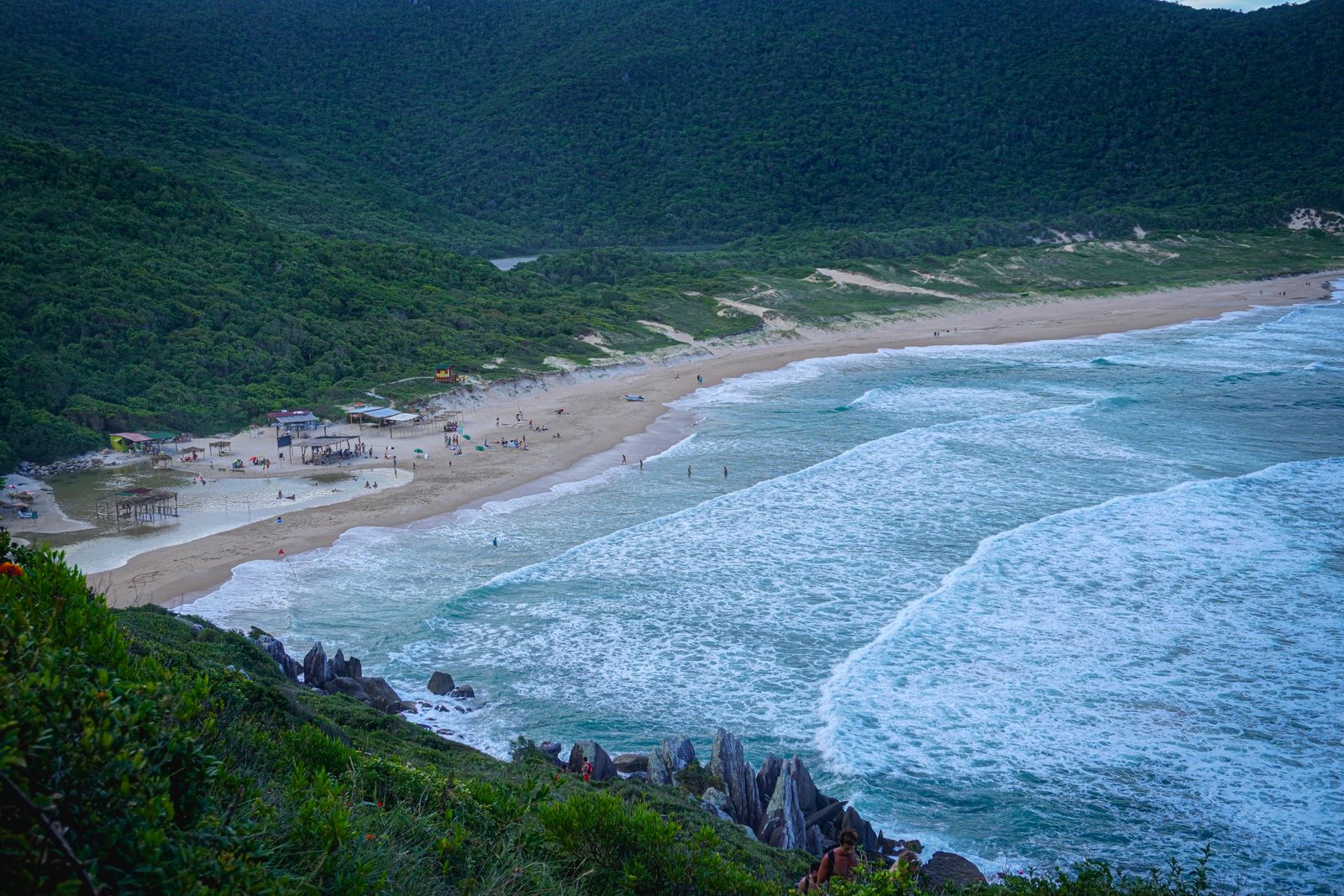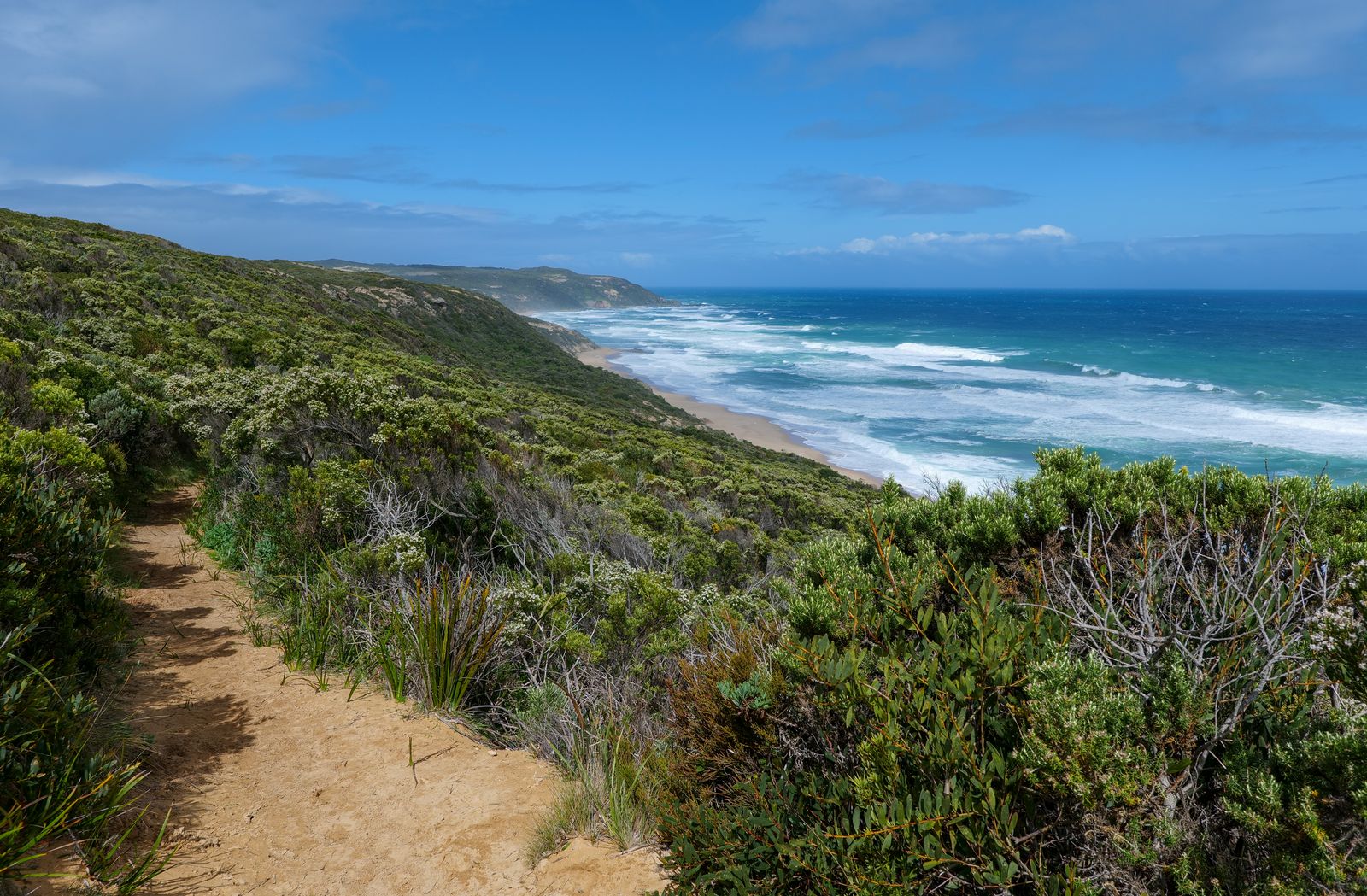
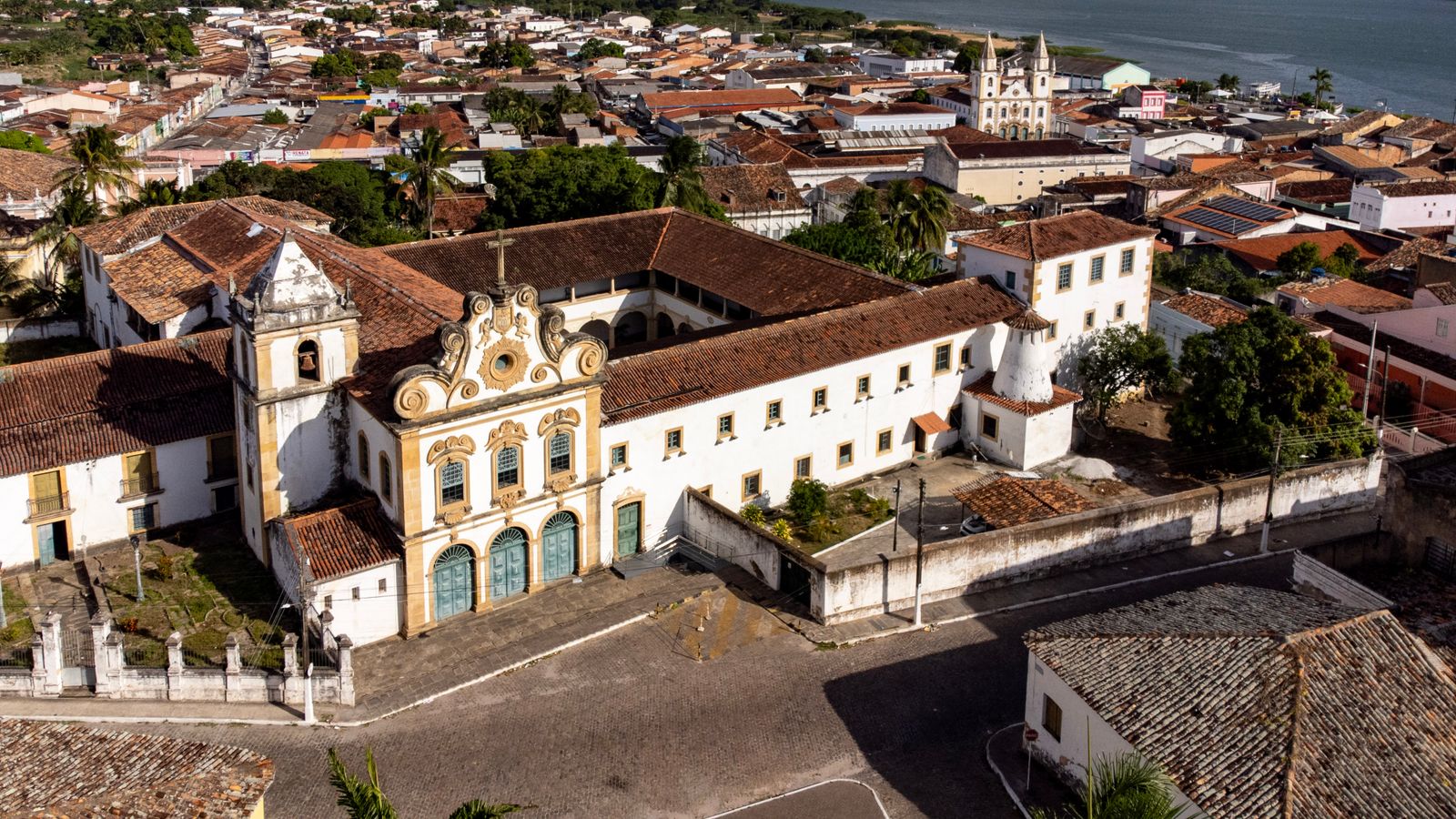
Most people arrive in Florianópolis for the beaches and leave without noticing they spent a week in a Portuguese island colony that never quite stopped being one. The Azorean families the crown shipped here in the 1740s built villages on the flat bay side of the island, and those villages are still there — still fishing, still making lace, still hauling nets by hand every winter. It's the most interesting thing about this place and it takes about half a day to find.
The Azorean arrival
1748, white walls, blue window frames, and a village named for Lisbon.
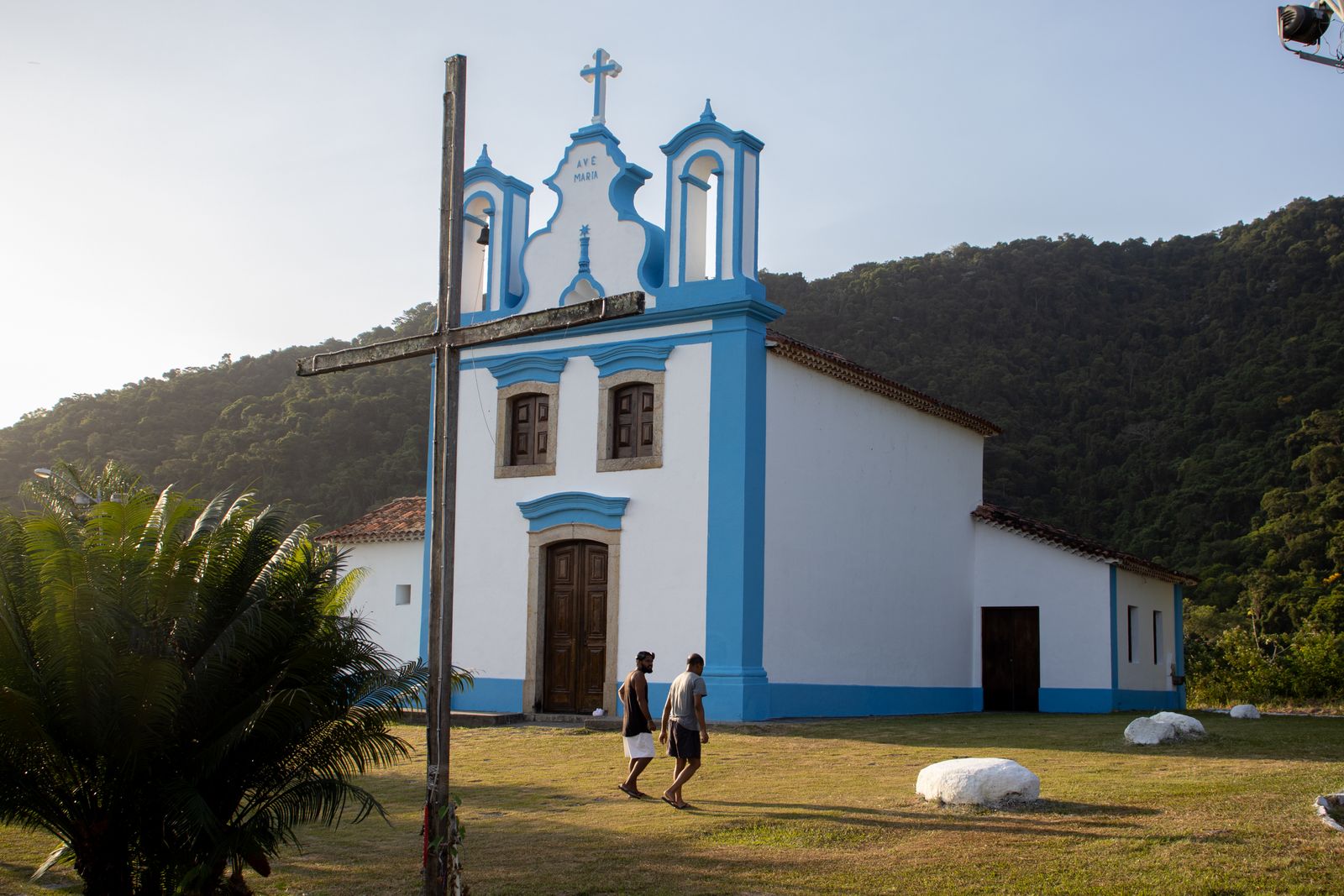
Between 1748 and 1756 the Portuguese crown moved thousands of families from the Azores and Madeira to this coast, partly to farm it and mostly to hold it against Spanish claims. They landed on the bay side, where the water is flat, and built what they knew: lime-washed cottages with blue window frames, a church on a square facing the sea, and an economy of fish. Santo Antônio de Lisboa, founded in 1750 and named for the patron saint of Lisbon, is the best-preserved of them — the church of Nossa Senhora das Necessidades still stands over a square that runs down to the water, and the whole village takes about twenty minutes to walk and rather longer to leave.
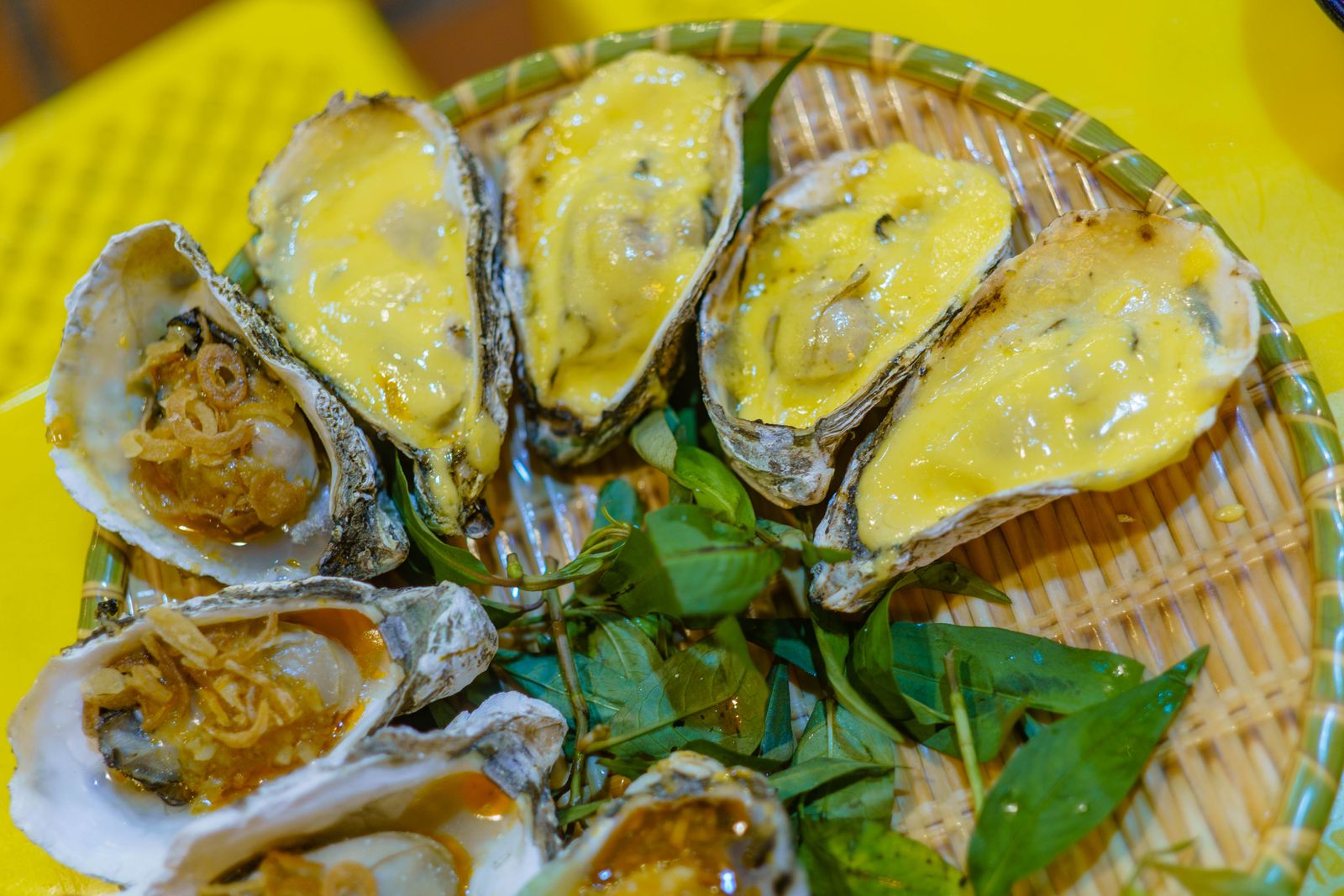
The southern equivalent is the Freguesia do Ribeirão da Ilha, and it's the one we'd choose if you only do one. Colonial houses in a row along the bay, the eighteenth-century church, an ecclesiastical museum, oyster frames in the water, and a pace that hasn't accelerated in two hundred years. Both villages are also where you eat best on the island, which is not a coincidence — see the food guide.
Look at the window frames. Every blue one on this island is a family that crossed the Atlantic in the 1750s and decided to keep something.— On the Azorean coast
The lace and the ox
Two traditions that survived the crossing and are still going.
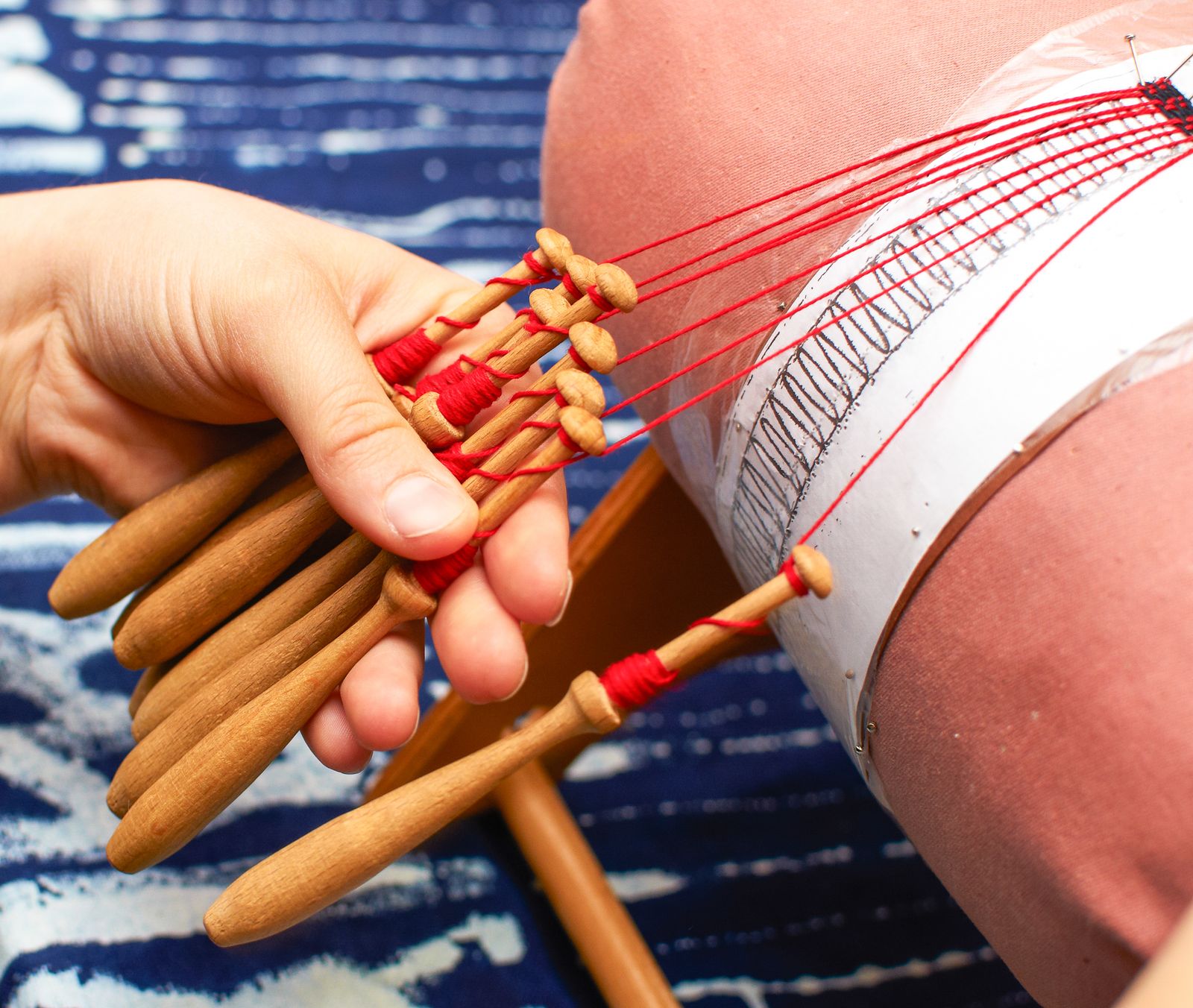
Renda de bilro — bobbin lace — came over in those same boats and never left. It's made on a cylindrical cushion with dozens of wooden bobbins moving at a speed that looks like sleight of hand, and it is still worked by women in Ribeirão da Ilha and the southern villages, some of whom have been at it sixty years and were publicly honoured for it in 2025. You'll find it sold in the villages and at the Mercado Público. Buy it there, from the person who made it, rather than from a beach stall.
The other survivor is boi de mamão, and Florianópolis has more groups performing it than anywhere else in Brazil. It's a folk play in which an ox — built from wood and cloth and worn by a dancer — dies and is brought back to life, surrounded by a cast that has absorbed three centuries of additions: a horse, a bear, a mermaid, a doctor. It's performed at village festivals and around the Christmas and Carnival calendar rather than on a schedule for visitors, so the honest advice is to ask locally what's on that week rather than to plan around it.
The bridge
A century-old suspension bridge you can walk across at any hour.
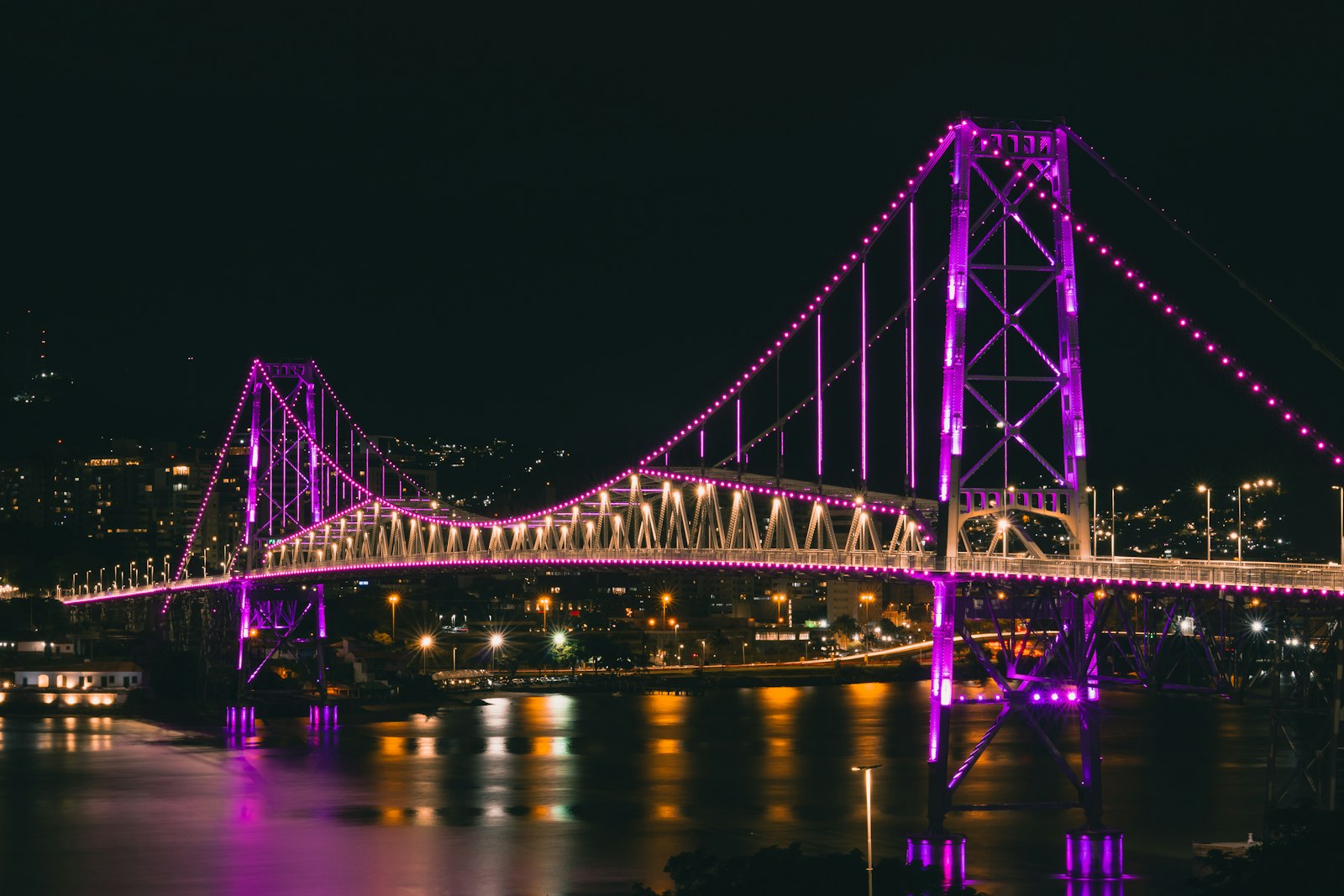
The Ponte Hercílio Luz is the island's monument and its best free walk. Construction started on 14 November 1922; it was the first link between the island and the mainland, it's the largest suspension bridge in Brazil, and after decades of corrosion it closed, sat rusting over the bay as an enormous municipal embarrassment, and was finally restored and reopened in 2019. Now it works on a split timetable that's worth knowing: pedestrians and cyclists have it 24 hours a day, while cars only cross from 6am Monday to 10pm Friday — which means at weekends and on public holidays the whole span belongs to people on foot. Walk it at dusk when the lights come on and the bay goes pink behind it. It costs nothing and it's the best photograph you'll take here.
The Mercado Público and the old centre
The city centre gets skipped by almost every visitor, which is a mistake worth about two hours. The Mercado Público, built in 1898, is a long yellow arcade of fish counters, cachaça sellers, lace and bars, with around twenty thousand people through it a day and Box 32 at the heart of it. Around it sit the Praça XV de Novembro with its enormous 150-year-old fig tree, the Catedral Metropolitana, and the Palácio Cruz e Sousa — a pink colonial governor's palace, now the state historical museum, named for the Afro-Brazilian symbolist poet born on this island in 1861 to formerly enslaved parents. Do the market at the end, when the counters turn into bars.
The fishing calendar
The tainha season is the island's real festival, and it happens in winter.
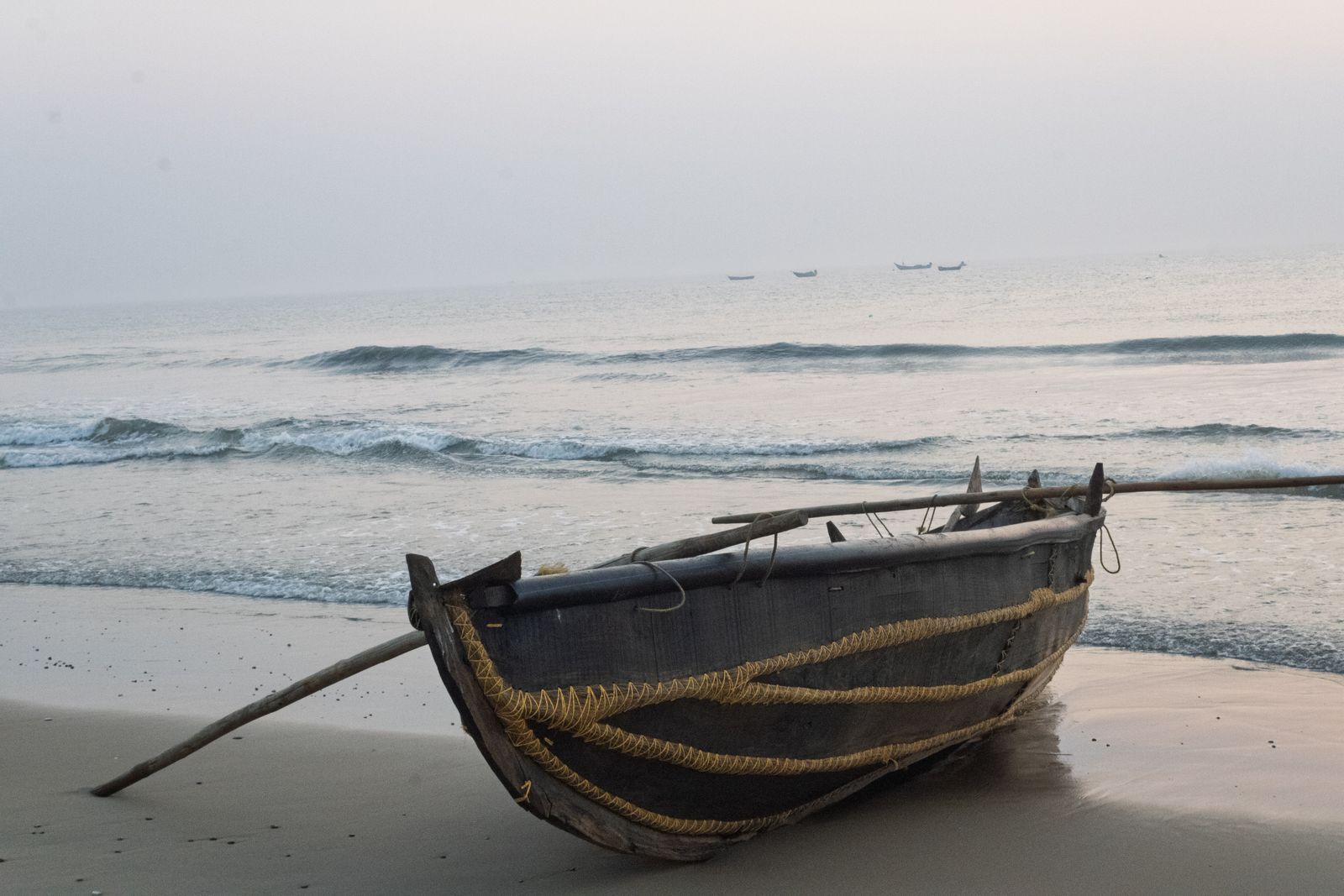
If you want to see the Azorean island as a living thing rather than a preserved one, come in winter. From 1 May to 31 July the mullet run south down this coast and around 1,500 artisanal fishermen work the beaches in the way their families have for two hundred and fifty years: a lookout on the dunes watching for the dark shape of the shoal, then a wooden canoe rowed out to lay the net in a curve, then everyone on the sand — fishermen, neighbours, whoever is standing there — hauling it in by hand. It is completely unstaged and anyone can watch.
The Rota da Tainha puts events, fairs and cultural workshops across 26 beaches through the season, and the Festival da Tainha no Costão runs for a week in mid-June with Azorean cooking techniques as the centrepiece. The 2026 catch was among the biggest in decades. Watch a haul at Pântano do Sul, Campeche or Barra da Lagoa, then go and eat the fish somewhere with a coal grill. Stand well back from the ropes and don't get in the way of the net — this is work, not a show.
Where we would book
Almost nothing here needs a ticket, which is rather the point of it. The Ponte Hercílio Luz is a free public walkway. The villages of Santo Antônio de Lisboa and Ribeirão da Ilha are free to wander, and the churches are open when they're open. The Museu Histórico de Santa Catarina at the Palácio Cruz e Sousa charges a small entry and is worth an hour. Buy renda de bilro directly from the rendeiras in the villages or at the Mercado Público — the money goes where it should and the piece is real. For boi de mamão and the tainha events, check the Prefeitura's cultural calendar the week you arrive rather than booking anything in advance; these run on their own time and there's no ticket to buy. If you want a guided version of the Azorean south, hire a local guide directly rather than through a resale platform, and pay them properly.
Related guides
- Your Florianópolis Travel Guide — the island's three trips and how to pick one.
- Florianópolis Food Guide — oysters where they're grown, and the tainha in season.
- Things to Do in Florianópolis — the boat, the walk, the surf and the dunes.
- Buenos Aires Culture Guide — another Atlantic coast with a music and a memory of arrival.