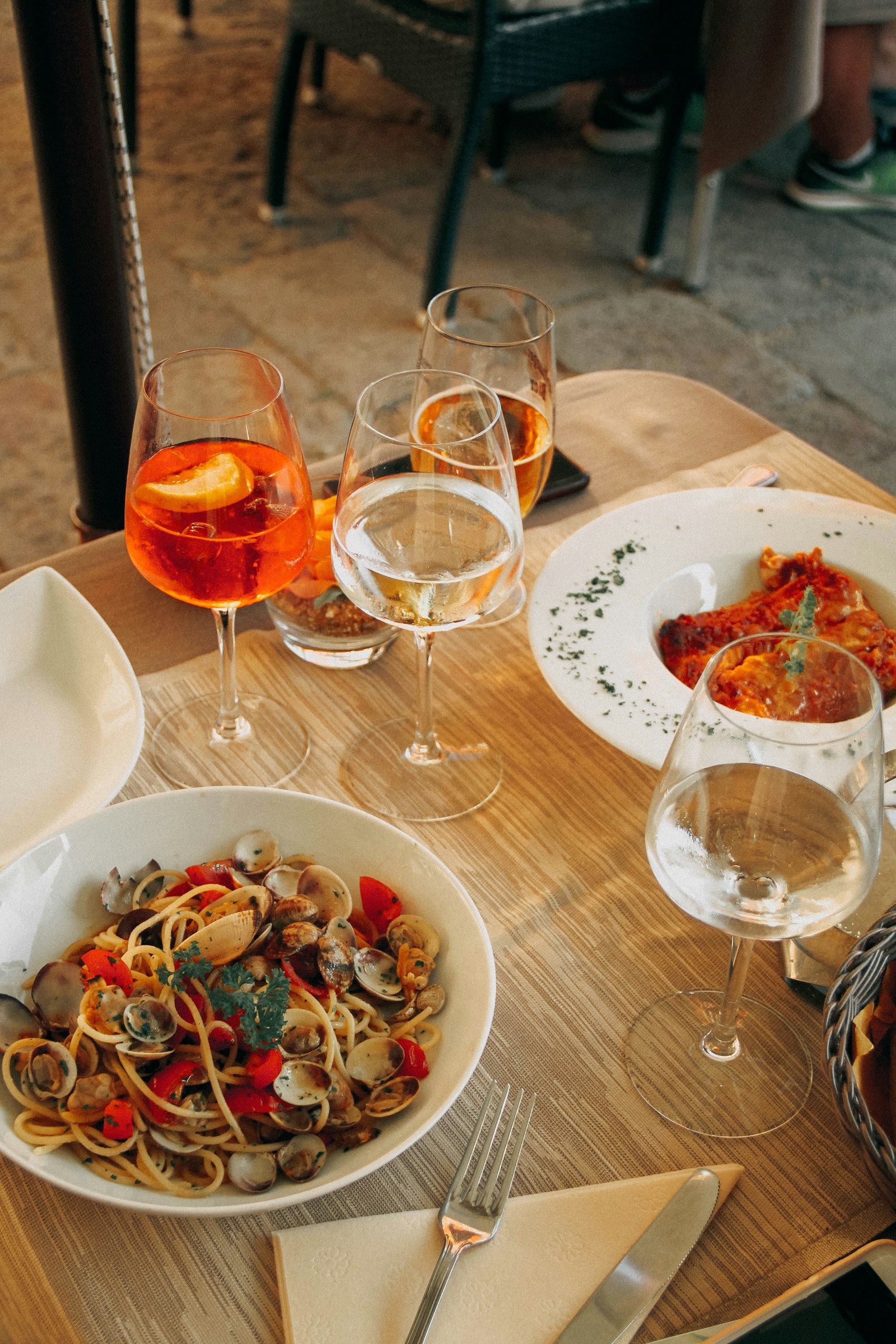
Venetian food is lagoon food
If it swam, you're in the right place.
Venice gets accused of being a bad food city by people who ordered pizza two hundred meters from San Marco. The actual cuisine is one of Italy's strangest and best: sarde in saor (sardines in sweet-sour onions, a sailor's invention), baccalà mantecato whipped onto grilled bread, cuttlefish black with its own ink, moeche — soft-shell crabs fried whole in spring — and risotto cooked all'onda, to a wave, not a mound. It's lagoon food: briny, vinegared, built for a city that has always eaten standing up between errands.
The rule that organizes everything else: the closer a menu stands to a major monument, the worse and dearer the food. Walk five minutes into San Polo, Cannaregio, or Castello and Venice starts cooking for you instead of at you.
The bacaro crawl: how it works
Small glass, small snack, next bar.

A bacaro is a standing wine bar; cicchetti are the bar-top snacks (€1.50–3 each); an ombra is the small glass of wine that goes with them (€1.50–2.50). The crawl is the format: two or three cicchetti and an ombra per bar, then move. Four bars is a proper lunch. Six is a memorable afternoon. You order by pointing, you eat standing on the pavement or the canal edge, and you pay shockingly little by Venetian standards.
Etiquette is simple: don't occupy a table you didn't pay table prices for, keep cash handy, and don't order a cappuccino after eleven. Crawl hours run roughly 11am–2pm and 6–8pm; many of the best bacari are shuttered by mid-evening, which is why the crawl is lunch.
The crawl, mapped
Start at the market. Follow the locals.
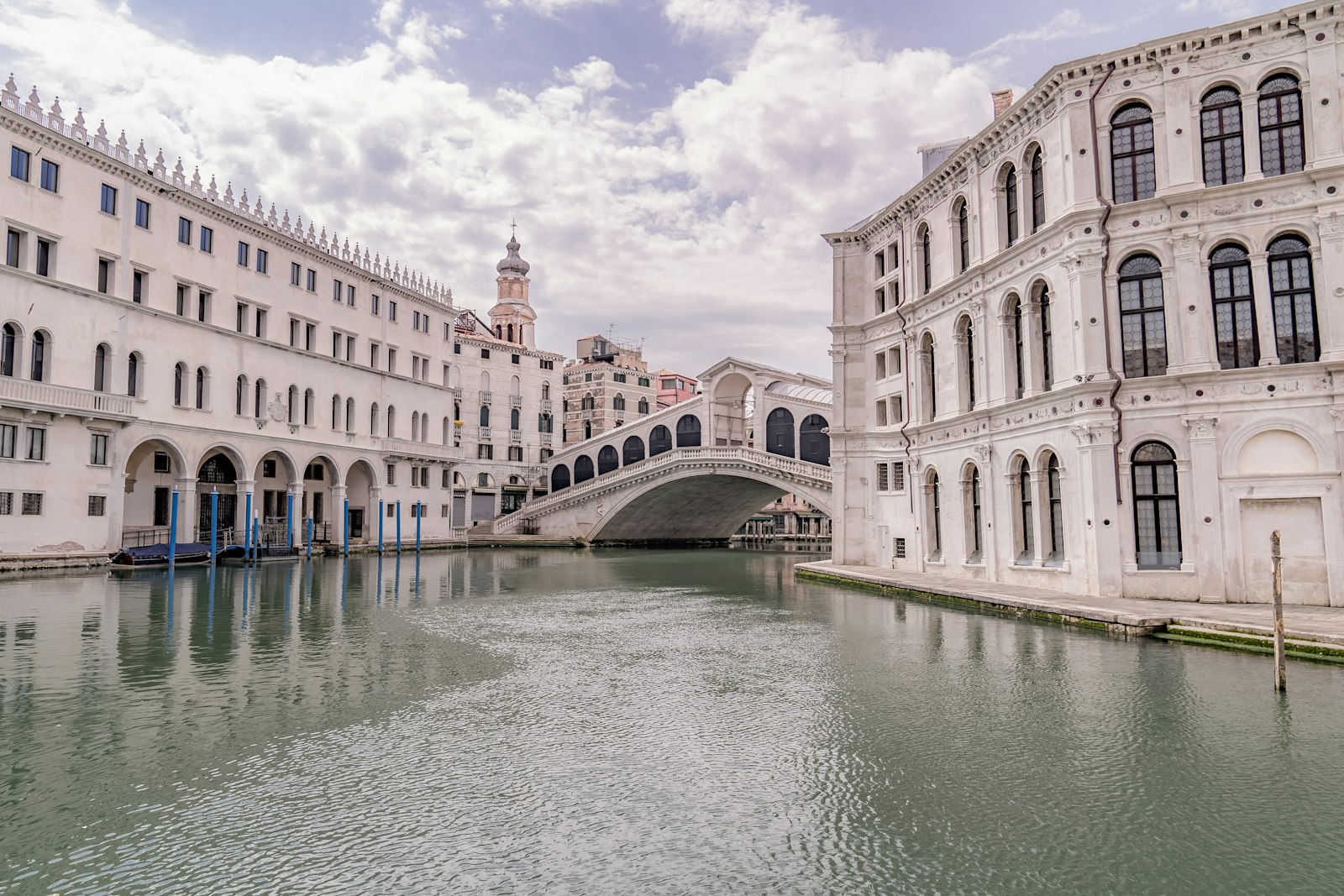
The dense cluster around the Rialto market is the classic route, in roughly this order:
- All'Arco — market-adjacent and market-supplied; whatever crostino they invented this morning is the order. Arrive before 12:30.
- Cantina Do Mori — see below. Mandatory.
- Cantine del Vino già Schiavi — across in Dorsoduro, a bottle-lined family bar facing a quiet canal; the crostini are tiny architecture.
- Osteria al Squero — opposite one of the last working gondola boatyards; eat your cicchetti watching hulls get retarred.
Cantina Do Mori
Pouring since 1462 — copper pots on the ceiling, no seats, no espresso machine, and francobolli ("postage stamps"), tiny stuffed sandwiches that vanish in two bites. Stand where merchants have stood for five centuries, drink your ombra, hand back the glass. Cash, and go before noon.
Sit-down: the trattorie worth booking
Small rooms. Real fish. Book ahead.
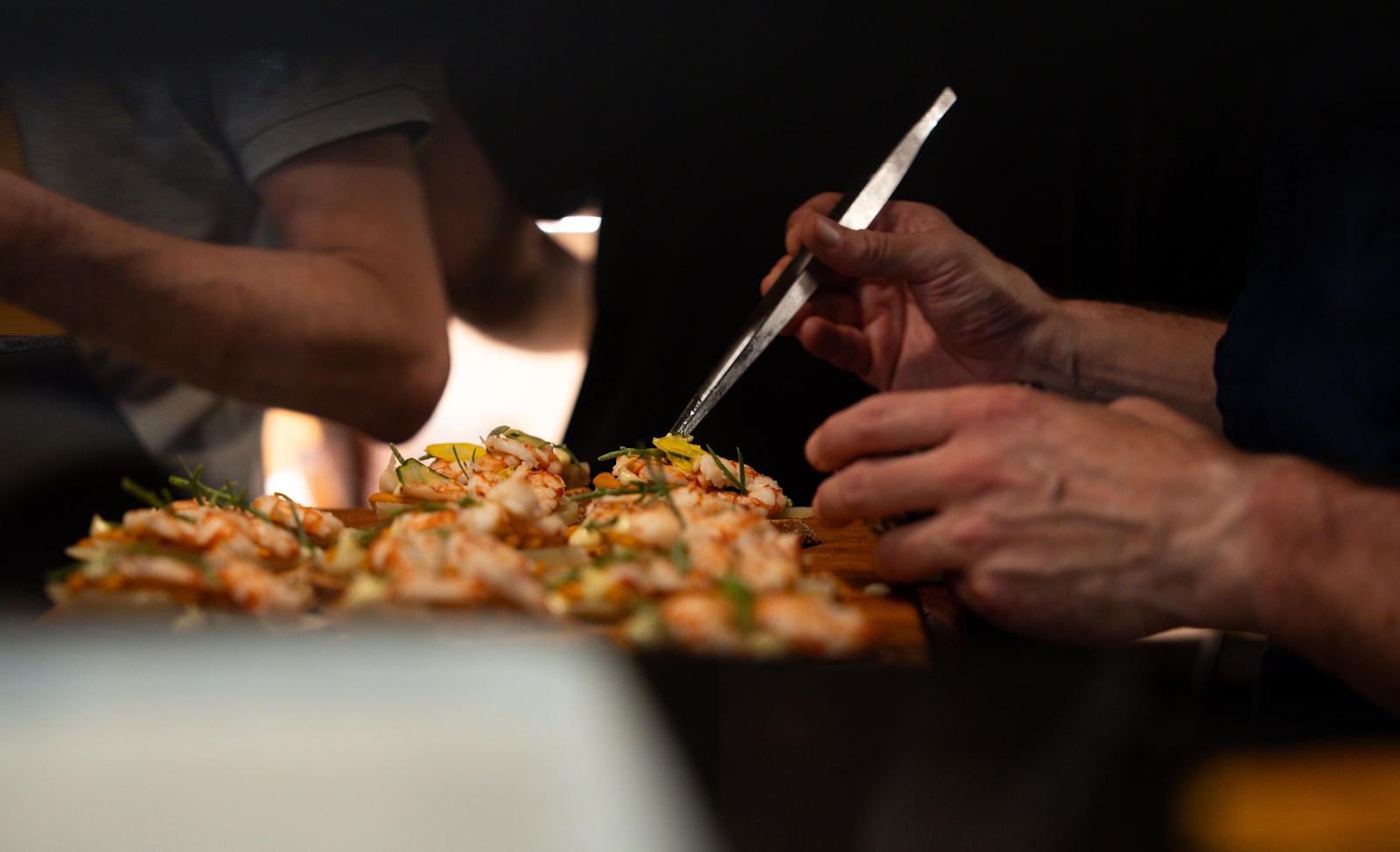
- Antiche Carampane — hidden in the old red-light tangle of San Polo behind a sign listing everything it refuses to serve (no pizza, no lasagne, no tourist menu). The best classic fish cooking in the city. Book a week out.
- Osteria alle Testiere — eleven tables in Castello, a daily menu written off the market, and a serious small wine list. Two seatings; take the late one.
- Vini da Gigio — Cannaregio's special-occasion room that still feels like a family operation. The duck, when it's on, is the heretical non-fish order that's worth it.
- Trattoria al Gatto Nero — on Burano, and the reason to schedule the islands around lunch. The risotto di gò is the dish the lagoon would choose to be remembered by.
Fish is often priced all'etto — per 100 grams. It's legitimate, but ask for the rough total when ordering the big fish so the bill isn't performance art.
Dinner in Venice is optional. The bacaro crawl is not.— On eating standing up
The rules
Five of them. They're cheap insurance.
- No pizza in Venice. Wood-fired ovens were banned for centuries in a city built of timber; there's no tradition here. It's the single most reliable tourist-trap flag on a menu.
- No photo menus, no menu in six languages, no host beckoning — walk on; the good rooms don't recruit.
- Eat fish near the market, not near the piazza.
- Lunch is the big meal — the market feeds the kitchens at noon, and the bacari close early.
- Spritz comes with Select. Aperol is from Padua; Select is Venice's own, darker and more bitter, and any bartender will respect the order.
Markets
Five centuries of breakfast theater.
The Rialto market runs Tuesday through Saturday mornings — produce from about 7:30, the fish hall until about noon. Moeche in spring, castraure (baby artichokes from Sant'Erasmo) in April and May. Even with no kitchen to shop for, it's the best free spectacle in the city, and the crawl starts when the stalls close. Via Garibaldi in Castello has the small local version, floating produce barge included.
Gelato and the coffee question
One gianduiotto, one warning.
The gelato move is Gelateria Nico on the Zattere: order the gianduiotto da passeggio — a brick of hazelnut chocolate drowned in whipped cream — and walk the sunset promenade. For coffee, the historic caffès on Piazza San Marco charge €6–9 with the orchestra surcharge; pay it once at Florian for the history if you want, knowing the same espresso is €1.50 standing at any bar a hundred meters north.
Money + tipping
Cash for the counter. Cards for the table.
Bacari are cash-first and small-bill — keep €20 in fives and coins for crawl days. Trattorie take cards. The coperto (€2–4) is normal; tipping is not expected — round up after a great night. Check tourist-area bills for a servizio line; if service is already included, you're done.
If you only have one night
The condensed version.
Crawl All'Arco and Do Mori at six — two cicchetti each, pace yourselves — cross to già Schiavi for the third round, then walk ten minutes to a 9pm table at Antiche Carampane. One evening, the whole thesis.
Where we would book
The trattorie above book by phone or email a week out — Alle Testiere and Carampane are worth the international call, and there's no reseller shortcut worth paying for. A guided cicchetti tour is the one bookable thing we'd consider for a first night — GetYourGuide has small-group versions with good bacaro taste — but honestly, this guide is the tour. For a cooking class with a market visit, the Rialto-morning ones are the keepers.
Related guides
- Your Venice Travel Guide — three days, honestly done.
- Venice Activities Guide — islands, oars, and the Burano lunch run.
- Venice Culture Guide — Tintoretto between meals.
- Florence Food Guide — bistecca rules, two hours south.
- Venice Group Trip Guide — the same city, planned for six or ten of you.