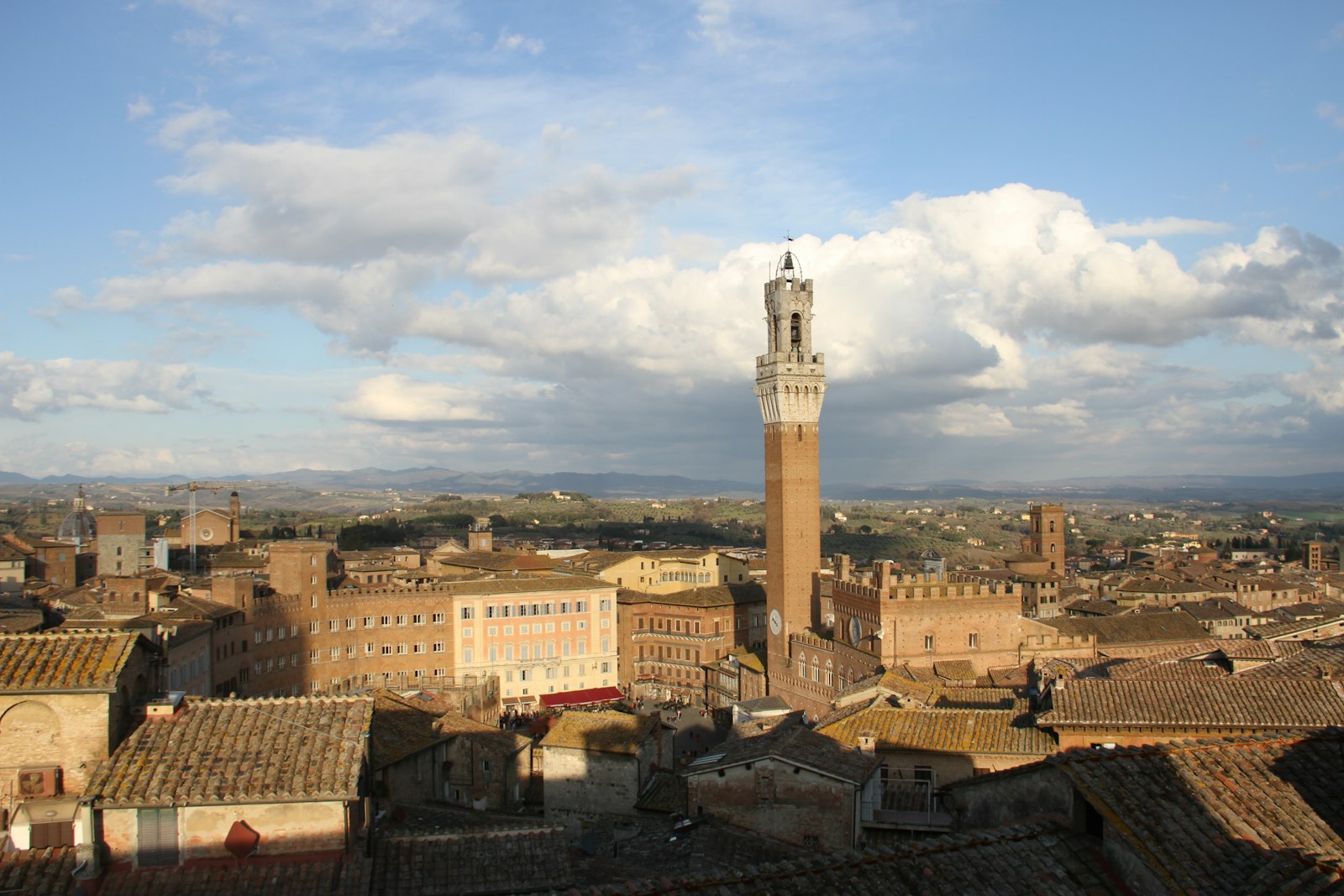
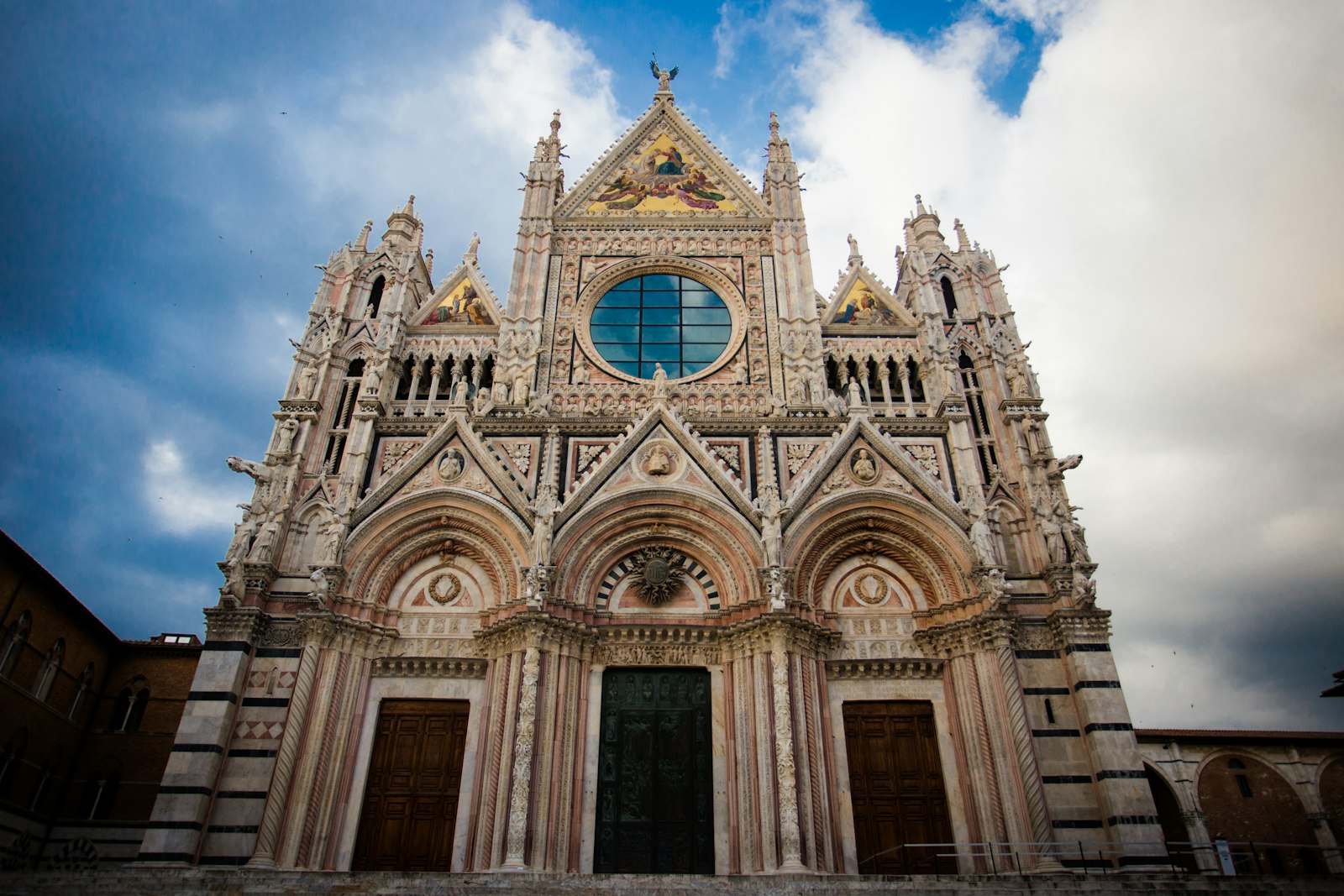
Siena spent the Middle Ages as Florence's great rival and poured everything into proving it — a cathedral to out-dazzle Rome, a city hall covered in the first great secular paintings in Europe, a school of gold-ground painters who defined Gothic art. Then the plague froze it all in place. The result is a city where the culture isn't behind glass — it's underfoot in the Campo, painted on the walls of the town hall, and run bareback around the square twice a summer. Here's how to read it.
The Duomo, top to bottom
Striped marble, a secret floor, and a frescoed library.
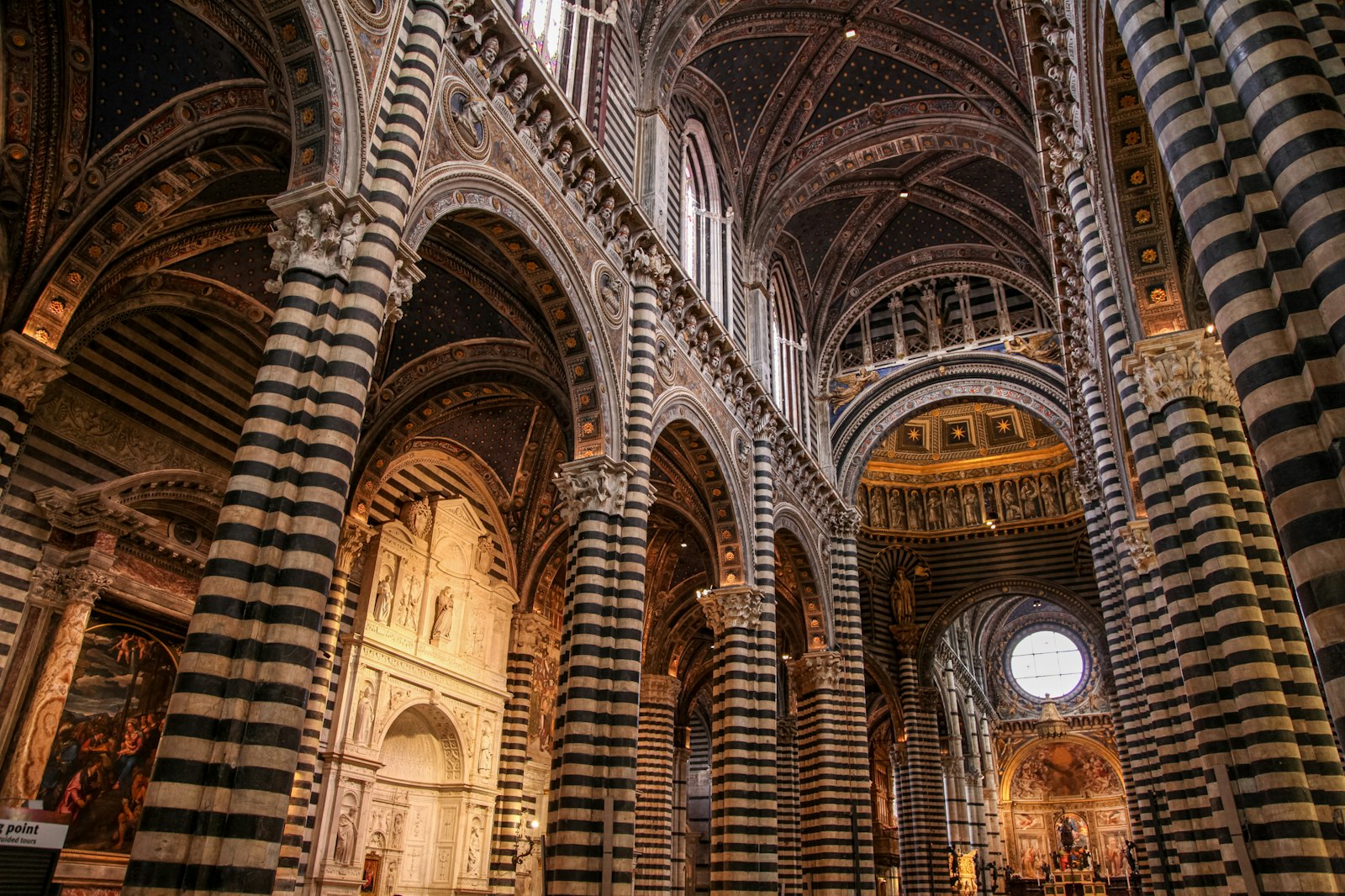
Siena's Duomo is one of the great churches of Italy, and it earns a slow visit. Outside: bands of black and white marble (the city's colors) and a facade crusted with sculpture. Inside: a forest of striped columns, a pulpit by Nicola Pisano, and the Piccolomini Library, its walls frescoed by Pinturicchio in blues and golds that still look freshly mixed. The floor is the secret — a vast inlaid-marble program of 56 panels that's kept covered most of the year and uncovered only for a few weeks (roughly late summer into October), so time your trip for the scopertura if you can. Buy the combined OPA SI Pass; it bundles the cathedral, the library, the crypt, the baptistery, and the museum.
Climb to the Gate of Heaven
The Duomo's Porta del Cielo tour walks you up into the roof and out onto the marble for a view down the nave and across the city. It's timed, small-group, and booked separately — and it's the best thirty minutes in the building. Reserve ahead.
The Palio, the maddest race in Italy
Ninety seconds of bareback chaos, 700 years in the making.

Twice a summer — July 2 and August 16 — Il Campo fills with packed dirt and Siena loses its mind. The Palio is a bareback horse race between the contrade, three laps of the square in about 90 seconds, and it is not a show for tourists — it's the beating center of local life, complete with secret alliances, a horse blessed inside a church, and grown adults weeping in the street. Ten of the 17 contrade run each race. The center of the Campo is free and packed solid; a seat in a window or grandstand is the only thing money buys, and it's booked months ahead. Can't make the race? Come for a prova (a trial run) in the days before — same thrill, a fraction of the crush.
The Palio isn't a spectacle you watch. It's a religion you're a guest at.— On how to behave
The 17 contrade, explained
Why the Snail eyes the Tortoise, and other essentials.
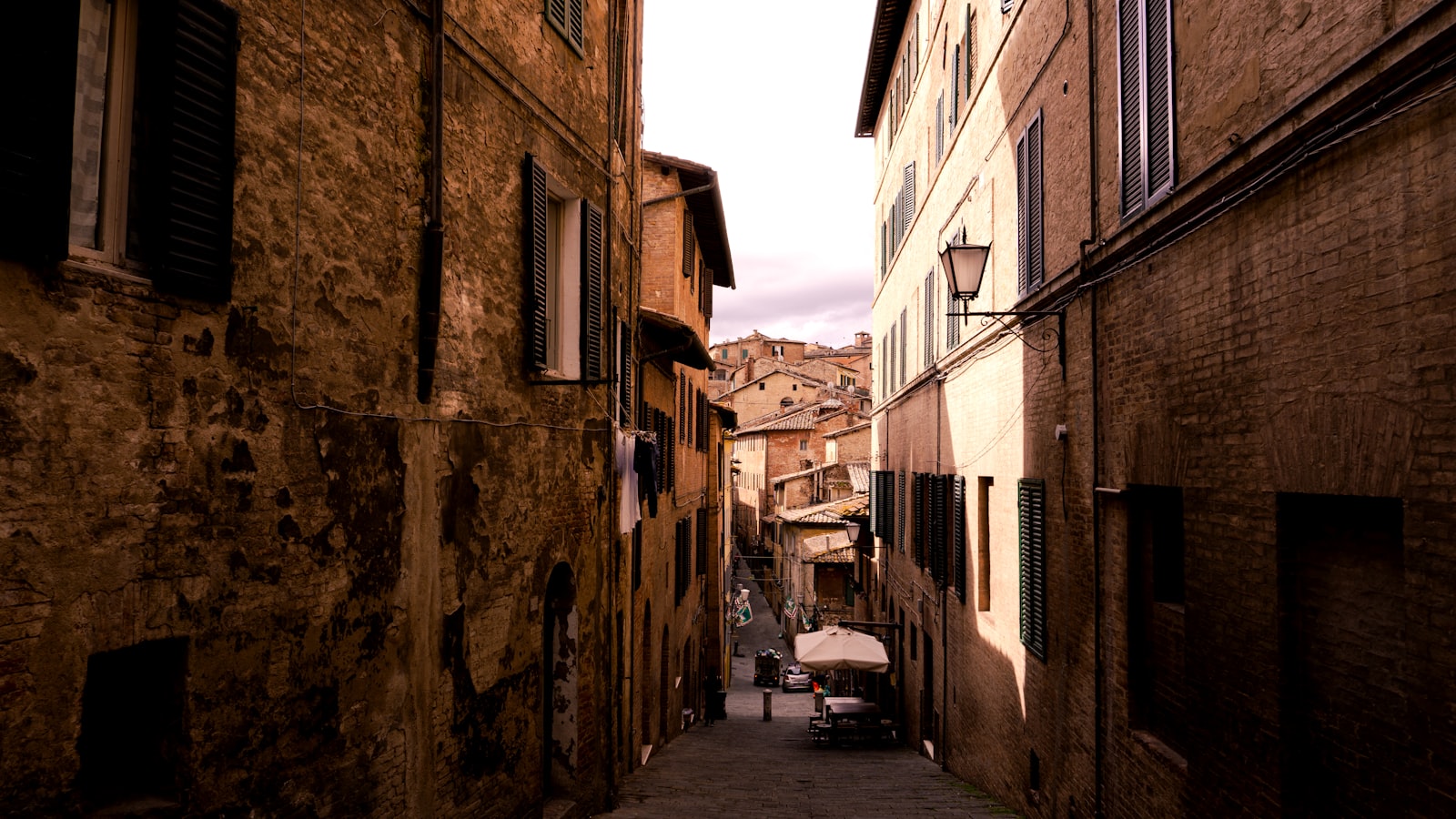
To understand Siena you have to understand the contrade — 17 neighborhoods, each a miniature republic with its own flag, animal (Snail, Wave, Eagle, Owl, Panther, Porcupine, and on), patron saint, fountain, museum, and centuries-old rivalries. You're born into one, baptized in its fountain, and loyal for life. Walk the streets and you'll cross invisible borders block by block, the lamp-post colors and corner shrines shifting as you go. Many contrade open their tiny museums by appointment — a room of Palio banners and horse tack that tells you more about the city than any cathedral. Even just learning to spot the symbols turns a wander into a treasure hunt.
Gothic gold and a saint's head
The town hall, the painters, and Saint Catherine.
For the art, start in the Palazzo Pubblico on the Campo, whose Museo Civico holds Ambrogio Lorenzetti's Allegory of Good and Bad Government — a giant 1330s fresco that's basically the first political cartoon — and Simone Martini's luminous Maestà. The Pinacoteca Nazionale gathers the Sienese Gothic masters (Duccio, the Lorenzetti brothers) whose gold-ground panels rival anything in Florence. Across from the Duomo, Santa Maria della Scala — a thousand-year-old pilgrims' hospital — is now a layered museum worth half a day. And Siena's own Saint Catherine, patron saint of Italy, is everywhere: her sanctuary near the Fontebranda fountain, and (fair warning) her preserved head in the Basilica di San Domenico.
Where we would book
For the Duomo complex, buy the official OPA SI Pass and book the Gate of Heaven slot directly — resellers just add a fee to the same timed entry. The Museo Civico you walk up to. For the Palio, standing in the center of the Campo is free; the marked-up window and grandstand seats are the only thing anyone sells, so pay only if you genuinely want to sit. Contrada museums go through the contrada itself, usually for a small donation. Merit first, middleman never.
Related guides
- Your Siena Travel Guide — the practical trip around all this.
- Siena Food Guide — how to eat between churches.
- Things to Do in Siena — towers, day trips, and wine.
- Tuscany Culture Guide — the region's wider story.
- Siena Group Trip Guide — the same contrade and Palio, planned for a crowd.