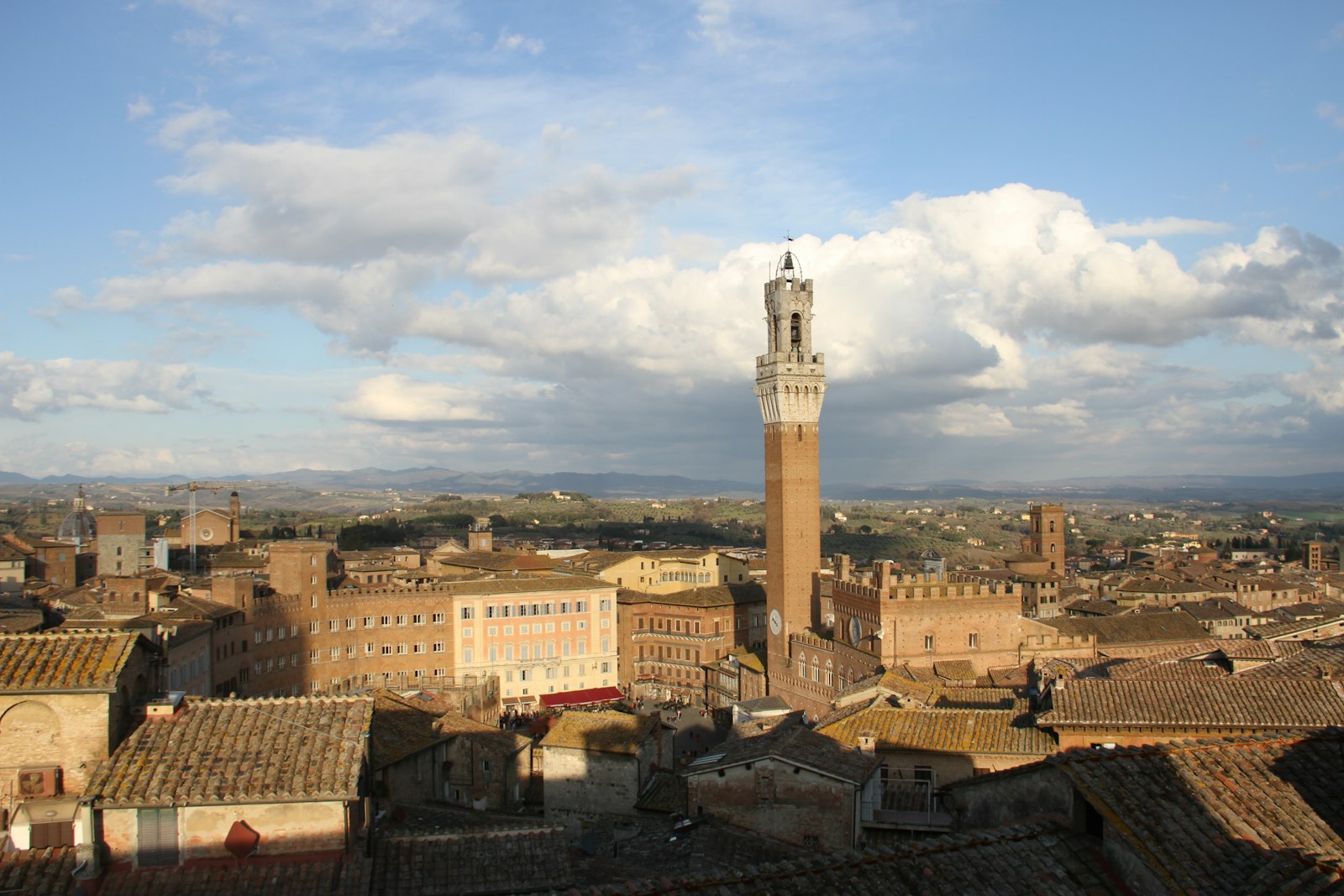
Siena is the city Florence could have been if the Black Death hadn't gotten there first. In 1348 the plague took more than half the city, the building stopped, and the Gothic masterpiece they'd been raising simply stayed. What's left is the most complete medieval city in Italy — brick streets the color of the hills, a piazza shaped like a shell, and 17 neighborhoods that still throw a horse race twice a summer like it's the only thing that's ever mattered. You can see the headline sights in a day. Give it two, sleep inside the walls, and use it as your base for the best part of Tuscany.
Getting in, and where to leave the car
The bus from Florence beats the train. Park outside the walls.
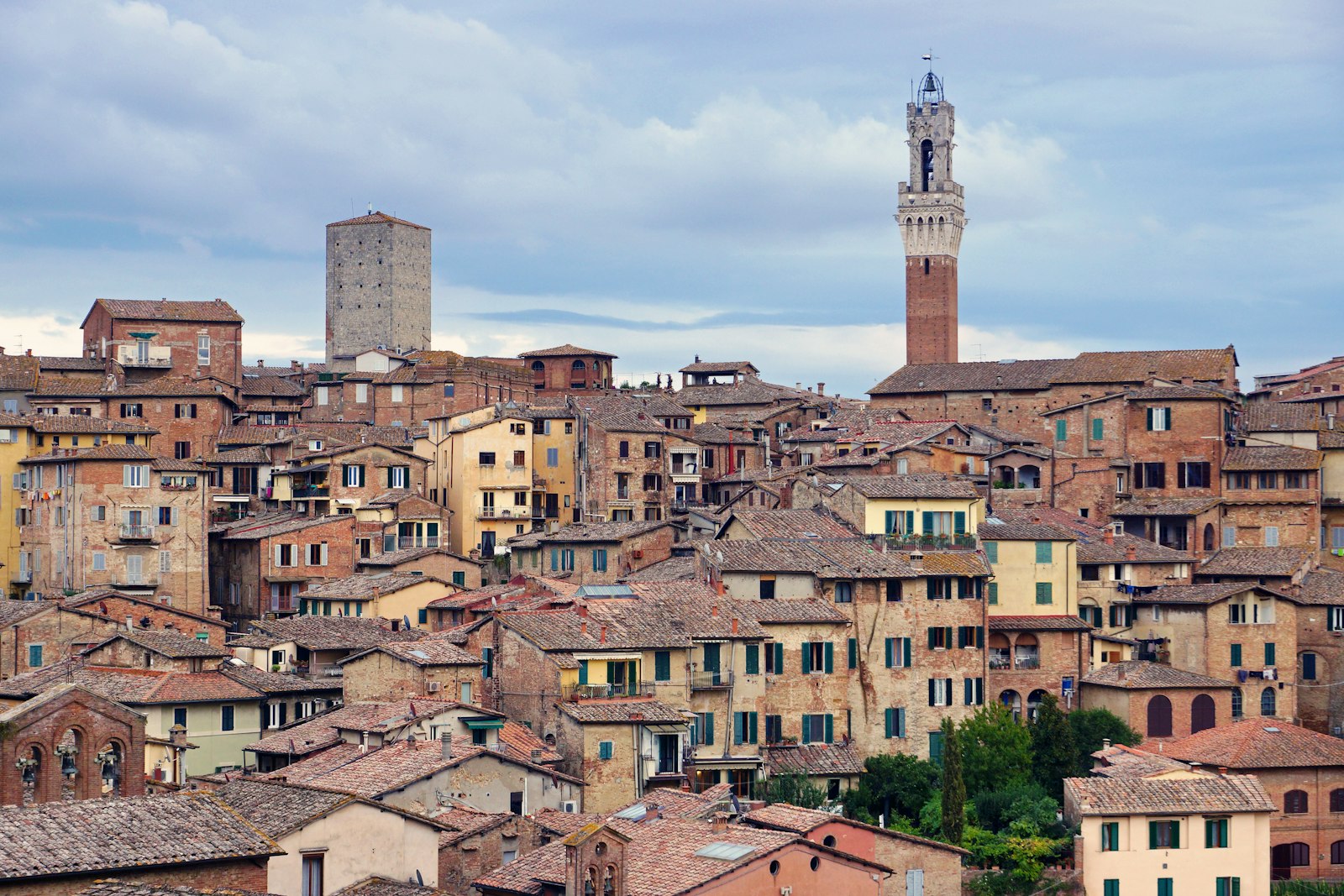
Coming from Florence, take the bus, not the train — it's one of the few places in Italy where that's the honest advice. The fast Autolinee Toscane coach runs city-center to city-center in about 75 minutes; the train strands you at a station downhill from the old town and usually wants a change at Empoli. If you're driving in from the countryside, learn this cold: the center is a ZTL (limited-traffic zone) and pedestrianized, watched by cameras, and one wrong turn past a sign is an automatic fine that finds you months later. Leave the car in a ring garage — Santa Caterina has escalators that carry you straight up into town — and walk. You won't want a car inside the walls anyway; nothing is more than 15 minutes on foot, all of it uphill at some point.
Sleep inside the walls
The day-trippers leave at five. That's when Siena gets good.
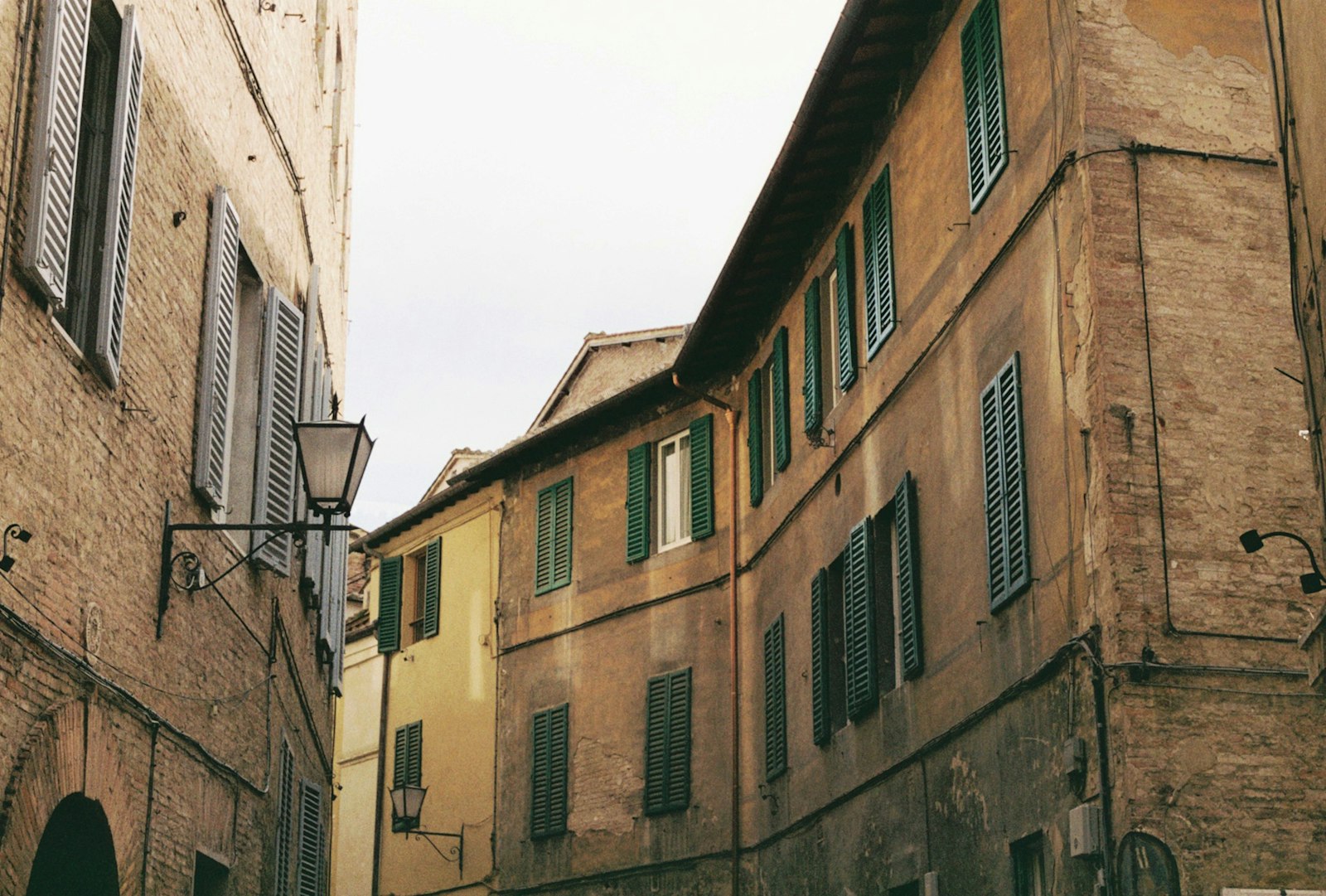
Most people do Siena as a day trip from Florence, which is exactly why you shouldn't. The buses empty out around five, the light turns amber on the brick, and the city hands itself back to the people who live in it — aperitivo in the contrada bars, kids running across Il Campo, swallows wheeling over the towers. Book a room or, better for a group, a whole apartment inside the medieval walls; the Terzo di Città and the lanes around Il Campo are central without being a tourist canyon. For a group it's almost always cheaper to rent one place with a kitchen than to split across hotel rooms — and you'll want somewhere to stash the pecorino and wine you'll inevitably haul home.
One apartment, not four hotel rooms
A two- or three-bedroom apartment inside the walls usually undercuts the equivalent in hotel rooms, hands you a kitchen for the market haul, and a table to actually sit around. Rent the whole place, split it evenly, and the per-night number gets friendly fast.
Il Campo and the Duomo
The best square in Italy, and a cathedral that tried to be the biggest.
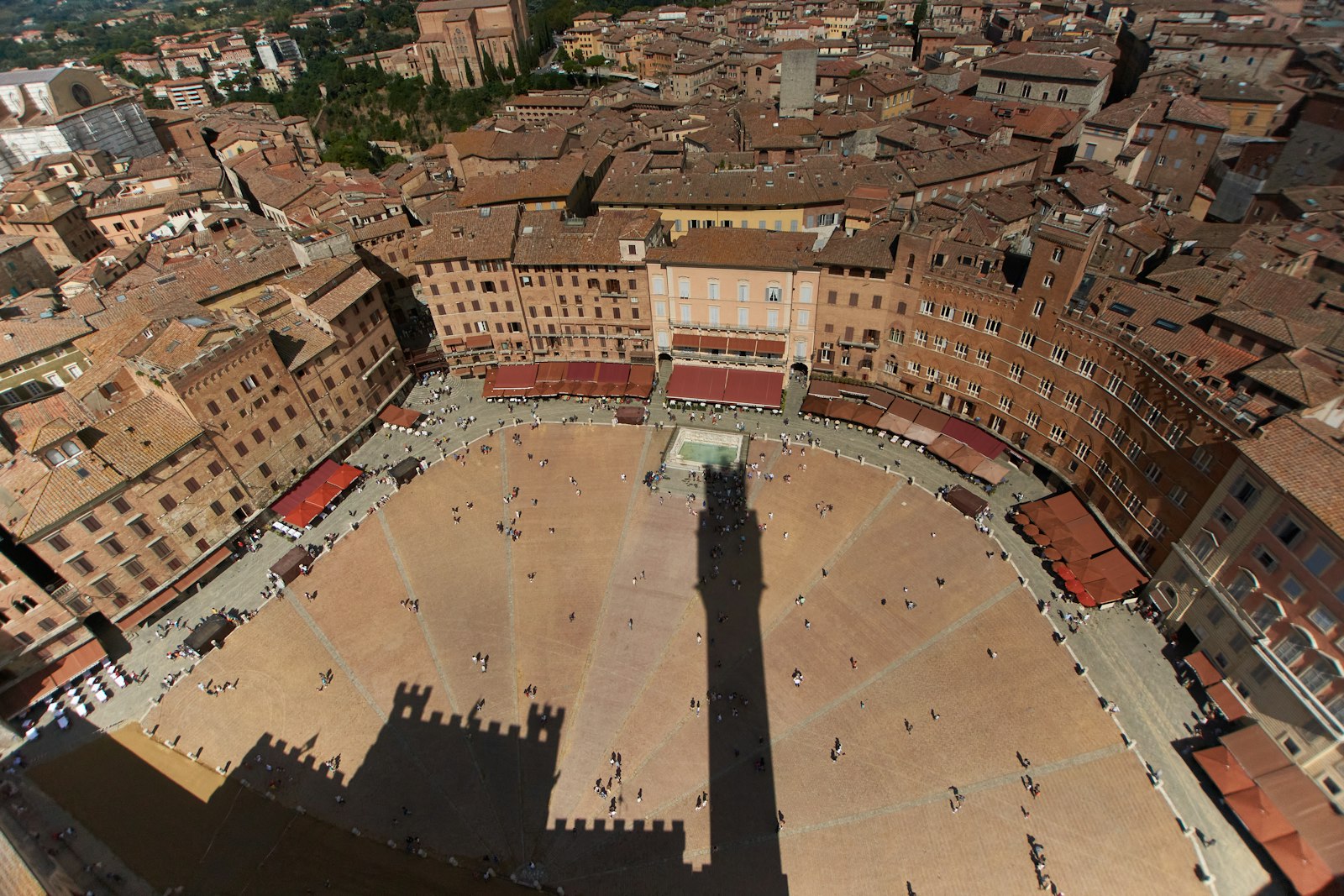
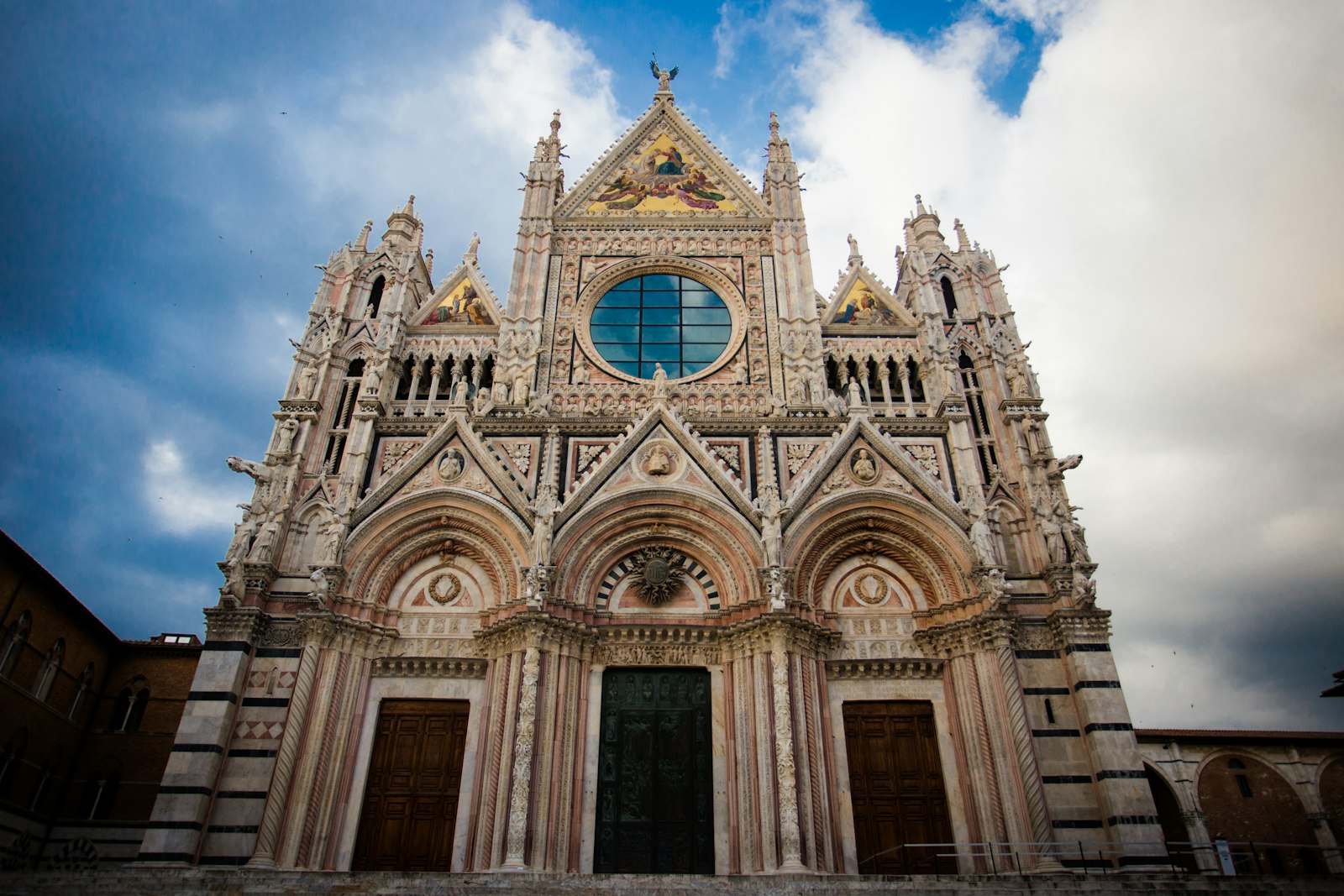
Two sights carry the city, and both deliver. Piazza del Campo — "Il Campo" — is a sloping, shell-shaped square paved in brick and split into nine segments for the medieval council that built it. There's no better public space in the country. Do the obvious thing: get a coffee or a beer, sit down on the warm bricks, and watch Siena happen for an hour. Then the Duomo, a black-and-white-striped marble fever dream with one of the most spectacular interiors in Italy — an inlaid marble floor, a Pisano pulpit, and a side library frescoed by Pinturicchio in colors that look wet. We go deep on both in the culture guide; for now, just know they're worth every minute and most of your first day.
Sit on the bricks of Il Campo for an hour. That's the itinerary.— On slowing down
The best base in southern Tuscany
Wine, hill towns, and lunar hills, all within an hour.
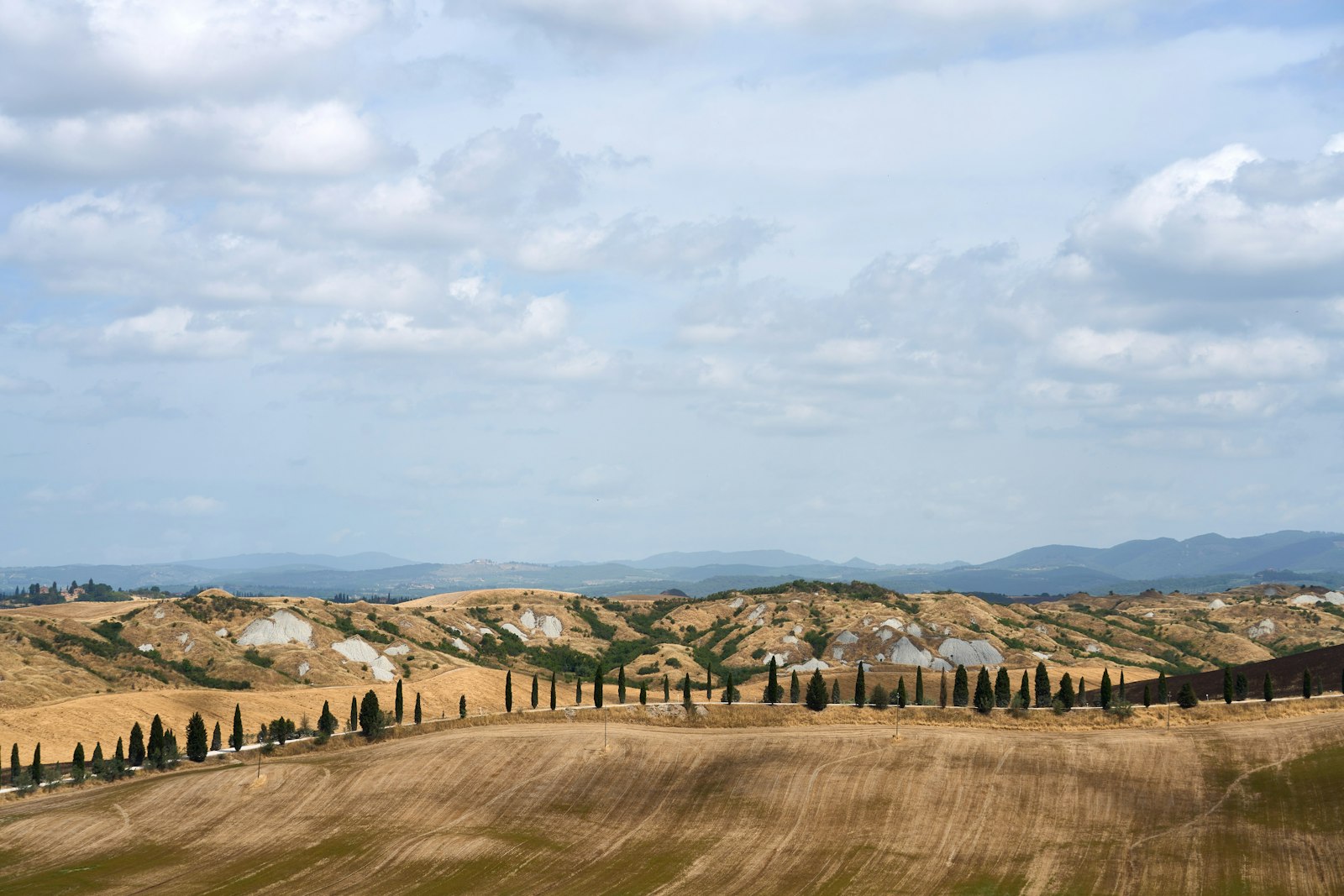
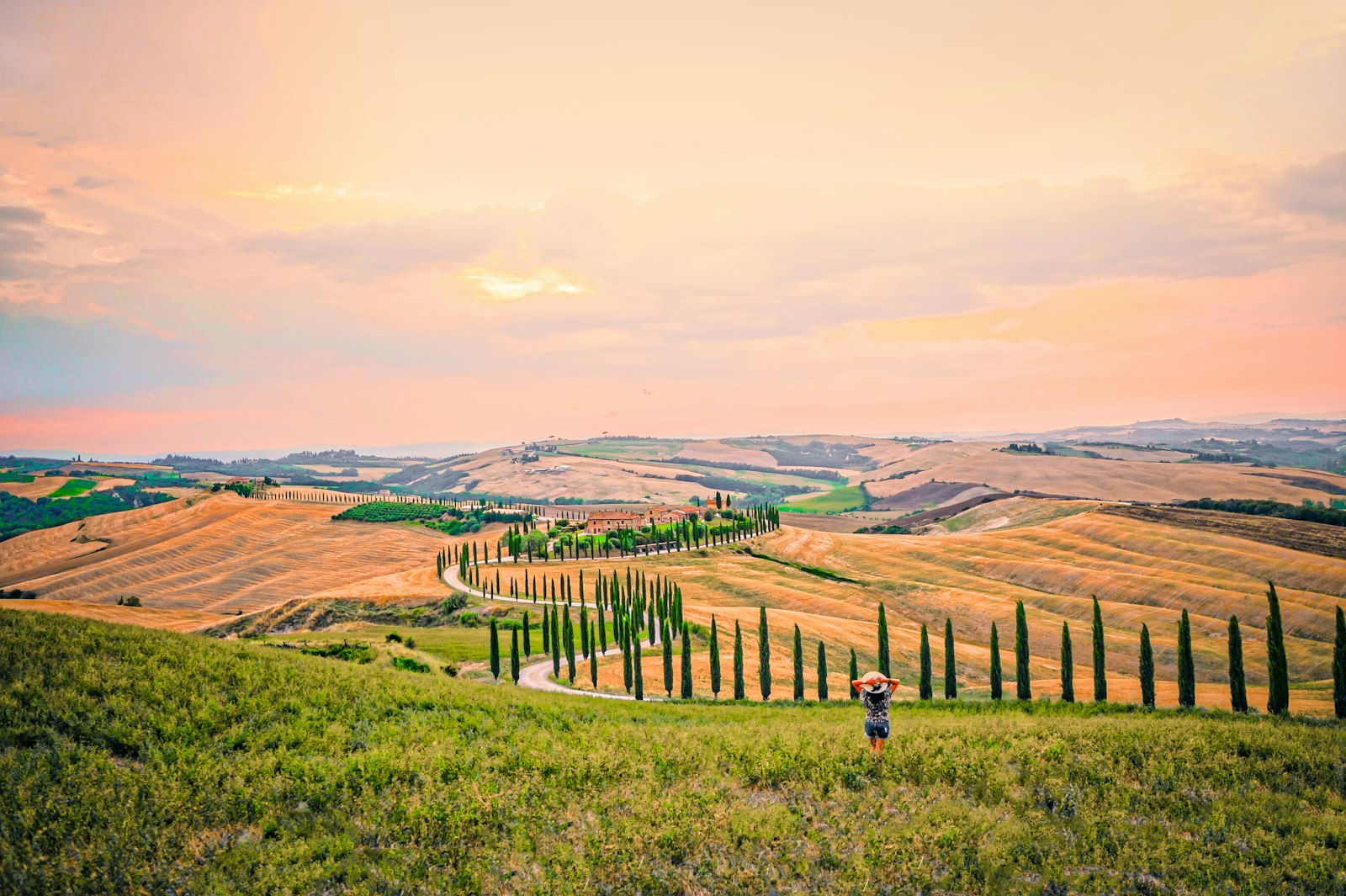
Here's Siena's secret weapon: location. It sits at the center of the best part of Tuscany, and almost everything you'd drive hours for from Florence is 30 to 60 minutes away. To the south, the Crete Senesi roll out in bare clay waves that go gold in summer. Past them, Montalcino pours Brunello and Montepulciano pours Vino Nobile, two of Italy's great reds. San Gimignano and its towers, walled Monteriggioni, and the postcard Val d'Orcia are all easy day trips. Rent a car for the days you head out (and only those days), or join a small-group wine tour and let someone else drive. We lay out the full day-trip hit list in the activities guide.
- Crete Senesi — lunar clay hills; a gorgeous drive or e-bike, 20 minutes out.
- Montalcino & Montepulciano — Brunello and Vino Nobile, under an hour south.
- San Gimignano — the medieval Manhattan of towers, about 45 minutes.
- Monteriggioni — a tiny, perfect walled circle Dante name-checked, 20 minutes.
How long, and a shape for the days
Two nights minimum. Three if you're using it as a base.
One day sees the city; two lets you breathe; three makes it a base. A shape that flows: Day 1, arrive, drop bags, and give the afternoon to Il Campo and the Duomo, then aperitivo and a long dinner. Day 2, climb the Torre del Mangia for the rooftops, walk the contrade, do the Museo Civico and Santa Maria della Scala, and end on the steps of the Campo with a gelato. Day 3, pick up a car and point it south — a Brunello tasting in Montalcino, lunch in a hill town, the Crete Senesi at golden hour on the way back. Leave one slot with no plan; in Siena that's usually the part everyone remembers.
When to go
Spring and fall — unless you're here for the Palio.
Come April to June or September to October: warm days, long light, and the countryside green or harvest-gold. July and August are hot and crowded, and the two Palio dates — July 2 and August 16 — turn the whole city inside out (thrilling if you plan for it, chaos if you don't; book months ahead either way). Winter is quiet, atmospheric, and cheap, though some countryside spots wind down. If you can pick, mid-September is the sweet spot — warm, the grape harvest on, and the day-trip crowds thinning out.
Where we would book
For the apartment, book direct with the owner or a whole-home rental rather than a third-party site when you can — you'll often get a better rate and real answers about which door is yours in a 700-year-old building. Buy the Florence–Siena bus from Autolinee Toscane directly, rent the car ahead (automatics sell out), and for the cathedral use the official OPA SI Pass — more in the culture guide — not a reseller charging extra for the same timed slot. The best things here, a seat on the bricks and the walk through the contrade, cost nothing at all. No middleman required, so we skip it.
Related guides
- Siena Food Guide — pici, wild boar, and the medieval sweets.
- Things to Do in Siena — towers, day trips, and wine country.
- Siena Culture Guide — the Duomo, the Palio, and the contrade.
- Your Tuscany Travel Guide — the whole region Siena anchors.
- Siena Group Trip Guide — the same city, planned for six or ten of you.