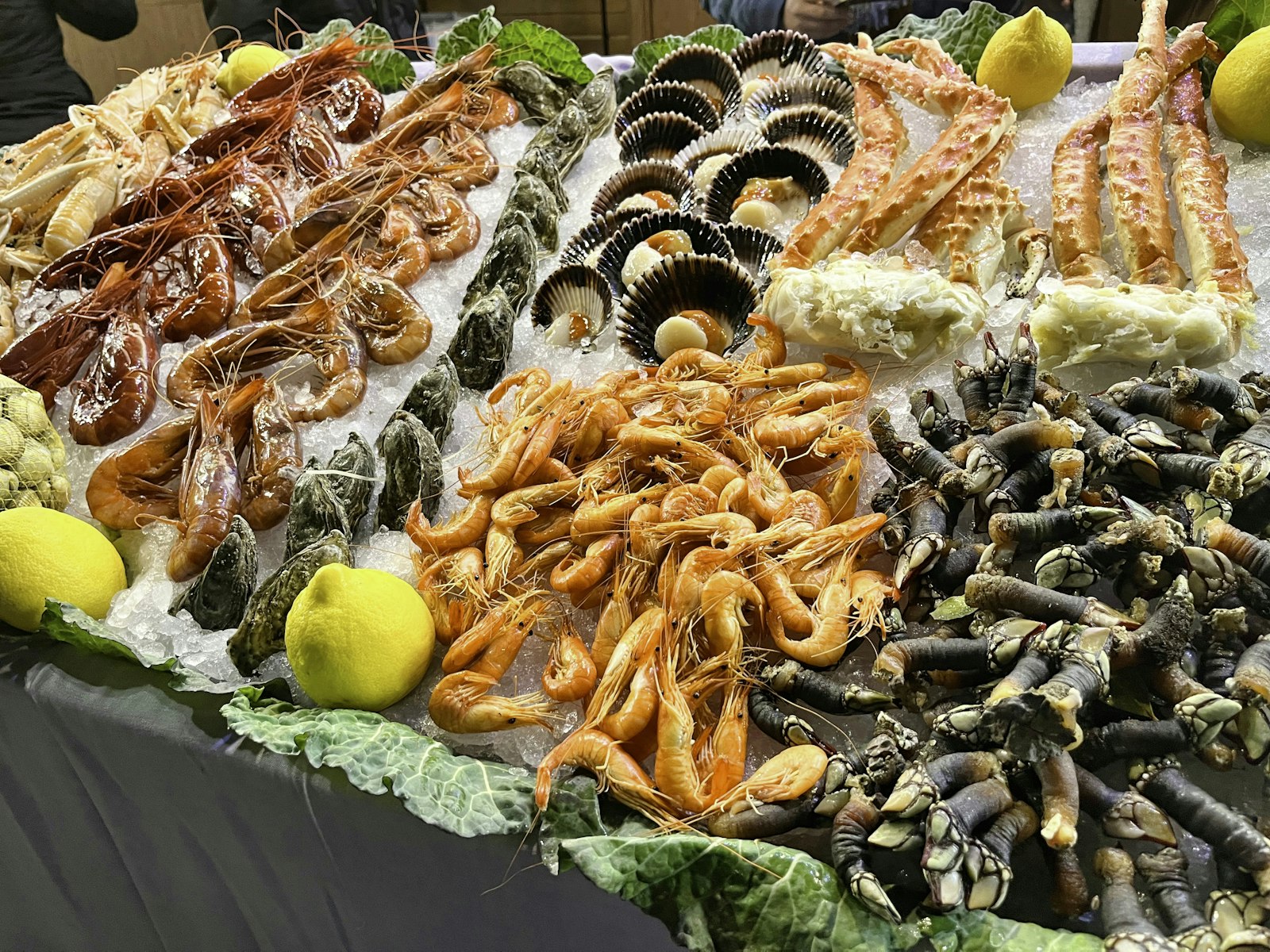
Menorca eats off its own land and water
A British navy, a French sauce, and an enormous amount of cheese.
For a small island, Menorca punches absurdly above its weight at the table. It has its own protected cheese, eaten from breakfast to midnight. It has a lobster stew so good a Spanish king used to sail in for it. It distils a gin invented for British sailors and drinks it cut with cloudy lemonade. And it may — the island will fight you on this — have invented mayonnaise. None of it is fussy. This is farm-and-harbour food, generous and a little rough, built for long tables.
The organizing rule is the same as anywhere with a view to sell: the closer a restaurant sits to the prettiest stretch of harbour, the more you pay for the postcard and the less for the cooking. Walk one street back, or inland to a village, and Menorca starts feeding you properly.
The cheese: Mahón-Menorca
Square, orange-rinded, and on every table.
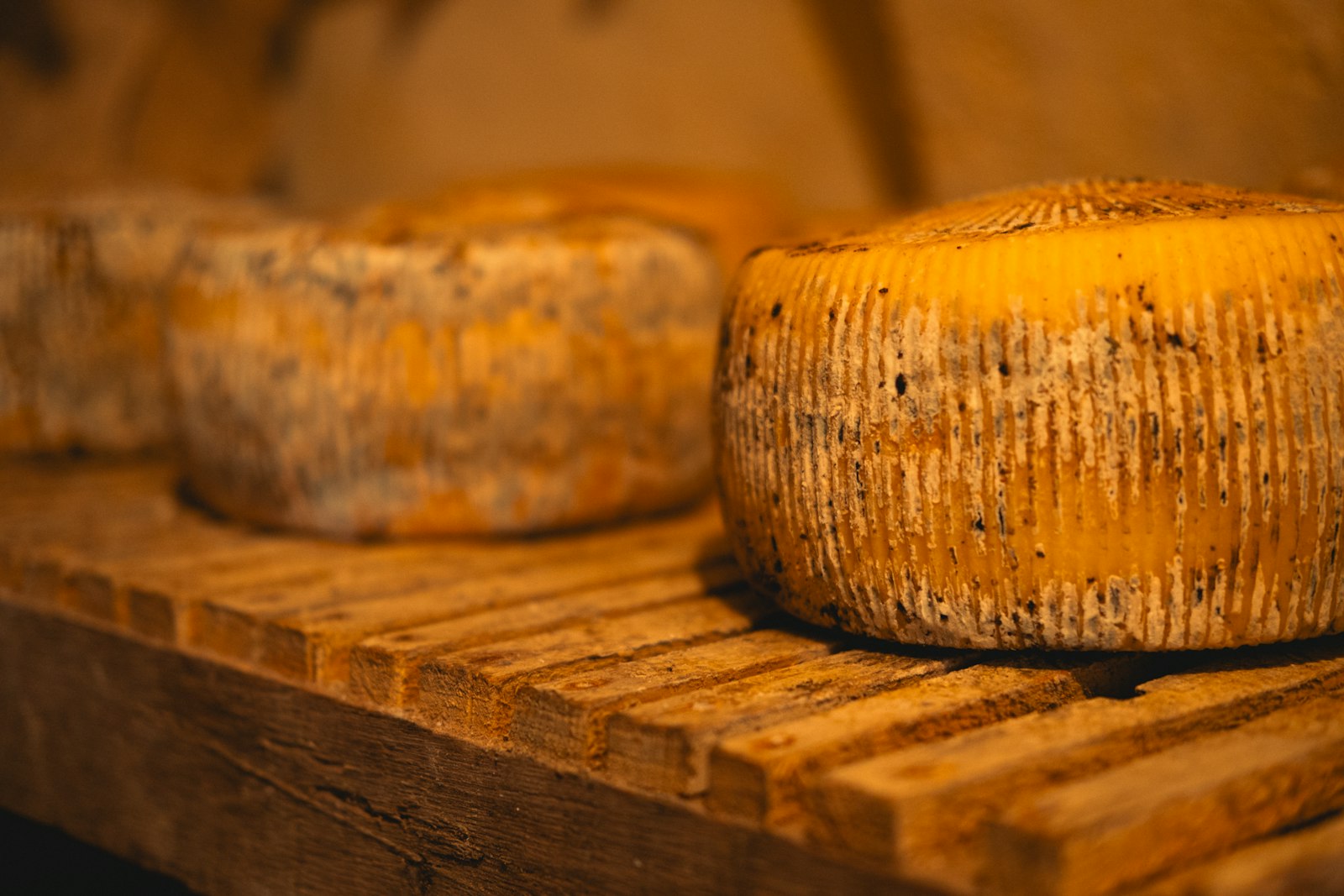
Queso Mahón-Menorca is the island's edible flag: a cow's-milk cheese pressed into a soft square with rounded corners, its rind rubbed with butter and paprika until it glows orange. You'll meet it at four ages — tendre (young and springy), semicurat (the everyday all-rounder), curat (firm, nutty, the one to take home), and añejo (aged hard, almost a grating cheese). Eat the young one for breakfast, the old one after dinner with Menorcan honey or a slick of sobrassada. Buy it not in a supermarket but at a farm gate or a market stall flying the DOP label — much of it still comes from the dairies around Alaior, several of which open for a tasting.
Caldereta de llagosta
The one splurge worth planning the week around.
Fornells and the lobster stew
In the fishing village of Fornells, on the north coast, the local spiny lobster goes into a caldereta — a soupy, intense stew of lobster, onion, tomato, and a little brandy, served in two acts: the broth poured over bread first, the lobster after. It is not cheap (reckon €80–110 a head, priced by the weight of the lobster) and it is worth doing once. Es Pla is the famous room, where King Juan Carlos used to dock his yacht; Cap Roig on the cliffs and Sa Llagosta in the village are the locals' picks. Book a week ahead in summer, and arrive hungry.
The everyday plates
What the island actually eats on a Tuesday.
- Sobrassada — the soft, paprika-red cured sausage of the Balearics, spreadable as butter. On warm bread with a drizzle of honey, it's the island's perfect snack.
- Pa amb oli — bread rubbed with tomato, good oil, and salt, the Catalan baseline, here piled with cheese or cured meat.
- Oliaigua — a thin, ancient peasant soup of bread, tomato, pepper, and garlic, eaten in summer with fresh figs dropped in. Pure cucina povera.
- Arròs de la terra — not rice at all but baked crushed wheat with pork and garlic, a Menorcan oddity worth ordering once.
- Carn-i-xua — fried pork belly with the cheese, the unfussy fallback the whole island grew up on.
For the sweet end: ensaïmadas (the coiled, lard-light pastry under a snow of sugar), pastissets (crumbly shortbread rings), and carquinyols (almond biscuits) — all good with a mid-morning coffee or as the thing you carry home in a flat pink box.
Gin, pomada, and the herbs
Drink it the way Sant Joan does.
When the British ran Menorca in the 1700s, their sailors wanted gin, so the island started distilling it from wine alcohol and local juniper. Xoriguer still makes it on the Maó quayside, in squat green bottles, and the distillery shop pours free tastings all day — work through the gin, the herbes (a sweet herbal liqueur), and the calent. But the drink to learn is pomada: gin cut with cloudy lemonade, served in a plastic cup and drunk by the litre at every summer festa. It tastes like a holiday and ambushes you like one too — pace it.
Where to eat: the harbours
Four waterfronts. Same rule everywhere.

- Cales Fonts (Es Castell) — a horseshoe of little harbour restaurants strung with lights, the most atmospheric dinner on the east end. Touristy, yes; still lovely at dusk.
- Moll de Llevant (Maó) — the capital's long quay, the better cooking clustered away from the cruise end. Lunch upstairs at the Mercat des Peix fish-market stalls is the local move.
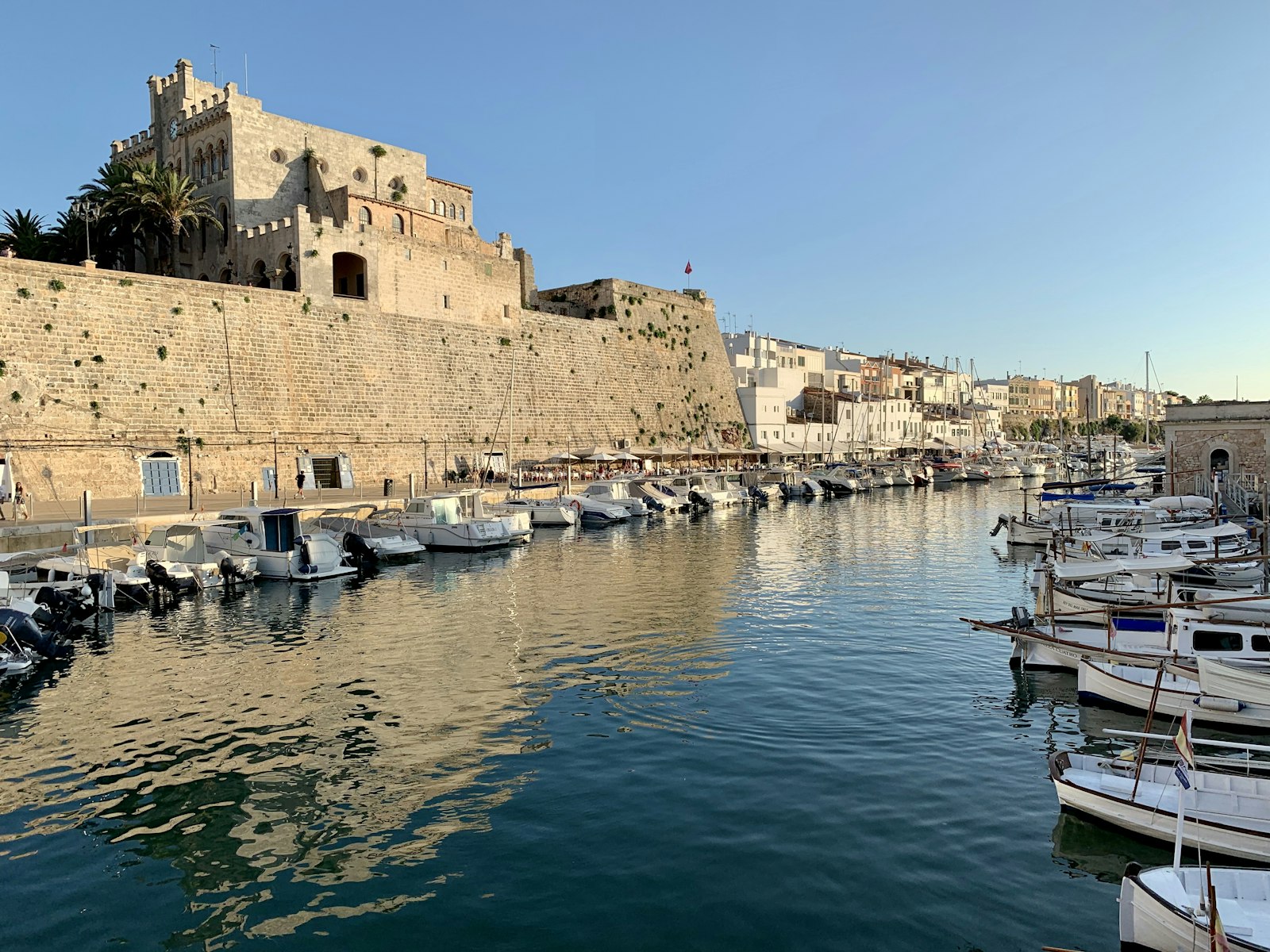
- Ciutadella's port — under the old-town walls, romantic and pricey on the water; climb the steps into the centre for the rooms locals actually book.
- Fornells — beyond the lobster, a row of honest seafood places looking over the bay.
One more, for the photo: Binibeca Vell, a cluster of whitewashed lanes built to look like an old fishermen's village. It's a film set, not a real one, but a drink there at sunset is a fair trade.
On a view this good, the harbour-front markup is just the cover charge for the postcard. Walk one street back.— On where to actually eat
The mayonnaise question
Salsa mahonesa, born in Maó. Allegedly.
The island's proudest culinary claim is the sauce in your fridge. The story goes that in 1756, after the French took Maó from the British, the Duc de Richelieu's chef whipped egg yolks and oil into a cold emulsion he named mahonnaise for the port. Historians quibble; Menorca does not. Order all i oli (the garlic-and-oil cousin) with your grilled fish and split the difference.
Where we would book
The Fornells lobster restaurants and Ciutadella's best tables take bookings by phone a week or two out in summer — there's no reseller, and you don't want one. For the cheese, buy direct at an Alaior dairy or a market stall with the DOP mark rather than at the airport. The Xoriguer distillery needs no booking — walk in off the Maó quay. If you want the food explained, a small-group tapas or market walk in Maó or Ciutadella through GetYourGuide is a fair first-night primer, but the harbours don't need a middleman.
Related guides
- Your Menorca Travel Guide — a week on the island, honestly done.
- Menorca Activities Guide — the calas to earn your lunch on.
- Menorca Culture Guide — the gin's British backstory, and the festa that drinks it.
- Florence Food Guide — another region that eats off its own land, a flight away.
- Menorca Group Trip Guide — the same lobster night, split six or ten ways.