An island lived on for four thousand years
Bronze Age towers, a British harbour, and a horse festival.
Menorca wears its history lightly, but there's a staggering amount of it for a place this size. The green middle is studded with stone monuments older than Rome; the capital is a little Georgian England that happens to sit in the Mediterranean; and the old western capital throws the best party in the Balearics every June. You can do the coves all week and never notice — or give it two afternoons and find the island has a second, deeper personality.
Talaiotic Menorca
Stone towers older than the Parthenon, and almost no one looking at them.
The prehistoric island
For two thousand years a Bronze and Iron Age culture built in stone all over Menorca, and an astonishing amount survives — so much that UNESCO named Talaiotic Menorca a World Heritage Site in 2023. The vocabulary: a talaiot is a massive round watchtower; a taula is a giant T-shaped monument, unique to this island, that probably anchored a sanctuary; a naveta is a boat-shaped collective tomb. Start at the Naveta des Tudons, a drystone burial chamber near Ciutadella often called the oldest roofed building in Europe still standing. Then Torre d'en Galmés, the largest prehistoric settlement in the Balearics, and Talatí de Dalt, the photogenic one, where a perfect taula stands in an olive-dotted field you'll likely have to yourself.
Maó and the British century
Sash windows, a deep-water harbour, and gin.
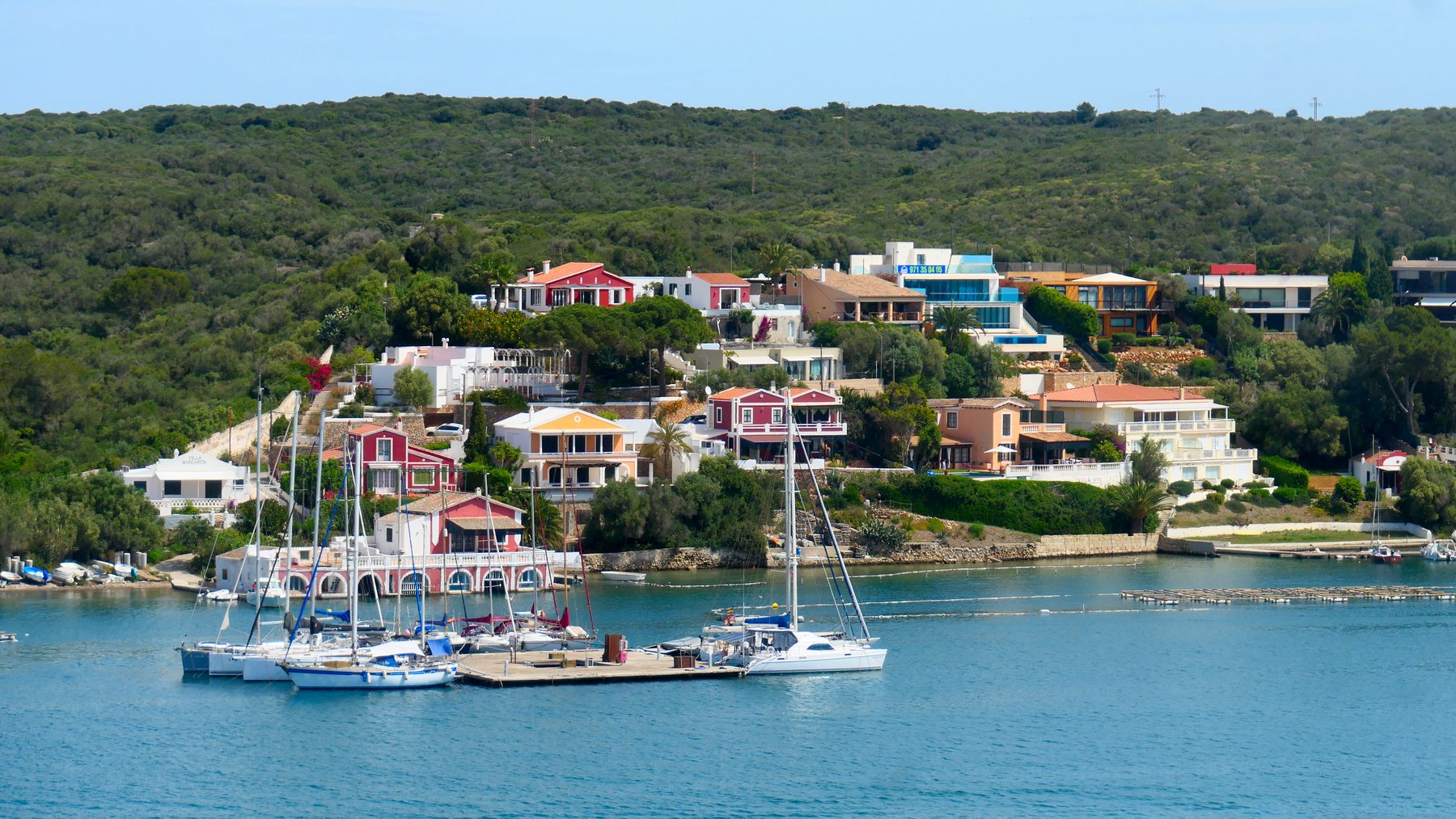
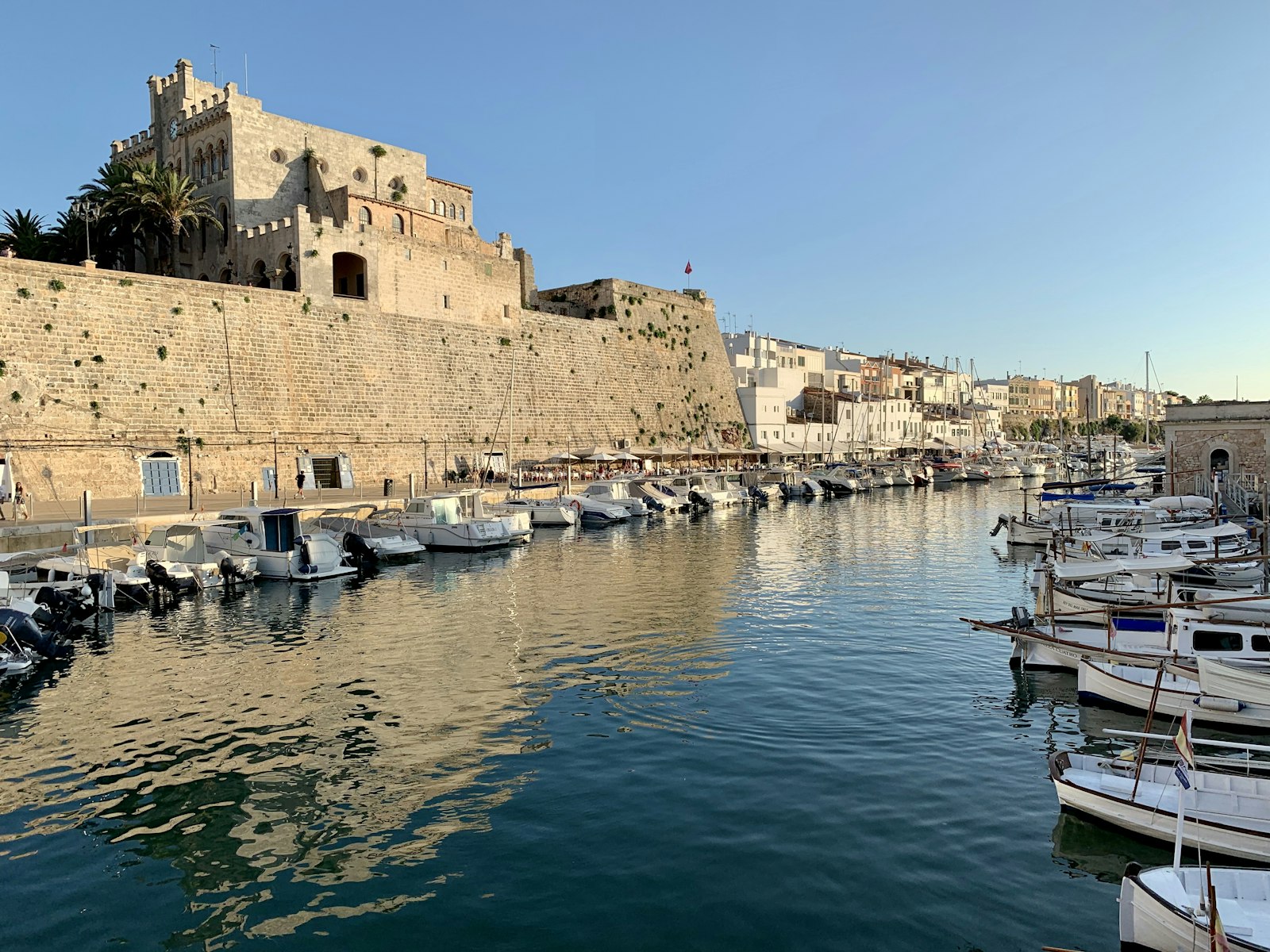
Britain held Menorca for most of the 1700s, drawn by that enormous natural harbour at Maó — and the century left fingerprints all over the capital. Look up and you'll see boinders, the bow-fronted Georgian sash windows the British introduced; the harbour is lined with their naval architecture; and on a far point sits Golden Farm, the red mansion where Nelson is said (probably wrongly, but delightfully) to have stayed. Take the harbour boat tour out to the Lazaretto quarantine island and the old naval hospital, then close the loop where the era is still alive: the Xoriguer gin distillery on the quay, making the sailors' spirit three centuries on.
Ciutadella, the old capital
Honey-coloured stone and aristocratic ghosts.

Before the British moved the capital to Maó, Ciutadella was the island's seat, and it still looks the part: a dense medieval old town of sandstone palaces, a fortress-like Gothic cathedral raised on a former mosque, and noble houses — Palau Salort, Palau Saura — a few of which open their painted rooms to visitors. The 1558 Ottoman raid that sacked the town is remembered every year, and the obelisk in the Born square marks it. Come for the late-afternoon light on the stone and stay for the passeig, when the whole town drifts down to the port.
The stone and the high ground
A quarry-turned-labyrinth and the island's one mountain.
Two more for the culture column. Líthica (Pedreres de s'Hostal) near Ciutadella is a vast disused marès sandstone quarry reinvented as a hand-carved maze of stone rooms, gardens, and a botanical labyrinth — the most atmospheric hour on the island. And Monte Toro, the central 358-metre peak, holds a 17th-century sanctuary to the island's patron and a view that takes in both coasts at once; on a clear day you can see why everyone from prehistoric chiefs to Spanish generals wanted the high ground.
The coves are why you come. The stone towers are why you stay an extra day.— On the green middle
Sant Joan and the horses
The best night of the Menorcan year.
Festes de Sant Joan, Ciutadella
On 23–24 June, Ciutadella hands its old town over to black Menorquín horses and the riders who rear them up into the packed crowds in a ritual called the jaleo. It is loud, ancient, slightly dangerous, and unforgettable: brass bands, the caragol spiralling through the streets, gallons of pomada, and the islanders out in their thousands. If you want to be there, book your beds months ahead — the whole island fills. Each town has its own summer festa with the same horses (Gràcia in Maó in September closes the season), but Sant Joan is the one.
A culture half-day, two ways
Pick a coast and give it an afternoon.
West: Naveta des Tudons, then Torre d'en Galmés, then into Ciutadella for the cathedral, a palace, and dinner in the Born. East: the Maó harbour boat tour and the Xoriguer distillery, then Talatí de Dalt's taula on the way back to the villa for golden hour. Either one breaks up a week of swimming without anyone feeling dragged to a museum.
Where we would book
The prehistoric sites are mostly open-air with a small honesty-box or low ticket at the gate — nothing to pre-book, just bring a few euros and a hat. The Maó harbour cruises you can grab on the quay or reserve through GetYourGuide in peak weeks. Ciutadella's palace visits keep short, seasonal hours — check the day's opening locally. For Sant Joan, the only thing to book is a bed, and the earlier the better. The Xoriguer distillery is free and walk-in.
Related guides
- Your Menorca Travel Guide — a week on the island, honestly done.
- Menorca Food Guide — the gin and the cheese this history left behind.
- Menorca Activities Guide — the calas between the stone towers.
- Florence Culture Guide — a different kind of open-air museum, a flight away.
- Menorca Group Trip Guide — the same stone towers, planned for six or ten of you.