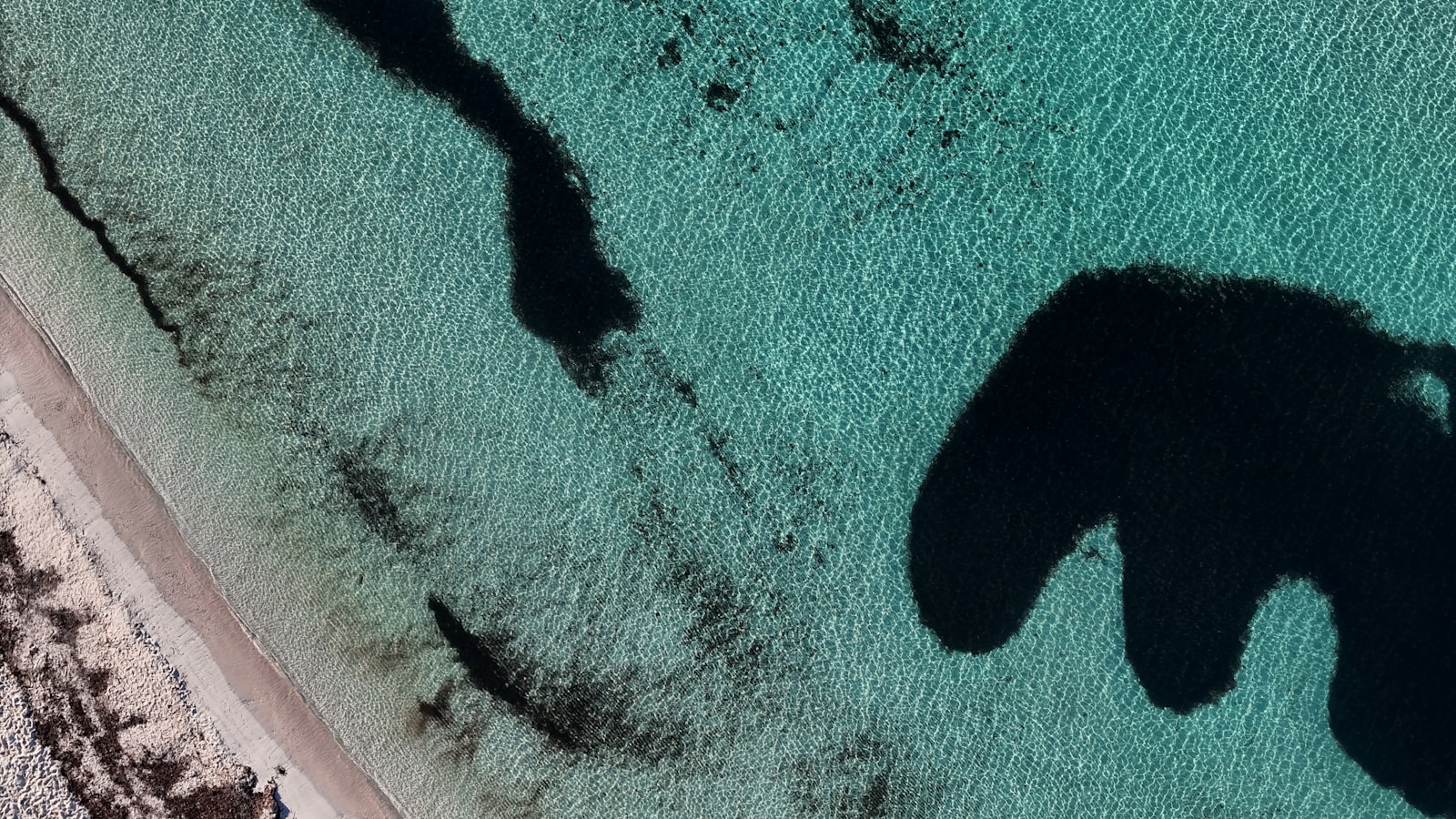
Menorca runs on island time
Rent a car. Pick a cove. Repeat.
Menorca is small enough to feel like a single, slow idea: a low green island you can drive end to end in under an hour, ringed by water that doesn't look real and a 185-kilometre path that connects every last cove of it. There are no big resorts to speak of, no nightclub strip, no must-see that ruins your day if you skip it. The whole place is a UNESCO Biosphere Reserve, which is the official way of saying nobody ever let it get built on.
This is how we'd spend a week here with a group. Not a checklist — a rhythm. One cala in the morning, a long lunch, a town or a ruin in the late afternoon, dinner on a harbour. Do that seven times in slightly different places and you'll come home browner, calmer, and quietly evangelical about an island most people can't quite place on a map.
The island in five pieces
Two cities, two coasts, and the empty middle.
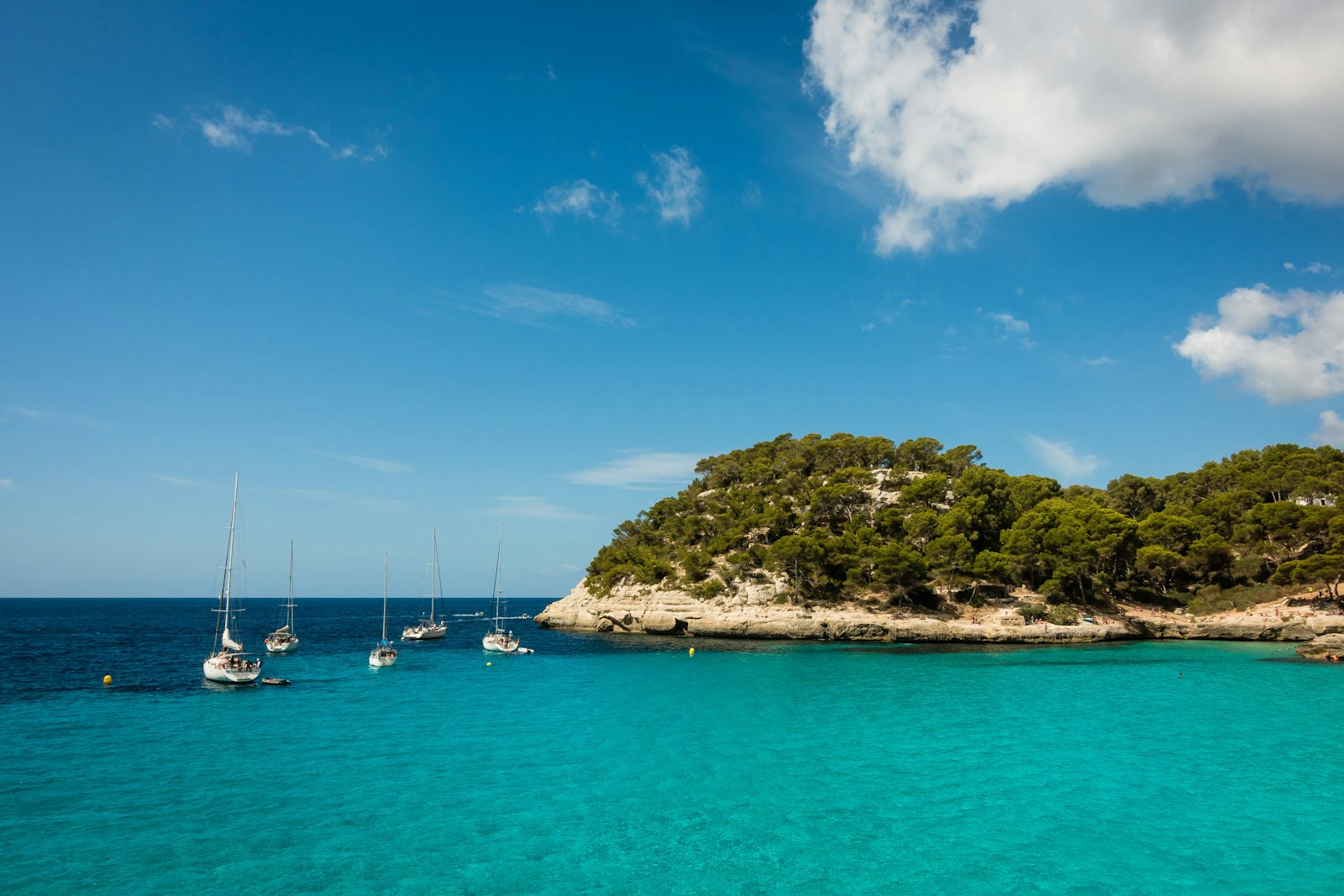
Menorca organizes itself around two ends and the wild edges between them:
- Maó (Mahón) — the capital, on the east end, wrapped around one of the largest natural harbours in the world. Georgian sash windows, the gin distillery, the airport, and the ferry. Where most trips begin.
- Ciutadella — the old Catalan capital on the west end, all sandstone palaces, a cathedral, and the prettiest evening stroll on the island. An hour from Maó on the one main road.
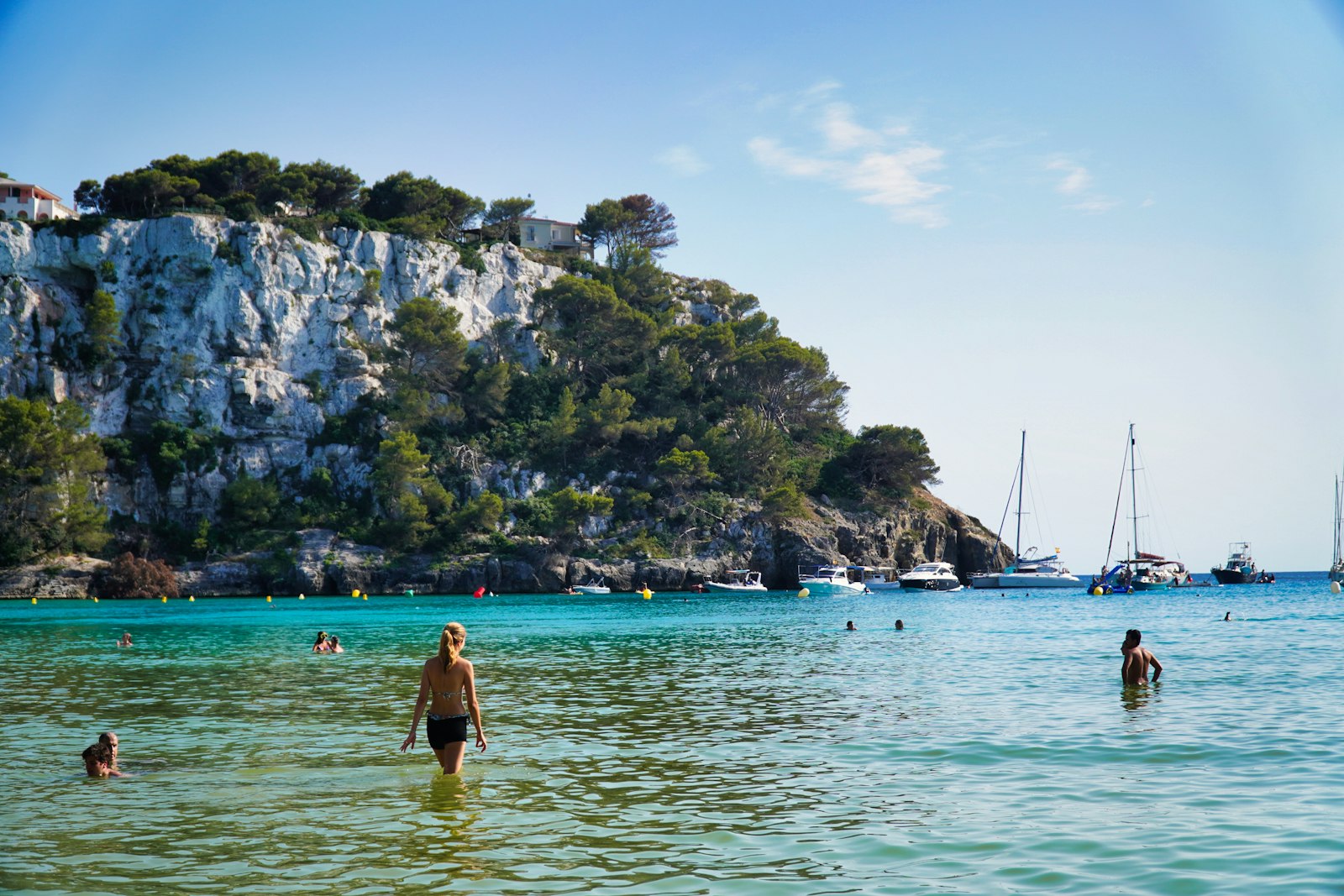
- The south coast — the postcard. White-sand calas the colour of a pool, fringed with pine: Macarella, Turqueta, Mitjana, Son Saura. Most need a short walk in from a car park.
- The north coast — the wild opposite. Red and black sand, rock the colour of rust, fewer people, and the tramuntana wind. Cala Pregonda and Cavalleria are the headliners.
- The middle — farmland, drystone walls, grazing cows (this is cheese country), and the Bronze Age stone towers almost nobody else visits.
Before you fly: the booking list
Four bookings. One matters more than the flights.
- A car — book it the day you book the flights. Menorca without a car is half an island; the calas and the north coast simply aren't reachable any other way. Summer stock sells out and prices triple. For a group, two small cars beat one big one — the cala lanes are narrow.
- Where you sleep — a villa or agroturismo for a group is the move (see below), and the good ones go months ahead for July and August.
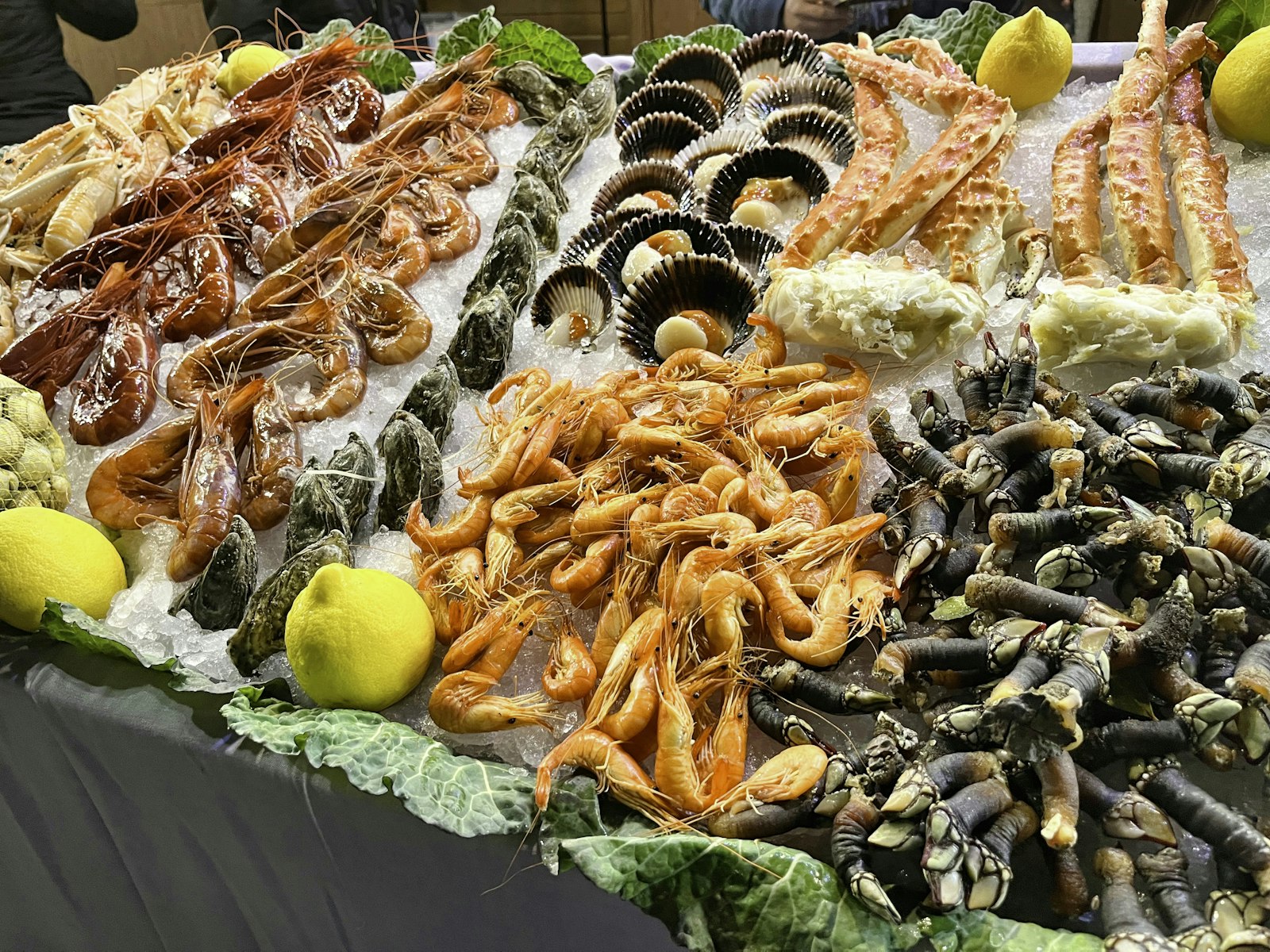
- The lobster night in Fornells — the island's one truly special-occasion dinner books out in season. Pick the spot from the food guide and reserve before you fly.
- Sant Joan, if you're here for it — Ciutadella's horse festival on 23–24 June is the best night of the Menorcan year, and beds for fifty kilometres vanish months out. More in the culture guide.
A week, loosely shaped
Seven days, no forced marches.
Land at Maó and give the first evening to the harbour — a gin on Cales Fonts in Es Castell, an early night. Spend the next two days working the south coast: a cala a day, arriving before ten to beat the car parks, with the full shortlist in the activities guide. Give a day to Ciutadella — the old town in the late afternoon, dinner in the Born — and a day to the wild north, where Cala Pregonda earns its walk. Bank one day for the water itself: a boat charter along the south cliffs, or a stage of the Camí de Cavalls on foot. Keep the last day soft — Monte Toro for the view over the whole island, the Naveta des Tudons on the way back, a final harbour dinner. That's a week, and you'll still be plotting the return on the drive to the airport.
Menorca only has one speed, and the trick is to stop fighting it by about day three.— On island time
The two cities
Maó for the harbour. Ciutadella for the evening.
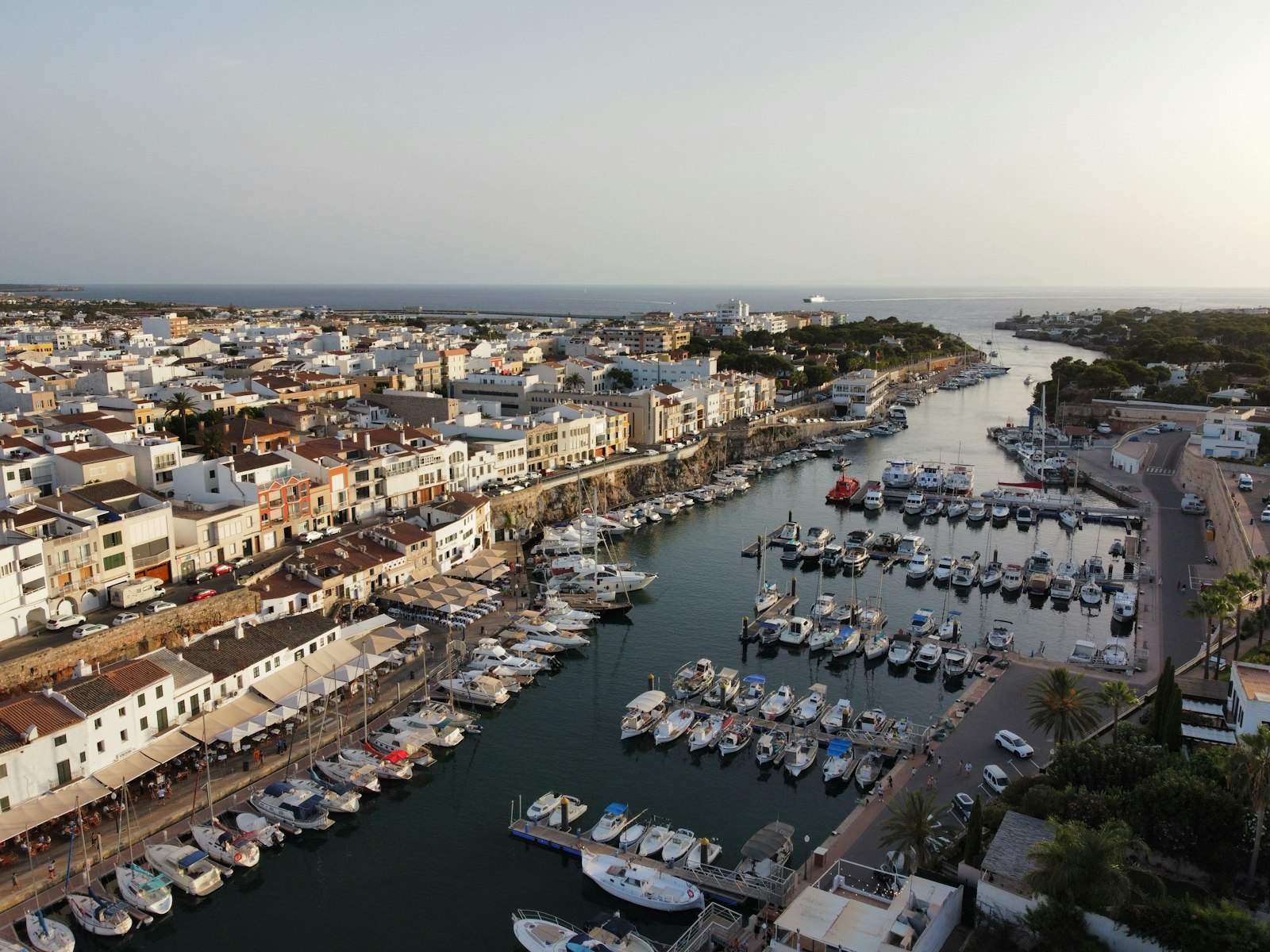
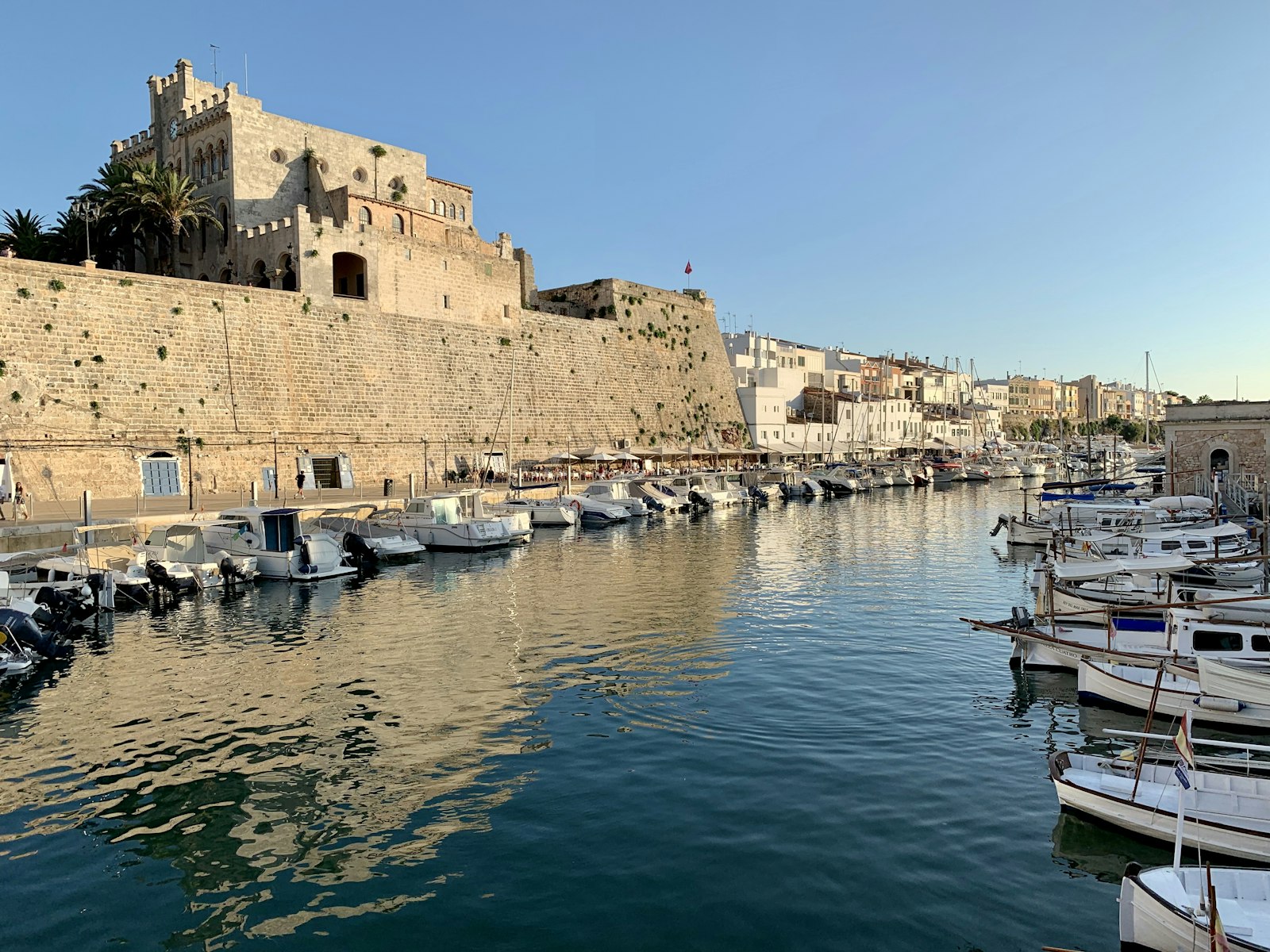
Maó is the working capital: a long quay below a town of pastel Georgian houses, the Xoriguer gin distillery pouring tastings on the waterfront, and a fine market lunch upstairs in the Mercat des Peix. Ciutadella is the beauty — a tight medieval grid of honey-coloured stone, a Gothic cathedral, aristocratic palaces still in family hands, and the Born square where the whole town walks at dusk. If you can give only one of them an evening, give it to Ciutadella. Both are covered properly in the culture guide.
Where to stay
A villa in the middle, not a tower on the coast.
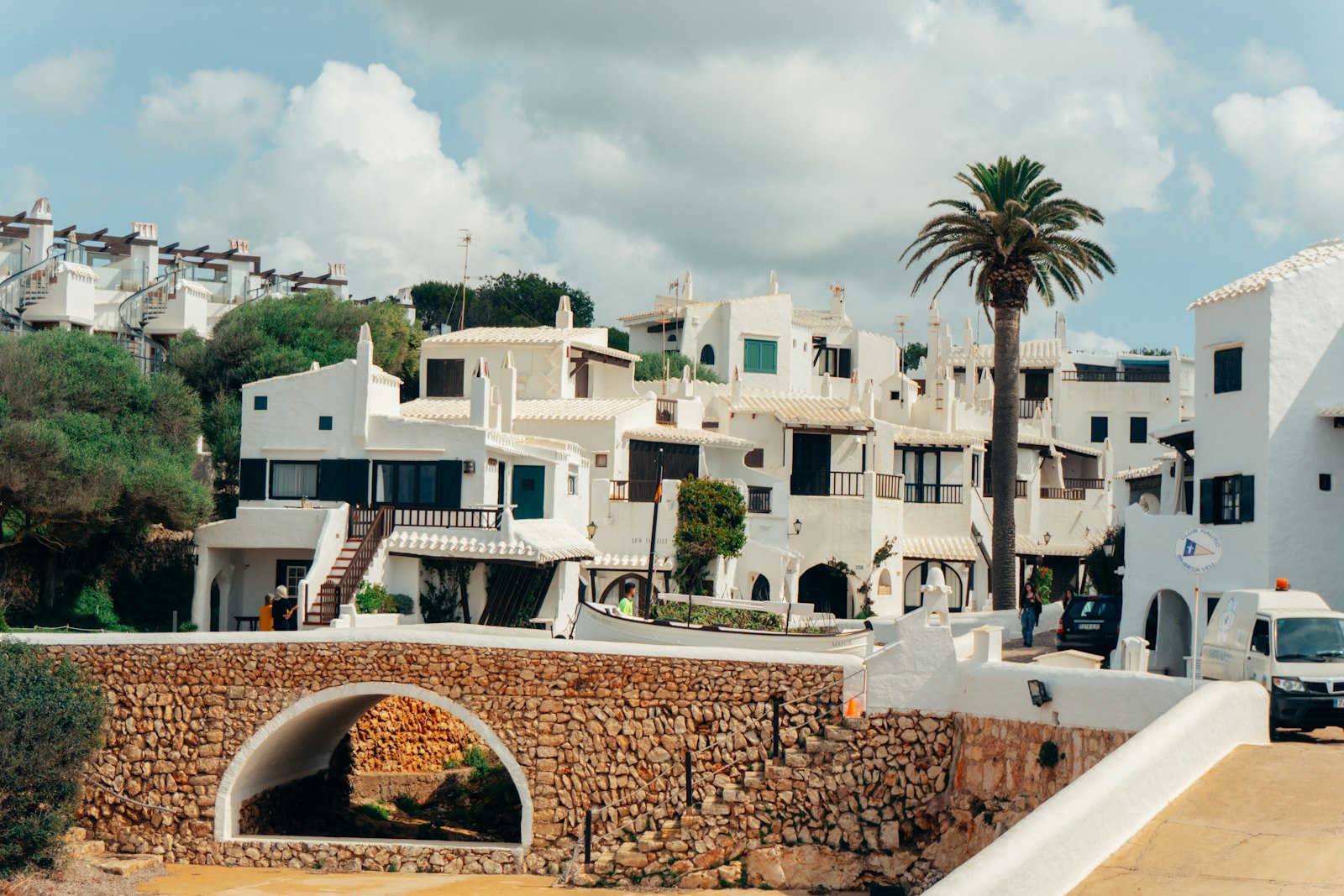
For a group, the move is a villa or agroturismo inland or just off the coast, with a pool, a kitchen, and a terrace for the long evenings — somewhere around Sant Lluís, Alaior, or the lanes outside Ciutadella puts you within forty minutes of everything. If you'd rather walk to dinner, base in Ciutadella itself for old-town life or Es Castell for the Cales Fonts harbour restaurants. What we'd skip: the purpose-built resort clusters (Son Bou, Cala'n Bosch, Punta Prima) unless you specifically want a beach on the doorstep and don't mind the package-holiday feel. Menorca's charm lives in the spaces between those.
Getting in and around
Fly to Maó, rent wheels, forget the bus.
- By air: Maó airport (MAH) is a fifteen-minute drive from the capital, with direct summer flights from across the UK and Europe and a quick hop from Barcelona, Madrid, or Palma year-round.
- By ferry: overnight and fast boats run from Barcelona and València, and a short crossing links Ciutadella to Mallorca — handy if you want your own car and a two-island trip.
- On the ground: rent a car, full stop. Public buses connect the main towns and a few big beaches but run on island frequencies and reach almost none of the good calas. In high summer the most popular south coves (Macarella, Es Talaier) close their car parks and you ride a shuttle bus from Ciutadella or a nearby lot — check before you drive down, or you'll do the last kilometres on foot. Parking fills by ten; the early start is the whole trick.
Money, water, and the rhythm
Cards everywhere. Bottled water. Late dinners.
Cards work nearly everywhere, but keep some cash for a beach chiringuito or a market stall. The tap water is safe but hard and heavily desalinated — it tastes of the process, and most people, locals included, drink bottled; buy the big bottles and refill. Spain eats late: lunch from two, dinner rarely before half past eight, and in summer the calas empty into the restaurants only once the sun's gone. Build the day around a long midday lunch and a late table and you'll be on the island's real clock. Tipping isn't expected — round up if it was good.
Where we would book
Cars we price first through a broker like DiscoverCars to compare the local Menorcan agencies, then book direct if it's close — and always before May for a summer trip. Villas and agroturismos we look for on Booking.com and the specialist Balearic-villa sites; for a group, a whole house beats any hotel here. The Fornells lobster restaurants and Ciutadella's best tables book by phone a week out, with no reseller worth paying. For a south-coast boat day or a guided Camí stage, GetYourGuide and the operators in Ciutadella harbour carry the ones we'd actually use — details in the activities guide.
Related guides
- Menorca Food Guide — the cheese, the lobster stew, the gin, and the harbours worth booking.
- Menorca Activities Guide — the calas in order, the Camí de Cavalls, and a boat day done right.
- Menorca Culture Guide — the stone towers, the two cities, and the gin that started as a navy.
- Your Venice Travel Guide — another group trip that runs on water, a flight away.
- Menorca Group Trip Guide — the same island, planned for six or ten of you.