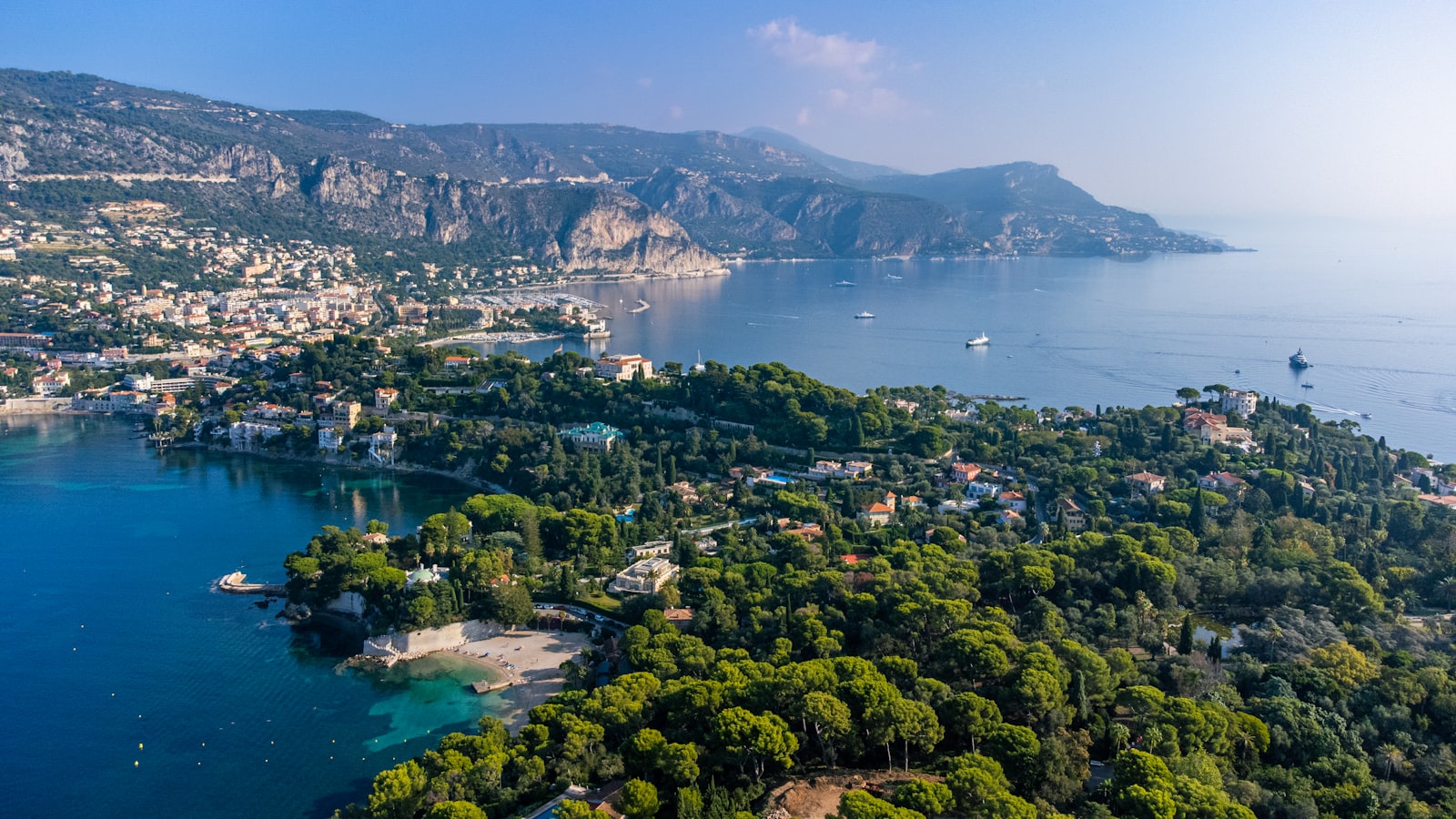

The Riviera's culture starts with one thing: the light. There's a clarity to it here — the Alps drop into a very blue sea and the sun does something to the colour of everything — and for a century it pulled the greatest painters in the world to this coast and kept them. Matisse, Chagall, Picasso, Renoir, Bonnard, Léger: they all worked here, and they left their museums and chapels scattered along the shore and up in the hills. Layer on the Belle Époque grandeur the English and Russians built, the principality of Monaco, and the perched art villages, and you get a coast that's far more than a beach. Here's the culture worth your time.
The light that made modern art
Matisse, Chagall, and Picasso all set up shop on this coast.

No stretch of coast has better museums per mile, because the artists lived here. In Nice, the Musée Matisse sits up in leafy Cimiez, where Matisse spent his last decades, and the Musée National Marc Chagall holds his luminous Biblical Message cycle in a building made for it — both a short bus from the centre and both a revelation. Over in Antibes, the Musée Picasso occupies the Château Grimaldi where Picasso worked in a burst in 1946, and much of what he made there stayed on the walls. Add the MAMAC modern-art museum in Nice and Renoir's house-museum in Cagnes-sur-Mer, and you could spend three rainy days indoors and never run out of masterpieces. Most are cheap; several are free on the first Sunday of the month.
Belle Époque Nice and the winter colony
Built by the English and the Russians who came here to feel better.

Long before the painters, the Riviera was a place invalids and aristocrats came to winter, and their money shaped the coast you walk today. The Promenade des Anglais — the grand seafront in Nice — is named for the English who funded it in the 1820s and strolled it in furs. The Russians came too: Tsar Nicholas II paid for the Cathédrale Saint-Nicolas, the largest Russian Orthodox cathedral outside Russia, its onion domes still startling behind the palm trees. Queen Victoria wintered up in Cimiez; the grand hotels of the era, crowned by the pink dome of the Negresco, still line the front. Walk the Promenade at dusk, look up at the facades, and you're reading a hundred years of the world's convalescent rich deciding this was the good life.
The English came for their health and stayed for the light. Then everyone else came for the same reason and never really left.— On why the coast filled up
The perched art villages
Saint-Paul-de-Vence, the Fondation Maeght, and a chapel Matisse designed.

Go up into the hills for the coast's other great culture. Saint-Paul-de-Vence is a fortified stone village that became an artists' colony — its lanes are lined with galleries, Chagall is buried in its cemetery, and the legendary inn La Colombe d'Or hangs real Picassos and Mirós it took in trade for meals. Just outside it, the Fondation Maeght is one of Europe's finest modern-art foundations, with a sculpture garden of Giacometti, Miró, and Calder set among the pines. Nearby, in Vence, the Chapelle du Rosaire is a whole chapel Matisse designed at the end of his life — the windows, the murals, the priests' robes, everything — and considered his masterpiece. Rent a car or take the bus up; this is the day that turns a beach trip into something you think about for years.
Glamour, and the calendar
Monaco, Cannes, and the festivals that made the coast famous.
The Riviera's third act is pure glamour, and it runs on a calendar. Monaco — the tiny, tax-free principality of the Grimaldis — gives you the Monte-Carlo Casino, the Prince's Palace on the Rock, and, if you time it in late May, the Grand Prix screaming through the streets. Cannes turns into the centre of the film world for two weeks each May for its Festival, and even out of season the Croisette and the red-carpet steps are fun to walk. Down the coast, Menton throws its Fête du Citron in February, building sculptures out of lemons, and Nice runs a huge Carnival. You don't need a tuxedo or a festival pass to enjoy any of it — the spectacle spills into the streets, and a coffee on the right square buys you a front-row seat.
Where we would book
Buy tickets for the Nice art museums, the Fondation Maeght, and the Monaco Oceanographic Museum from their own official sites — never a reseller charging extra for the same entry. Many city museums are cheap and several are free on the first Sunday of the month, so check the calendar. For the real context, a good walking tour of Vieux Nice or the art trail through Saint-Paul-de-Vence is worth every euro — book direct with a local guide. The Promenade, the Russian cathedral's exterior, and the perched villages themselves cost nothing. Book direct, and let one person handle the group's tickets in Obe.
Related guides
- Your French Riviera Travel Guide — the practical trip around all this.
- French Riviera Food Guide — the socca and rosé that fuel the museum days.
- Things to Do on the French Riviera — the coast, the corniches, and the villages.
- Bordeaux Culture Guide — France's other coast: 18th-century stone and the wine trade.
- French Riviera Group Trip Guide — the same light and villages, planned for a group of ten.